
Chef Joost
Aardappelschotel met Gehakt
A plain name for a quietly clever dish: fresh mince, sweet fried onion, nutmeg, and mashed potato baked until the top goes golden and the table goes silent.
A cooking platform built around craft, culture, and the stories behind what we eat.
Created by
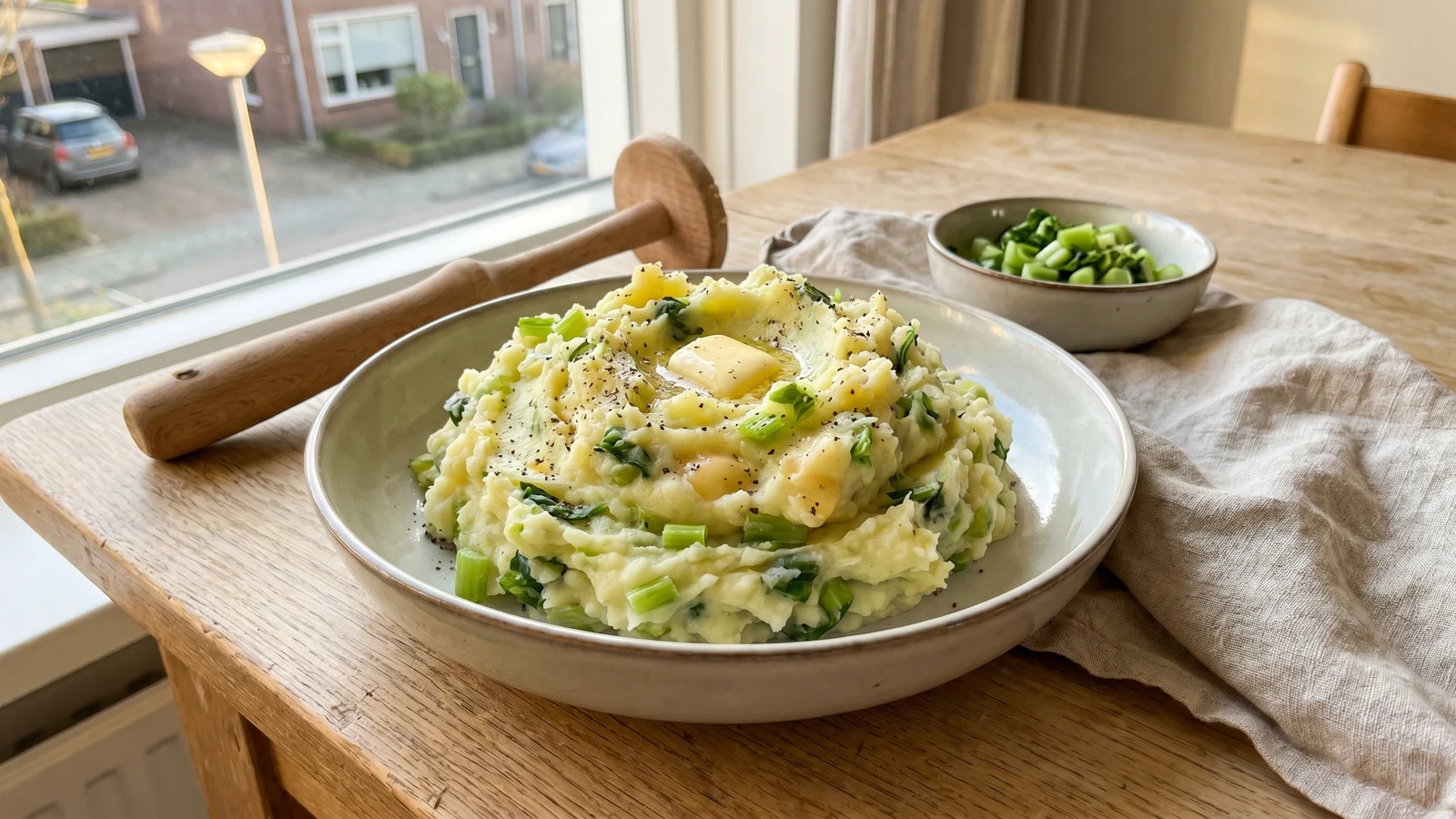
The lightest member of the stamppot family: young turnip stems stirred raw through hot potato, a spring allotment supper that tastes like the garden woke first.
The first stamppot of spring does not arrive wearing the heavy coat of winter. It comes from the volkstuin, the allotment garden, with soil still clinging to the roots and the leaves too young to know bitterness. Raapstelen are literally turnip stems: raap, turnip, and stelen, stems. The name already tells you this is peasant precision, not poetry, though I have always suspected the Dutch hide their poetry where only hungry people will find it.
But let me tell you a secret. Stamppot is not one dish. It is a method, a whole Dutch grammar of potato and season. In winter it takes kale, sauerkraut, carrot, onion, anything that can stare down the cold. In spring, it softens. Raapstelen are peppery and grassy, almost radish-like, and you don't boil them to death. You let the hot potatoes do the wilting. That is the whole trick.
Stampen means to mash or pound, and pot is simply the pot, so stamppot is the mashed pot. No mystery there, which is exactly why people underestimate it. Hou het altijd simpel, always keep it simple: floury potatoes, a little butter, warm milk, mustard if your table likes a sharper edge, and the greens folded in at the end so they keep their bite. A dish without its story is half a meal, and this one tells you the Dutch kitchen was never only about surviving winter. It knew how to notice the first green thing.
Raapstelen, the young leaves and stems of turnip or closely related brassicas, have long been a spring market-garden vegetable in the Netherlands, especially in home gardens and volkstuinen where early greens mattered before the main harvest began. Stamppot in its potato form belongs largely to the period after the potato became common Dutch fare in the eighteenth and nineteenth centuries, replacing older mash dishes built on roots, grains, and legumes. Raapstelenstamppot is the seasonal counterpoint to winter kale stamppot: the greens are stirred in raw or barely wilted, preserving the peppery freshness that marks it as spring food.
Quantity
1 kg
peeled and cut into even chunks
Quantity
300g
washed, roots trimmed, chopped
Quantity
150ml
warmed
Quantity
50g
Quantity
1 tablespoon
Quantity
1 small
finely chopped
Quantity
100g
diced or coarsely grated
Quantity
to taste
Quantity
a small pinch
| Ingredient | Quantity |
|---|---|
| floury potatoespeeled and cut into even chunks | 1 kg |
| fresh raapstelen (turnip greens)washed, roots trimmed, chopped | 300g |
| whole milkwarmed | 150ml |
| butter | 50g |
| Dutch mustard | 1 tablespoon |
| shallotfinely chopped | 1 small |
| aged Gouda (optional)diced or coarsely grated | 100g |
| salt and freshly ground black pepper | to taste |
| freshly grated nutmeg | a small pinch |
Put the potato chunks in a large pot, cover with cold water, and add a generous pinch of salt. Bring to a boil, then cook for 18 to 22 minutes until a knife slips through without resistance. Start them in cold water so the outside and inside cook evenly; a stamppot with watery edges and hard hearts is a small domestic betrayal.
While the potatoes cook, wash the raapstelen well in a bowl of cold water, lifting them out so any grit stays behind. Trim away roots and tired stems, then chop the leaves and tender stems into pieces about 2 centimetres long. Keep them raw. Their sharp little spring voice is the point.
Drain the potatoes very well, then return them to the hot pot for one minute so their surface dries. Add the butter, warm milk, mustard, black pepper, and a small pinch of nutmeg, then mash until soft but not gluey. Use a masher, not a machine; potatoes worked too hard become paste, and paste is not supper.
Fold the chopped raapstelen and shallot through the hot mash until the greens darken slightly and begin to wilt, about one minute. If using aged Gouda, fold it in now so it softens in small salty pockets. Taste for salt after the cheese, because Gouda likes to do some of the seasoning for you.
Spoon the stamppot into warm shallow bowls and make a kuiltje, a little hollow, in the middle for a small knob of butter if you like. Serve at once, while the greens still taste fresh and peppery. I prefer to keep it a bit more relaxed, in the Dutch way: one pot, four bowls, no ceremony except someone scraping the bottom.
1 serving (about 375g)
Culinary guides, cultural storytelling, and the editorial depth that makes cooking meaningful.
Discover Culinary ExplorerChef Joost
A plain name for a quietly clever dish: fresh mince, sweet fried onion, nutmeg, and mashed potato baked until the top goes golden and the table goes silent.

Chef Joost
Ajam Besengek is the golden chicken stew of the Indo-Dutch table: coconut milk, turmeric, and candlenut cooked down until the sauce clings to the meat like memory.

Chef Joost
The old Dutch spelling says ajam, the city says Batavia, and the pot says exactly what the rijsttafel always was: memory, trade, and dinner in one dish.

Chef Joost
The name means simply fried chicken, but the Dutch spelling carries a whole Indies kitchen: turmeric, coriander, garlic, and a golden crust that remembers the boemboe.