Culinary Explorer
A cooking platform built around craft, culture, and the stories behind what we eat.
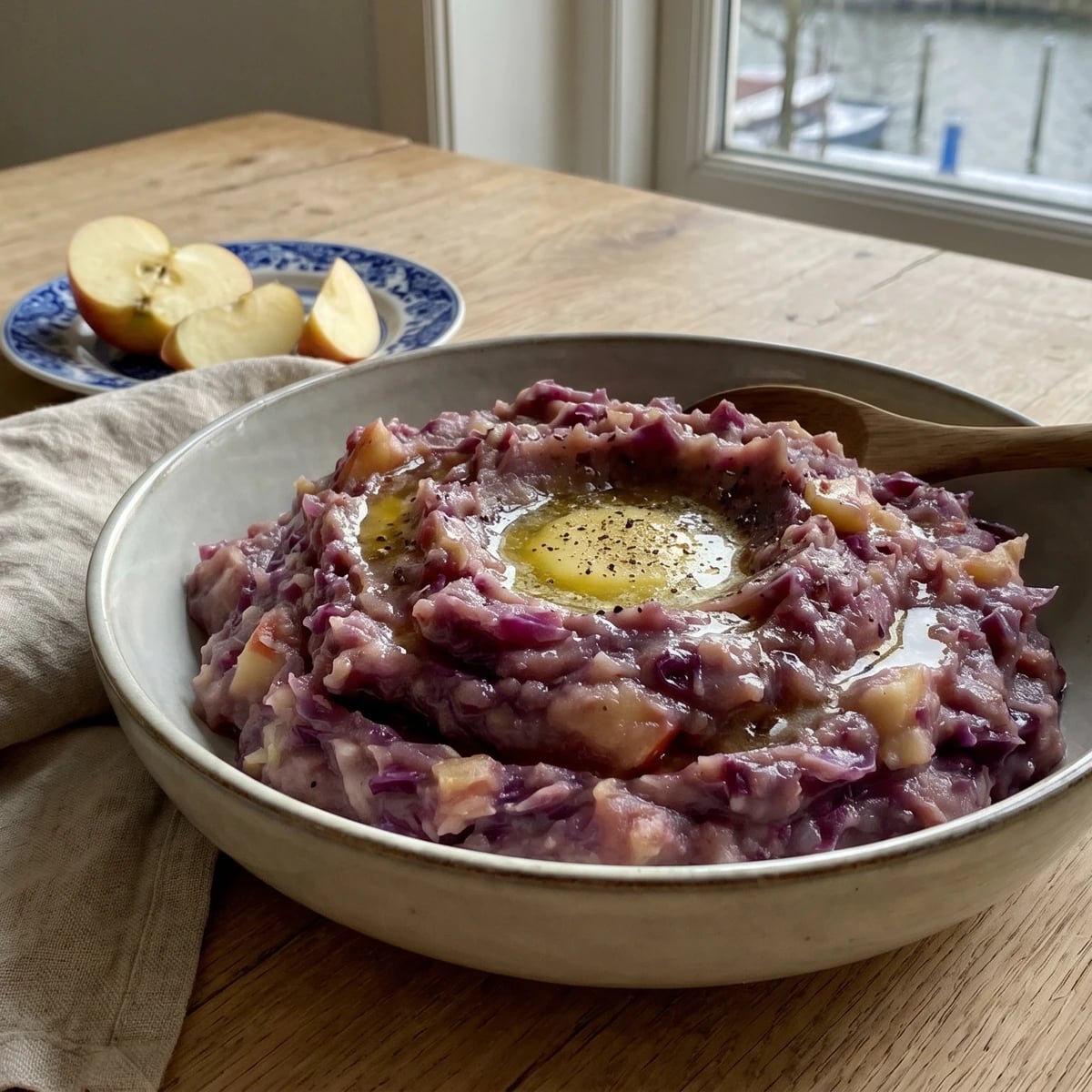
Rodekoolstamppot
Created by Chef Joost
Red cabbage, apple, clove, and potato meet in one honest winter mash, the colour of a stormy Dutch evening and the taste of frugality made generous.
There are dishes that arrive with trumpets, and there are dishes that wait for a Tuesday in January, when the light leaves early and the cupboard asks to be taken seriously. Rodekoolstamppot is the second kind. In my grandmother's second notebook, the red cabbage page was stained purple at the corner, which tells you more about its importance than any neat handwriting could.
The name is plain because the dish is plainspoken. Rode kool is red cabbage, stamppot is the mashed pot, from stampen, to pound or mash, and that is already enough etymology for one supper. But let me tell you a secret: the clove in this humble pot belongs to the same spice world as speculaas. The Dutch did not reserve the VOC cargo for feast-day biscuits. A frugal kitchen put clove into cabbage because one nail-shaped spice could make winter taste less like storage.
The method is the lesson. The cabbage must soften first with apple, vinegar, and clove, until its raw edge turns sweet and dark. Only then do the potatoes join, so they cook in the purple liquor and carry the flavour into the mash. Hou het altijd simpel, always keep it simple: one pot, a wooden spoon, and enough patience for the cabbage to become itself.
Ingredients
red cabbage
Quantity
1 small, about 800g
finely shredded
floury potatoes
Quantity
1kg
peeled and cut into large chunks
tart apples
Quantity
2
peeled, cored, and diced
| Ingredient | Quantity |
|---|---|
| red cabbagefinely shredded | 1 small, about 800g |
| floury potatoespeeled and cut into large chunks | 1kg |
| tart applespeeled, cored, and diced | 2 |
Where cooking meets culture.
Culinary guides, cultural storytelling, and the editorial depth that makes cooking meaningful.
Discover Culinary Explorer