Chef Jeong-sun
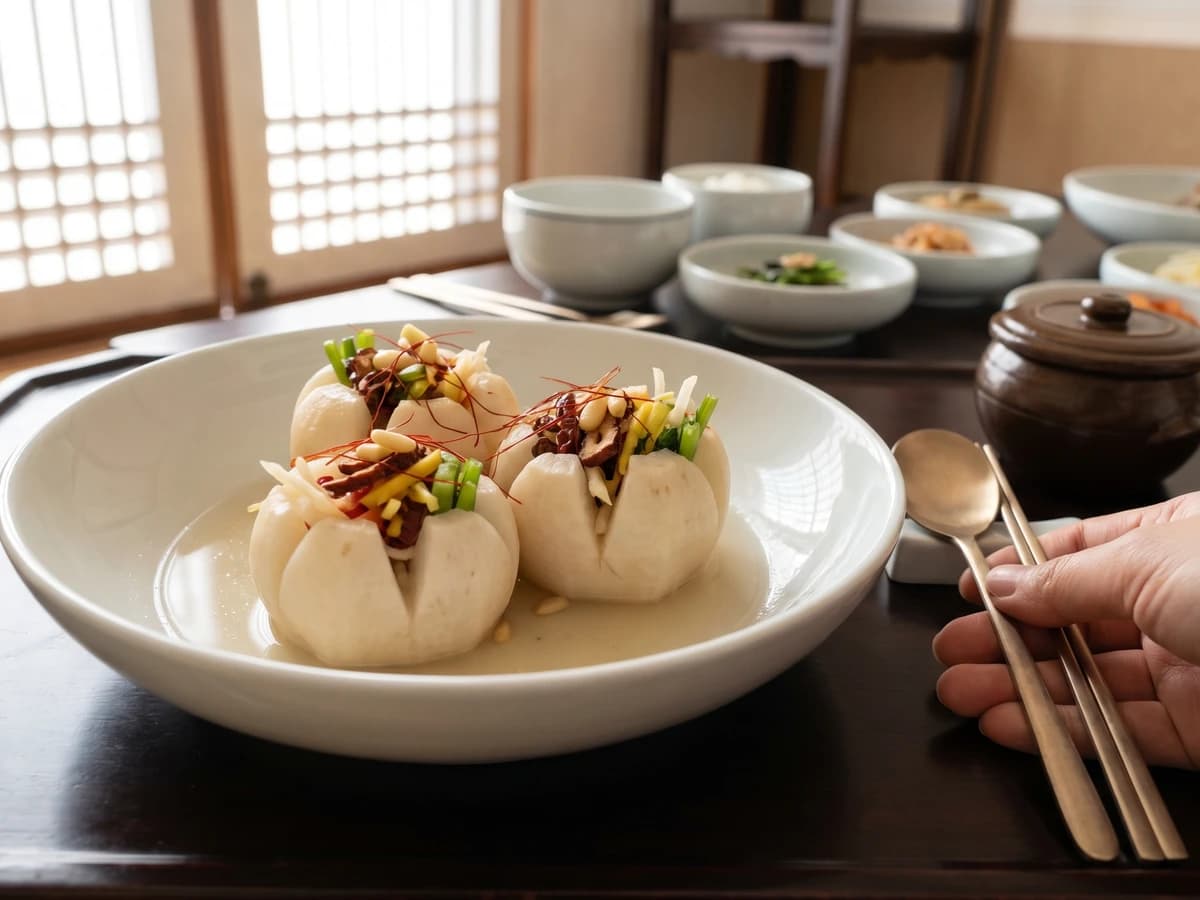
Seokryu-kimchi (Pomegranate Court Kimchi)
A quiet holiday kimchi from the court table: Korean radish cut to bloom like a pomegranate, stuffed with pale fruit and nuts, then rested in a clear, lightly seasoned brine.

Updated June 11, 2026
The older kimchi line, from before the chili reached the jar: baek-kimchi, winter dongchimi whose icy brine becomes noodle broth, gentle nabak-kimchi, the summer water kimchi, the white stuffed cucumber, and the court and Gaeseong kimchi that stayed pale. A 1459 cookery book lists dozens of kimchi and not one of them is red.
A cooking platform built around craft, culture, and the stories behind what we eat.
Chef Jeong-sun
A quiet holiday kimchi from the court table: Korean radish cut to bloom like a pomegranate, stuffed with pale fruit and nuts, then rested in a clear, lightly seasoned brine.

Chef Jeong-sun
A festive Gaeseong kimchi parcel, packed with crisp radish, pear, chestnut, jujube, pine nuts, and oyster, then opened at the table like a gift made to be shared.

Chef Jeong-sun
Flat spring bomdong cabbage, lightly brined and tucked into a clear pear-radish kimchi broth, made without chili and eaten young while the leaves still taste like spring.

Chef Jeong-sun
A clear water kimchi of fragrant minari and crisp radish, lightly fermented until the brine turns clean, tart, and alive without burying the green taste of the herb.

Chef Jeong-sun
A pale summer cucumber kimchi, split and stuffed with radish and chives, then held in a cool pear brine so the cucumber stays clean, crunchy, and plainly itself.

Chef Jeong-sun
Whole mu radishes set down after first frost in a clear, restrained brine, turning crisp and lightly sour while the broth becomes winter's cleanest spoonful and naengmyeon's quiet backbone.
Chef Jeong-sun
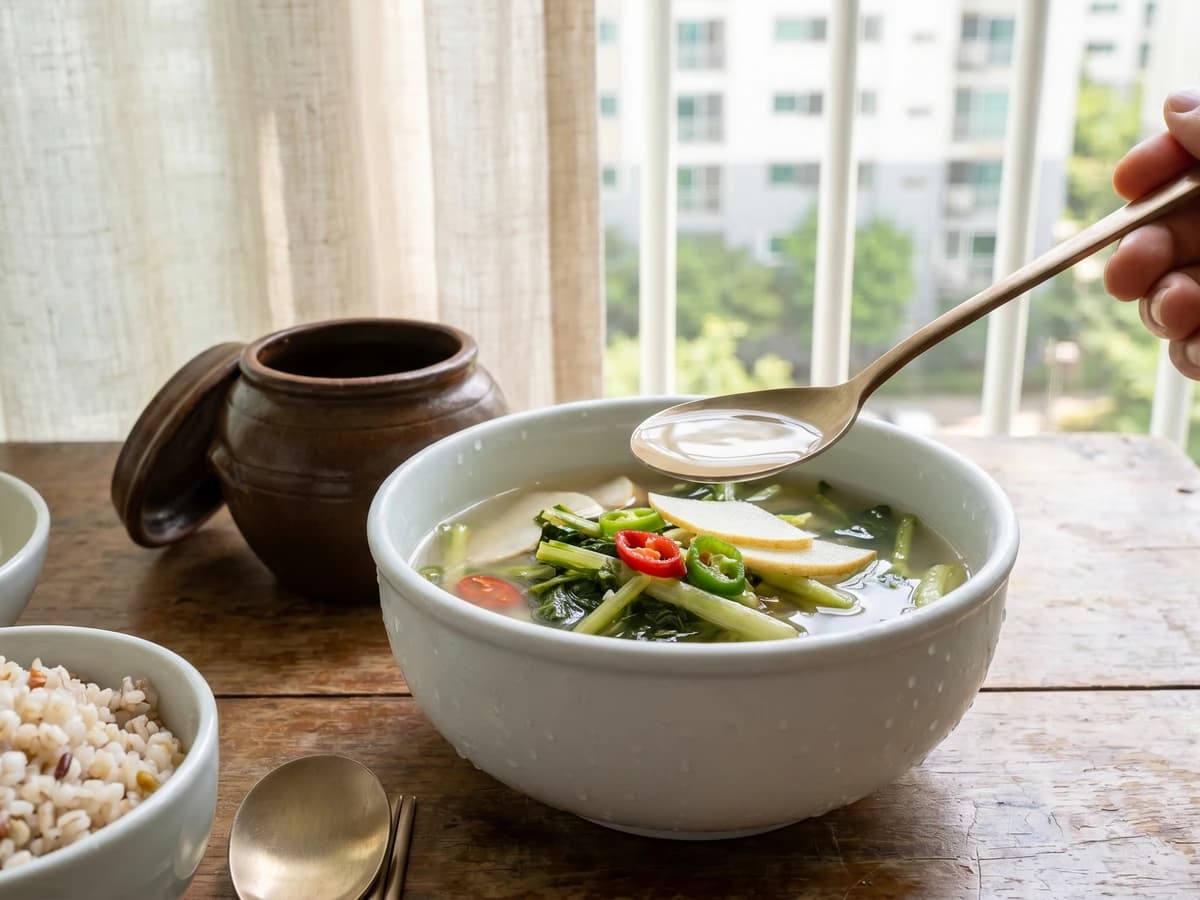
Tender young radish and its greens in a clean, lightly fermented summer brine, made pale and crisp so the leaves stay fresh and the broth is drunk as much as eaten.
Chef Jeong-sun
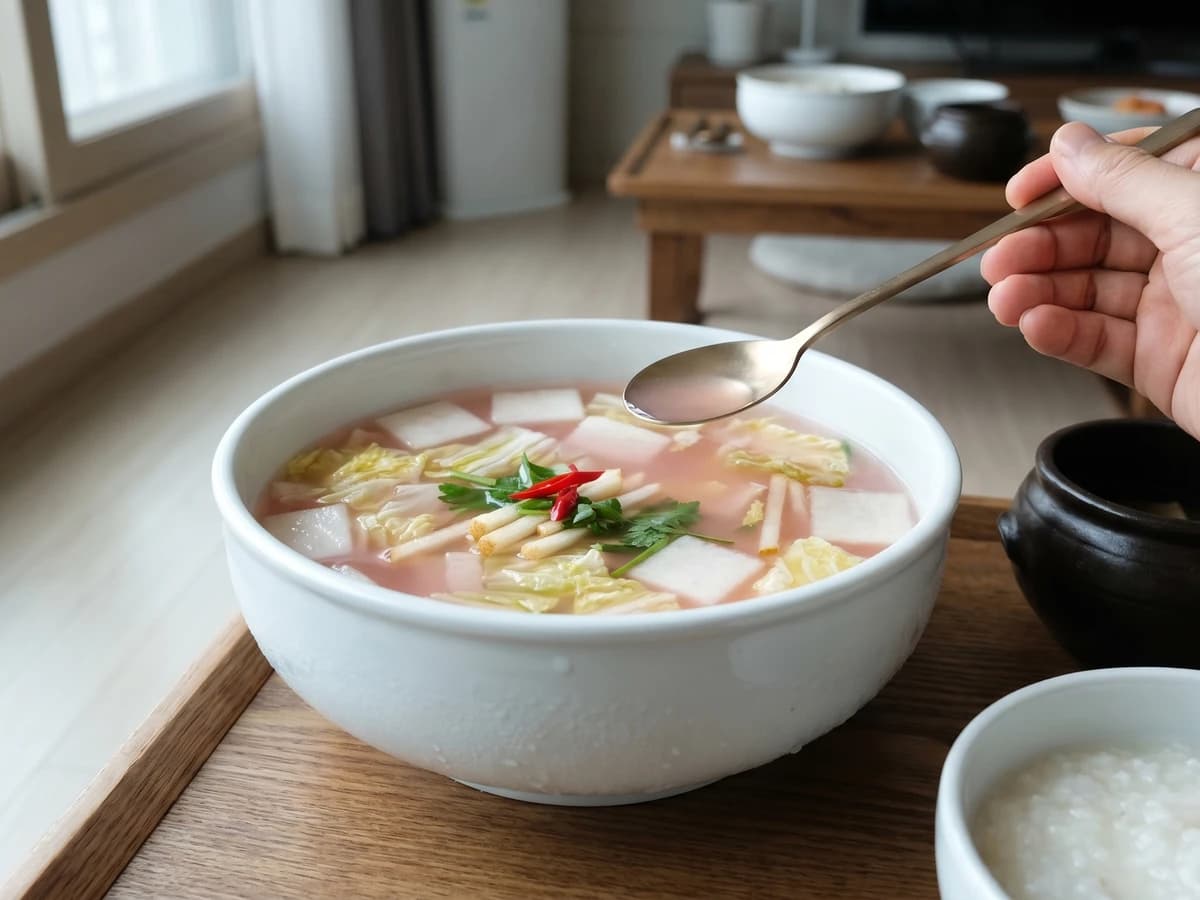
A pale spring water kimchi of thin radish and cabbage squares, quick to ferment, clean on the tongue, and made for the first spoonful beside juk, rice, or a fuller table.

Chef Jeong-sun
An amber winter water kimchi for the holiday table, napa cabbage and radish softened in soy brine, pear, honey, ginger, and clean cold fermentation until it sits quietly beside tteokguk.

Chef Jeong-sun
Ganghwa's purple-topped turnip made into a pale, clean kimchi, salted carefully and fermented slowly so its peppery sweetness stays clear.

Chef Jeong-sun
The kimchi from before chili, salted napa cabbage packed with radish, pear, jujube, and pine nuts in a clear brine that turns quietly tart in the jar.

Chef Jeong-sun
Tender baby napa cabbage in a clear pear-garlic brine, lightly fermented until the broth turns clean and bright, the summer kimchi a beginner can make without a kimjang floor.
Culinary guides, cultural storytelling, and the editorial depth that makes cooking meaningful.
Discover Culinary ExplorerChef Jeong-sun is a fictional culinary guide to Korean Home Cooking (Hansik), written with the assistance of AI.