Culinary Explorer
A cooking platform built around craft, culture, and the stories behind what we eat.
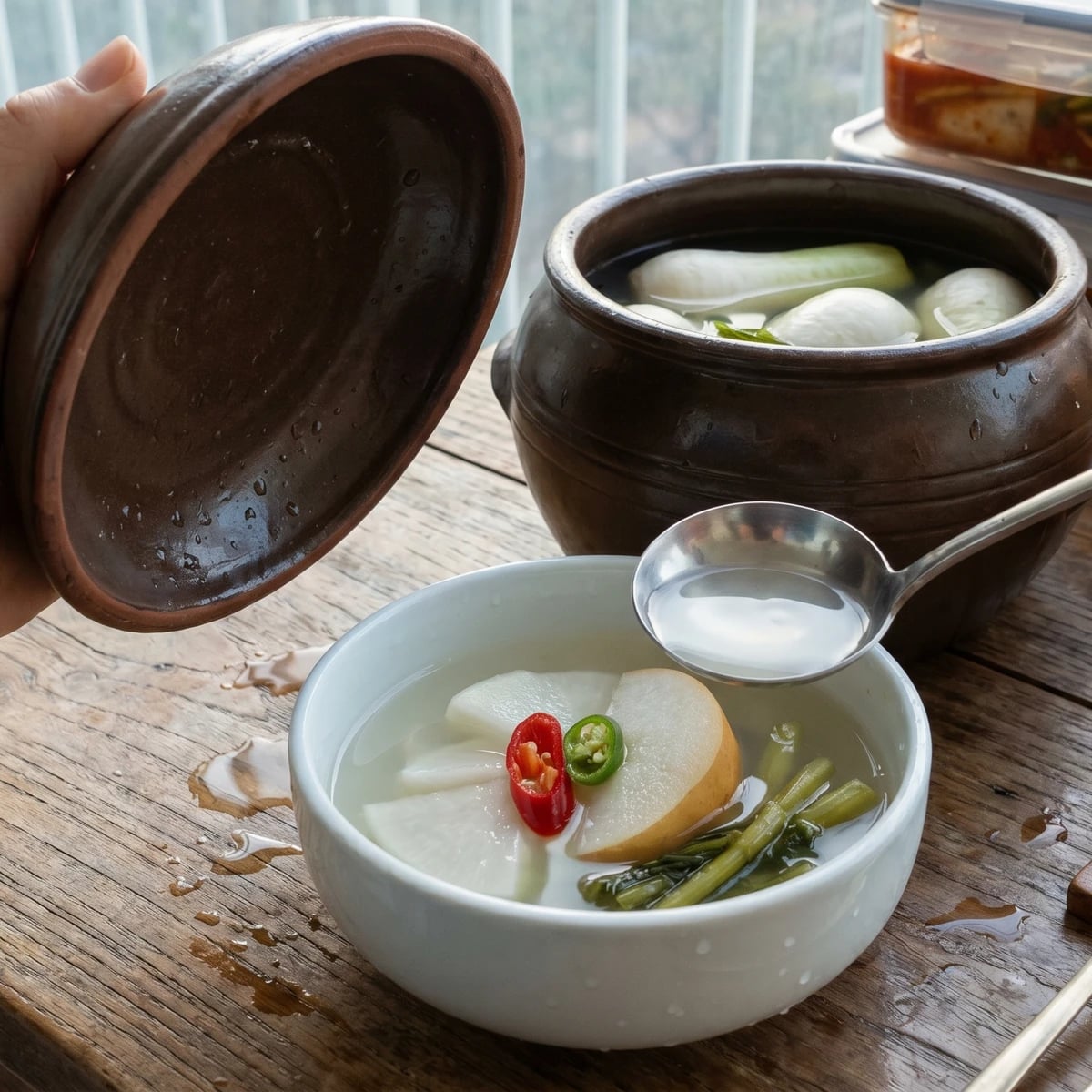
Dongchimi (Winter Radish Water Kimchi)
Created by Chef Jeong-sun
Whole mu radishes set down after first frost in a clear, restrained brine, turning crisp and lightly sour while the broth becomes winter's cleanest spoonful and naengmyeon's quiet backbone.
At first frost, the radishes in the market get dense enough to carry a winter. The good ones are small, heavy, and green at the shoulder, with skin you scrub clean but do not peel. My mother bought them by knocking one against another, not for sound like a melon, but to feel whether it was solid. I write the weight now, because her hand knew what mine still has to hand on.
This is water kimchi, but do not mistake water for weakness. Dongchimi lives or dies by the brine: enough salt to guide fermentation, enough pear and radish sweetness to round it, not so much garlic that the clear broth turns rough. The radish should taste like radish after all this. Let it taste like itself.
Tonight this dish asks for scrubbing, salting, packing under brine, and then leaving it alone. That last part is harder than people admit. You'll give it a day or two at cool room temperature, then a week or two in the cold. The reward is two foods in one jar: crisp radish for the table and a clean sour broth for noodles, soup, or a spoonful after rice.
Cook the month you're standing in. If it is summer, make nabak-kimchi or oi-mul-kimchi (cucumber water kimchi) and don't bully a hot-weather radish into winter work. But when the radishes are right, write this batch down. Memory is a borrowed bowl.
Ingredients
small Korean winter radishes (mu)
Quantity
2 kg
scrubbed, unpeeled, root hairs trimmed, greens cut to 2 cm
coarse sea salt (cheonilyeom)
Quantity
99 g, divided
45 g for salting, 54 g for brine
filtered or boiled-and-cooled water
Quantity
2.5 liters
| Ingredient | Quantity |
|---|---|
| small Korean winter radishes (mu)scrubbed, unpeeled, root hairs trimmed, greens cut to 2 cm | 2 kg |
| coarse sea salt (cheonilyeom)45 g for salting, 54 g for brine | 99 g, divided |
| filtered or boiled-and-cooled water | 2.5 liters |
Where cooking meets culture.
Culinary guides, cultural storytelling, and the editorial depth that makes cooking meaningful.
Discover Culinary Explorer