
Chef Klaus
Schwäbische Kartoffelsuppe
A Swabian bowl built from stored potatoes, roots, and real beef broth, left chunky so the potatoes thicken the soup themselves, with Saitenwürstle or Spätzle when the pot asks for it.
Updated June 18, 2026
One-pot Hausmannskost from Swabia, Baden, and the Allgäu: the lentil-Spätzle-Saiten plate, Gaisburger Marsch, sour tripe, the pancake-strip broth, and Baden's French-leaning snail soup. Thrift cooking done properly, where the southwest stretches a little meat across a whole pot.
A cooking platform built around craft, culture, and the stories behind what we eat.
Chef Klaus
A Swabian bowl built from stored potatoes, roots, and real beef broth, left chunky so the potatoes thicken the soup themselves, with Saitenwürstle or Spätzle when the pot asks for it.

Chef Klaus
Stuttgart's stew earns its name in the pot: clear beef broth, tender meat, floury potatoes, fresh Spätzle, and onions browned dark enough to matter.
Chef Klaus
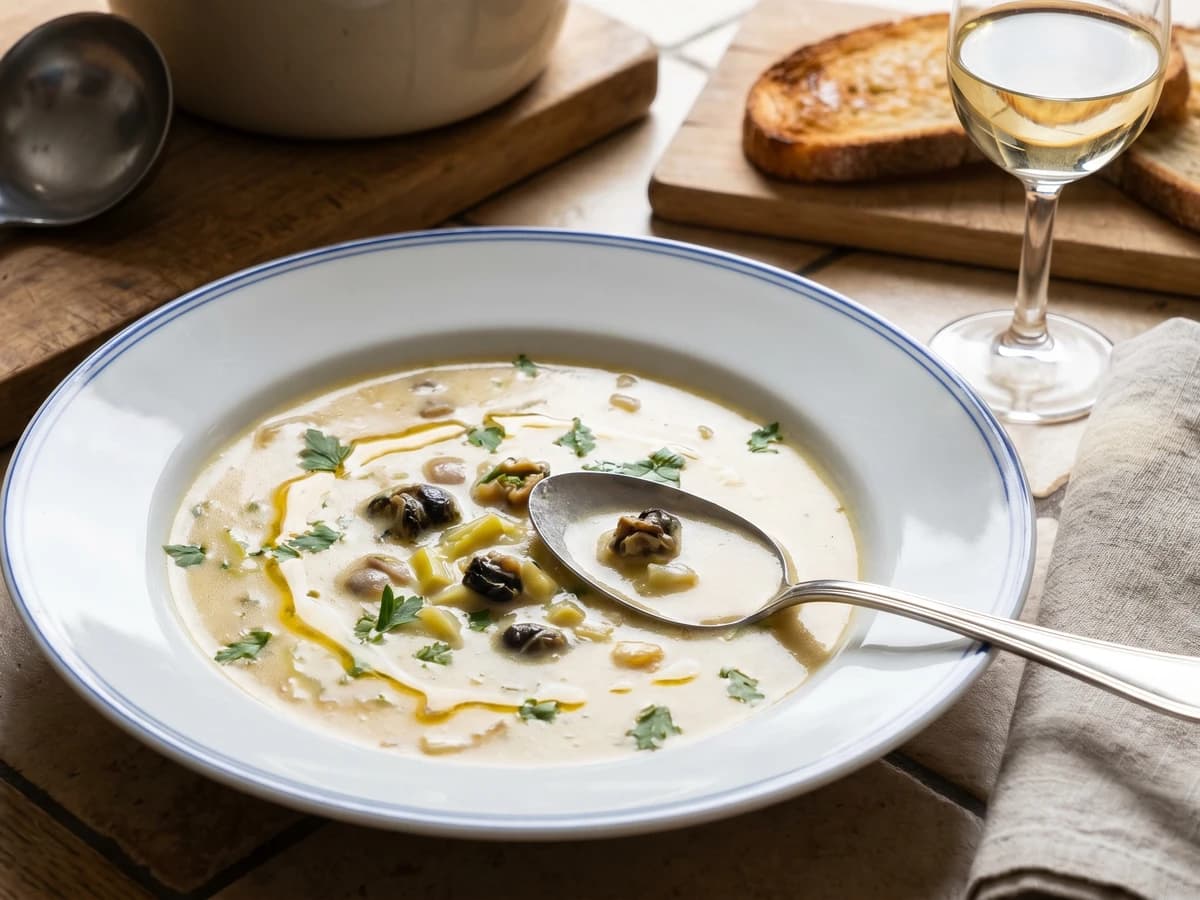
Baden's vineyard soup is won on gentle heat: white wine reduced before the cream, snails warmed just enough to stay tender, and a bowl that tastes of the Rhine border kitchen.

Chef Klaus
A bowl of Baden carnival: dried beans, smoked bacon, potato, and the patience to cook them soft before the Narren come in hungry.

Chef Klaus
A Swabian broth bowl from the thrift larder: liver, stale bread, egg, and marjoram scraped into hot beef broth as small tender Spätzle.

Chef Klaus
Swabia's sour potato wheels are made from the cheap things in the pot: floury potatoes, bacon, onion, and vinegar added late so the broth stays bright.

Chef Klaus
Swabia's festive clear broth, opened with the wedding meal and kept honest by real bones, clean straining, and the small things floating in it.

Chef Klaus
A southern German clear soup of real beef broth and thin pancake ribbons, where the whole dish depends on keeping the broth clean and the Flädle tender.

Chef Klaus
Swabia's Filder plateau puts its pointed cabbage to work here: smoke, floury potatoes, and Spätzle in one pot, with Röstzwiebeln over the top because even a weeknight deserves the crunch.

Chef Klaus
A Swabian larder soup where stale rye does the thickening itself: roast the crusts dark, simmer them low in good broth, and finish with chives, not a packet.

Chef Klaus
Baden's quiet green-spelt soup lives on the smoky grain, not tricks: toast it in butter first, then simmer gently and finish off the boil with cream and yolk.

Chef Klaus
A firm egg dough, grated into tiny crumbs and cooked in clear broth: Allgäu kitchen thrift, warm in the bowl, and finished only when the Riebele keep their bite.

Chef Klaus
Swabia's weekday and Sunday lentil plate, brown lentils sharpened with vinegar only after they soften, spooned over fresh Spätzle with a Saitenwürstle alongside.
Chef Klaus
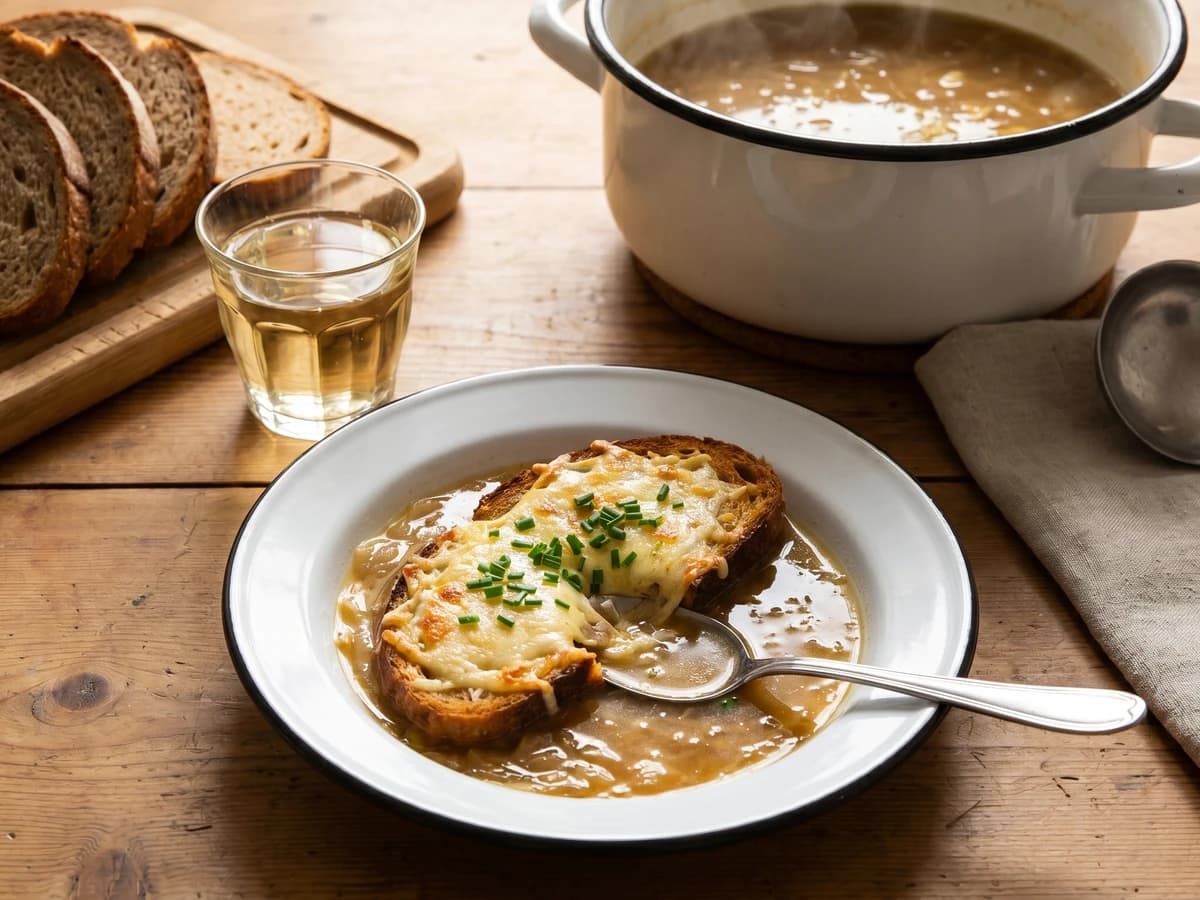
Baden cooks onion soup with one eye over the Rhine: slow golden onions, good broth, and dry white wine doing the lifting before the cheese ever appears.
Chef Klaus
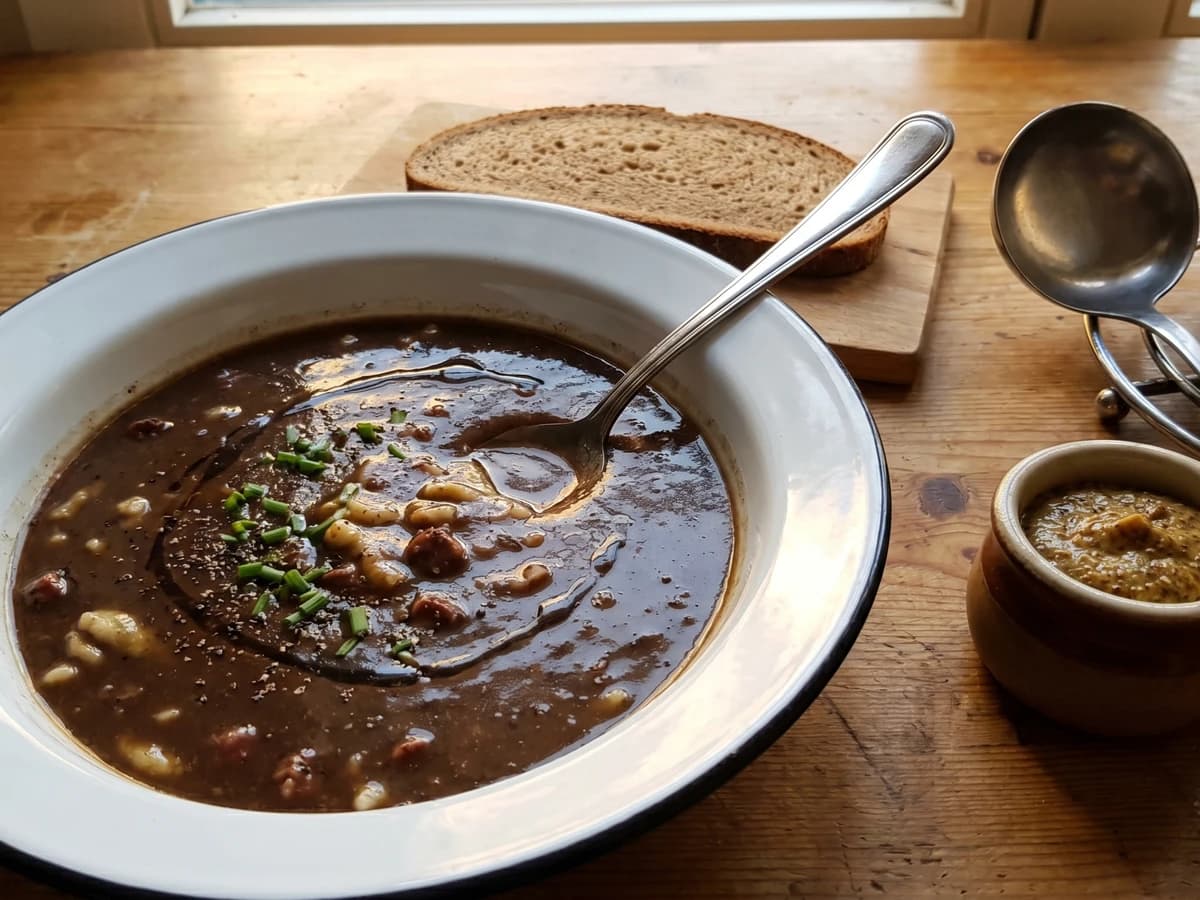
The Swabian slaughter-day soup built from the kettle: pork broth, fresh blood and liver sausages, Spätzle, and the old rule that nothing useful leaves the pot.

Chef Klaus
Swabian sour tripe lives or dies by the browned flour: take it dark enough for nutty depth, then loosen it slowly so the sauce turns glossy, sour, and clean.
Chef Klaus
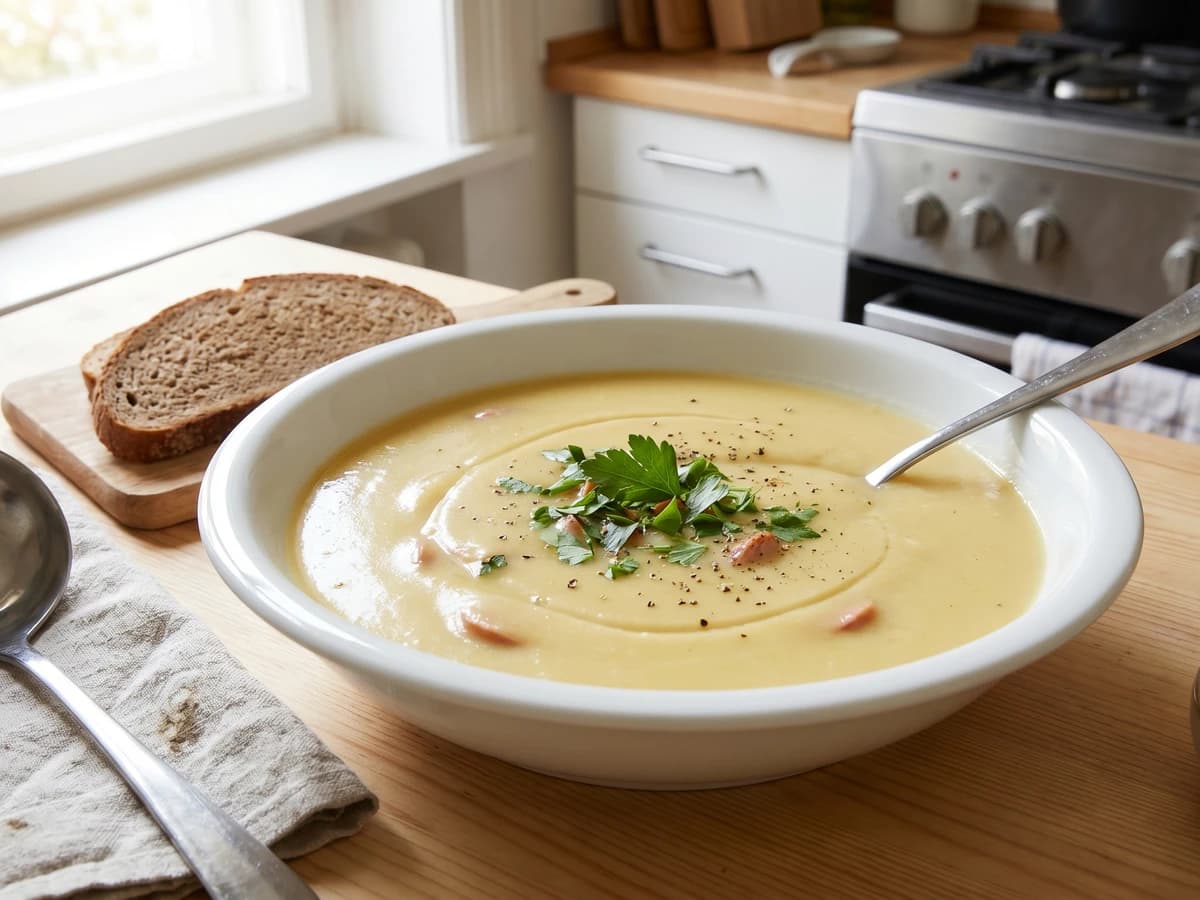
Baden's potato soup is the southern bowl with a French hand: smooth potatoes, green herbs, a little cream, and sausage only after the soup is right.

Chef Klaus
The Allgäu's Alpine cheese soup works only if the Bergkäse melts gently off the heat, where it turns smooth instead of stringy.

Chef Klaus
A Swabian Alb pot where potato wedges and homemade Spätzle take the smoke from pork rind and bone, with dried pear for the old sweet note that made little meat feed many.
Culinary guides, cultural storytelling, and the editorial depth that makes cooking meaningful.
Discover Culinary ExplorerChef Klaus is a fictional culinary guide to German Regional Cuisine (Hausmannskost), written with the assistance of AI.