Culinary Explorer

A cooking platform built around craft, culture, and the stories behind what we eat.
Discover Culinary Explorer
Schwäbische Kartoffelsuppe

Schwäbische Kartoffelsuppe

Created by

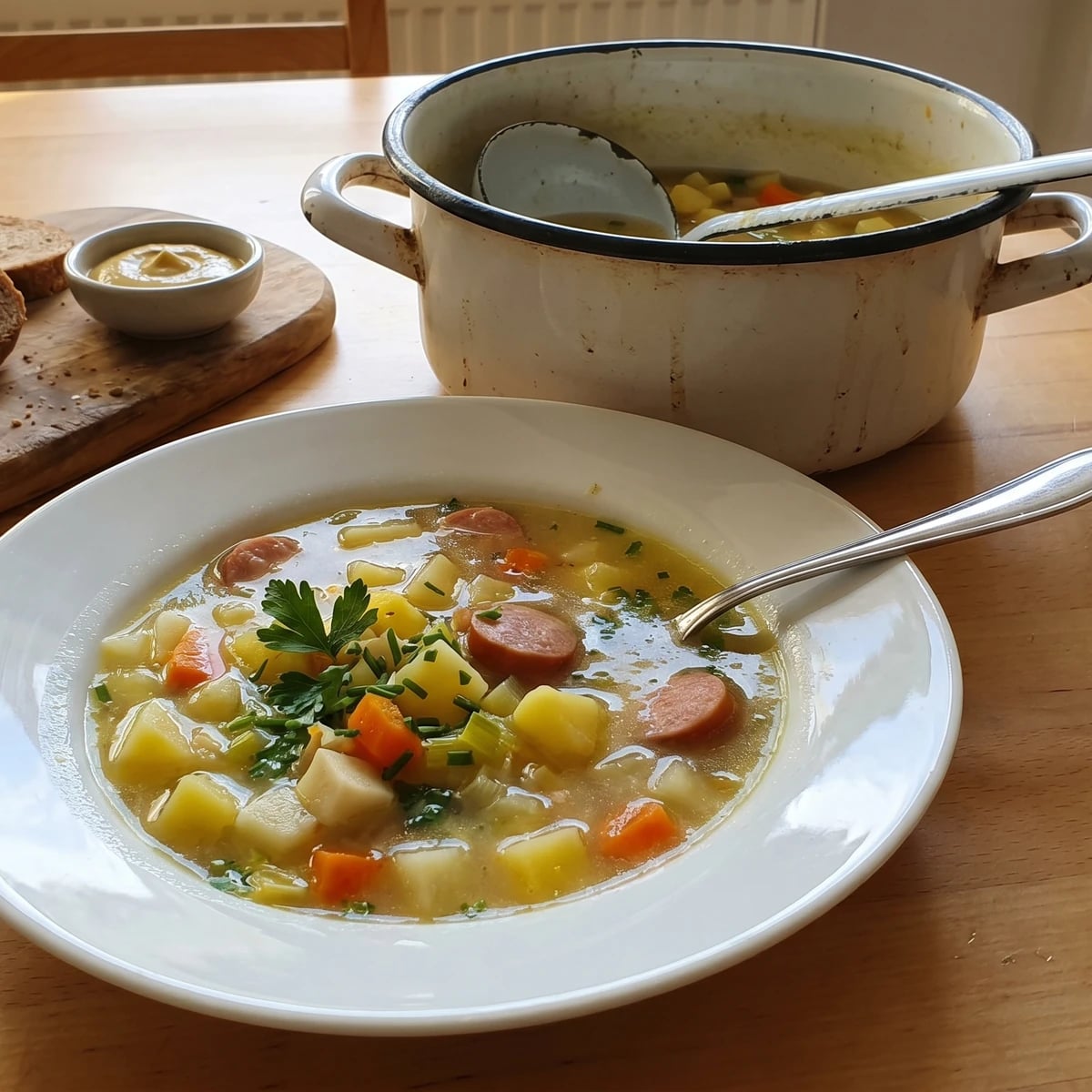
A Swabian bowl built from stored potatoes, roots, and real beef broth, left chunky so the potatoes thicken the soup themselves, with Saitenwürstle or Spätzle when the pot asks for it.

Soups & Stews
German
Weeknight
Budget Friendly
Comfort Food
25 min
Active Time
45 min cook1 hr 10 min total
Yield4 to 6 servings

Schwäbische Kartoffelsuppe belongs to the Swabian everyday table, especially when the cellar is doing its work: potatoes, roots, broth, a sausage if the butcher has been kind. This is winter and weeknight food, but it sits well on a Sunday too, beside a loaf of rye and a board still carrying the knife marks. Nothing precious. Just a pot that knows what it is doing.

Im Norden anders, im Süden anders. In the north, potato soup often leans on smoked pork, leek, or a spoon of cream. In Swabia, I want beef broth, floury potatoes, soup roots, and sometimes Saitenwürstle or Spätzle in the bowl. That puts it close to Gaisburger Marsch, the Stuttgart beef, potato, and Spätzle stew, but this soup stays looser and plainer. Das ist kein Bierzelt.

The rule is simple: crush part of the potatoes by hand, and leave the rest alone. Floury potatoes release enough starch to thicken the broth if you press them against the pot, but a blender turns that same starch into glue. That is the difference between a Swabian potato soup and wallpaper paste with parsley.

Use real broth. Nicht aus dem Glas. Bones, rind, and trim are why the broth has body in the first place, and Weggeworfen wird nichts, nothing gets thrown away. Watch the pot when the potatoes begin to break at the edges; that is when the soup is ready to bind itself. Erst verstehen, dann kochen.

Frederick II of Prussia issued his best-known Kartoffelbefehl, potato order, in 1756, a reminder that the potato became German daily food in the 18th century, not in the Middle Ages. In Württemberg and Swabia it joined stored roots and the butcher's broth pot, and from that larder grew everyday dishes from potato soup to Schupfnudeln and Gaisburger Marsch. The regional split is clear: Swabia often lets Spätzle or Saitenwürstle into the bowl, while northern potato soups lean more often on smoked pork, leek, or cream.

The technique, the tradition, and the story behind every dish.

Discover Culinary Explorer

Ingredients

butter, lard, or neutral oil

Quantity

2 tablespoons

yellow onion

Quantity

1 large

finely diced

leek

Quantity

1 small

white and light green parts sliced and well washed

carrots

Quantity

2

diced small

celeriac

Quantity

150g

peeled and diced small

parsley root or small parsnip

Quantity

1

diced small

floury potatoes

Quantity

900g

peeled and cut into 2cm chunks

beef broth

Quantity

1.5 litres

homemade or good butcher's stock preferred

bay leaf

Quantity

1

dried marjoram

Quantity

1 teaspoon

rubbed between your fingers

freshly grated nutmeg

Quantity

1 pinch

Saitenwürstle or Frankfurter sausages (optional)

Quantity

4

cooked Spätzle (optional)

Quantity

200g

white wine vinegar or apple cider vinegar

Quantity

1 tablespoon

flat-leaf parsley

Quantity

1 small bunch

chopped

chives

Quantity

1 tablespoon

chopped

salt and freshly ground black pepper

Quantity

to taste

Equipment Needed

  • Heavy 4 to 5 litre soup pot
  • Potato masher or sturdy wooden spoon
  • Sharp knife and cutting board

Instructions

  1. 1

    Sweat the roots

    Warm the butter, lard, or oil in a heavy pot over medium heat. Add the onion, leek, carrots, celeriac, and parsley root with a small pinch of salt and cook 8 to 10 minutes, stirring often, until the onion turns glassy and the roots smell sweet. Do not brown them hard. This soup wants the cellar sweetness of stored roots, not scorched onion shouting over the broth.

    Cut the roots small and the potatoes larger. The roots should soften into the broth; the potatoes should still leave you something to bite.
  2. 2

    Add potato

    Stir in the potato chunks, marjoram, nutmeg, and bay leaf, then let the potatoes roll around in the fat for two minutes. The fat coats the surface and carries the marjoram into the soup, so the herb tastes cooked into the bowl instead of sprinkled on top like an apology.

  3. 3

    Simmer gently

    Pour in the beef broth and scrape the bottom of the pot clean. Bring it just to a simmer, then runter mit der Temperatur, down with the temperature, and cook uncovered for about 25 minutes, until the potato edges break when pressed with a spoon. A hard boil beats the vegetables ragged and clouds the broth; a steady simmer lets the floury potatoes give up starch without turning the pot muddy.

  4. 4

    Crush, do not blend

    Remove the bay leaf. Crush about a third of the potatoes against the side of the pot with a spoon or potato masher, leaving the rest chunky. This is the step that decides the soup. A blender shears the starch and makes glue; hand-crushed floury potato thickens the beef broth while the bowl still eats like soup.

  5. 5

    Warm the extras

    If using Saitenwürstle, lay them into the soup whole or sliced and warm them gently for 6 to 8 minutes. If using cooked Spätzle, stir them in for the last 3 minutes only. Do not boil either one. The sausage splits and dumps its salt, and the Spätzle drinks the broth until the pot forgets it was soup.

  6. 6

    Finish bright

    Stir in the vinegar, parsley, and chives, then taste for salt and pepper after the sausage has warmed through. Würzen, Fett, Salz zum Schluss, season, fat, salt at the end. Beef broth and sausage both carry salt, so the last taste is the only honest one. Serve with rye bread and mustard on the side if sausages are in the bowl.

Chef Tips

  • Use floury potatoes, the kind that fall apart when boiled. Waxy potatoes stay polite and separate; they will never give the broth the body this soup needs.
  • Cook the vegetables gently before the broth goes in. That slow sweating turns onion and roots sweet without browning them, and the soup tastes round instead of raw.
  • Use beef broth with body, homemade if you have it or good butcher's stock if you don't. A cube gives salt and colour, not the mouthfeel that bones give. Nicht aus dem Glas.
  • Add the vinegar at the end. Acid cooked for half an hour disappears; acid added at the finish wakes up the potato and keeps the soup from eating flat.
  • Saitenwürstle are warmed, not boiled. Treat them roughly and they split, which is the sausage telling you it has had enough.

Advance Preparation

  • The soup base can be cooked one day ahead through the crushing step. Cool it quickly, refrigerate it, and reheat gently with a splash of broth because potato thickens as it stands.
  • Add Saitenwürstle, Spätzle, parsley, chives, and vinegar only when serving. They are finishers, not storage ingredients.
  • Leftovers keep 3 days in the refrigerator. Reheat over low heat and loosen with broth or water; hard boiling leftover potato soup makes it heavy.

Frequently Asked Questions

Nutrition Information

1 serving (about 490g)

Calories
500 calories
Total Fat
27 g
Saturated Fat
10 g
Trans Fat
0 g
Unsaturated Fat
15 g
Cholesterol
65 mg
Sodium
1420 mg
Total Carbohydrates
47 g
Dietary Fiber
6 g
Sugars
7 g
Protein
19 g

Note: Chef personas and recipes are created with AI assistance. Cook with care: follow safe food-handling practices, check doneness with a thermometer when needed, and adapt for allergies and your kitchen.

Where cooking meets culture.

Culinary guides, cultural storytelling, and the editorial depth that makes cooking meaningful.

Discover Culinary Explorer

More from Southwest Stews & Soups

Browse the full collection