
Chef Klaus
Allgäuer Käsesuppe
The Allgäu's Alpine cheese soup works only if the Bergkäse melts gently off the heat, where it turns smooth instead of stringy.
A cooking platform built around craft, culture, and the stories behind what we eat.
Created by
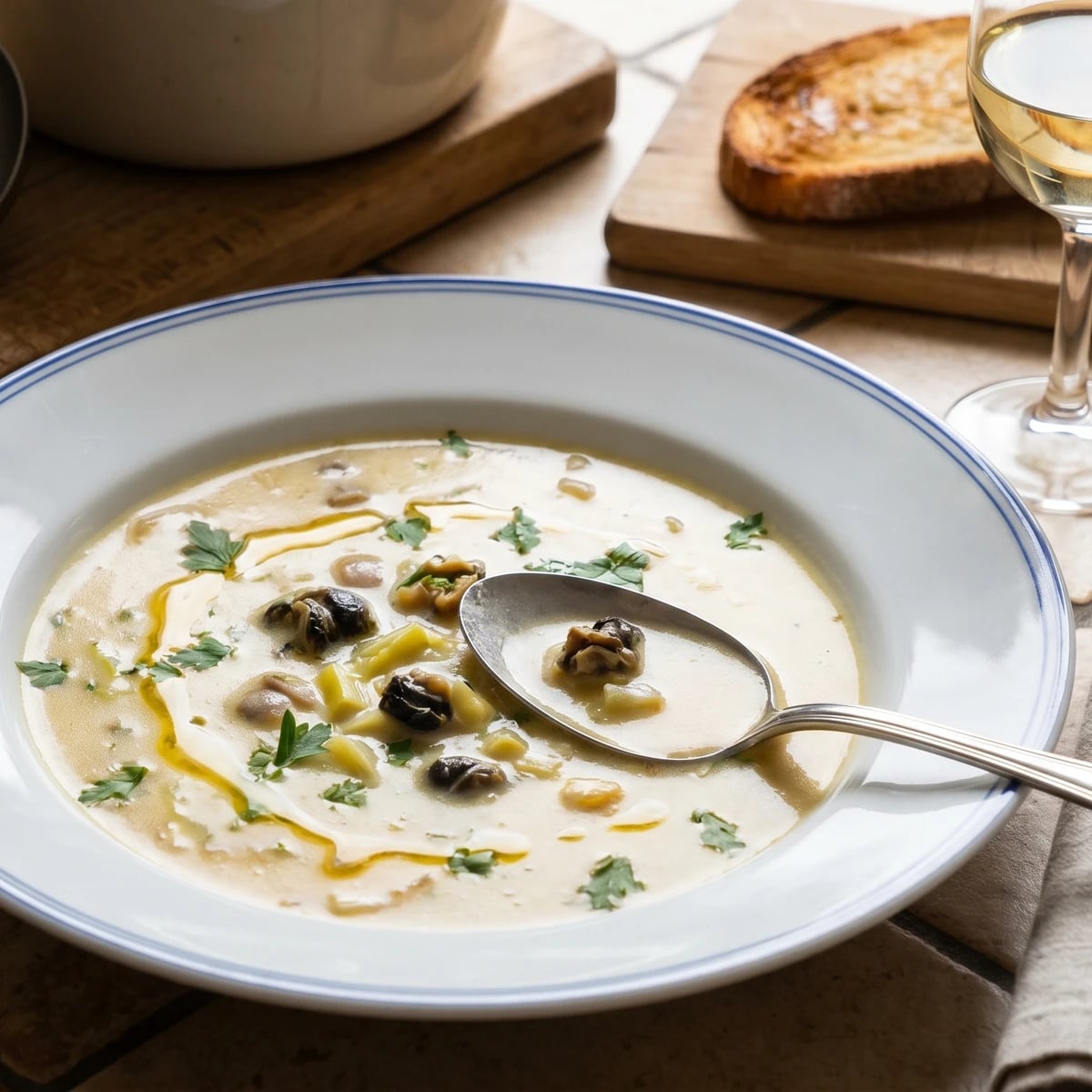
Baden's vineyard soup is won on gentle heat: white wine reduced before the cream, snails warmed just enough to stay tender, and a bowl that tastes of the Rhine border kitchen.
Badische Schneckensuppe belongs to Baden, the wine country along the Rhine where the kitchen looks across to Alsace without forgetting its own pot. It sits at the front of a feast meal and on the old fasting table, Lent into spring, a small bowl before the roast or before fish, not a tureen to fill the room. Snails in wine and cream sound delicate, and they are, but this is still Hausmannskost, honest home cooking, if your stock has bones behind it.
Everywhere argues. Baden keeps it pale with white wine, shallot, leek, garlic, and cream; Swabia makes its snail soups earthier, often with stronger stock and more herbs; the north would rather give you fish soup and rye. Im Norden anders, im Süden anders. Das ist kein Bierzelt, and thank heaven for that.
The rule is heat control at the end. Reduce the wine before dairy goes in, then temper the cream and egg yolk and never let the soup boil once the snails return. The wine needs its raw edge cooked off while the pot is still lean; the yolk thickens only below the boil, and the snails stay tender only if you stop bullying them.
Plain prepared snail meat is an ingredient, especially now that wild Weinbergschnecken, vineyard snails, are protected. A ready cream sauce is not. Nicht aus dem Glas. Keep the leek tops and parsley stems for stock, because Weggeworfen wird nichts. Bring the bowl to the table pale gold, green with parsley, and sharp enough from the wine to wake everyone up.
Vineyard snails, Weinbergschnecken (Helix pomatia), were part of south-west German fasting cookery by the late Middle Ages, when monastery and Catholic household kitchens treated them as permissible on meatless days because they were not livestock. In the 18th and 19th centuries, Baden, Württemberg, and the Swabian Alb had organised snail gathering and snail gardens; purged snails travelled through Ulm and Strasbourg toward Paris and Vienna, tying the German south-west to the French escargot trade. The modern legal detail matters at the stove: Helix pomatia is protected in Germany today, so a Baden home cook buys farmed, prepared snails.
Quantity
24 pieces, about 120g drained
rinsed if briny and patted dry
Quantity
35g
divided
Quantity
2
finely diced
Quantity
1
white and pale green parts only, finely sliced and washed
Quantity
1
minced
Quantity
1 tablespoon
Quantity
150ml
Gutedel or Weissburgunder
Quantity
750ml
warm
Quantity
1 small
Quantity
1 sprig
Quantity
150ml
Quantity
1
Quantity
1 to 2 teaspoons
Quantity
2 tablespoons
finely chopped
Quantity
to taste
Quantity
4 small slices
| Ingredient | Quantity |
|---|---|
| cooked and cleaned vineyard snails (Weinbergschnecken)rinsed if briny and patted dry | 24 pieces, about 120g drained |
| unsalted butterdivided | 35g |
| shallotsfinely diced | 2 |
| small leekwhite and pale green parts only, finely sliced and washed | 1 |
| garlic cloveminced | 1 |
| plain flour | 1 tablespoon |
| dry Baden white wineGutedel or Weissburgunder | 150ml |
| light veal or chicken stockwarm | 750ml |
| bay leaf | 1 small |
| thyme | 1 sprig |
| cream | 150ml |
| egg yolk | 1 |
| lemon juice | 1 to 2 teaspoons |
| flat-leaf parsleyfinely chopped | 2 tablespoons |
| fine salt, white pepper, and nutmeg | to taste |
| toasted Bauernbrot (farmhouse bread) (optional) | 4 small slices |
Drain the snails, rinse them once if they were packed in strong brine, and pat them dry. Cut large snails in half and leave small ones whole. They must go into butter dry, because water in the pan dulls the wine and carries the packing salt straight into the soup.
Set a 2.5 to 3 litre heavy saucepan over low-medium heat. Melt 25g of the butter, add the shallots, leek, and a small pinch of salt, and cook about 8 minutes until the vegetables are soft and glassy with no brown edges. Low heat matters: this is a pale Baden wine and cream soup, and browned leek gives it an onion-gravy taste.
Add the garlic and snails and turn them gently in the butter for 2 minutes, just until the garlic smells sweet and the snails look glossy. Lift the snails to a bowl with a slotted spoon, leaving the vegetables and butter behind. The snails are already cooked; they are here to perfume the fat, not to be boiled tough from the start.
Sprinkle the flour over the vegetables and stir for 1 minute so the flour cooks in the butter and loses its raw paste taste. Pour in the wine, scraping the bottom of the pan, and simmer until it has reduced by half and smells fruity instead of sharp. The wine must lose its raw edge before the dairy arrives, because acid and alcohol stay harsh when trapped under cream.
Whisk in the warm stock a ladle at a time so the flour loosens smoothly instead of clumping. Add the bay leaf and thyme, bring the soup only to a quiet tremble, and simmer for 18 minutes. Keep it below a rolling boil; rough heat muddies a flour-thickened broth and makes the leek taste bitter.
Remove the bay leaf and thyme, return the snails to the pot, and heat them gently for 3 minutes. Whisk the cream and egg yolk in a bowl, whisk in one ladle of hot broth, then stir the mixture back into the pot off the heat. Set it over the lowest heat until it reaches 70C to 75C or lightly coats a spoon, never boiling. A boil scrambles the yolk and tightens the snails. Finish with the remaining 10g butter, lemon juice, parsley, salt, white pepper, and nutmeg. Würzen, Fett, Salz zum Schluss. Ladle into shallow bowls and serve with toasted Bauernbrot.
1 serving (about 340g)
Culinary guides, cultural storytelling, and the editorial depth that makes cooking meaningful.
Discover Culinary Explorer
Chef Klaus
The Allgäu's Alpine cheese soup works only if the Bergkäse melts gently off the heat, where it turns smooth instead of stringy.

Chef Klaus
A firm egg dough, grated into tiny crumbs and cooked in clear broth: Allgäu kitchen thrift, warm in the bowl, and finished only when the Riebele keep their bite.

Chef Klaus
A bowl of Baden carnival: dried beans, smoked bacon, potato, and the patience to cook them soft before the Narren come in hungry.

Chef Klaus
Baden's quiet green-spelt soup lives on the smoky grain, not tricks: toast it in butter first, then simmer gently and finish off the boil with cream and yolk.