
Chef Klaus
Allgäuer Käsesuppe
The Allgäu's Alpine cheese soup works only if the Bergkäse melts gently off the heat, where it turns smooth instead of stringy.
A cooking platform built around craft, culture, and the stories behind what we eat.
Created by
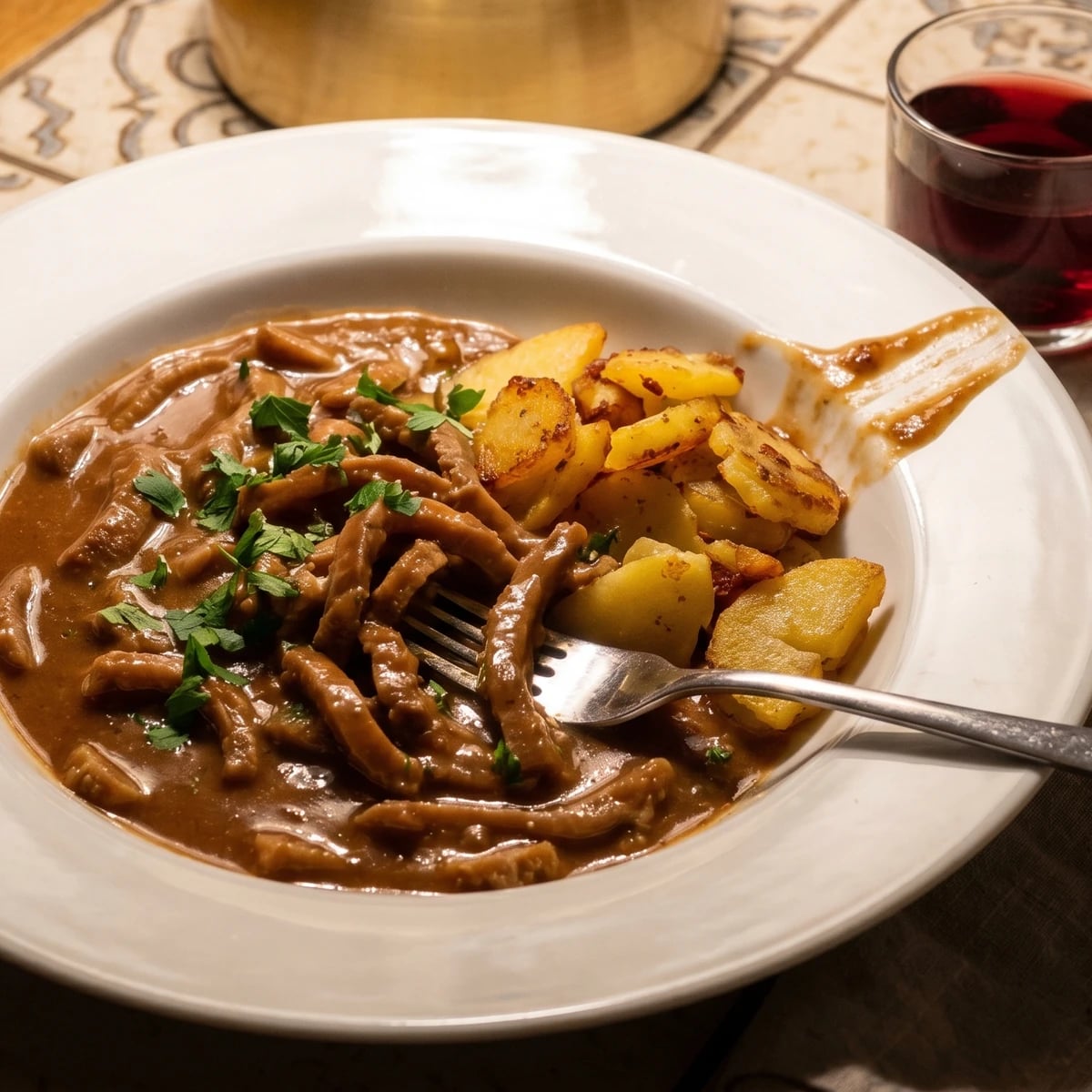
Swabian sour tripe lives or dies by the browned flour: take it dark enough for nutty depth, then loosen it slowly so the sauce turns glossy, sour, and clean.
Saure Kutteln are Swabian table food, old Arme-Leute food, poor-people cooking, and still one of the clearest proofs that Weggeworfen wird nichts, nothing gets thrown away. The tripe is already cleaned and cooked by the butcher, then cut into strips and carried by a sour brown sauce, vinegar, onion, broth, and a good splash of Trollinger if the bottle is open. Set it down with Bratkartoffeln, fried potatoes, and nobody needs a speech.
Swabia keeps the dish sharp and brown, with a flour roux cooked properly dark before the liquid goes in. Baden often leans more on wine. In Franconia and Bavaria you find sour offal too, but the pot changes, sometimes lung, sometimes creamier, sometimes less vinegar. Im Norden anders, im Süden anders. This is not one national offal stew with a flag stuck in it.
The deciding technique is the roux. Cook the flour in fat until it smells nutty and turns chestnut brown, because pale flour gives you paste and burnt flour gives you bitterness. Then add the liquid slowly, whisking hard, so every spoon of flour drinks before the next splash comes in. That is the difference between a smooth sour sauce and a pot of lumps. Nicht aus dem Glas.
The tripe only needs gentle heat after that. It is already cooked, so a hard boil tightens it and makes it squeak under the teeth. Runter mit der Temperatur, let it move quietly until the strips are soft and the vinegar has settled into the sauce. Das braucht seine Zeit, but not all night.
Kutteln, beef tripe, belonged to the southern German offal kitchen because slaughter left more than steaks, and town markets in Swabia sold the cleaned stomach alongside liver, lung, heart, and blood for households that wasted nothing. The sour sauce follows an old central European habit of using vinegar and wine to brighten cheaper cuts and preserved foods, especially before refrigeration made fresh meat ordinary all week. In Baden-Württemberg the dish became especially tied to Swabian inns and home kitchens, where Trollinger, the local light red wine, often sharpens the sauce beside vinegar.
Quantity
800g
cut into thin strips
Quantity
2 tablespoons
Quantity
2
finely sliced
Quantity
1
finely diced
Quantity
1 small piece
finely diced
Quantity
2 tablespoons
Quantity
3 tablespoons
Quantity
250ml
Quantity
700ml
Quantity
2
Quantity
4
lightly crushed
Quantity
1 teaspoon
Quantity
3 tablespoons, plus more to finish
Quantity
1 teaspoon
Quantity
to taste
Quantity
1 tablespoon
Quantity
2 tablespoons
chopped
Quantity
to serve
| Ingredient | Quantity |
|---|---|
| cleaned, pre-cooked beef tripecut into thin strips | 800g |
| lard or neutral oil | 2 tablespoons |
| onionsfinely sliced | 2 |
| carrotfinely diced | 1 |
| celeriacfinely diced | 1 small piece |
| tomato paste | 2 tablespoons |
| plain flour | 3 tablespoons |
| Trollinger or another light dry red wine | 250ml |
| beef stock | 700ml |
| bay leaves | 2 |
| juniper berrieslightly crushed | 4 |
| sweet paprika | 1 teaspoon |
| red wine vinegar | 3 tablespoons, plus more to finish |
| sugar | 1 teaspoon |
| salt and freshly ground black pepper | to taste |
| cold butter | 1 tablespoon |
| flat-leaf parsley (optional)chopped | 2 tablespoons |
| Bratkartoffeln, fried potatoes | to serve |
Rinse the pre-cooked tripe under cold water and drain it well, then pat it dry before it goes near the pot. Water clinging to the strips thins the sauce before it has built any body, and the tripe should warm in the gravy, not leak into it.
Heat the lard in a heavy pot over medium heat, add the onions, carrot, and celeriac, and cook until the onions take colour at the edges. Browning the vegetables gives the sour sauce a base before the vinegar arrives; without that sweetness, the pot tastes thin and sharp.
Stir in the tomato paste and cook it until it darkens, then sprinkle in the flour and keep stirring until the flour turns chestnut brown and smells nutty. This is the step. Pale flour tastes pasty, burnt flour tastes bitter, and the right brown flour gives the sauce its old Swabian backbone.
Pour in the Trollinger a little at a time, whisking hard after each splash, then add the stock the same way until the sauce is smooth. Flour thickens cleanly only when it drinks the liquid slowly; drown it at once and you build lumps that no amount of stirring will make proud.
Add the bay leaves, juniper, paprika, vinegar, sugar, and a firm pinch of salt, then bring the sauce just to a quiet bubble. Add the tripe, cover the pot partly, and simmer gently for 45 to 60 minutes, stirring now and then. Hard boiling tightens already-cooked tripe; quiet heat lets it soften and take the sour sauce all the way through.
Taste the sauce and balance it with more vinegar, salt, pepper, and the cold butter. Würzen, Fett, Salz zum Schluss: the vinegar is sharper when it is fresh, the butter rounds the roux, and the final salt only makes sense once the sauce has reduced. Scatter parsley if you use it, then serve with Bratkartoffeln.
1 serving (about 520g)
Culinary guides, cultural storytelling, and the editorial depth that makes cooking meaningful.
Discover Culinary Explorer
Chef Klaus
The Allgäu's Alpine cheese soup works only if the Bergkäse melts gently off the heat, where it turns smooth instead of stringy.

Chef Klaus
A firm egg dough, grated into tiny crumbs and cooked in clear broth: Allgäu kitchen thrift, warm in the bowl, and finished only when the Riebele keep their bite.

Chef Klaus
A bowl of Baden carnival: dried beans, smoked bacon, potato, and the patience to cook them soft before the Narren come in hungry.

Chef Klaus
Baden's quiet green-spelt soup lives on the smoky grain, not tricks: toast it in butter first, then simmer gently and finish off the boil with cream and yolk.