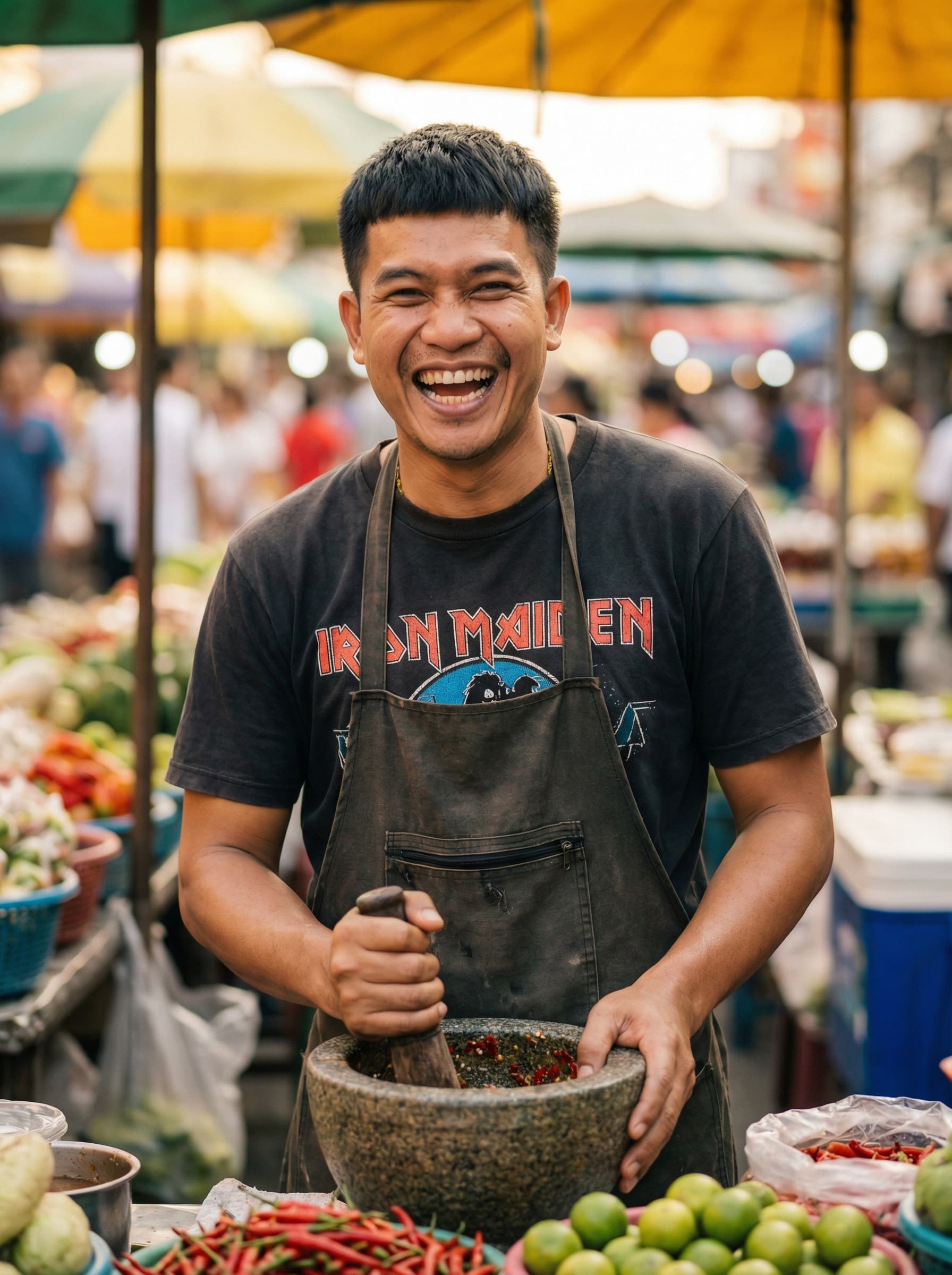
Chef Fai
Green Mango Pounded Salad (Tam Mamuang)
Green mango brings its own acid to the mortar before the lime even arrives. Sour on sour. The four pillars still hold, but here the sour pillar runs the show. Tam at its sharpest.

Updated March 2, 2026
The mortar tradition at its deepest. Thirteen som tam and pounded salad variations from one technique: pound garlic and chilies, add the main ingredient, bruise don't pulverize, dress with the governing pillars. Krok ก่อน.
A cooking platform built around craft, culture, and the stories behind what we eat.

Chef Fai
Green mango brings its own acid to the mortar before the lime even arrives. Sour on sour. The four pillars still hold, but here the sour pillar runs the show. Tam at its sharpest.

Chef Fai
The same mortar, the same four pillars, the same technique. Swap green papaya for ripe tropical fruit and the system still holds: fish sauce for salt, palm sugar for sweet, lime for sour, chili for heat. Tam ponlamai is the proof.

Chef Fai
The forager's tam. Whatever the forest and garden give you goes into the krok: eggplant, bamboo, herbs, snails. The four pillars hold the chaos together. Isan's wildest pounded salad, and the proof that principles work even without a recipe.

Chef Fai
The stall meal that taught me Thai food is a system: pounded papaya dressed by the four pillars, fried mackerel flaked in by hand, sticky rice on the side. One plate, every principle.

Chef Fai
Fresh corn kernels pounded in the krok din, the natural sweetness of the corn doing half the four-pillar work. Less palm sugar, more lime. The tam technique carries anything, and seasonal corn might be its sweetest proof.

Chef Fai
Tam is a technique, not a recipe for papaya. Young jackfruit proves it: boiled, shredded, pounded in the krok din until the fibers drink the dressing whole. The four pillars hold no matter what goes in the mortar.

Chef Fai
This is the som tam Bangkok doesn't want to talk about. Pla ra gives it a funk that no amount of fish sauce can replicate. Isan doesn't apologize for fermented fish. Isan puts it in the mortar and pounds harder.

Chef Fai
Same mortar, same technique, same four pillars. Swap the papaya for chewy fermented rice noodles and you've got tam sua: proof that the system works with any ingredient you throw in the krok.

Chef Fai
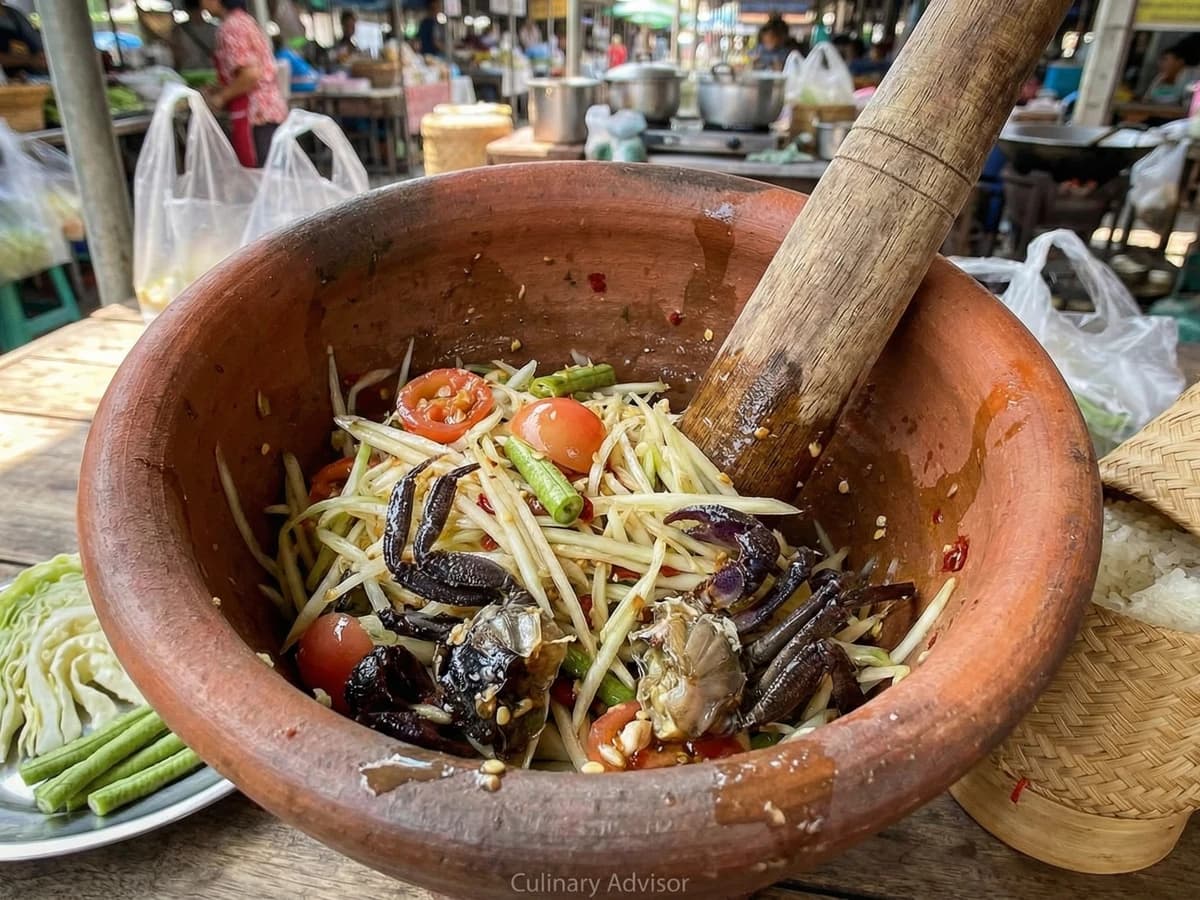
Salted field crabs crushed in the krok din, shell and all, releasing brine into green papaya dressed with fish sauce, lime, and just enough palm sugar to know it's there. This is Isan's mortar, not Central Thailand's.

Chef Fai
Every strand of papaya bruised in the krok din, dressed with the four pillars in real time: nam pla for salt, nam tan pip for sweet, manao for sour, prik for heat. The Central Thai version softens the punch with peanuts and dried shrimp. Same system, different ratio.

Chef Fai
Shattered crispy pork belly meets the four pillars in a clay mortar. Fat is the fifth element nobody talks about, the one that carries every other flavor to your tongue and refuses to let go.

Chef Fai
Same mortar, same four pillars, lighter punch. Cucumber bruised just enough to drink the dressing, sharp with lime, salty with nam pla, barely sweet. The tam you make when Bangkok is 38 degrees and papaya feels too heavy.

Chef Fai
This is the som tam that som tam vendors eat for themselves. Field crab and pla ra together in the krok din, the full Isan: no peanuts, no dried shrimp, no Central Thai sweetness. Just funk, sour, and fire.
Culinary guides, cultural storytelling, and the editorial depth that makes cooking meaningful.
Discover Culinary Explorer