
Chef Fai
Isan Beef Larb (Larb Nua)
No sugar. That's the rule. Isan larb strips Thai cuisine down to three pillars: nam pla for salt, manao for sour, prik for heat, bound by the smoky crunch of freshly pounded khao khua. The absence defines the dish.
A cooking platform built around craft, culture, and the stories behind what we eat.
Created by
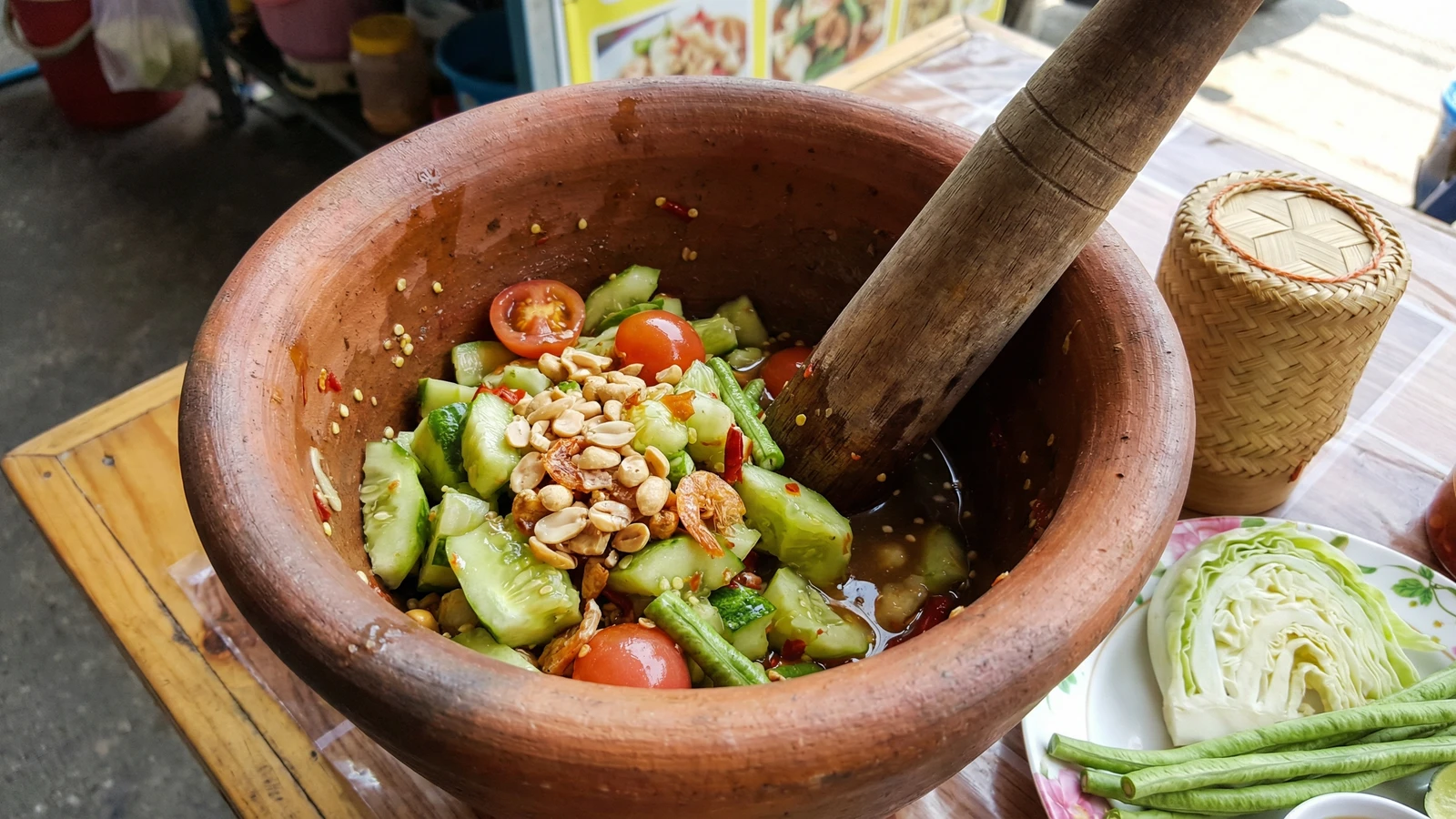
Same mortar, same four pillars, lighter punch. Cucumber bruised just enough to drink the dressing, sharp with lime, salty with nam pla, barely sweet. The tam you make when Bangkok is 38 degrees and papaya feels too heavy.
Same krok din. Same wooden pestle. Same garlic-and-chili foundation. Different ingredient. That's the tam system at work.
Ajarn always said that once you understand the tam technique, you can pound anything. Green papaya, corn, green mango, glass noodles, fruit, cucumber. The method doesn't change. The governing principle doesn't change. Garlic and chilies first. Long beans and tomatoes to build the body. Then your main ingredient. Bruise, dress, taste, adjust. Fish sauce for salt. Palm sugar for sweet. Lime for sour. Chili for heat. That's the law. The ingredient is the variable. The system is the constant.
Tam taeng is what you make when it's 38 degrees in Bangkok, the air is sitting on your chest like a wet towel, and the thought of heavy food makes you want to lie down. Cucumber is cooling. It's mostly water. But when you bruise it in the krok, the cell walls crack open and the flesh becomes a sponge for the dressing. That's the science: a food processor cuts the cells cleanly, and the dressing sits on the surface. A mortar ruptures the cells unevenly, creating pockets that trap the fish sauce and lime. Same principle as som tam, same physics, different texture.
My mother would make tam taeng for herself during the hot season. She'd pound som tam for customers all day, hundreds of servings, but when she sat down for her own meal between the lunch and dinner rushes, it was tam taeng with extra chilies and a basket of khao niew. Lighter, faster, refreshing. The vendor's tam. She didn't need the spectacle of green papaya flying out of the mortar. She needed something cold and sharp and done in two minutes. That's tam taeng.
Tam taeng is part of the broader tam tradition that originated in Isan (northeastern Thailand) and Laos, where the clay mortar (krok din) is as essential as the rice basket. While som tam gets international fame, tam taeng is the everyday version eaten across Isan and Central Thailand during the hot season (March to May). Cucumber (taeng kwa) is one of the oldest cultivated vegetables in mainland Southeast Asia, and its use in pounded salads likely predates the arrival of papaya, which was introduced from the Americas via Portuguese traders in the 16th or 17th century.
Quantity
2 small or 1 medium
halved lengthwise, then cut into rough 1-inch chunks
Quantity
3 cloves
Quantity
3
Quantity
2 tablespoons
Quantity
1 tablespoon
Quantity
5
halved
Quantity
2
cut into 1-inch pieces
Quantity
2 tablespoons
Quantity
1 tablespoon
Quantity
3 tablespoons (about 2 limes)
| Ingredient | Quantity |
|---|---|
| Thai cucumbers (taeng kwa) or English cucumberhalved lengthwise, then cut into rough 1-inch chunks | 2 small or 1 medium |
| garlic | 3 cloves |
| bird's eye chilies (prik khi nu) | 3 |
| dried shrimp (goong haeng) | 2 tablespoons |
| unsalted roasted peanuts | 1 tablespoon |
| cherry tomatoeshalved | 5 |
| long beans (thua fak yao)cut into 1-inch pieces | 2 |
| fish sauce (nam pla) | 2 tablespoons |
| palm sugar (nam tan pip) | 1 tablespoon |
| lime juice (nam manao) | 3 tablespoons (about 2 limes) |
In your clay mortar (krok din) with wooden pestle, pound the garlic and chilies into a rough, chunky paste. Not smooth. You want the garlic crushed and the chilies split open, seeds exposed, oils released. Three, four firm strikes. The aroma hits you before you even look down. That's how you know you're in the right place.
Add the long bean pieces to the mortar. Give them a few firm strikes to crack and bruise them. They should split slightly and soften, releasing a green, grassy aroma. Don't flatten them. Bruised, not broken.
Add the dried shrimp and peanuts. A few light pounds to break them open. The peanuts should crack into halves and quarters. The dried shrimp should split so their briny, concentrated flavor starts seeping into the mortar. You're building layers of flavor before the cucumber even enters.
Add the palm sugar, fish sauce, and lime juice. Stir with the pestle to dissolve the sugar into the liquid. Taste it now. This is your dressing: salty from nam pla, sweet from nam tan pip, sour from manao. The balance leans sour and salty here. Tam taeng is lighter than som tam Thai, so the palm sugar stays restrained. One tablespoon, maybe less. The cucumber is already mild. The dressing needs to be sharp enough to wake it up.
Add the cucumber chunks and halved tomatoes to the mortar. Now the real work. Strike down with the pestle, toss and fold with a long spoon in your other hand. You're bruising the cucumber so the flesh cracks and absorbs the dressing while the skin stays intact enough to hold its shape. The cucumber should look battered but not demolished. Some pieces split open, some barely cracked, the juice mingling with the dressing. Eight to ten strikes. That's all. Overwork it and you get cucumber soup. The tomatoes should burst slightly, their juice joining the dressing.
Taste a piece of cucumber with some dressing clinging to it. It should be sour first, salty second, with a clean chili heat that blooms after. The sweetness should be barely there, just enough to round the edges. If it's flat, more fish sauce. If it's too sharp, a tiny pinch more sugar. Serve it straight from the mortar with sticky rice (khao niew) and raw vegetables. Eat it now. Not in ten minutes. Now. Tam taeng releases water as it sits. In five minutes it's a puddle. In ten, it's gone.
1 serving (about 270g)
Culinary guides, cultural storytelling, and the editorial depth that makes cooking meaningful.
Discover Culinary ExplorerChef Fai
No sugar. That's the rule. Isan larb strips Thai cuisine down to three pillars: nam pla for salt, manao for sour, prik for heat, bound by the smoky crunch of freshly pounded khao khua. The absence defines the dish.

Chef Fai
No sugar. That's the line between Isan and Central Thai larb. Grilled catfish flaked while warm, dressed with nam pla, manao, khao khua, prik pon, and a storm of fresh herbs. The plateau on a plate.

Chef Fai
No sugar. That's the rule. Isan larb strips Thai cuisine down to three pillars: nam pla for salt, manao for sour, prik for heat, with khao khua tying it together in a way nothing else can.

Chef Fai
Duck brings gamey depth to the Isan larb formula. No sugar. Lime, fish sauce, khao khua, prik pon, and a wall of fresh herbs. This is the celebration table standard, and the governing rule is restraint.