Chef Fai
Sun-Dried Pork (Moo Daet Diew)
Garlic, cilantro root, white pepper, fish sauce, palm sugar. Marinate. Dry under one sun. Fry until the surface shatters and the inside stays chewy. That's Isan preservation science on a plate.

Updated March 2, 2026
Fire and fermentation on the Isan plateau. Fourteen dishes spanning charcoal-grilled meats with jaew dipping sauce, fermented sausages where preservation creates flavor, sun-dried protein, and one raw preparation that shows the other end of the spectrum.
A cooking platform built around craft, culture, and the stories behind what we eat.

Chef Fai
Garlic, cilantro root, white pepper, fish sauce, palm sugar. Marinate. Dry under one sun. Fry until the surface shatters and the inside stays chewy. That's Isan preservation science on a plate.

Chef Fai
Isan fermentation at its most direct: whole fish packed with garlic and cooked rice, left for lactic acid bacteria to create sourness, then fried until the skin shatters golden. The acid isn't from lime. It's from time and biology.

Chef Fai
Sourness without lime. Sticky rice feeds the bacteria, garlic guards the gate, time does the cooking. Lactic acid fermentation is Isan's oldest flavor principle, and the charcoal grill finishes what biology started.

Chef Fai
Four pillars threaded onto a bamboo skewer, kissed by charcoal smoke. The Isan grill paste governs this marinade: garlic, cilantro root, white pepper, nam pla. Sticky rice. Jaew. That's breakfast.

Chef Fai
No fire. No wok. No mortar. Bacteria are the cook. Cooked rice feeds lactobacillus, lactic acid drops the pH, and raw pork becomes naem: sour, garlicky, and alive with the science Isan grandmothers understood before anyone called it science.

Chef Fai
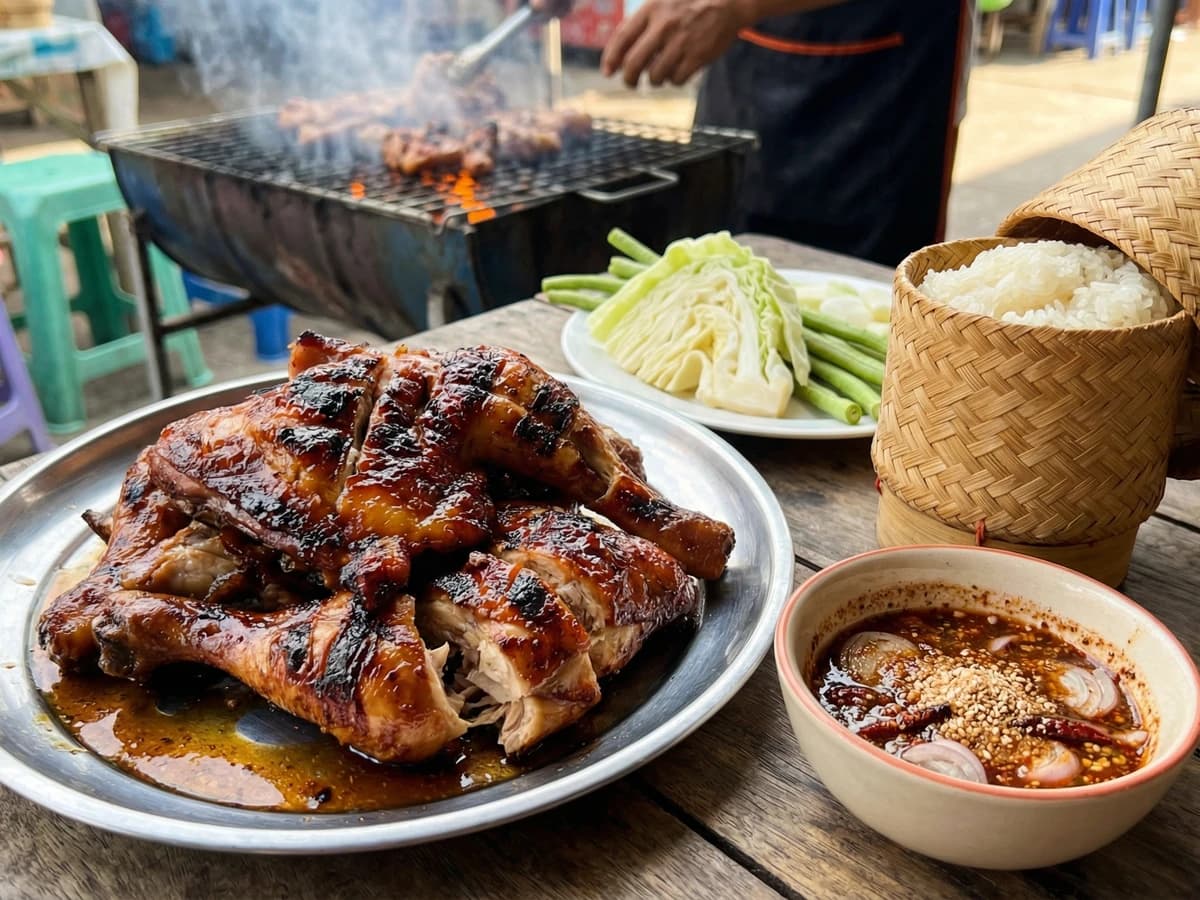
Garlic, cilantro root, white pepper, fish sauce. That's the Isan grill marinade, four ingredients governing every piece of meat that hits charcoal on the plateau. The jaew beside it isn't a condiment. It's the other half of the dish.

Chef Fai
Pork neck marinated in the Isan grill paste (garlic, cilantro root, white pepper, fish sauce), seared over charcoal until the fat renders and the edges blacken. Jaew is not a condiment. It's the other half of the dish.

Chef Fai
Korat's favorite crossover: bouncy grilled pork balls, rice paper, a mountain of herbs, and a peanut dipping sauce that hits all four pillars. This is Isan hospitality on a table, not a plate.

Chef Fai
The Isan grill paste is four ingredients: garlic, cilantro root, white pepper, nam pla. That's the formula for every grilled meat on the Isan highway. Charcoal is the only heat source. Jaew is not optional. Sticky rice or nothing.

Chef Fai
A whole fish buried in salt, grilled low and slow over charcoal until the crust cracks open to reveal flesh so moist it falls from the bone. The nam jim seafood dipping sauce carries all four pillars. The fish just needs fire and patience.

Chef Fai
Whole river prawns over white-hot charcoal, shells blistered and cracked, orange head fat melting into sweet flesh. The jaew on the side delivers the four pillars. The fire does the rest.

Chef Fai
Live shrimp, lime juice, fish sauce, toasted rice powder. They jump because the acid hits them. This is Isan at its most raw, most honest, most alive. The four pillars with nothing to hide behind.

Chef Fai
Every grilled dish in Isan answers to this dip. Roasted dried chilies, nam pla, manao, khao khua, and shallots: the four pillars in a condiment that's structural, not optional.

Chef Fai
Sticky rice pressed onto bamboo skewers, brushed with egg and palm sugar, charred over low coals until golden and crackly outside, soft and chewy inside. Even the starch gets the fire treatment in Isan.
Culinary guides, cultural storytelling, and the editorial depth that makes cooking meaningful.
Discover Culinary Explorer