Chef Fai
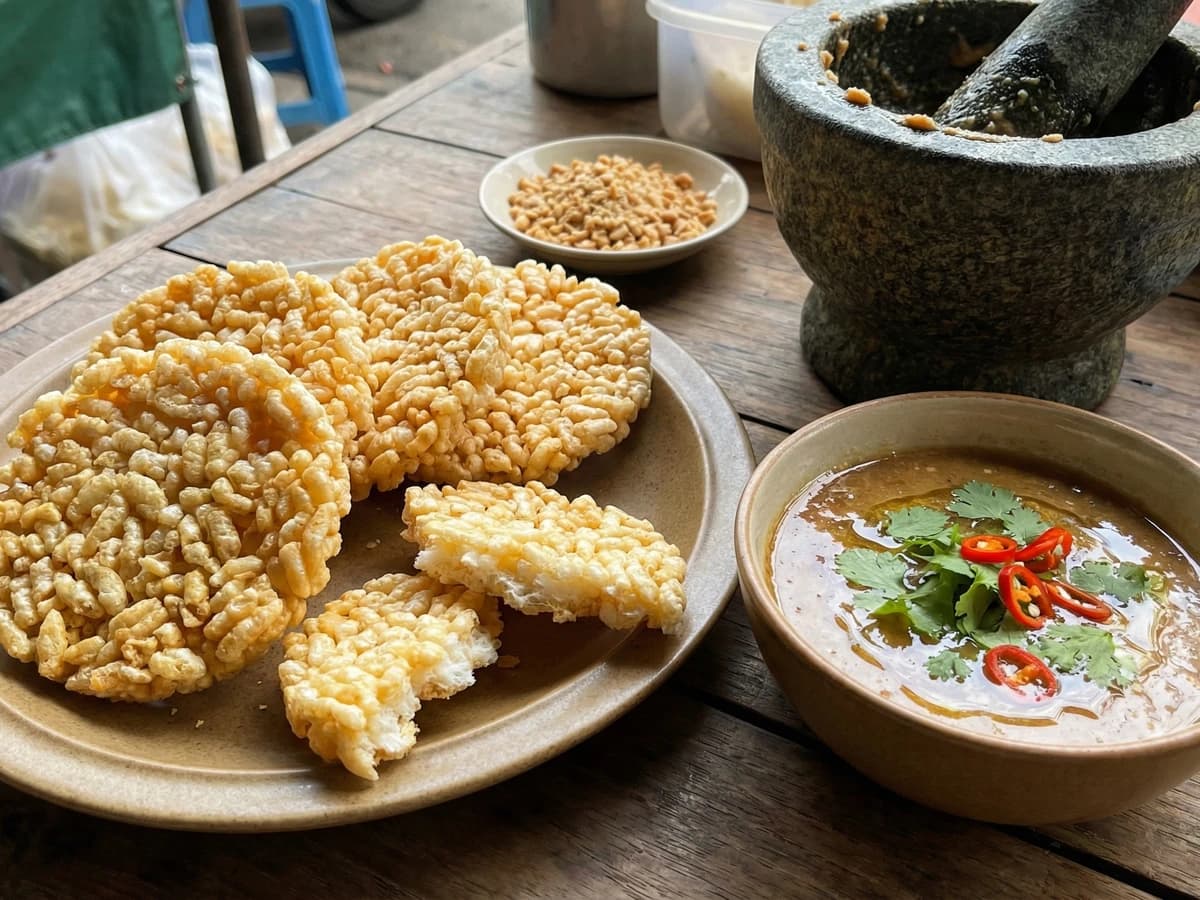
Crispy Rice with Coconut Dip (Khao Tang Na Tang)
The kreung tam doesn't rest, not even for a snack. Pounded paste cracked into coconut cream, spooned over golden rice that shatters on contact. Four pillars in every bite.
A cooking platform built around craft, culture, and the stories behind what we eat.
Created by
No fire. No wok. No mortar. Bacteria are the cook. Cooked rice feeds lactobacillus, lactic acid drops the pH, and raw pork becomes naem: sour, garlicky, and alive with the science Isan grandmothers understood before anyone called it science.
Fermentation is cooking without fire. That's the principle. Thai cuisine doesn't just use heat to transform ingredients. It uses time, salt, and microbiology. Naem is the purest expression of that idea: raw pork mixed with garlic, salt, and cooked sticky rice, wrapped tight in banana leaf, and left at room temperature for two to three days. No flame touches it. No wok. No mortar. Bacteria do the work.
Here's the science Ajarn drilled into me. The cooked sticky rice provides simple sugars. Lactobacillus bacteria, already present on the garlic and in the environment, feed on those sugars and produce lactic acid. That acid drops the pH of the pork below 4.6, which is the threshold where pathogenic bacteria can't survive. The pork doesn't rot. It ferments. It becomes sour, tangy, and safe to eat raw. The same principle that gives you yogurt, sauerkraut, and kimchi. Isan figured this out centuries before anyone wrote a microbiology textbook.
The sourness in naem is the same pillar as the lime in your som tam or the tamarind in your pad thai. Sour is sour. But in naem, you're not squeezing a fruit. You're growing the acid. The climate of Isan, hot, humid, 30 to 35 degrees Celsius, is the engine. That temperature is the sweet spot for lactic acid bacteria. This is tropical food science. You can't make naem properly in a cold country without help. The tropics are built for fermentation.
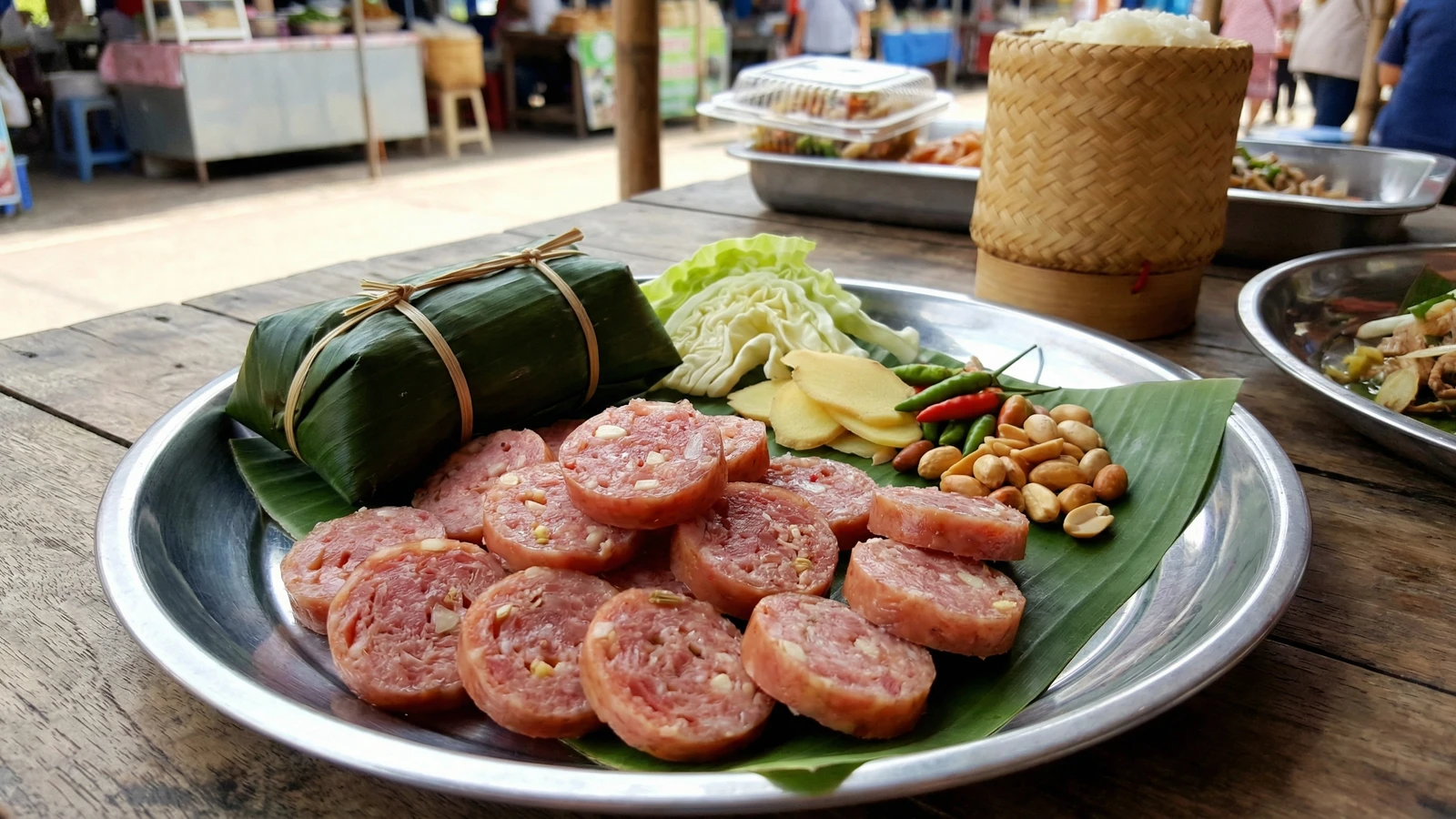
I need to be straight with you about one thing. Naem is eaten raw. That means your pork must be impeccably fresh. I'm talking same-day from a butcher you trust, not a supermarket tray that's been sitting under fluorescent lights for three days. If you're not confident in your pork source, fry the naem after fermentation. It's delicious fried. Crispy outside, sour inside. But the traditional way is raw, sliced, eaten with fresh ginger, roasted peanuts, chilies, and cabbage. That's the Isan way. That's the real thing.
Naem (แหนม) belongs to a family of lactic-acid-fermented meat products found across mainland Southeast Asia, with close relatives in Laos (som moo), Myanmar, and Vietnam (nem chua). The technique predates refrigeration and represents one of the earliest protein preservation methods in tropical climates, relying on the region's ambient heat to drive rapid fermentation. Naem is most strongly associated with Thailand's Isan (northeastern) region and the northern provinces, particularly Chiang Mai, where "naem Chiang Mai" has become a branded regional product sold at bus stations and highway rest stops across the country.
Quantity
500g
hand-minced or coarsely ground
Quantity
200g
boiled until tender, sliced into thin strips
Quantity
100g
cooled to room temperature
Quantity
1 head (12-15 cloves)
finely minced
Quantity
1½ tablespoons
Quantity
10-15
whole
Quantity
about 20 squares
cut into 6-inch squares, wilted over flame
Quantity
as needed
Quantity
as needed
| Ingredient | Quantity |
|---|---|
| fresh pork loin or shoulderhand-minced or coarsely ground | 500g |
| pork skin (nang moo)boiled until tender, sliced into thin strips | 200g |
| cooked sticky rice (khao niew)cooled to room temperature | 100g |
| garlicfinely minced | 1 head (12-15 cloves) |
| fine sea salt | 1½ tablespoons |
| bird's eye chilies (prik khi nu)whole | 10-15 |
| banana leavescut into 6-inch squares, wilted over flame | about 20 squares |
| kitchen string or rubber bands | as needed |
| plastic wrap (optional) | as needed |
Place the pork skin in a pot of water and bring to a boil. Simmer until the skin is tender enough to cut easily with a knife, about 30-40 minutes. Drain, let it cool, then slice into thin strips about 2 inches long and 1/4 inch wide. The skin isn't filler. It gives naem its signature chew. Without it, you have seasoned ground pork. With it, you have a sausage with structure.
If you're starting with a whole piece of pork, mince it by hand with a cleaver. Chop, scrape, fold, chop again. You want a coarse mince, not a paste. A meat grinder on a coarse setting works too, but hand-minced pork has a more varied texture that ferments more evenly. The pork should have some fat in it. Not a lot. Maybe 15-20% fat. Pure lean pork makes dry, crumbly naem. Fat keeps it moist and helps bind the mixture.
In a large bowl, combine the minced pork, garlic, salt, and cooked sticky rice. Mix by hand. Use a kneading motion, squeezing the mixture through your fingers, folding it over, pressing it together. You need everything evenly distributed: every piece of pork should be touching garlic and rice. The rice is the fuel for fermentation. The garlic provides flavor and antimicrobial compounds that help the right bacteria win. The salt controls moisture and slows down unwanted microbes. This is the formula. Pork, rice, garlic, salt. Four ingredients. That's it.
Fold in the sliced pork skin strips. Mix gently but thoroughly. The skin should be distributed evenly throughout the meat mixture. Don't overwork it at this stage. You want the strips intact, not shredded.
Take a wilted banana leaf square and place about 2 tablespoons of the pork mixture in the center. Tuck one or two whole bird's eye chilies (prik khi nu) against the meat. Fold the banana leaf tightly around the mixture, pressing out as much air as possible. Air is the enemy. Lactic acid fermentation is anaerobic, meaning the bacteria you want thrive without oxygen. The tighter you wrap, the better the fermentation. Secure with kitchen string or a rubber band. Repeat until all the mixture is wrapped. If you want extra insurance against air, wrap each banana leaf packet in a layer of plastic wrap first, then the banana leaf over it.
Place the wrapped naem packets in a single layer in a tray or container at room temperature. In Thailand's climate (30-35°C), fermentation takes 2-3 days. If you're in a cooler climate, place them in the warmest spot in your kitchen, near the oven, on top of the refrigerator, or in an oven with just the light on (which maintains about 30-32°C). The naem is ready when you unwrap a test packet and the pork smells clean and sour, like good yogurt, the color has turned from raw pink to a slightly deeper pinkish-red, and the texture is firm, not mushy. Taste it. It should be tangy and garlicky with a pleasant sourness. If it smells off, rotten, or ammonia-like, discard it. Good fermentation smells sour. Bad fermentation smells foul. Trust your nose.
For the traditional Isan way: unwrap the naem, slice into thick rounds, and arrange on a plate with fresh ginger sliced thin, roasted peanuts, whole bird's eye chilies, and raw cabbage leaves. Each bite is a piece of naem, a sliver of ginger, a peanut or two, eaten together. The ginger cuts through the sourness. The peanut adds crunch. The chili adds fire. That's the balance. For fried naem: slice and pan-fry in a little oil until the edges are golden and crispy. The inside stays sour and soft, the outside gets a crust. Both versions are correct. The raw way is bolder. The fried way is more accessible.
1 serving (about 100g)
Culinary guides, cultural storytelling, and the editorial depth that makes cooking meaningful.
Discover Culinary ExplorerChef Fai
The kreung tam doesn't rest, not even for a snack. Pounded paste cracked into coconut cream, spooned over golden rice that shatters on contact. Four pillars in every bite.
Chef Fai
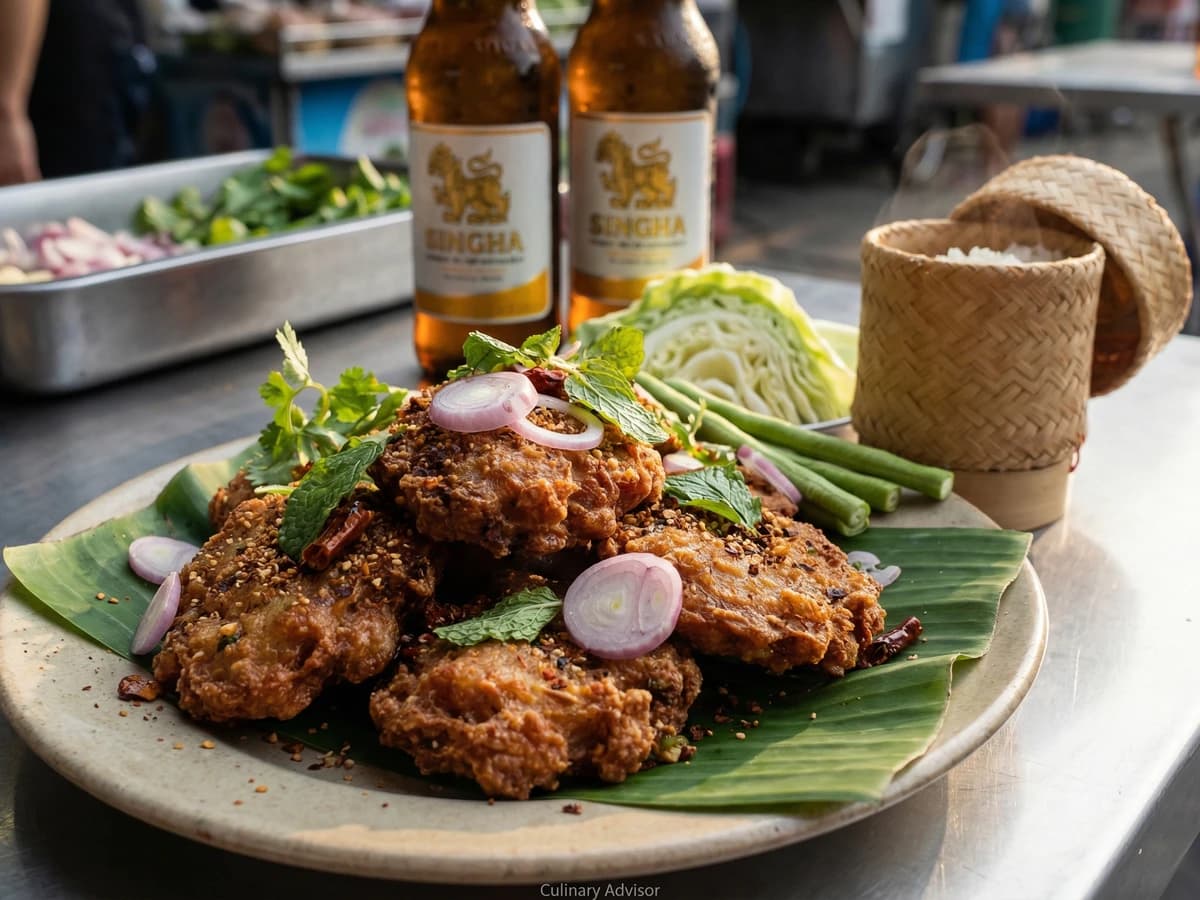
Isan's larb principles pressed into patties and fried golden: fish sauce for salt, lime for sour, khao khua for structure and crunch, prik pon for heat. No sugar. That's the rule that separates Isan from everything else.
Chef Fai
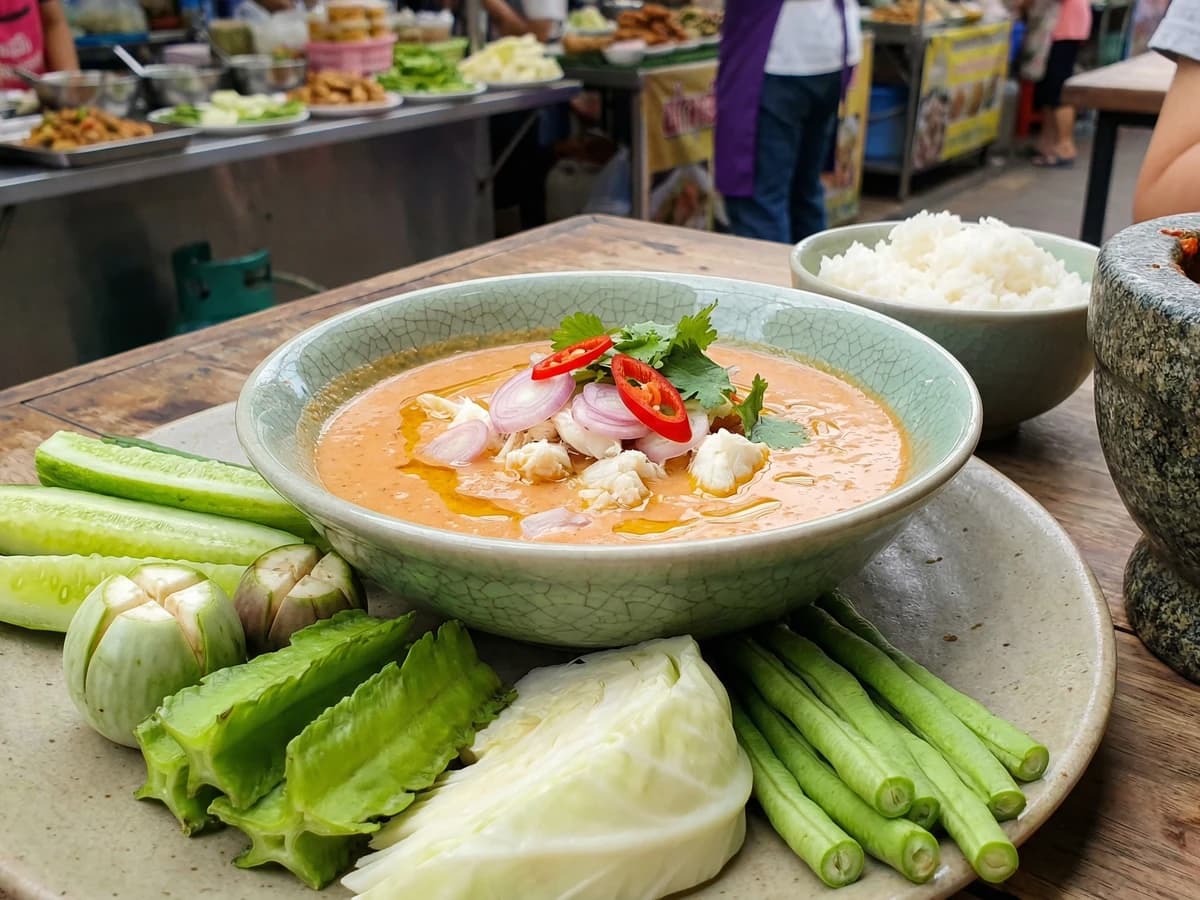
A kreung tam pounded in the krok, dissolved into cracked coconut cream, sweet crab folded through at the end. All four pillars balanced in a dip so silky you'll forget it started in a granite mortar. Central Thai home cooking at its most principled.

Chef Fai
Twenty-four meatballs, eight bamboo skewers, a charcoal grill the size of a shoebox, and one pot of nam jim built on the four pillars. The simplest vendor setup in Thailand proves the system works everywhere.