Chef Fai
Dry Curry with Long Beans (Phat Prik Khing)
Strip away the coconut milk. Strip away the broth. What's left is the kreung tam, naked and exposed. This is the driest curry in the Thai system, and your paste has nowhere to hide.

Updated March 2, 2026
The kreung tam at its most complex. Fifteen Central Thai curries spanning coconut-rich, dry-fried, water-based, and steamed techniques. Every curry starts in the mortar.
A cooking platform built around craft, culture, and the stories behind what we eat.

Chef Fai
Strip away the coconut milk. Strip away the broth. What's left is the kreung tam, naked and exposed. This is the driest curry in the Thai system, and your paste has nowhere to hide.

Chef Fai
The greenest paste in Thai cooking, the sweetest curry on the table, and a masterclass in why the kreung tam is everything. Nine essential ingredients pounded into one foundation. Coconut cream cracked in the wok. Principles, not recipes.

Chef Fai
The mother curry of Central Thai cooking. Dried red chilies pounded into a kreung tam with galangal, lemongrass, and kapi, then fried in cracked coconut cream until the oil runs red. Every coconut curry you've ever eaten descends from this one.

Chef Fai
The thickest curry in the Central Thai canon: kreung tam fried in cracked coconut cream until the oil separates, reduced until paste clings to every piece of chicken. No broth. No pool. Just concentrated principle.

Chef Fai
No coconut. No complexity to hide behind. Just a pounded paste dissolved in water, shrimp, vegetables, and the sour pillar turned up to full volume. Gaeng som is where tamarind runs the show.

Chef Fai
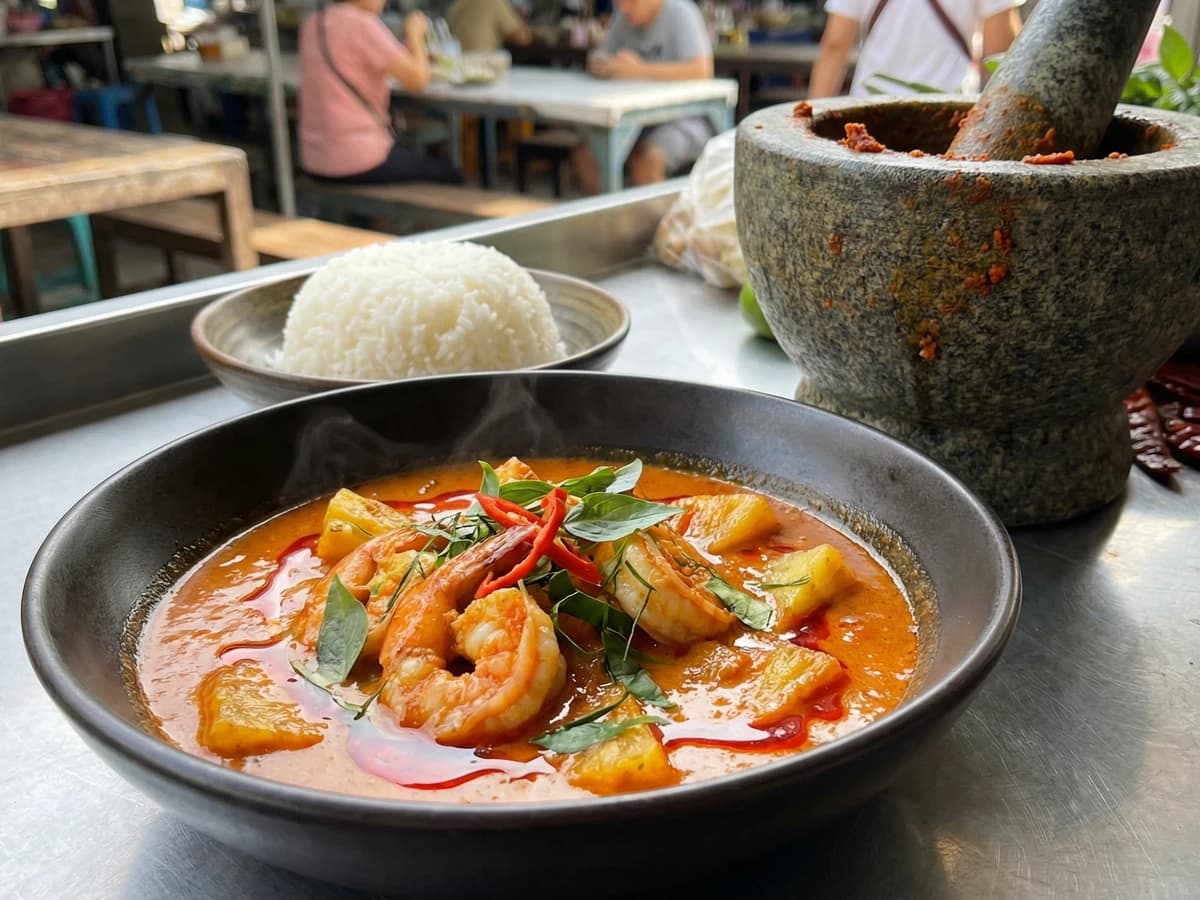
The kua technique cracks coconut cream until the fat separates, then fries the kreung tam in pure coconut oil. Pineapple replaces lime as the sour pillar. This is the four-pillar system proving that the principle is tropical fruit acid, not just citrus.

Chef Fai
The kreung tam fried in cracked coconut cream until the oil bleeds red. That's the technique. Concentrated, semi-dry, spooned thick over crispy fish. This is what happens when the four pillars meet restraint.

Chef Fai
The spice trade built this curry: turmeric, cumin, coriander seed pounded into a kreung tam that's unmistakably Thai. Indian spices, Thai principles, four pillars intact.

Chef Fai
The everyday Central Thai curry that proves the system works: one kreung tam, four pillars, whatever vegetables your market has today. This is how Thai grandmothers taught cooking without ever writing a recipe down.

Chef Fai
Same red kreung tam as every gaeng phet, but roast duck changes everything: the rendered fat from the skin cracks into the coconut cream, the char meets the chili paste, and suddenly you understand why Bangkok claimed this dish as its own.

Chef Fai
Persian dried spices enter the kreung tam and the four pillars hold. Cardamom, cinnamon, star anise pounded into a Thai paste foundation, slow-braised with beef in cracked coconut cream. The system bends. It doesn't break.

Chef Fai
No coconut milk. No chili. White peppercorns run the heat in this stripped-down kreung tam of shallots, dried shrimp, and kapi, simmered into a clear broth packed with vegetables. Central Thai nourishment at its most honest.

Chef Fai
Strip away the coconut milk and the kreung tam has nowhere to hide. This water-based Central Thai curry is the ultimate test of your paste: fierce, herbal, no safety net. The four pillars raw and exposed.

Chef Fai
Same red kreung tam as gaeng phet, but steamed into a silky custard with fish and coconut cream. One paste, two dishes. That's the system at work. Principles, not recipes.

Chef Fai
No paste, no chili, no coconut. Still a gaeng. The gentlest dish in Central Thai cooking proves that the system works even at a whisper: fish sauce for salt, palm sugar for sweet, white pepper for warmth, clear broth for soul.
Culinary guides, cultural storytelling, and the editorial depth that makes cooking meaningful.
Discover Culinary Explorer