Chef Juliette
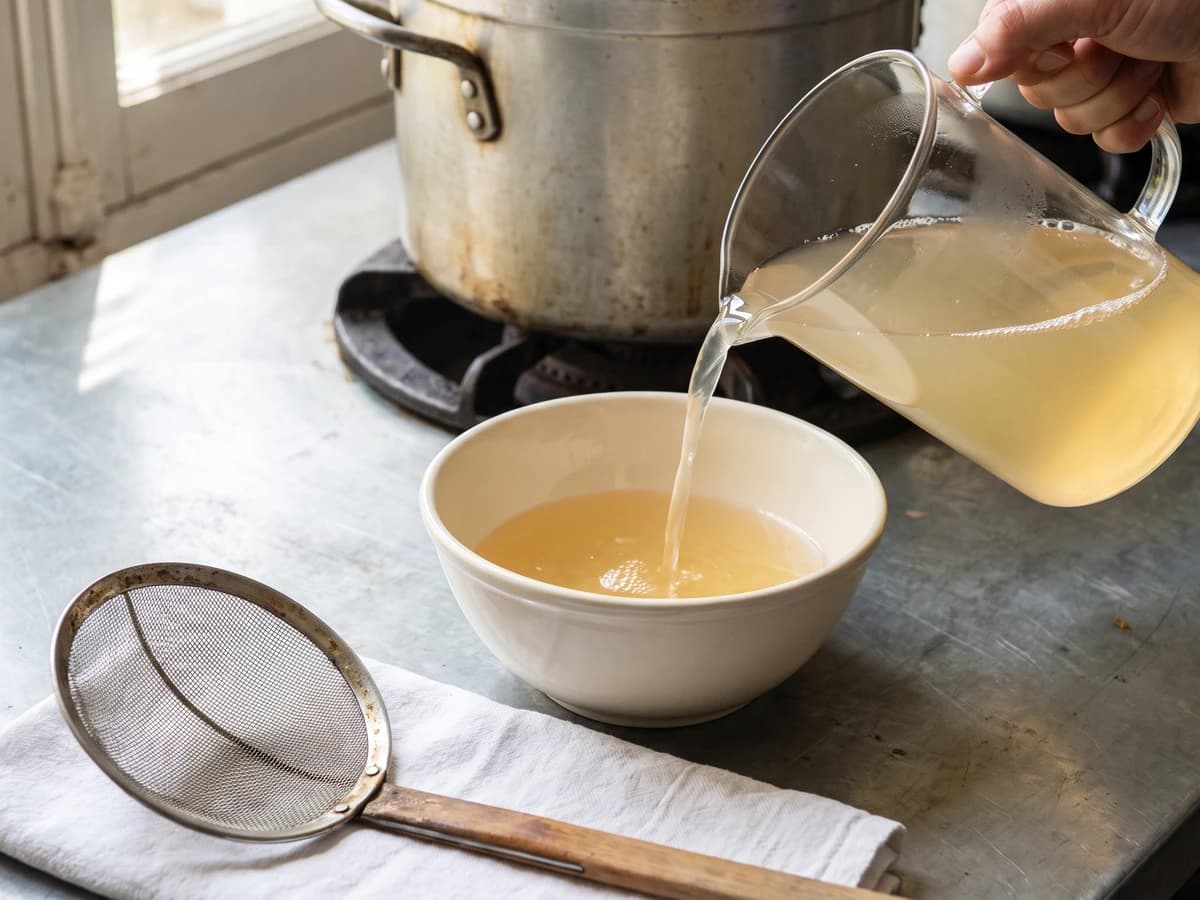
Ordinary or White Consommé
Beef shin, lean beef, and fowl begin in cold water and rise slowly toward a tremble. Skim before the boil, and you learn the quiet discipline that gives every clear French broth its backbone.
A cooking platform built around craft, culture, and the stories behind what we eat.
Created by Chef Juliette
Based on No. 17, Game Glaze, from Le Guide Culinaire (1907) by Auguste Escoffier
Glace de gibier takes one honest stock to its most concentrated expression: a dark, glossy spoonful that restores venison depth to a pan sauce, jus, or braise without changing its character.
Glace de gibier (game glaze) teaches the purest law of reduction: as water leaves, flavor, gelatin, and salt remain. The last of these matters before you touch a pan. Begin with unsalted Brown Game Stock (No. 8), because a pleasant stock can become punishingly salty long before it becomes a proper glaze.
The original method assumed a saucier watching an open fire, game stock never far from the stove, and a succession of smaller stewpans waiting as the volume fell. At home, two heavy saucepans and a fine sieve lined with damp muslin do the work. The brigade's battery of pans was volume-management scaffolding, so one transfer is enough for this small batch; the gradual lowering of the heat, the filtration at each transfer, and the final spoon test belong to the dish and must stay. This is the method of Meat Glaze (No. 15), applied faithfully to game stock for one cook, one stove, one evening.
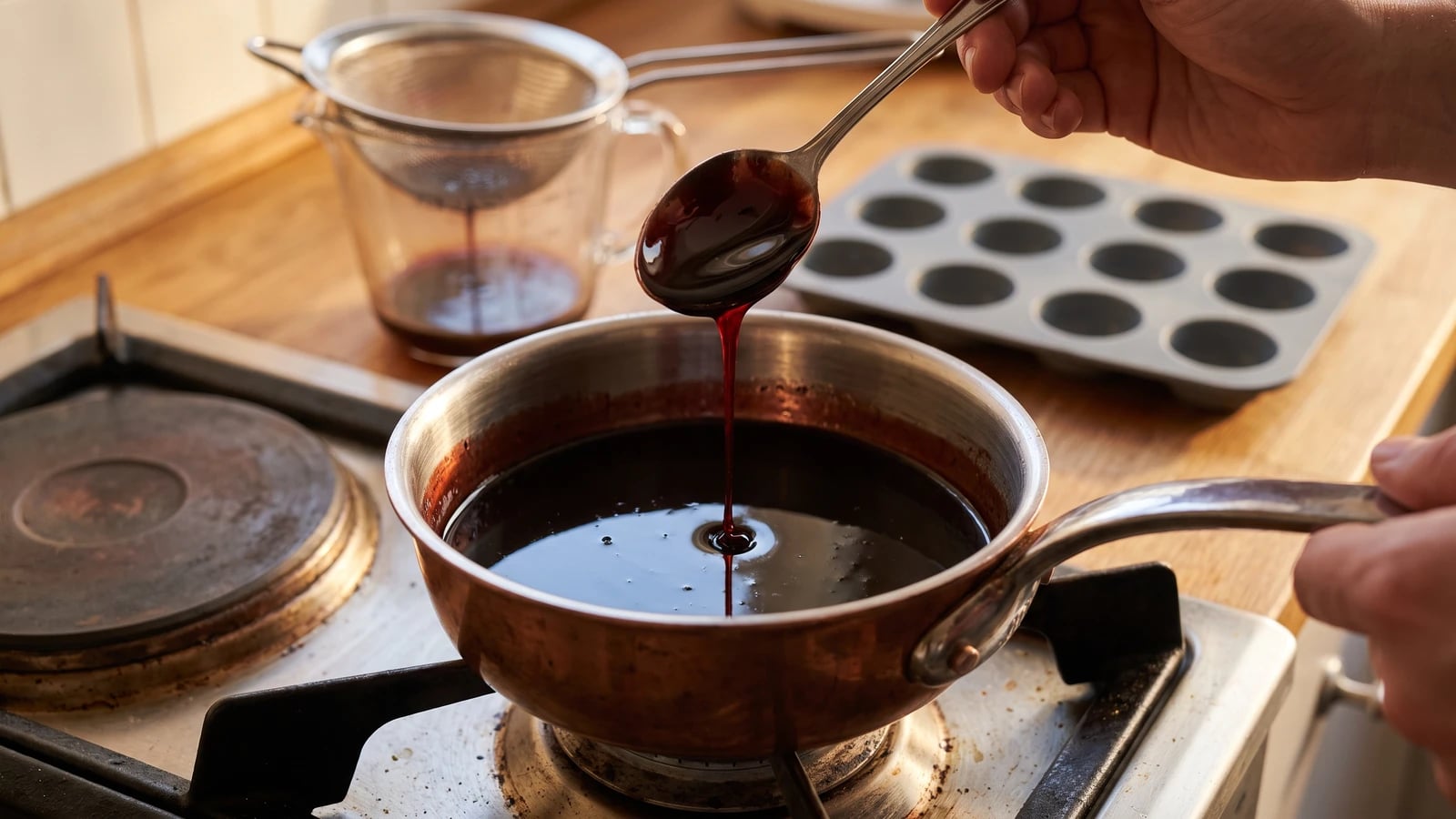
The finished glace de gibier is dark mahogany, almost garnet at a thin edge, and glossy enough to veneer a spoon. Lower the heat as the liquid concentrates. That is the step that decides everything: a lively simmer builds the glaze at first, but the same flame will scorch it once only a cup remains.
Glace de gibier belongs to the professional sauce kitchens of Paris and to hunting tables supplied by game country such as Sologne and Burgundy. Brown Game Stock (No. 8) was concentrated by the staged reduction used for Meat Glaze (No. 15), turning a large pot of perishable stock into a small reserve with the depth to reinforce many sauces. The glaze is not a sauce served alone; it is a concentrated foundation, added by the spoonful when a jus, braise, or pan sauce needs its game character restored.
cold and unsalted
Quantity
Up to ¼ cup (60 ml / 60 g)
only if needed to correct over-reduction
Lift away every trace of solid fat from the cold Brown Game Stock (No. 8), then pour the stock into a wide 4-quart (3.8 L) heavy saucepan. It should tremble like a soft jelly when cold, evidence of the gelatin that will give the glace de gibier its body. If it is liquid but deeply flavored, you may still proceed, though the yield will be smaller and the reduction longer. Do not season it.
Bring the stock to a boil over medium-high heat, then lower it to a lively, controlled simmer. Skim away foam and beads of fat as they gather, using a shallow spoon without stirring the sediment back through the liquid. Reduce until about 1 quart (950 ml) remains, roughly 45 to 75 minutes depending on the width of the pan. The surface should move steadily, not thrash against the sides.
Following the staged reduction used for Meat Glaze (No. 15), pour the reduced stock through a fine sieve lined with damp muslin or cheesecloth into a clean 2-quart (1.9 L) heavy saucepan. Do not press on the trapped solids; pressure forces cloudiness and stale-tasting sediment into the glaze. This single transfer replaces the brigade's succession of smaller stewpans because the home batch is already modest, while preserving the filtration the original method requires.
Return the strained stock to a moderate simmer and reduce it to about 2 cups (475 ml). Lower the heat again, then continue at the gentlest simmer your stove can hold. Stir occasionally with a heatproof spatula, reaching into the corners, but leave the dried ring on the sides of the pan where it is; scraping it down can introduce scorched flavors. Watch the pan continuously once the volume approaches 1¼ cups (300 ml), because the reduction quickens sharply at the end.
Dip a cold metal spoon into the glaze and lift it out. The glace de gibier is ready when it evenly veneers the spoon in a dark, glossy film rather than running away in watery tracks, usually at about 1 cup (240 ml). If it suddenly turns tarry or clings in heavy sticky ridges, lift the pan from the heat and stir in hot water 1 tablespoon (15 ml / 15 g) at a time until the smooth coating returns. Ça se rattrape. If the bottom catches, immediately pour the clean upper glaze into another pan without scraping, then taste it; the unburnt portion can continue, but genuine bitterness cannot be hidden.
Pass the finished glaze through a clean fine sieve into a heatproof measuring jug. Pour it into a shallow container or tablespoon-size freezer molds and cool promptly, uncovered at first, then cover and refrigerate. It will set into a firm, dark jelly when cold. Use it by the teaspoon or tablespoon, melting it into a finished pan sauce, jus, or braise and tasting between additions; glace de gibier gives depth, but it should never announce itself as a separate layer.
1 serving (about 15g)
Culinary guides, cultural storytelling, and the editorial depth that makes cooking meaningful.
Discover Culinary ExplorerChef Juliette
Beef shin, lean beef, and fowl begin in cold water and rise slowly toward a tremble. Skim before the boil, and you learn the quiet discipline that gives every clear French broth its backbone.
Chef Juliette
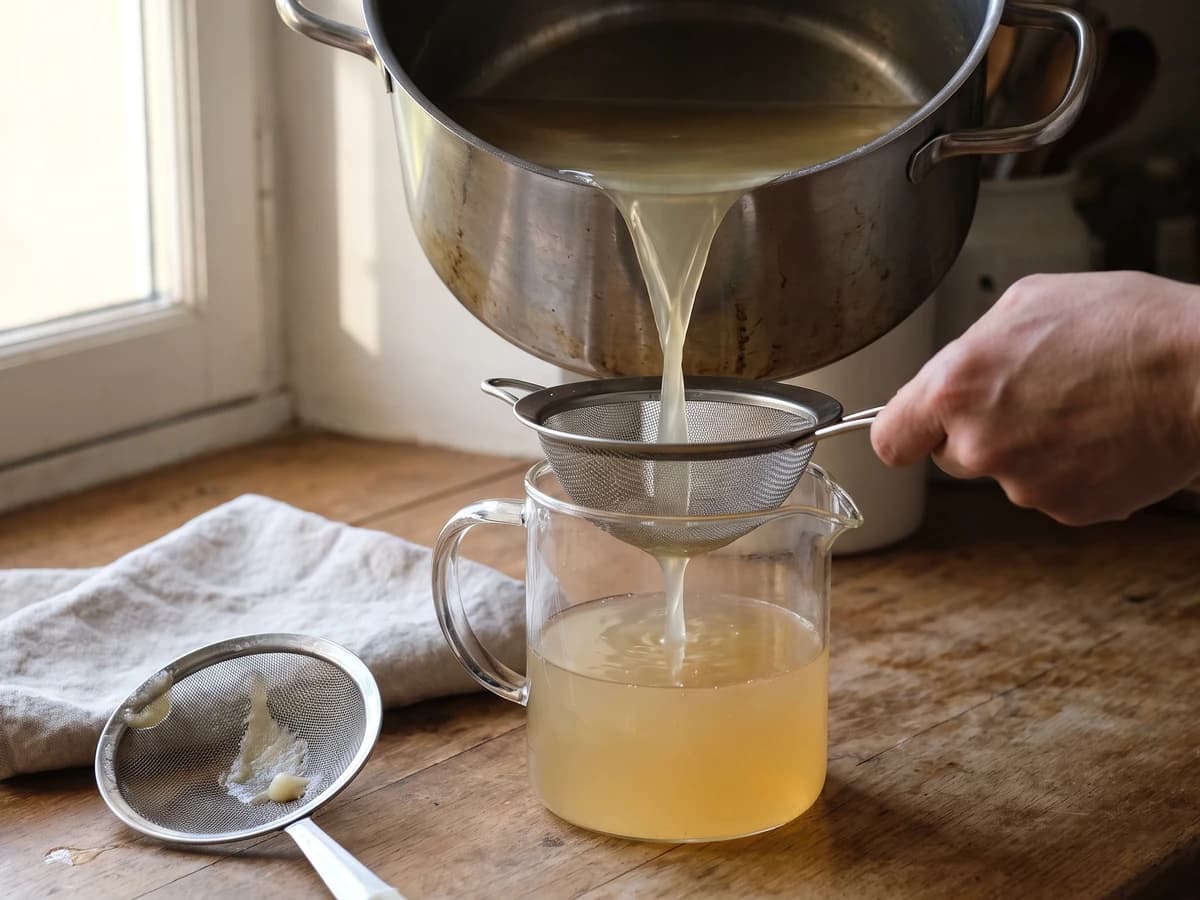
Break the veal bones small, then give them eight hours at a bare tremble. This pale, gelatinous fond becomes the quiet foundation beneath velouté, blanquette, and every sauce that must stay light.
Chef Juliette
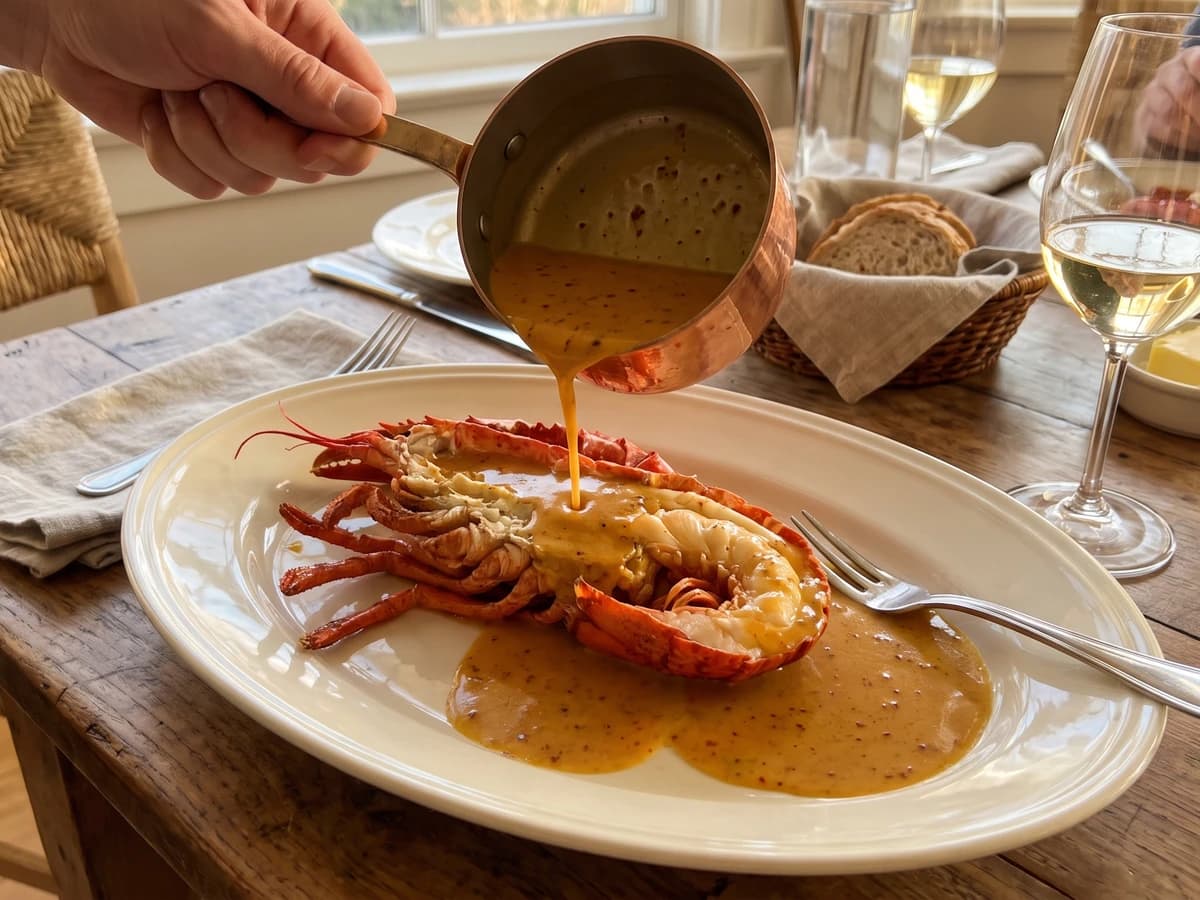
Sauce Orientale concentrates lobster-rich American Sauce with curry, then folds in cream away from the fire: a glossy, gently spiced derivative made for lobster, crayfish, and firm fish.
Chef Juliette
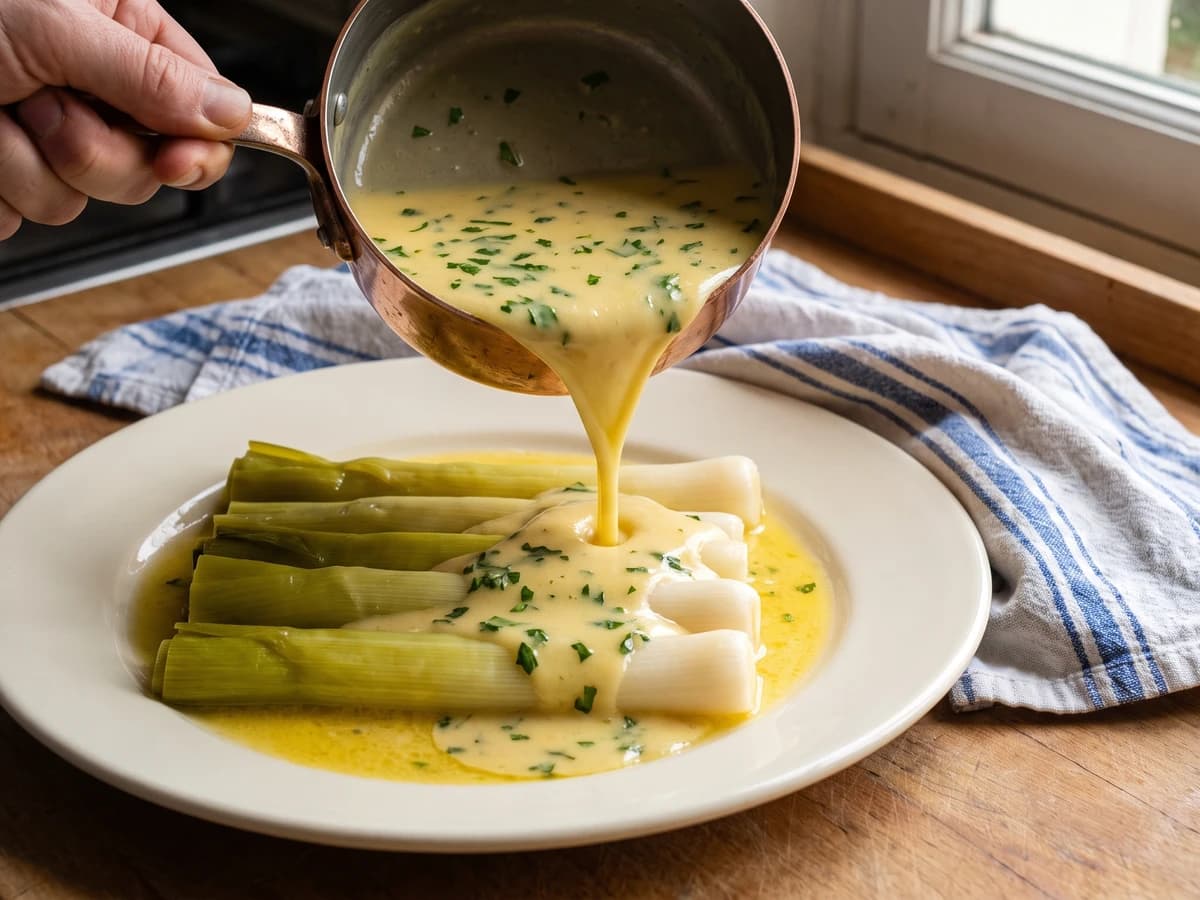
An old lesson in sauce families: Sauce Allemande takes mushroom liquor, then butter, lemon, and parsley, becoming a glossy Poulette for sheep's trotters, leeks, cauliflower, and anything needing gentle richness with a bright edge.