Chef Juliette
Ordinary or White Consommé
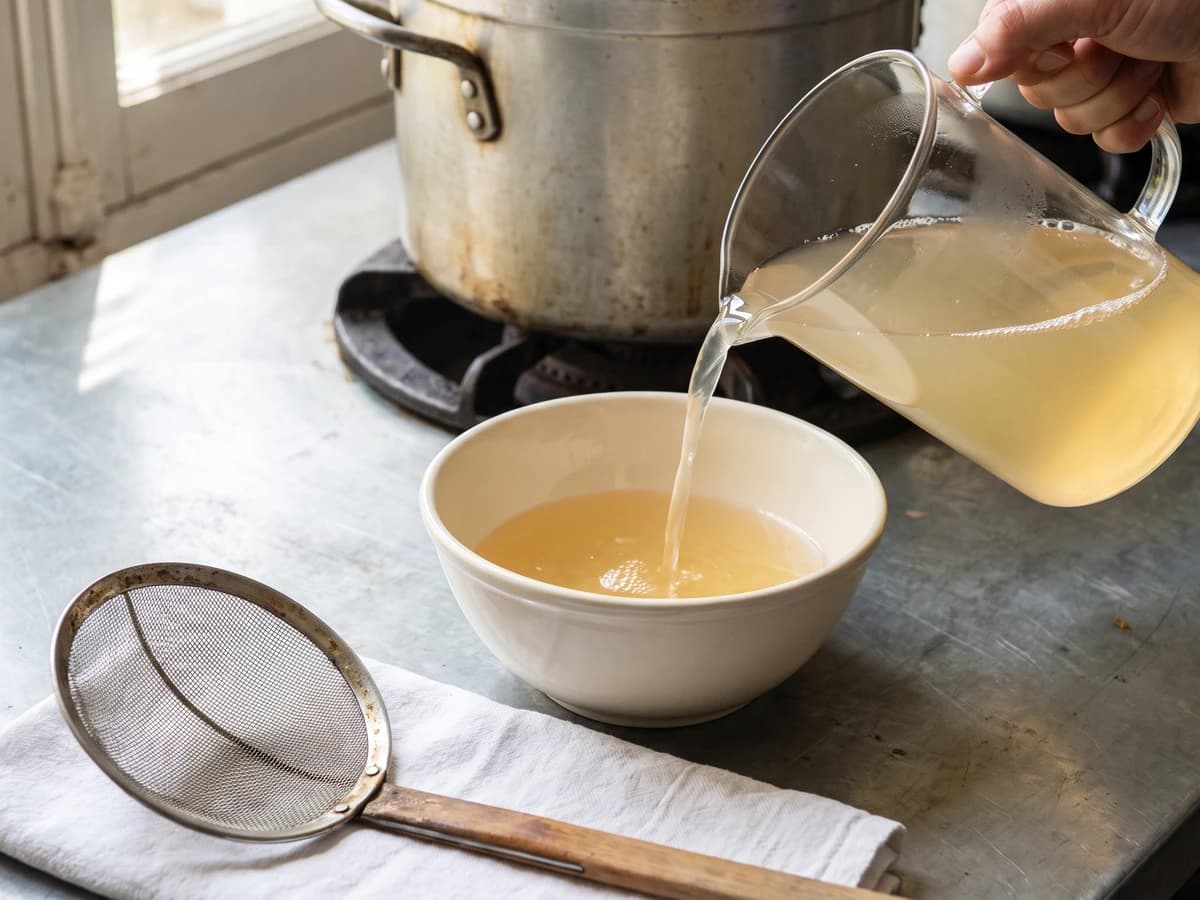
Beef shin, lean beef, and fowl begin in cold water and rise slowly toward a tremble. Skim before the boil, and you learn the quiet discipline that gives every clear French broth its backbone.
A cooking platform built around craft, culture, and the stories behind what we eat.
Created by Chef Juliette
Based on No. 8, Brown Game Stock, from Le Guide Culinaire (1907) by Auguste Escoffier
One liquor, two destinies: leave Game Consommé (No. 5) unclarified and it becomes a dark working stock for sauces and reductions; clarify it, and the same foundation becomes clear soup.
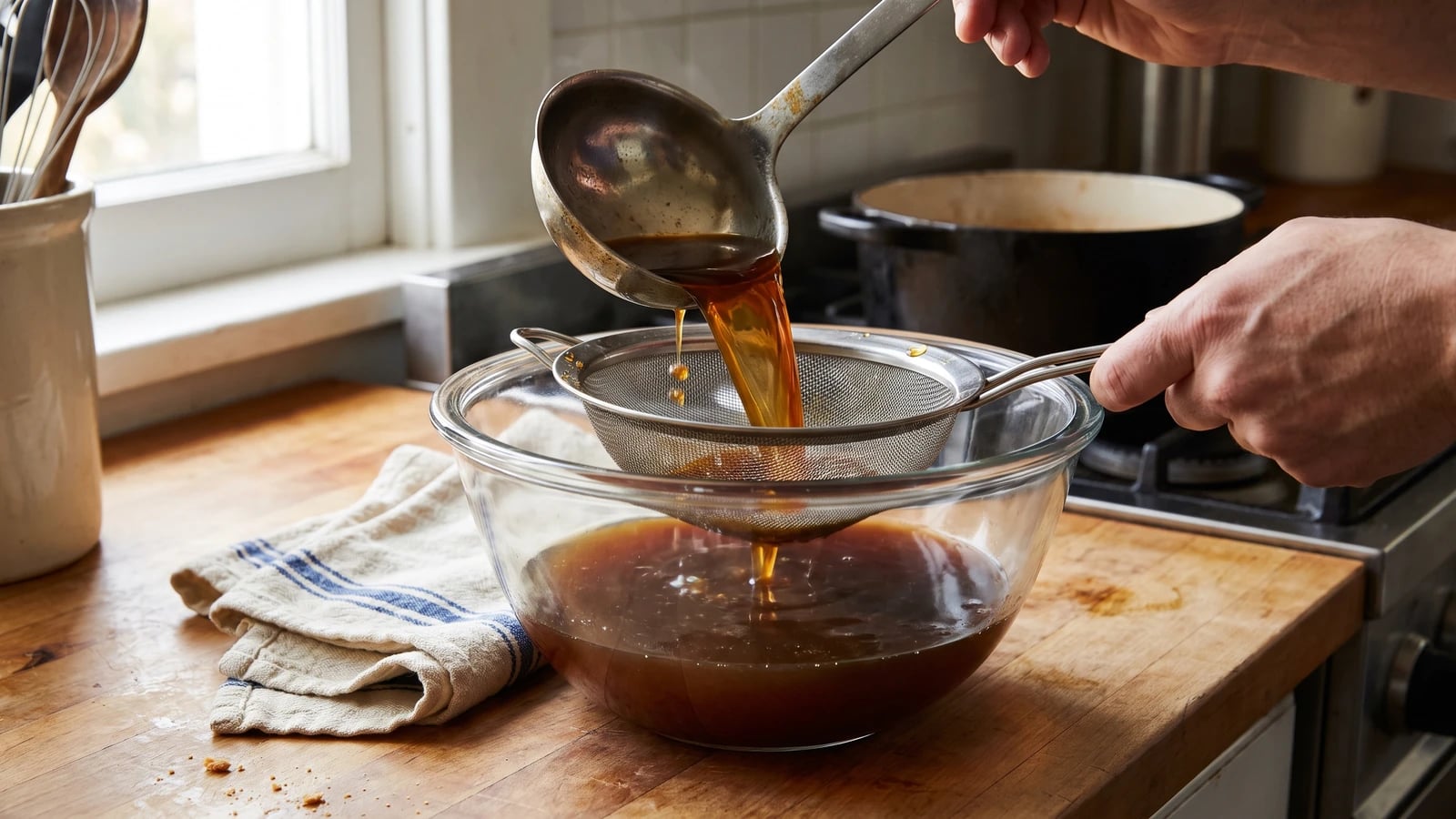
Fonds brun de gibier (brown game stock) teaches one of the cleanest distinctions in the classical kitchen: the liquid does not change, only its destination does. Game Consommé (No. 5), clarified, becomes clear soup. Leave it in its original, unclarified state and it is fonds brun de gibier, ready to carry a thick game soup, sauce, reduction, or glaze. Know this before touching a pan: do not clarify what you intend to reduce.
The brigade version assumed a saucier on staff and stock never off the fire; a salamander belonged to other finishing work and has no role in this pot. At home, make the referenced consommé as a two-quart batch, stop after its first clean straining, then cool and freeze it in useful portions. The half-roasting of the game and patient simmer are the dish and must stay. The clarifying raft is service scaffolding for clear soup, so it goes when the destination is sauce or reduction. One cook, one stove, one evening.
When it is right, the stock is mahogany, deeply aromatic with roasted game and mushrooms, and lightly gelatinous in the cold. The one step that matters most is knowing when to stop: strain it cleanly, then do not clarify it.
Fonds brun de gibier has no single regional claim; its precise home is the classical French grand kitchen, where the potager drew soups and the saucier drew reductions from the same pot of roasted-game liquor. Its name marks use rather than a separate preparation: clarified, Game Consommé (No. 5) serves as clear soup; left unclarified, it supplies thick soups, sauces, reductions, and glazes. What passed from the game larder into formal service was not a new recipe, but a disciplined choice about when to stop.
Quantity
2 quarts (1.9 L / about 1.9 kg) Game Consommé (No. 5)
freshly strained and left unclarified
| Ingredient | Quantity |
|---|---|
| Game Consomméfreshly strained and left unclarified | 2 quarts (1.9 L / about 1.9 kg) Game Consommé (No. 5) |
Set the freshly strained Game Consommé (No. 5) in a clean heatproof bowl before any clarification begins. Decide now: for clear soup, stop this recipe and continue the clarification in the referenced entry; for thick game soup, sauce, reduction, or glaze, leave it unclarified. The stock is not unfinished. This stopping point is its definition.
Inspect the liquid and the bottom of the bowl. If a little coarse sediment came through, pass the stock once through a damp fine-mesh sieve; if it is already clean, leave it alone. Do not press sediment through or chase consommé brilliance with an egg-white clarification. If the stock clouds during handling, do not pour it out. Ça se rattrape: let it stand for ten minutes, then ladle it gently away from the sediment. A slight haze disappears into sauce or thick soup.
Set the bowl into a larger bowl of ice water and stir the stock frequently, taking care that no water enters it. For safe cooling, bring it below 70°F (21°C) within two hours and below 40°F (5°C) within the next four; an ice bath should do this much sooner. Divide it between shallow containers if necessary. A deep hot stockpot cools too slowly, even in the refrigerator.
Chill the stock until any surface fat firms, then lift the fat away without disturbing the stock beneath. Keep the jelly and remove the grease. If the cold stock sets softly, splendid; if it remains liquid, it is still useful. Different game supplies different amounts of gelatin, and the final sauce can gain body through reduction.
Use the fonds brun de gibier at its natural strength for thick soup and as the liquid foundation of a game sauce. When a concentrated stock or glaze is required, reduce only the measured portion at a steady uncovered simmer, skimming the surface as needed. Game Consommé (No. 5) is already seasoned, so add no salt until the final dish is nearly finished. If a reduction becomes too salty or severe, ça se rattrape: take it off the heat and restore it with hot water, a spoonful at a time.
Keep the stock refrigerated for up to three days, or freeze it promptly in portions suited to its work: 1 cup (240 ml / about 240 g) for sauces, 1 pint (475 ml / about 475 g) for soups, or a few tablespoons for finishing a pan reduction. Leave expansion room in every freezer container and label the stock as unclarified.
1 serving (about 240g)
Culinary guides, cultural storytelling, and the editorial depth that makes cooking meaningful.
Discover Culinary ExplorerChef Juliette
Beef shin, lean beef, and fowl begin in cold water and rise slowly toward a tremble. Skim before the boil, and you learn the quiet discipline that gives every clear French broth its backbone.
Chef Juliette
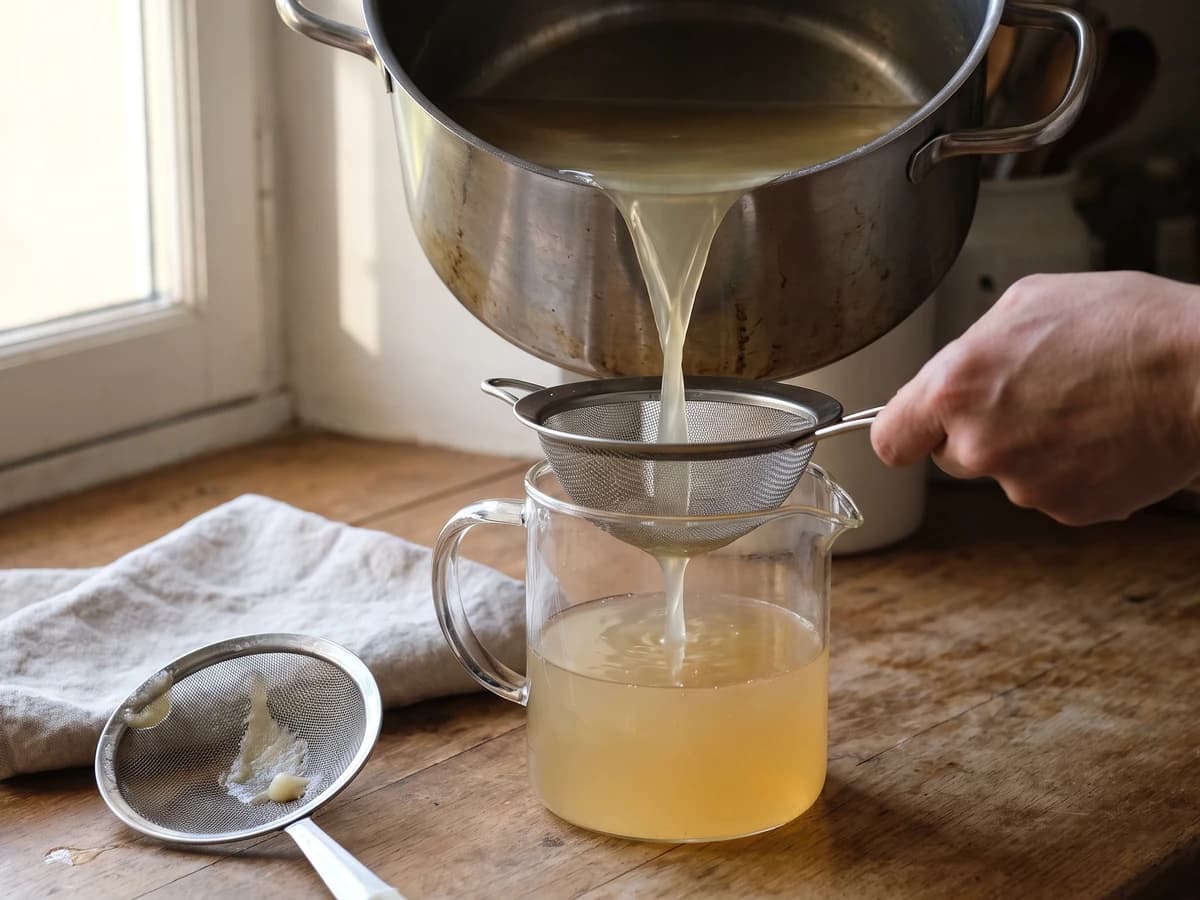
Break the veal bones small, then give them eight hours at a bare tremble. This pale, gelatinous fond becomes the quiet foundation beneath velouté, blanquette, and every sauce that must stay light.
Chef Juliette
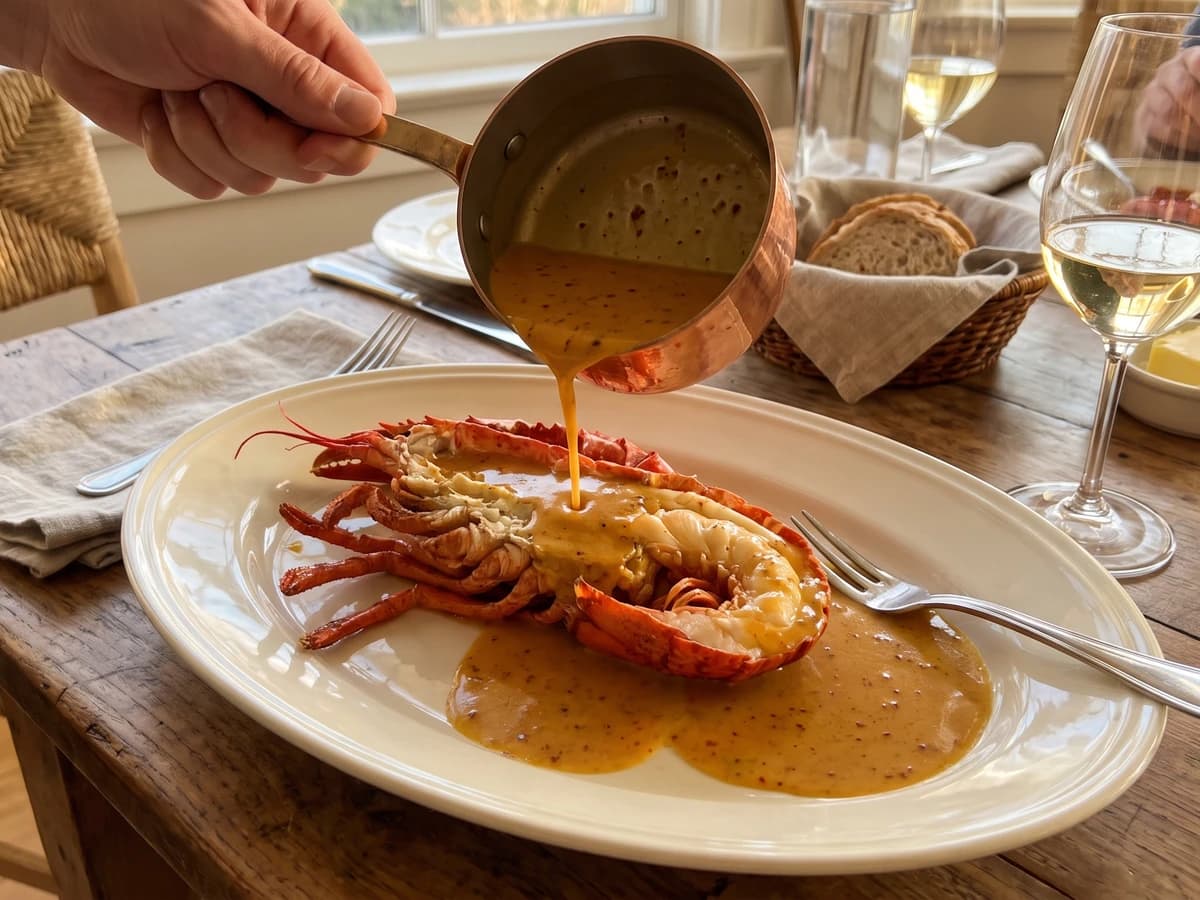
Sauce Orientale concentrates lobster-rich American Sauce with curry, then folds in cream away from the fire: a glossy, gently spiced derivative made for lobster, crayfish, and firm fish.
Chef Juliette
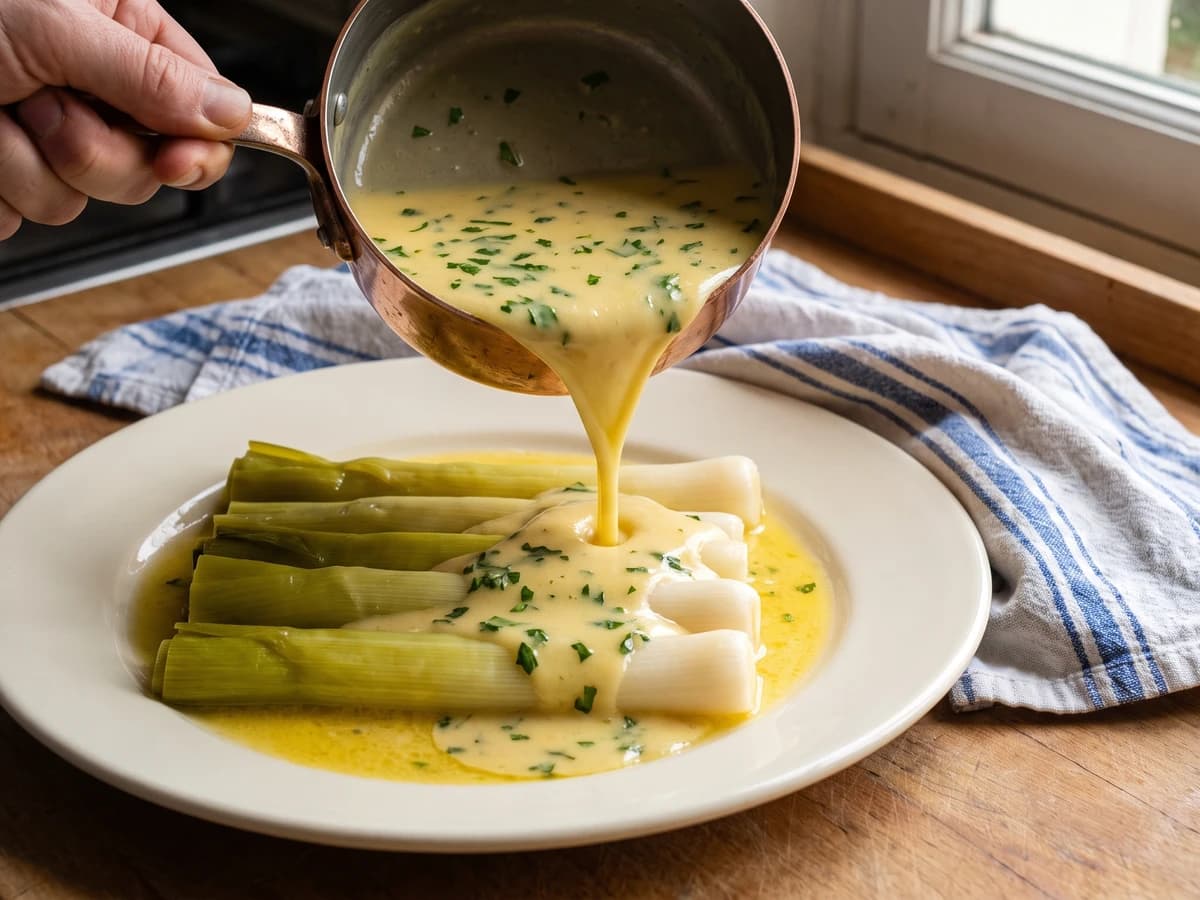
An old lesson in sauce families: Sauce Allemande takes mushroom liquor, then butter, lemon, and parsley, becoming a glossy Poulette for sheep's trotters, leeks, cauliflower, and anything needing gentle richness with a bright edge.