Chef Juliette
Bouillabaisse à la Marseillaise
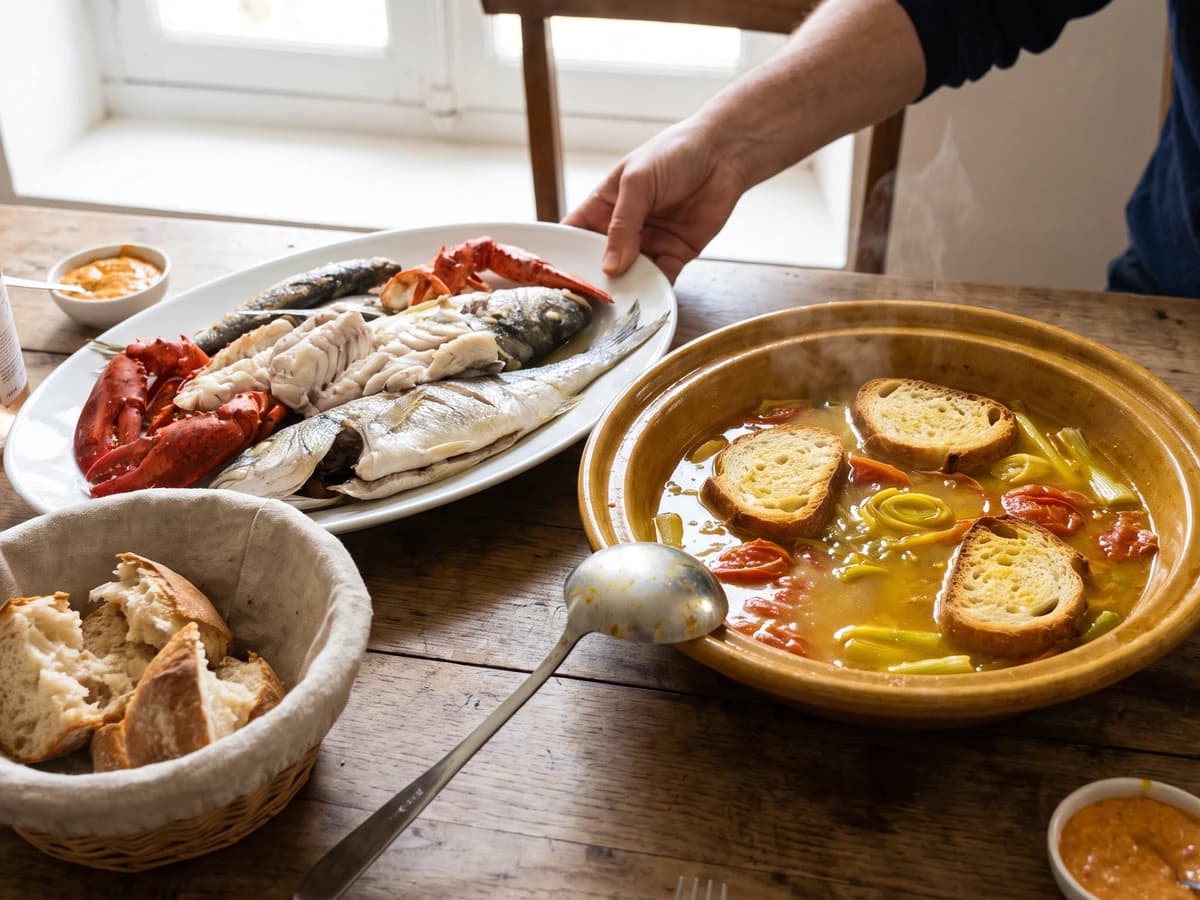
Marseille's great fish stew, saffron-gold and garlic-scented, proves that a hard boil can be the careful choice: it binds olive oil into broth before the whole pot meets bread.
A cooking platform built around craft, culture, and the stories behind what we eat.
Created by Chef Juliette
Based on No. 5, Game Consommé, from Le Guide Culinaire (1907) by Auguste Escoffier
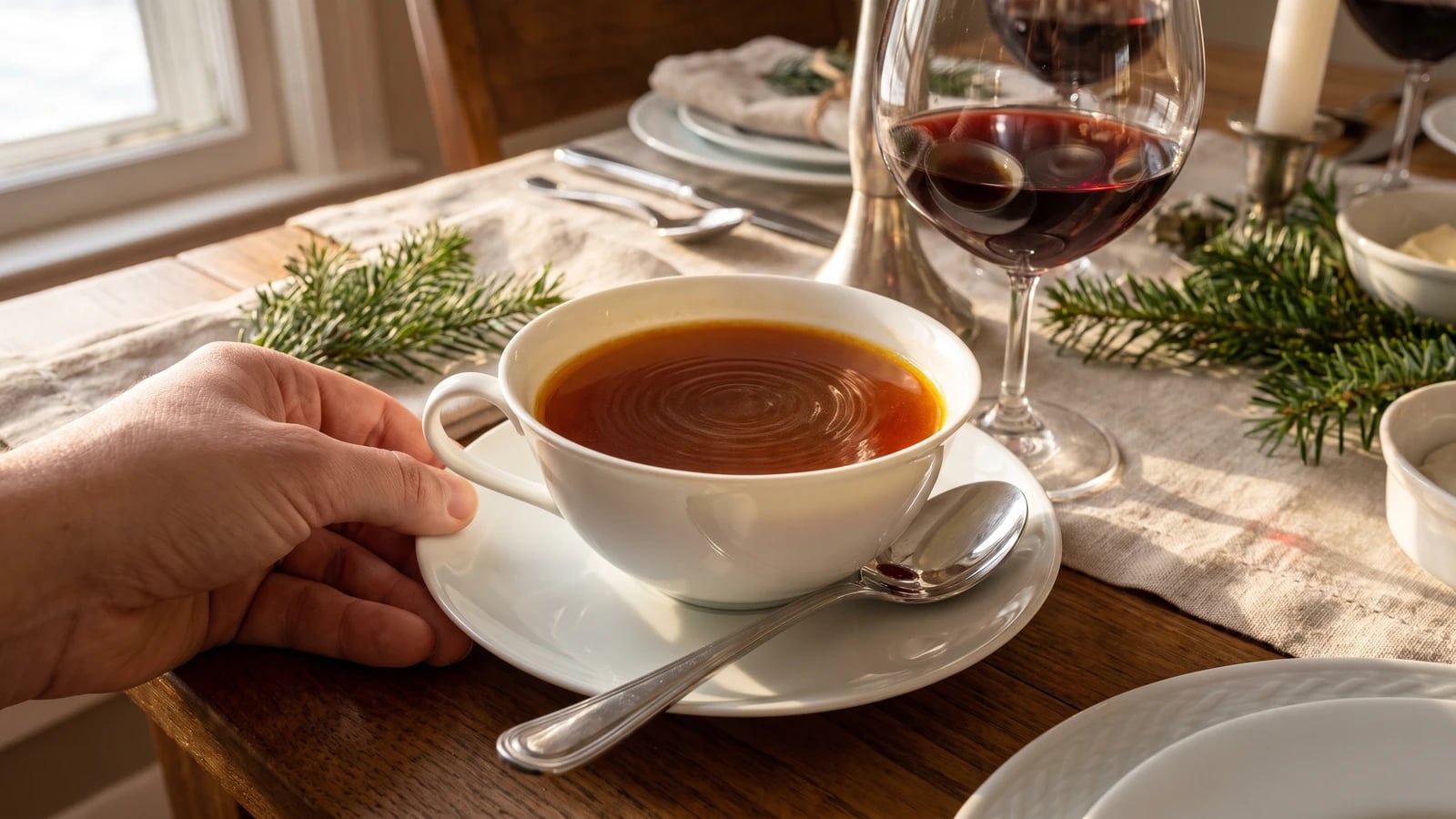
Venison, hare, and partridge are half-roasted, then slowly drawn into a clear, mahogany consommé whose depth comes from fumet, not heaviness. The roast is the dish's one uncompromising step.
Consommé de gibier (clear game broth) teaches that a clear soup needn't be a weak one. The one true thing is this: the game must be half-roasted before water touches it. That browning builds the fumet, the concentrated game essence that gives the broth its dark woodland fragrance and long finish. Skip the roasting and the consommé runs thin, however patiently you simmer it.
The grand kitchen around this formula assumed a saucier on staff, stockpots never off the fire, a salamander ready for fast browning, and enough game trimmings to draw four quarts at once. This formula actually begins with water, so the home cook loses nothing by lacking those stockpots. A metal roasting pan and ordinary oven half-roast the game, the broiler browns the onion if necessary, and one whole partridge replaces the brigade's awkward half pheasant. The batch is reduced by half to make about two quarts. Quantity and extra hands were scaffolding; half-roasting, butter-browning the vegetables, and three hours of gentle extraction are the dish.
The finished consommé should be lucid and mahogany-dark, with a fine golden shimmer and the aroma of roasted game before the cup reaches your lips. Dry the pieces, spread them without crowding, and let them take real colour while their centres remain underdone. That half-roast is the step that matters most.
Consommé de gibier belongs to the French hunting table, especially the wooded game country of Sologne and Burgundy, where necks, shoulders, old birds, and hare trimmings gave the clear potage its force. Classical kitchens recognized two proper routes: draw the game directly as here, or clarify an ordinary beef-and-veal consommé with concentrated game essence, a method often preferred for feathered game. The direct version corrects the notion that clarity means pallor, because half-roasting produces a dark, fragrant fumet while patient skimming keeps the liquor lucid.
Quantity
1½ pounds (680 g)
cut by the butcher into 2-inch (5 cm) pieces
Quantity
12 ounces (340 g)
cut into 2-inch (5 cm) pieces
Quantity
1 bird (about 14 ounces / 400 g)
jointed with the backbone included
Quantity
2 tablespoons (30 ml / 28 g)
divided
Quantity
½ cup (120 ml / 55 g)
thinly sliced
Quantity
1½ cups (350 ml / 115 g)
sliced
Quantity
½ medium leek (about 2 ounces / 55 g)
split and thoroughly rinsed
Quantity
1 stalk (about 1½ ounces / 40 g)
cut into 2-inch (5 cm) lengths
Quantity
½ medium onion (about 2 ounces / 55 g)
left unpeeled with the cut face exposed
Quantity
1
Quantity
1 small bouquet garni
tie together 6 parsley stems, 4 thyme sprigs, and 2 bay leaves
Quantity
11 cups (2¾ quarts / 2.6 L / 2.6 kg)
Quantity
2½ teaspoons (12.5 ml / 14 g)
Quantity
6
| Ingredient | Quantity |
|---|---|
| bone-in venison neck, shoulder, or breastcut by the butcher into 2-inch (5 cm) pieces | 1½ pounds (680 g) |
| bone-in hare trimmingscut into 2-inch (5 cm) pieces | 12 ounces (340 g) |
| mature partridgejointed with the backbone included | 1 bird (about 14 ounces / 400 g) |
| unsalted butterdivided | 2 tablespoons (30 ml / 28 g) |
| carrotsthinly sliced | ½ cup (120 ml / 55 g) |
| button mushroomssliced | 1½ cups (350 ml / 115 g) |
| leek, white and pale green partssplit and thoroughly rinsed | ½ medium leek (about 2 ounces / 55 g) |
| celerycut into 2-inch (5 cm) lengths | 1 stalk (about 1½ ounces / 40 g) |
| yellow onionleft unpeeled with the cut face exposed | ½ medium onion (about 2 ounces / 55 g) |
| whole clove | 1 |
| bouquet garni with extra thyme and baytie together 6 parsley stems, 4 thyme sprigs, and 2 bay leaves | 1 small bouquet garni |
| cold water | 11 cups (2¾ quarts / 2.6 L / 2.6 kg) |
| fine sea salt | 2½ teaspoons (12.5 ml / 14 g) |
| black peppercorns | 6 |
Heat the oven to 450°F (230°C). Pat the venison, hare, and partridge completely dry, then spread them in one layer in a heavy metal roasting pan, leaving space between the pieces. Stud the skin side of the onion with the clove and set it cut-side down beside the game. Roast for 25 to 30 minutes, turning the meat once, until its surfaces are deep bronze but the thick centres and joints remain distinctly underdone. If the onion is still pale, remove the game and place the onion briefly under the broiler until its cut face darkens. The broiler is the home salamander here, and it has one small job.
While the game roasts, melt half the butter in a heavy skillet over medium-high heat. Add the carrots and cook until their edges are well browned, about 5 minutes, then transfer them to the stockpot. Add the remaining butter and the mushrooms, keeping them in a broad layer. Let their liquid cook away, then continue until the slices take a deep golden colour, about 7 minutes. Pale, wet mushrooms dilute the fumet; browned mushrooms strengthen it.
Transfer the half-roasted game and browned onion to a tall 8-quart (7.5 L) stockpot. Pour about 1 cup (240 ml) of the measured water into the still-warm roasting pan and scrape up every browned deposit, then add that liquid to the pot. Add the browned carrots and mushrooms, leek, celery, bouquet garni, and the remaining water. The liquid should cover the solids closely without leaving them adrift in an oversized pot.
Set the uncovered pot over medium-low heat and begin a three-hour clock. Allow 35 to 45 minutes for the liquid to approach a simmer, skimming off foam and grey protein as they gather. Never stir, because stirring drives those particles back into the broth. Once an occasional lazy bubble breaks the surface, lower the heat and keep it there. If the pot boils and clouds, cut the heat at once and leave it untouched for 10 minutes, then skim and resume at the smallest tremble. Don't pour it out. Ça se rattrape: settling and a second damp-cloth straining will recover a clean broth, though its brilliance may be softer.
Maintain that bare simmer until only 10 minutes remain on the three-hour clock. Skim whenever fat or foam collects, working gently and never pressing the meat. Add the salt and peppercorns for the final 10 minutes, exactly when the formula calls for them; late seasoning keeps the long extraction under control and prevents the reducing broth from becoming harshly salty.
Lift out the large pieces with a skimmer, then ladle the consommé through a fine sieve lined with damp muslin into a clean saucepan. Do not press the solids. Pressure forces spent meat fibres and vegetable pulp through the cloth, undoing three hours of careful skimming. Let the strained broth stand for 5 minutes and skim away the remaining fat. If sediment was disturbed, leave it for another 10 minutes, ladle the clear broth away from the bottom, and strain it once more.
Measure and taste the consommé. If you have more than 8 cups (1.9 L), simmer it gently until the flavour is concentrated and the surface carries a fine golden shimmer. If it has reduced below that mark and tastes too salty, loosen it a little at a time with boiling water. Serve it very hot in warmed consommé cups, plain and perfectly clear. No wine, cream, or decorative greenery belongs in this formula. À table!
1 serving (about 240g)
Culinary guides, cultural storytelling, and the editorial depth that makes cooking meaningful.
Discover Culinary ExplorerChef Juliette
Marseille's great fish stew, saffron-gold and garlic-scented, proves that a hard boil can be the careful choice: it binds olive oil into broth before the whole pot meets bread.
Chef Juliette
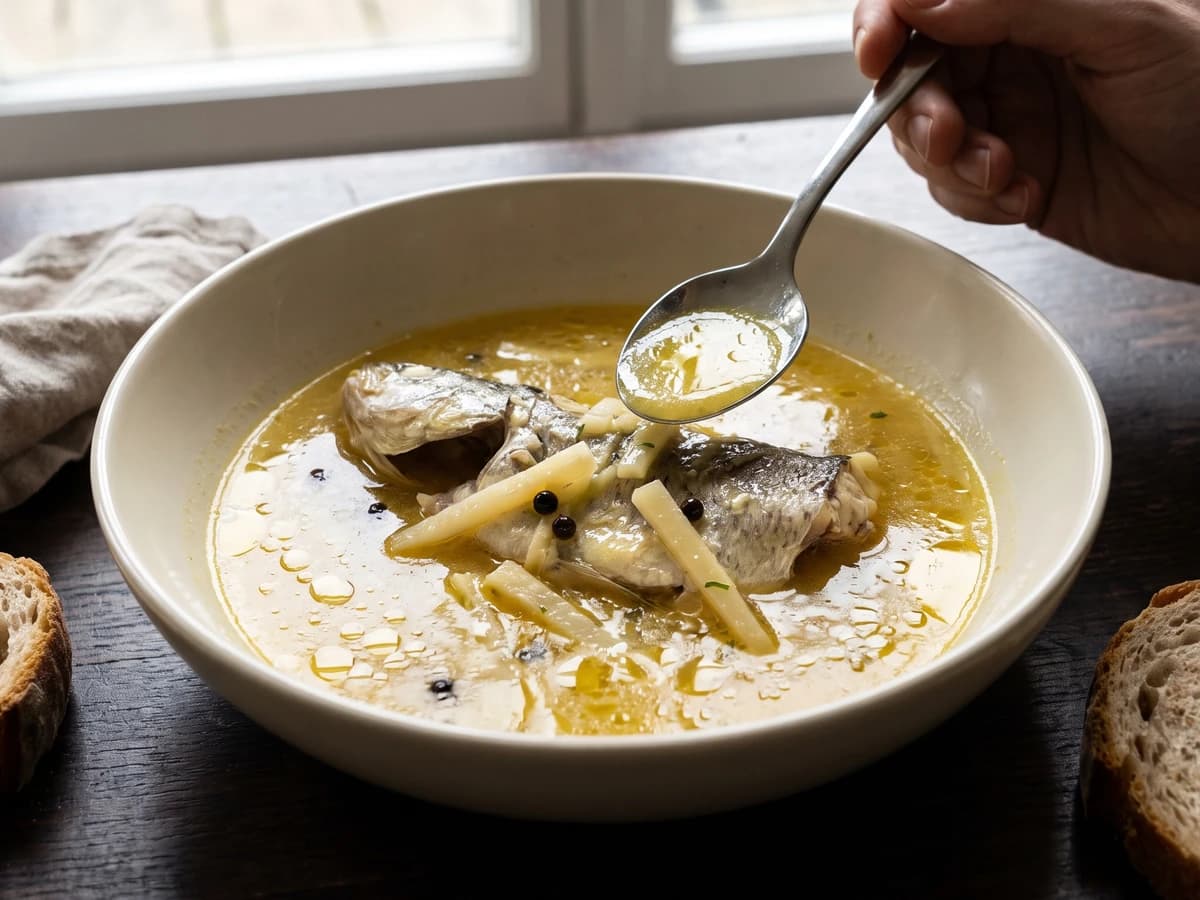
Waterzoi asks fresh, bone-in river fish to thicken its own buttery broth, with parsley root and pepper for company. No flour, no stockpot, just a brisk simmer watched closely.
Chef Juliette
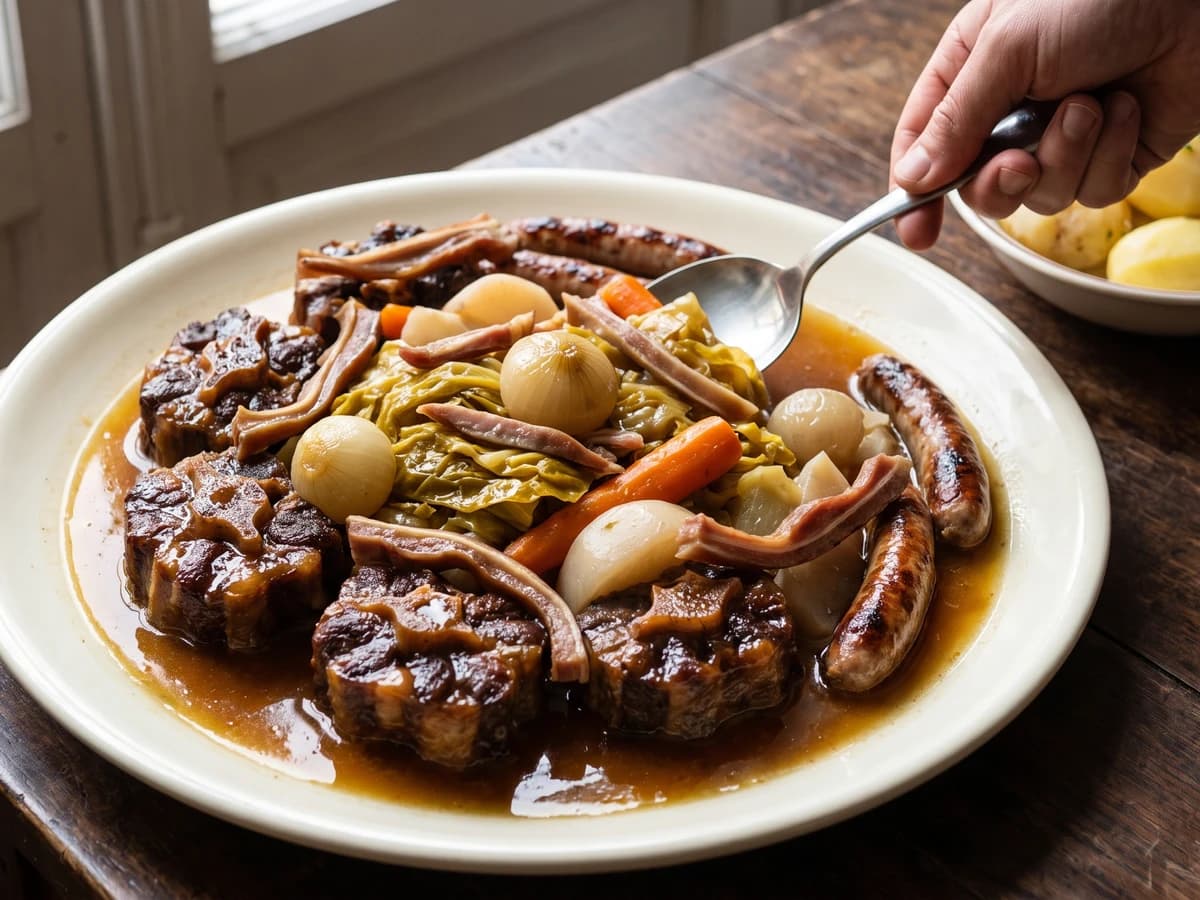
Queue de Bœuf en Hochepot gathers oxtail, pig's trotter and ear, cabbage, roots, and grilled chipolatas around a clear, gelatin-rich broth whose quiet simmer keeps every piece tender and distinct.
Chef Juliette
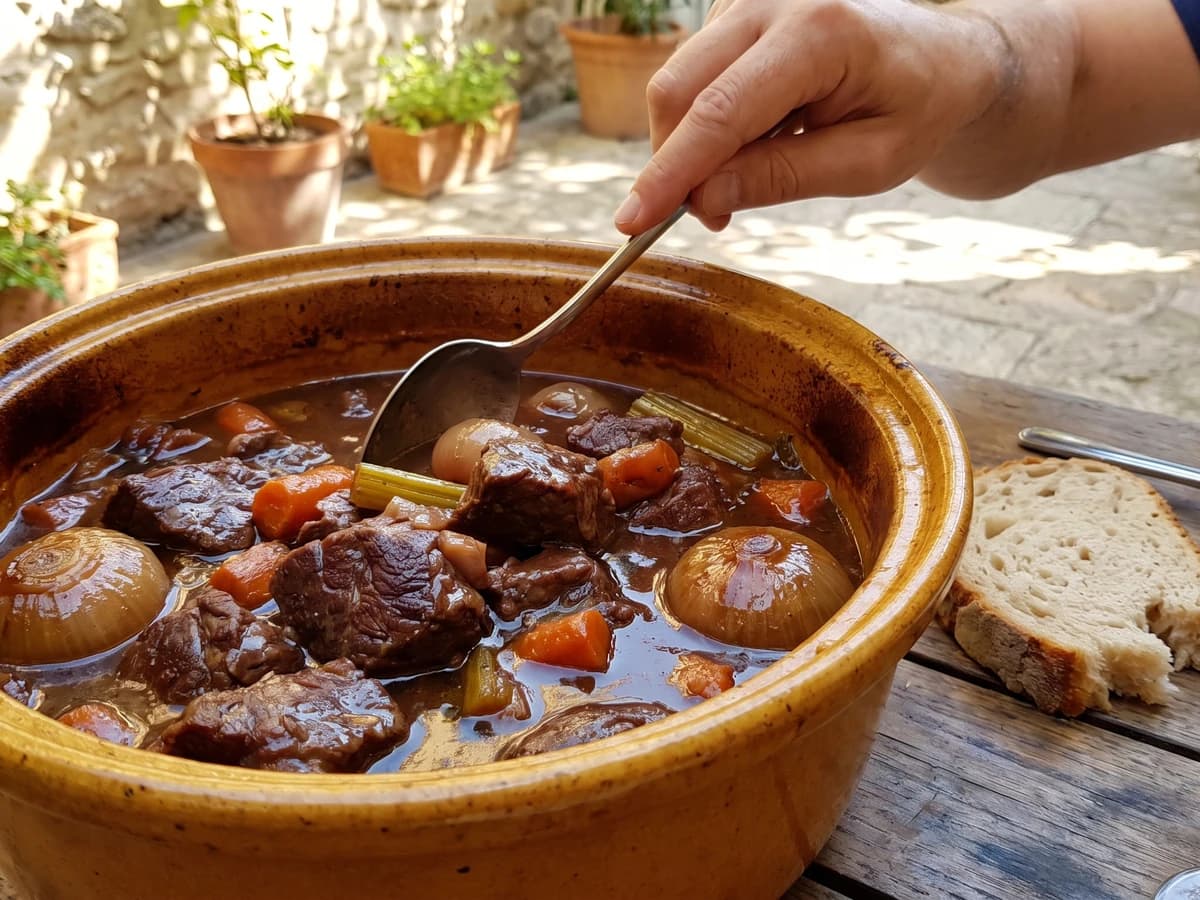
Beef shoulder larded with bacon, sharpened by red wine and vinegar, then sealed with garlic, vegetables, and dry lemon peel until the low oven turns it yielding and the gravy darkly glossy.