Chef Juliette
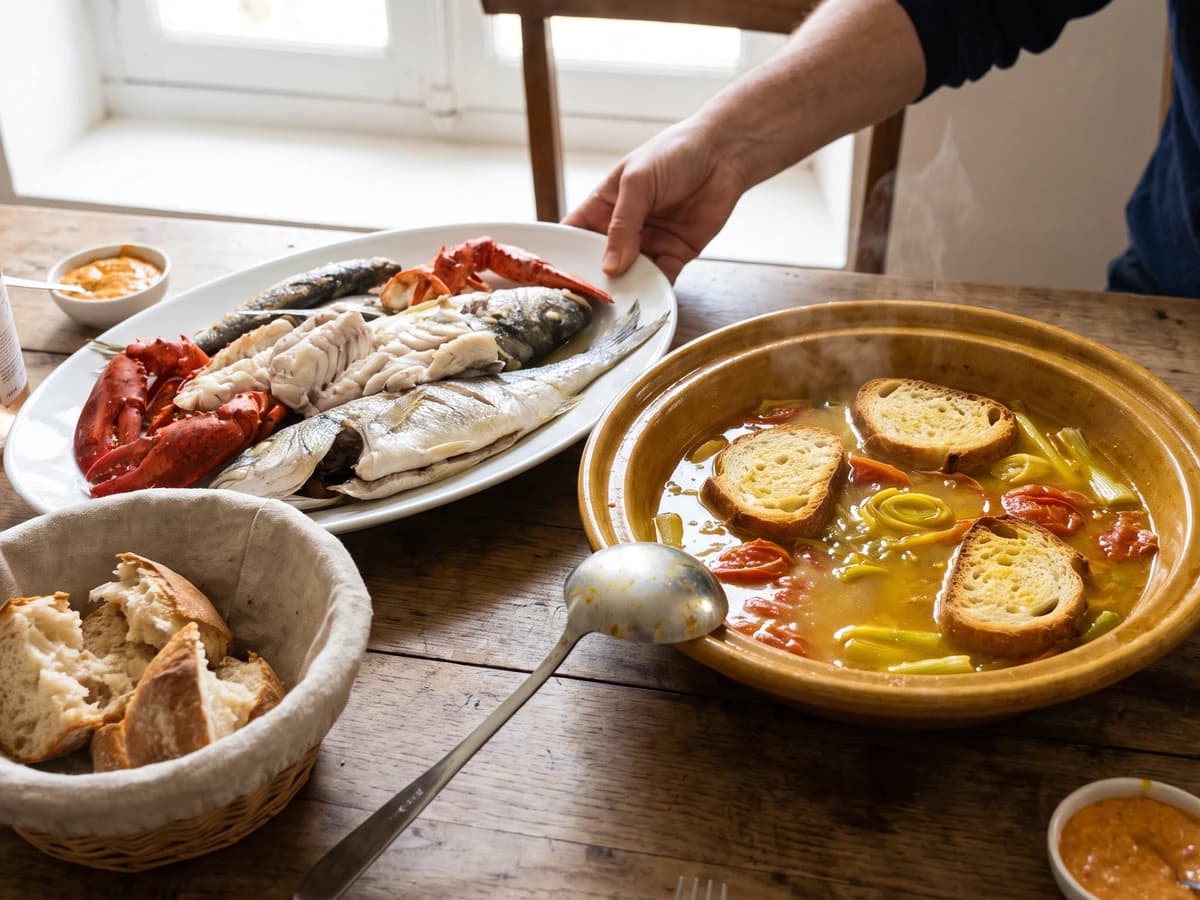
Bouillabaisse à la Marseillaise
Marseille's great fish stew, saffron-gold and garlic-scented, proves that a hard boil can be the careful choice: it binds olive oil into broth before the whole pot meets bread.
A cooking platform built around craft, culture, and the stories behind what we eat.

Created by Chef Juliette
Based on No. 1042, Waterzoi, from Le Guide Culinaire (1907) by Auguste Escoffier
Waterzoi asks fresh, bone-in river fish to thicken its own buttery broth, with parsley root and pepper for company. No flour, no stockpot, just a brisk simmer watched closely.
Waterzoi (Ghent fish stew) teaches reduction without a separate thickener. Its one true thing is this: very fresh, bone-in fish supplies gelatine while a brisk uncovered simmer reduces the water, and those two forces must finish together. Add flour and you hide the lesson; add too much water and the fish cooks before the broth gains body.
The source formula assumed live river fish, cleaned to order, and a range fierce enough to reduce the liquor before the flesh softened. No saucier and no stockpot kept on the fire are hiding behind this method, and the salamander has no work here. For one cook, one stove, one evening, use fishmonger-cleaned, same-day fish cut into bone-in sections and a wide shallow pan. The change is procurement and scale, not technique.
The live-fish tank and extra hands are brigade scaffolding and can go. The skin and bones, cold water barely covering the pieces, real butter, parsley root, and brisk uncovered reduction are the dish and must stay. Done properly, the fish arrives tender in a pale, butter-gold liquor with enough body to cling lightly to the spoon. The step that decides it is matching the fish's doneness to the broth's reduction; if the flesh is ready first, lift it and finish the liquor alone. Ça se rattrape.
Waterzoi belongs to Ghent in East Flanders, where its Flemish name, waterzooi, joins water with a verb for simmering and records the method plainly. The fish version grew from local river catches and passed from Ghent tables into the French classical repertory, which preserved this construction of fish, water, butter, and parsley root. Cream-thickened and chicken versions are separate branches; this spare formula relies on the fish's own gelatine and contains no flour.
Quantity
3 lb (1.35 kg), dressed weight
scaled as appropriate, gutted, trimmed, heads and tails removed, and cut into 2-inch (5 cm) bone-in sections
Quantity
up to 4 cups (960 ml / 960 g)
use only enough to barely cover the fish
Quantity
6 tablespoons (90 ml / 85 g)
cut into small pieces
Quantity
3 medium, about 1 1/2 cups (360 ml / 170 g)
peeled and cut into thin batons
Quantity
1/2 teaspoon (2.5 ml / 1 g)
lightly crushed
Quantity
1 1/4 teaspoons (6.25 ml / 7 g), plus more only if needed
Quantity
8 thick slices, about 12 oz (340 g)
Quantity
4 tablespoons (60 ml / 56 g)
for serving with the bread
| Ingredient | Quantity |
|---|---|
| very fresh dressed freshwater fish, such as eel, carp, perch, pike, tench, or troutscaled as appropriate, gutted, trimmed, heads and tails removed, and cut into 2-inch (5 cm) bone-in sections | 3 lb (1.35 kg), dressed weight |
| cold wateruse only enough to barely cover the fish | up to 4 cups (960 ml / 960 g) |
| unsalted buttercut into small pieces | 6 tablespoons (90 ml / 85 g) |
| parsley rootspeeled and cut into thin batons | 3 medium, about 1 1/2 cups (360 ml / 170 g) |
| whole black peppercornslightly crushed | 1/2 teaspoon (2.5 ml / 1 g) |
| fine sea salt | 1 1/4 teaspoons (6.25 ml / 7 g), plus more only if needed |
| country bread | 8 thick slices, about 12 oz (340 g) |
| softened salted butterfor serving with the bread | 4 tablespoons (60 ml / 56 g) |
Ask the fishmonger to scale the fish where necessary, gut it, remove the heads, tails, and fins, and cut the body crosswise into even 2-inch (5 cm) bone-in sections. Wipe away any blood from the cavities and pat the pieces dry, then keep them cold until the pan is ready. Do not substitute skinless fillets: the skin, bones, and connective tissue provide the gelatine that must thicken the liquor.
Arrange the fish snugly in a wide 12-inch (30 cm) sauté pan or shallow casserole, preferably in one layer. Tuck the parsley-root batons among the pieces, scatter over the peppercorns and salt, and distribute the butter across the top. Pour in cold water until the fish is barely covered, no more than 1/4 inch (6 mm) above it, keeping any unused water in reserve. If the pan demands all the water and still leaves the fish swimming loosely, use a snugger pan; excess water is the quickest way to lose the broth.
Set the uncovered pan over high heat and bring it quickly to a lively simmer. Keep the liquid bubbling briskly for 10 to 15 minutes, rocking the pan gently from time to time instead of stirring through the fragile pieces. Check smaller sections after 8 minutes. The fish is ready when the flesh has turned opaque, separates cleanly from the central bone, and reaches 145°F (63°C) at its thickest point. If the pieces begin breaking before they are cooked, lower the heat one notch; brisk does not mean violent.
Lift each cooked section carefully into a warmed deep serving dish with a wide slotted spatula. Judge the remaining liquor: it should be nappant, lightly coating the back of a spoon, with a clear taste of butter and parsley root rather than plain water. If it is thin, boil it uncovered for 2 to 5 minutes more. If it becomes oily, salty, or too tight, take it off the heat and whisk in the reserved cold water 1 tablespoon (15 ml) at a time until it reunites and flows. Ça se rattrape. Do not reach for flour; the fish's gelatine is the thickener.
Taste the liquor and correct the salt only now, after reduction. Return the fish to the pan for no more than 30 seconds over the lowest heat if it needs warming, then arrange it in the warmed deep serving dish, the practical home equivalent of the source's timbale. Spoon over every drop of the buttery broth and parsley root. Send the country bread and softened salted butter separately; they are how the last of the liquor leaves the bowl. Warn diners that the fish is served on the bone. À table!
1 serving (about 525g)
Culinary guides, cultural storytelling, and the editorial depth that makes cooking meaningful.
Discover Culinary ExplorerChef Juliette
Marseille's great fish stew, saffron-gold and garlic-scented, proves that a hard boil can be the careful choice: it binds olive oil into broth before the whole pot meets bread.
Chef Juliette
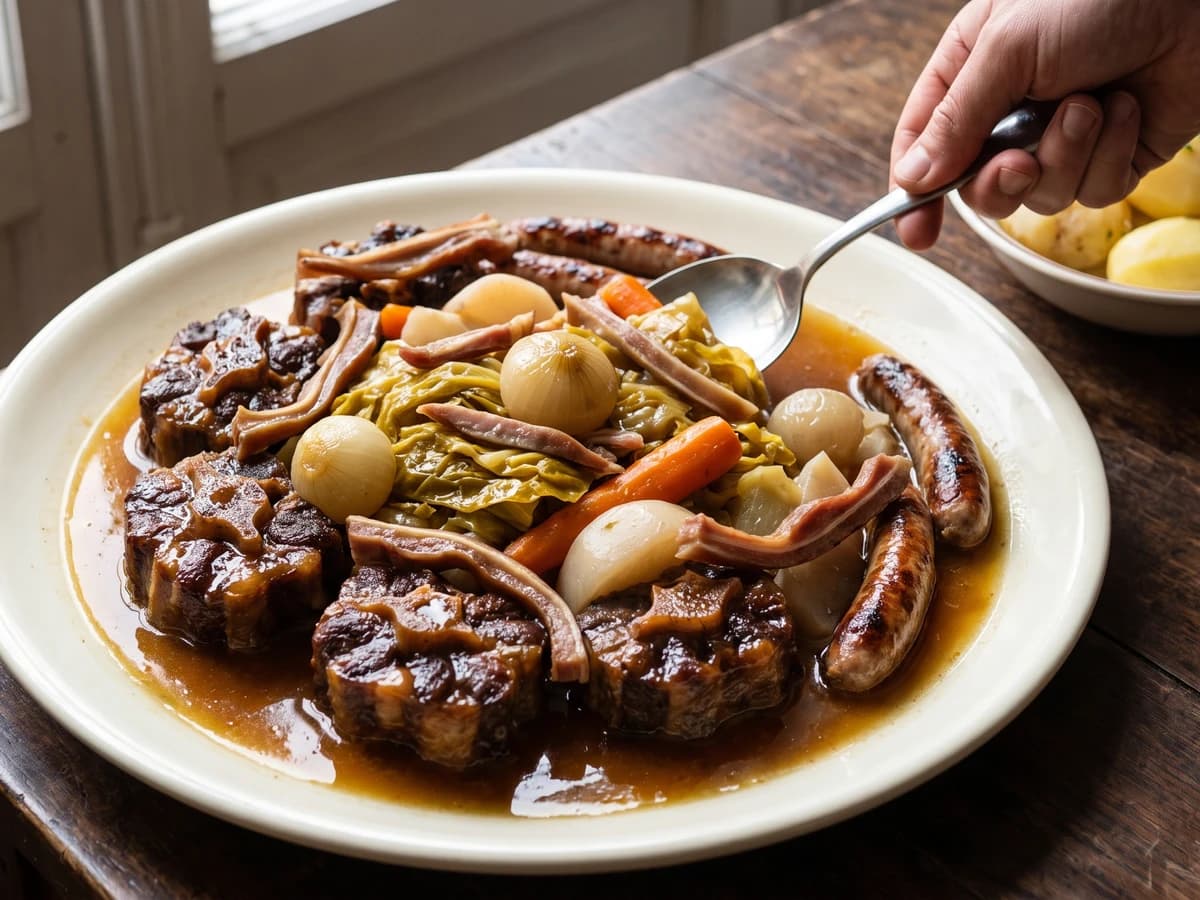
Queue de Bœuf en Hochepot gathers oxtail, pig's trotter and ear, cabbage, roots, and grilled chipolatas around a clear, gelatin-rich broth whose quiet simmer keeps every piece tender and distinct.
Chef Juliette
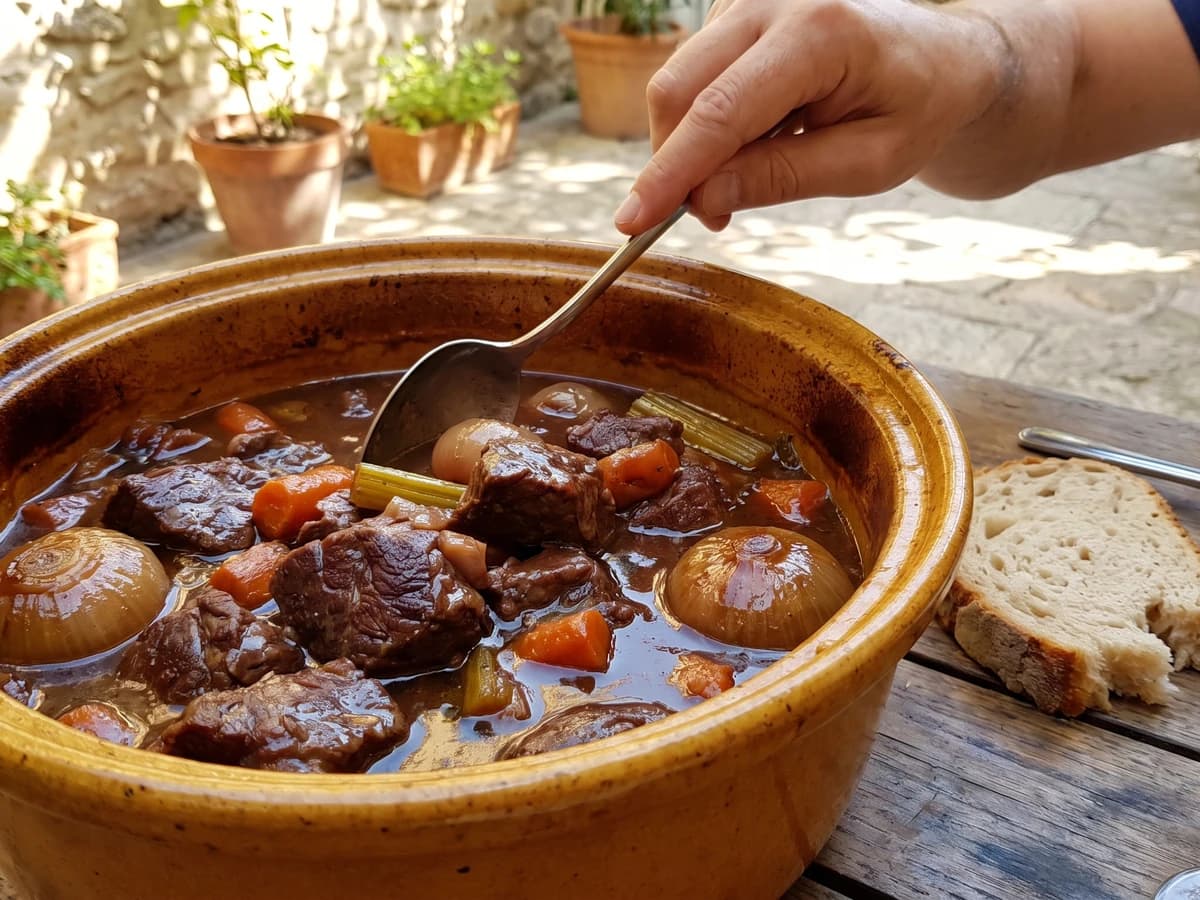
Beef shoulder larded with bacon, sharpened by red wine and vinegar, then sealed with garlic, vegetables, and dry lemon peel until the low oven turns it yielding and the gravy darkly glossy.
Chef Juliette
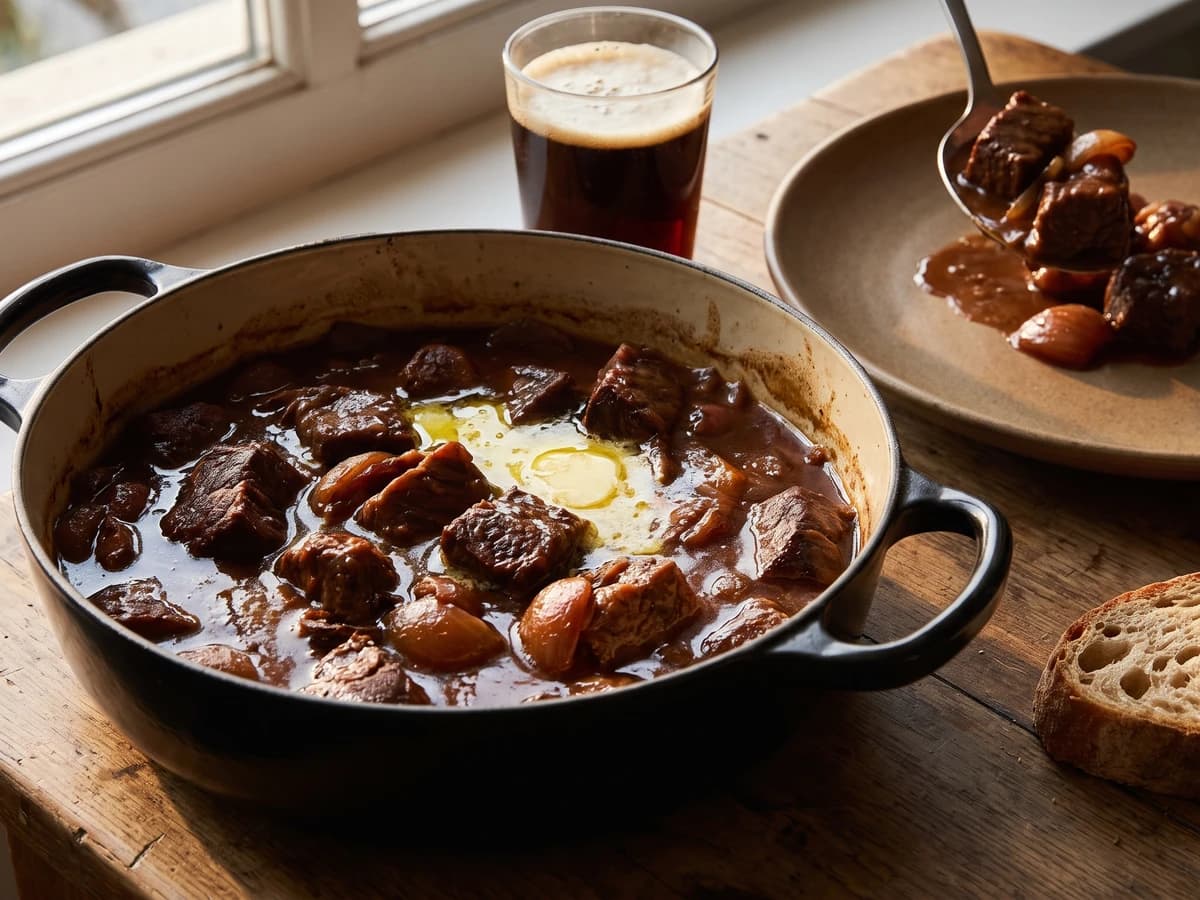
Beef shoulder and browned onions layered under old lambic, brown stock, and roux, then braised until the beer turns glossy and bittersweet: Flanders’ patient lesson in building a sauce.