Chef Juliette
Bouillabaisse à la Marseillaise
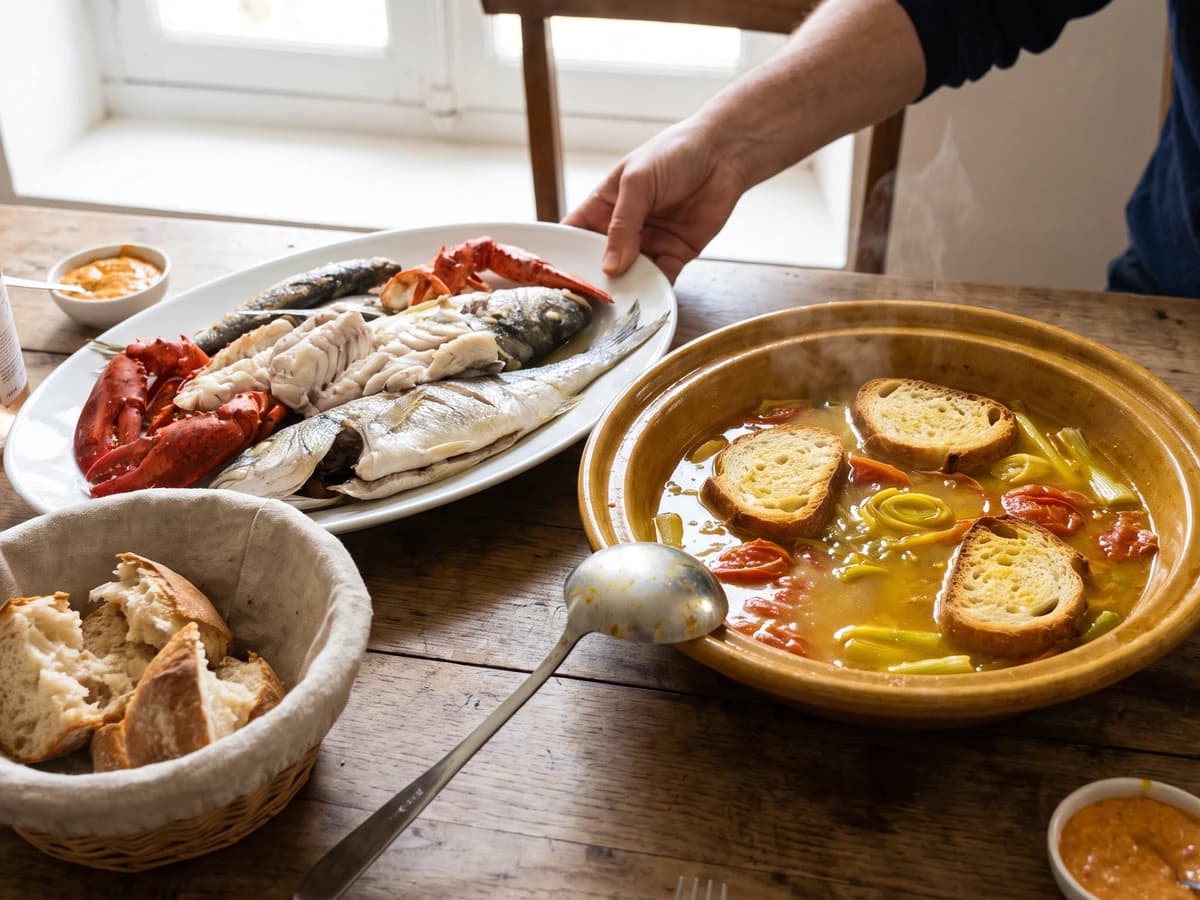
Marseille's great fish stew, saffron-gold and garlic-scented, proves that a hard boil can be the careful choice: it binds olive oil into broth before the whole pot meets bread.
A cooking platform built around craft, culture, and the stories behind what we eat.
Created by Chef Juliette
Based on No. 1174, Carbonnades à la Flamande, from Le Guide Culinaire (1907) by Auguste Escoffier
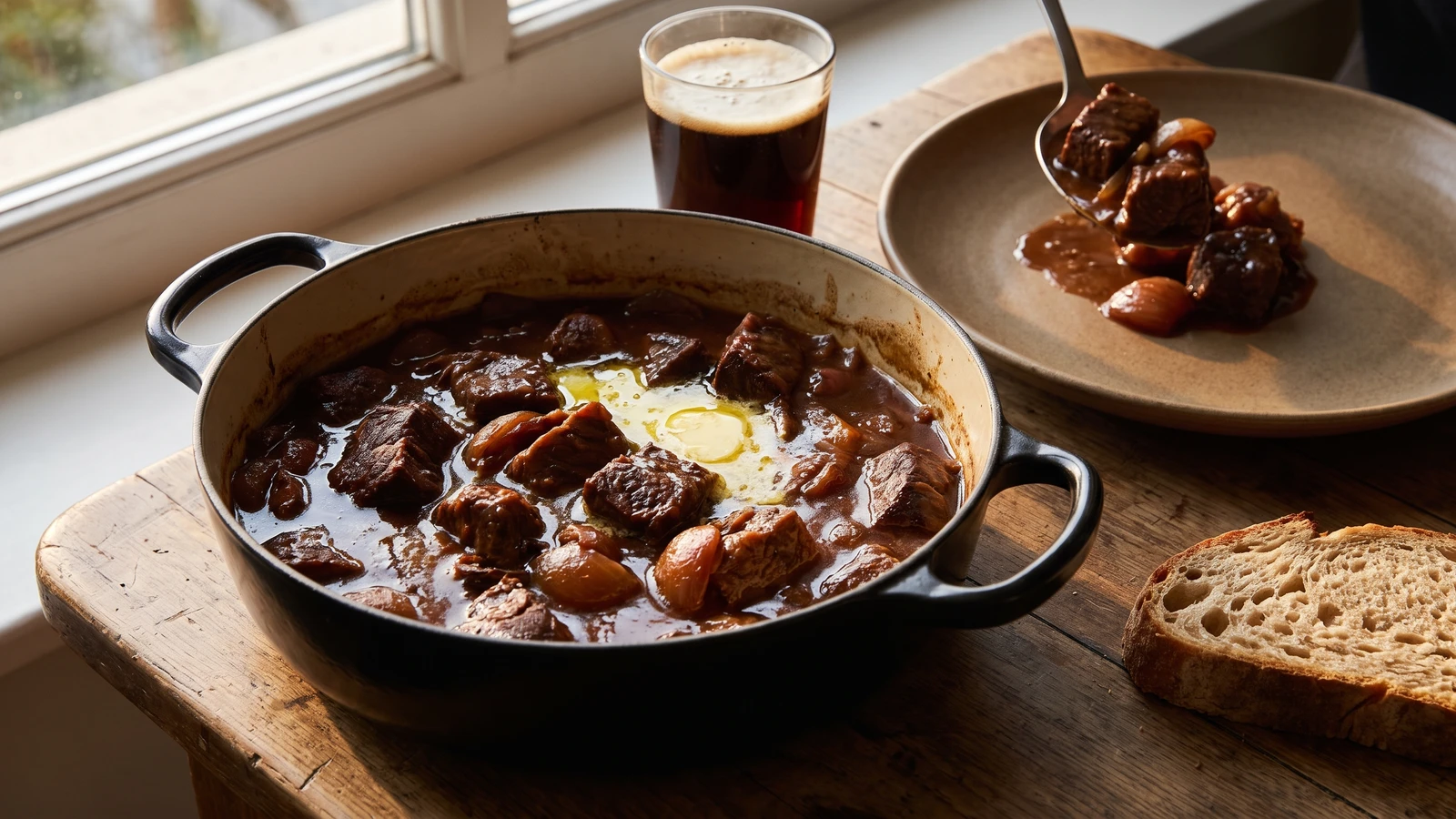
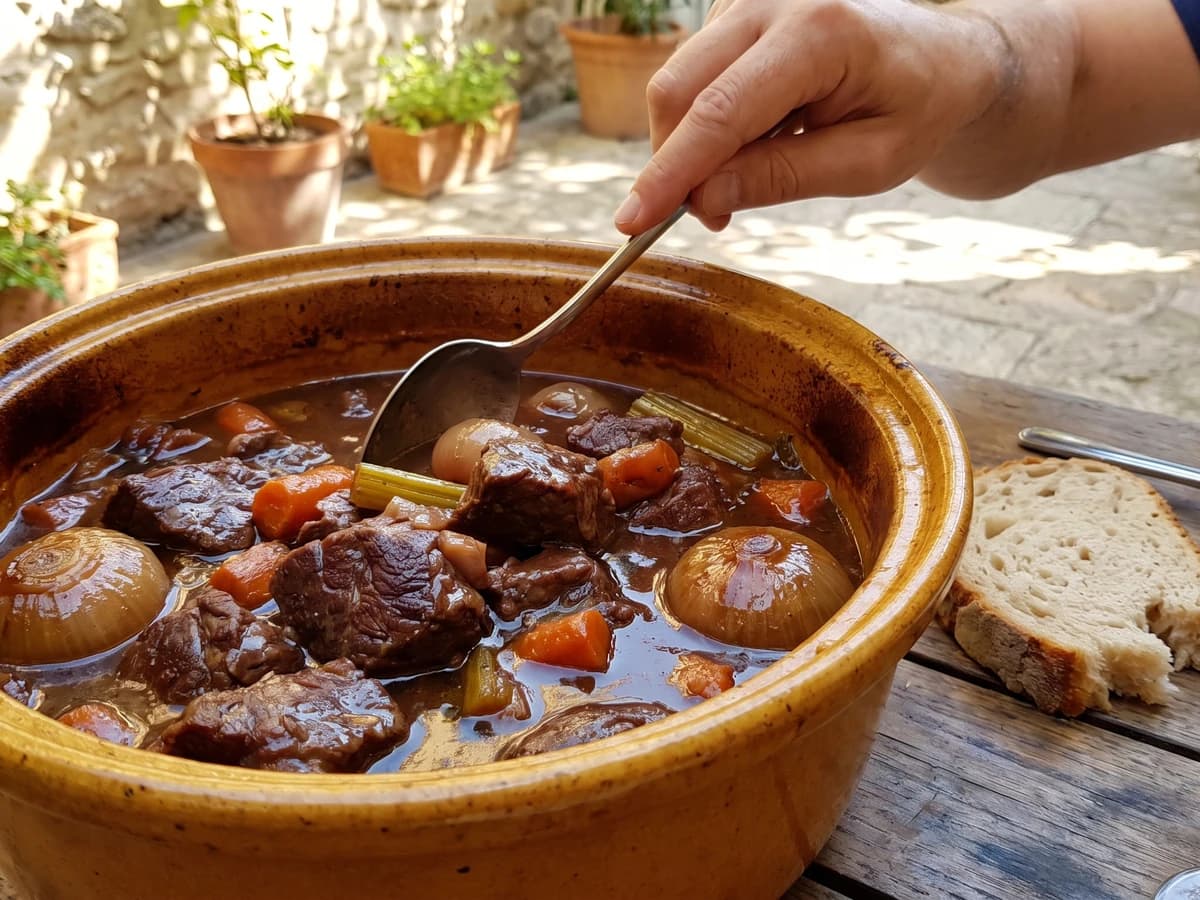
Beef shoulder and browned onions layered under old lambic, brown stock, and roux, then braised until the beer turns glossy and bittersweet: Flanders’ patient lesson in building a sauce.
Carbonnades à la Flamande (Flemish-style beef braised in beer) teaches the governing rule of a braise: liquid cannot supply the depth you refused to brown into the meat and onions. The beef must take a quick, dark colour, the onions must brown patiently, and only then may beer, stock, roux, and sugar become one sauce. Layering is not ceremony. It lets the onions season every slice while the slow oven does its work.
The original kitchen assumed a saucier, the cook responsible for sauces, stock fat ready for the sauté pan, brown stock never far from the fire, and prepared brown roux. Here the book’s proportions are halved for four, the parallel work is sequenced for one cook, and a small brown roux is made while the rest of the mise en place waits. Beef dripping or clarified butter replaces the stockpot fat, and good unsalted brown beef stock supplies the body. One cook, one stove, one evening.
The fine tammy and timbale used for the optional Soubise service are brigade scaffolding, so this version keeps the book’s primary service, beef and onions mingled generously in their cocotte. Browning, layering, brown roux, equal measures of beer and stock, and the full slow braise remain, because they are the dish. Before you touch the pan, know this: take the onions to a full chestnut brown without scorching them, because pale onions leave the beer harsh, and no length of braising can invent the sweetness you skipped.
Carbonnades belong to Flanders on both sides of the Franco-Belgian border, with a firm home in the estaminets and family kitchens of French Flanders around Lille, where beer, not wine, fills the braising pot. The dish traveled from domestic and tavern cooking into the classical grand-kitchen canon, which formalized its sauce with brown stock and brown roux while preserving the layered beef and onions. Old lambic is this classical entry’s preferred beer, though northern tables also use malty brown ale; the constant is beer balanced by a little sugar, never a Burgundy-style wine sauce.
Quantity
1½ pounds (680 g)
trimmed and cut across the grain into short slices about ¼ inch (6 mm) thick
Quantity
2 teaspoons (10 ml / 12 g), divided, plus more if needed
Quantity
1 teaspoon (5 ml / 2 g), divided
Quantity
2 tablespoons (30 ml / 28 g)
Quantity
2 large, about 2 cups (475 ml / 285 g)
minced
Quantity
2 tablespoons (30 ml / 28 g)
Quantity
2 tablespoons (30 ml / 28 g)
Quantity
¼ cup (60 ml / 29 g)
Quantity
1¾ cups (420 ml / approximately 420 g)
Quantity
1¾ cups (420 ml / approximately 420 g)
Quantity
3 tablespoons (45 ml / 21 g)
sifted
Quantity
1
| Ingredient | Quantity |
|---|---|
| boneless beef shoulder or chucktrimmed and cut across the grain into short slices about ¼ inch (6 mm) thick | 1½ pounds (680 g) |
| fine sea salt | 2 teaspoons (10 ml / 12 g), divided, plus more if needed |
| freshly ground black pepper | 1 teaspoon (5 ml / 2 g), divided |
| rendered beef fat, traditionally stock fat, or clarified butter | 2 tablespoons (30 ml / 28 g) |
| large yellow onionsminced | 2 large, about 2 cups (475 ml / 285 g) |
| unsalted butter for the onions | 2 tablespoons (30 ml / 28 g) |
| unsalted butter for the brown roux | 2 tablespoons (30 ml / 28 g) |
| all-purpose flour for the brown roux | ¼ cup (60 ml / 29 g) |
| unfruited old lambic or malty dark Belgian ale | 1¾ cups (420 ml / approximately 420 g) |
| unsalted brown beef stock | 1¾ cups (420 ml / approximately 420 g) |
| powdered sugarsifted | 3 tablespoons (45 ml / 21 g) |
| bouquet garni of parsley, thyme, and bay | 1 |
Melt the roux butter in the heavy skillet over medium-low heat, add the flour, and stir without stopping until the mixture passes from pale sand to the brown of a hazelnut, about 12 to 18 minutes. The aroma should be toasted and nutty, never acrid. If the colour begins racing, lift the skillet from the heat and keep stirring until it slows. Scrape the brown roux into a bowl to cool, then wipe the skillet clean before browning the beef.
Melt the onion butter in the cocotte over medium heat. Add the minced onions with a pinch of the measured salt and cook for 25 to 35 minutes, stirring more frequently as they colour, until they are soft and uniformly chestnut brown. If the pot floor begins catching before the onions are ready, add a spoonful from the measured stock and scrape it clean; the moisture will evaporate and the browning can continue. Transfer the onions to a bowl.
Season the beef with 1½ teaspoons of the salt and ¾ teaspoon of the pepper. Heat the rendered beef fat or clarified butter in the wiped skillet over medium-high heat until shimmering. Brown the slices quickly in three batches, about 60 to 90 seconds per side, leaving space around every piece. They need a dark bronze surface but should remain underdone within. Transfer each batch to a plate while preserving the brown fond on the skillet floor.
Arrange the beef and browned onions in alternating layers inside the cocotte, beginning and ending with onions. Place the bouquet garni in the middle as you build. Keep the layers loose enough for the sauce to move between them, but do not stir them together yet.
Pour excess fat from the beef skillet while leaving its bronze fond intact. Take the skillet off the heat and add the beer gradually, then return it to medium heat and scrape up every browned morsel. Add the remaining brown beef stock and bring the liquid to a boil. Whisk in the cooled brown roux a little at a time, followed by the powdered sugar, and boil for 2 to 3 minutes while stirring, until the sauce lightly coats a spoon. If the roux gathers into lumps, do not discard the sauce. Ça se rattrape: keep it boiling while you whisk, then pass it through the fine-mesh strainer directly over the layered beef and onions. The book’s straining step is the rescue as well as the refinement.
Cover the cocotte and place it in a 300°F (150°C) oven. Braise for 2½ to 3 hours, until the beef yields easily to a fork and the onions have nearly melted into the sauce. The liquid should barely tremble. If it bubbles hard when checked, lower the oven to 275°F (135°C); a fierce boil tightens the meat and drives the fat from the sauce.
Remove and discard the bouquet garni, then fold the beef and onions together gently, preserving the slices. If the sauce is thin, lift out the solids and boil the sauce alone for several minutes before returning them. If it is too tight, loosen it with a spoonful of hot water. Skim any excess fat, then season with the reserved salt and pepper. Bring the carbonnades to the table in their cocotte, the onions mingled through the beef and the sauce glossy enough to hold to every slice. À table!
1 serving (about 365g)
Culinary guides, cultural storytelling, and the editorial depth that makes cooking meaningful.
Discover Culinary ExplorerChef Juliette
Marseille's great fish stew, saffron-gold and garlic-scented, proves that a hard boil can be the careful choice: it binds olive oil into broth before the whole pot meets bread.
Chef Juliette
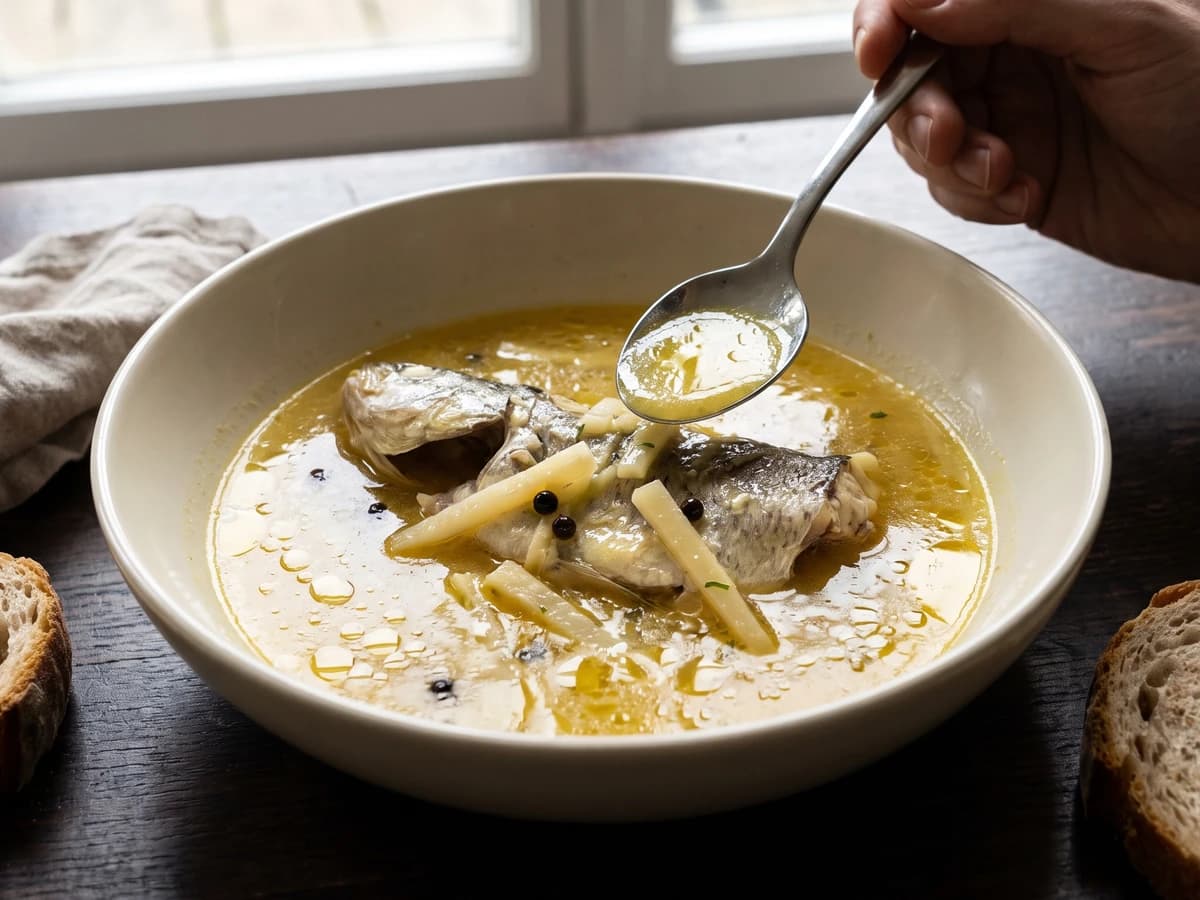
Waterzoi asks fresh, bone-in river fish to thicken its own buttery broth, with parsley root and pepper for company. No flour, no stockpot, just a brisk simmer watched closely.
Chef Juliette
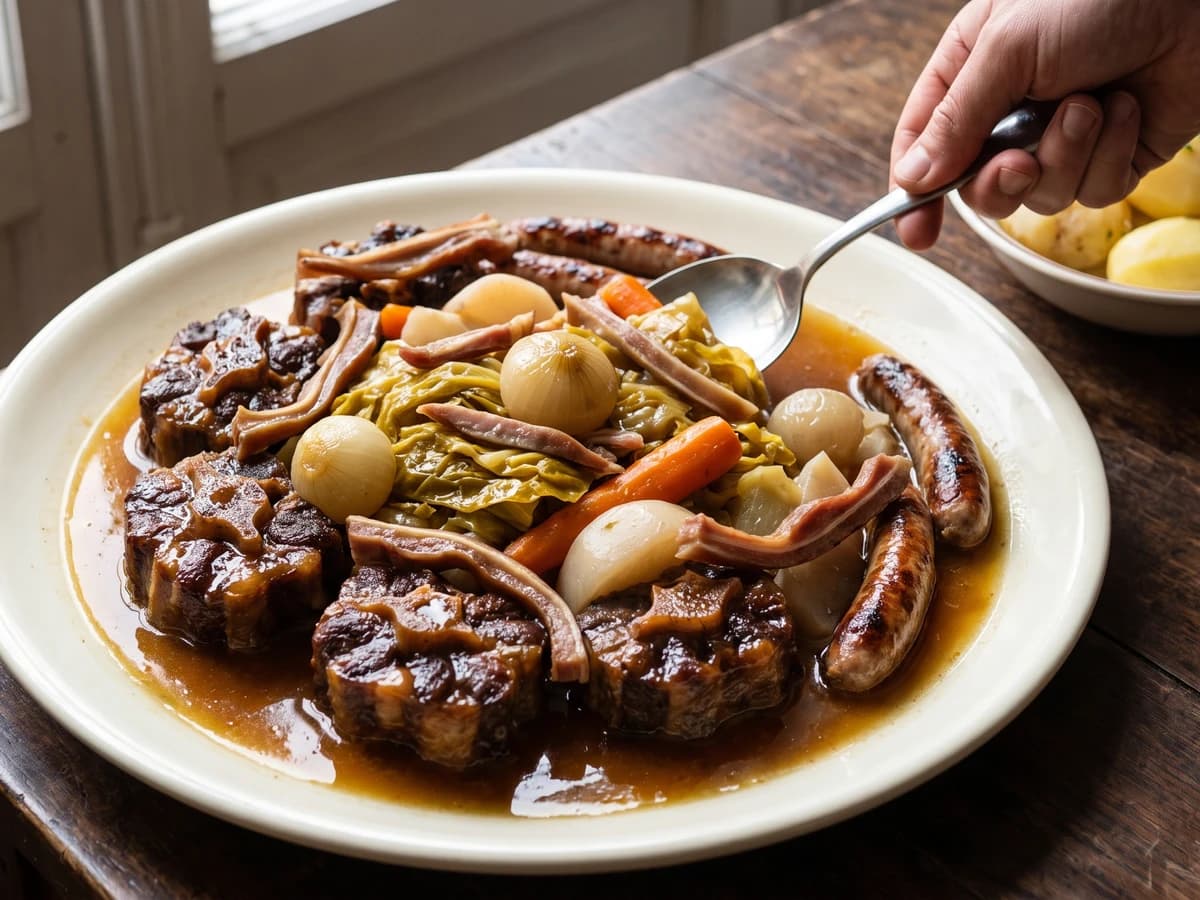
Queue de Bœuf en Hochepot gathers oxtail, pig's trotter and ear, cabbage, roots, and grilled chipolatas around a clear, gelatin-rich broth whose quiet simmer keeps every piece tender and distinct.
Chef Juliette
Beef shoulder larded with bacon, sharpened by red wine and vinegar, then sealed with garlic, vegetables, and dry lemon peel until the low oven turns it yielding and the gravy darkly glossy.