Chef Juliette
Waterzoi
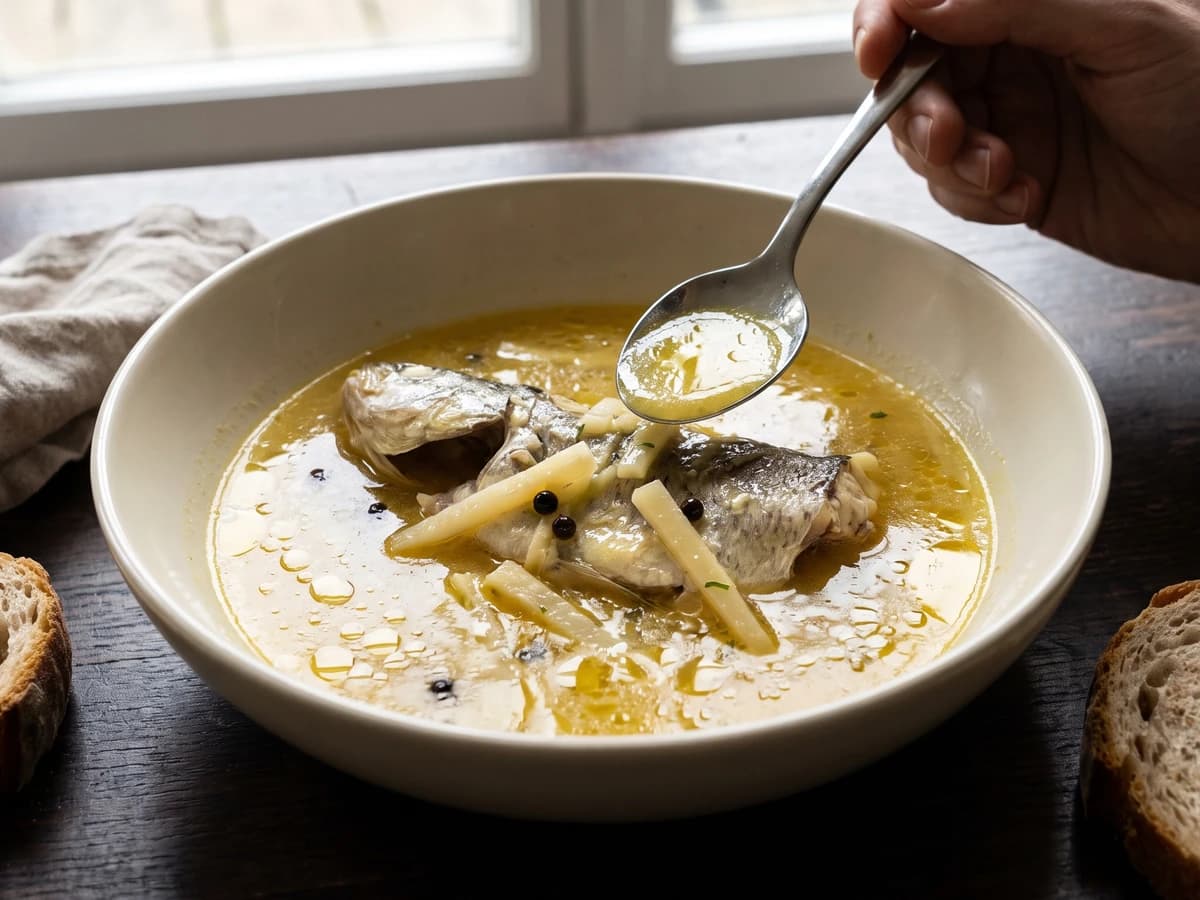
Waterzoi asks fresh, bone-in river fish to thicken its own buttery broth, with parsley root and pepper for company. No flour, no stockpot, just a brisk simmer watched closely.
A cooking platform built around craft, culture, and the stories behind what we eat.
Created by Chef Juliette
Based on No. 1039, Bouillabaisse à la Marseillaise, from Le Guide Culinaire (1907) by Auguste Escoffier
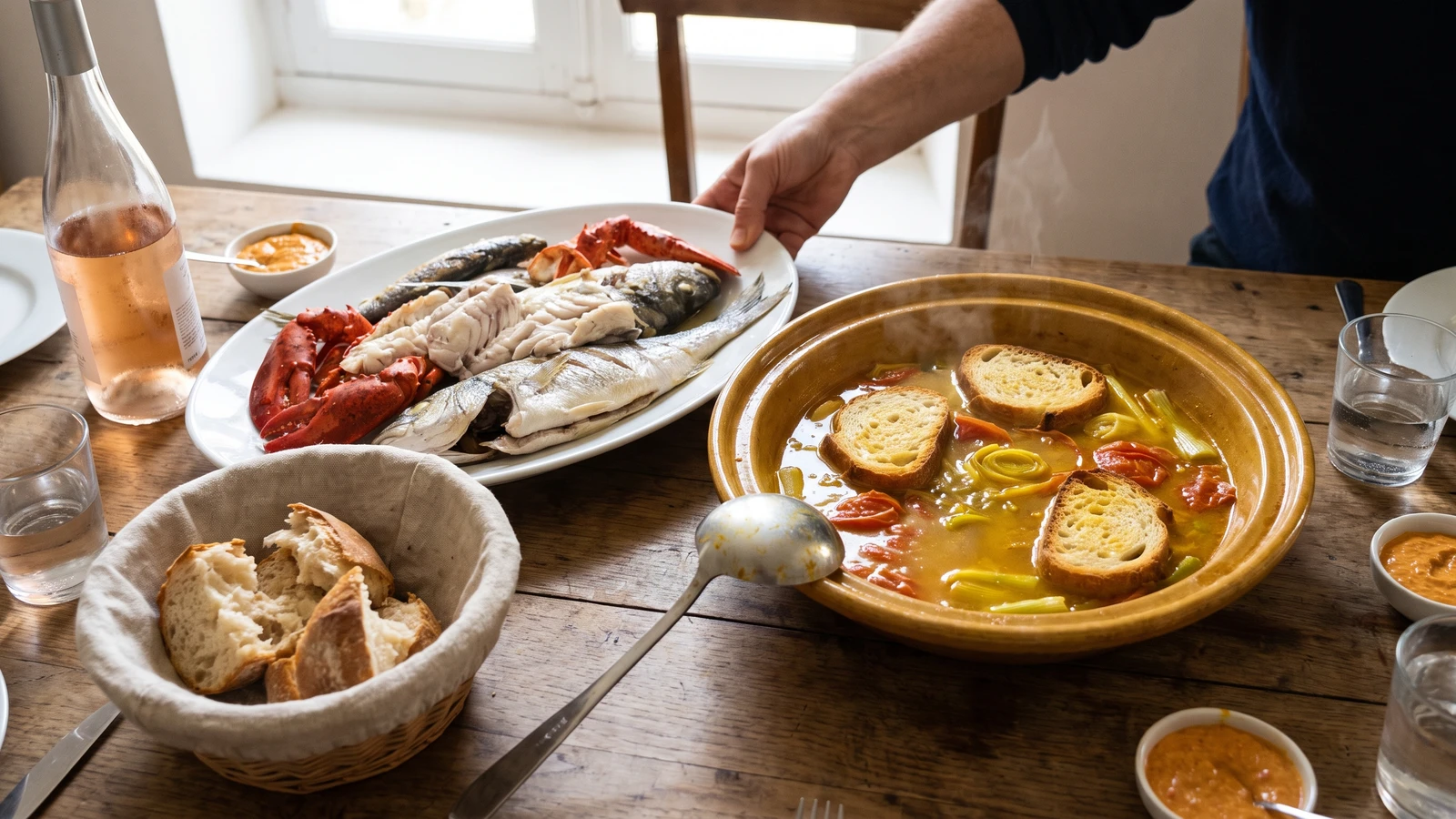
Marseille's great fish stew, saffron-gold and garlic-scented, proves that a hard boil can be the careful choice: it binds olive oil into broth before the whole pot meets bread.
Bouillabaisse à la Marseillaise (Marseille-style fish stew) teaches one true thing: the broth must boil briskly. Gentle simmering, usually a virtue with fish, leaves water below and oil above; the hard boil makes an émulsion, suspending the olive oil through the saffron liquor while the bones and shells give it body. This force is not carelessness. It is the dish.
Unlike many formulas from the grand repertoire, the original assumes neither a saucier on staff nor a stock never off the fire, and it needs no salamander. It assumes something Marseille supplied instead: a basket of varied Mediterranean fish and hands accustomed to cleaning them. Your fishmonger can do that scaffolding. For four people, the brigade's sprawling assortment becomes two purposeful pounds of fish and shellfish in one broad pot, with firm pieces going in first and whiting and red mullet following later. The species may change with the market, but the book's proportions, raw-pot method, olive-oil foundation, and two-stage timing stay intact.
The two-pound formula is already right for one cook, one stove, one evening. Ask for bone-in portions, keep the delicate fish separate, and do not stir once cooking begins. The step that decides everything is the first eight minutes at a genuine brisk boil; if the broth still looks divided, ça se rattrape, and the method tells you exactly how.
Bouillabaisse belongs to Marseille and the rocky Provençal coast, where fishers cooked intensely flavored fish that were awkward to sell, including rascasse, gurnard, conger, and small crustaceans. From the working waterfront it passed into the city's dining rooms and the classical repertoire, where fish lists became more formal but the service remained telling: broth poured over bread, with the fish presented separately. Its name is commonly linked to Provençal words for boiling and lowering, yet this Marseillaise formula insists on a brisk boil strong enough to bind olive oil into the liquor.
Quantity
1, about 1 pound (450 g)
dispatched and cut crosswise into 4 sections by the fishmonger, with shell and juices reserved
Quantity
8 ounces (225 g)
preferably bone-in and cut into 4 large pieces
Quantity
4 ounces (115 g)
preferably bone-in, cut into 4 thick pieces, and kept separate
Quantity
4 ounces (115 g)
cleaned and left whole if small or cut into 4 thick pieces, then kept separate
Quantity
1, about ⅔ cup (160 ml / 100 g)
finely chopped
Quantity
1, about ¾ cup (180 ml / 80 g)
washed and chopped
Quantity
1, about ½ cup (120 ml / 120 g)
peeled, halved, pressed free of seeds, and chopped
Quantity
2 cloves, about 2 teaspoons (10 ml / 6 g)
crushed and chopped
Quantity
2 tablespoons (30 ml / 8 g)
concassée (roughly chopped)
Quantity
⅛ teaspoon (0.6 ml / 0.1 g)
Quantity
1 small
Quantity
1 small sprig
Quantity
⅛ teaspoon (0.6 ml / 0.1 g)
Quantity
1 small piece, about 4 inches (10 cm)
Quantity
2 tablespoons (30 ml / 27 g)
Quantity
About 3½ cups (830 ml / 830 g)
use only enough to cover the fish
Quantity
1¼ teaspoons (6 ml / 8 g)
Quantity
¼ teaspoon (1.25 ml / 0.6 g)
Quantity
8 slices, about 10 ounces (280 g)
slightly dried
| Ingredient | Quantity |
|---|---|
| small spiny lobsterdispatched and cut crosswise into 4 sections by the fishmonger, with shell and juices reserved | 1, about 1 pound (450 g) |
| rascasse, chapon, John Dory, gurnard, sea robin, or monkfishpreferably bone-in and cut into 4 large pieces | 8 ounces (225 g) |
| whitingpreferably bone-in, cut into 4 thick pieces, and kept separate | 4 ounces (115 g) |
| red mulletcleaned and left whole if small or cut into 4 thick pieces, then kept separate | 4 ounces (115 g) |
| small yellow onionfinely chopped | 1, about ⅔ cup (160 ml / 100 g) |
| white part of small leekwashed and chopped | 1, about ¾ cup (180 ml / 80 g) |
| small ripe tomatopeeled, halved, pressed free of seeds, and chopped | 1, about ½ cup (120 ml / 120 g) |
| garliccrushed and chopped | 2 cloves, about 2 teaspoons (10 ml / 6 g) |
| flat-leaf parsleyconcassée (roughly chopped) | 2 tablespoons (30 ml / 8 g) |
| powdered saffron | ⅛ teaspoon (0.6 ml / 0.1 g) |
| bay leaf | 1 small |
| fresh summer savory (optional) | 1 small sprig |
| dried savory (optional) | ⅛ teaspoon (0.6 ml / 0.1 g) |
| feathery fennel frond or tender fennel stalk | 1 small piece, about 4 inches (10 cm) |
| extra-virgin olive oil | 2 tablespoons (30 ml / 27 g) |
| cold wateruse only enough to cover the fish | About 3½ cups (830 ml / 830 g) |
| fine sea salt | 1¼ teaspoons (6 ml / 8 g) |
| freshly ground black pepper | ¼ teaspoon (1.25 ml / 0.6 g) |
| plain household breadslightly dried | 8 slices, about 10 ounces (280 g) |
Have the fishmonger dispatch and section the lobster, keeping every shell and drop of juice. Cut the firm fish into large bone-in portions if possible, then hold the whiting and red mullet separately because they cook more quickly. Check every piece for stray scales or loose shards of bone, but do not rinse away the lobster juices. Together, the lobster and fish should weigh about 2 pounds (900 g), preserving the book's proportion.
Set the lobster sections and firm fish in a broad 6-quart (5.7 L) pot in a snug layer. Add the onion, leek, pressed tomato, garlic, parsley concassée, saffron, bay, savory, fennel, olive oil, salt, and pepper. Pour in only enough cold water to cover, about 3½ cups (830 ml). If your pot requires more, add another 1 gram of salt for each additional 100 ml water so the liquor keeps the original seasoning ratio. Do not sauté the vegetables and do not substitute prepared stock; the fish cooks in and creates its own broth.
Set the uncovered pot over high heat and bring it to a full, brisk boil. Start timing only when the whole surface is moving strongly, then boil for 8 minutes. Do not stir, which would break the fish; let the rolling liquid do the mixing, or rock the pot gently by its handles with dry oven mitts. The broth should turn saffron-gold and lightly opaque as the olive oil binds into it. If broad puddles of oil still sit on top after 8 minutes, increase the heat and rock the pot for another 60 seconds. Ça se rattrape.
After the first 8 minutes, tuck the whiting and red mullet among the larger pieces without stirring. Let the pot return immediately to a brisk boil and cook for a further 7 minutes. At the finish, the lobster shell will be vivid red, the fish flesh pearly and opaque to the bone, and the broth fragrant with saffron, fennel, and garlic. If a delicate piece splits, lift its fragments together with a slotted spoon and place them neatly on the platter. The flavor is unharmed, and you never apologize at your own table.
Lift the fish carefully with a broad slotted spoon and arrange it on a warmed oval platter, setting the lobster sections around the outside as the original directs. Lay the dried bread in the bottom of a separate deep serving dish, then pour the saffron liquor and softened aromatic vegetables directly over it. Bring both dishes to the table at once, spooning broth-soaked bread into warm bowls and serving the fish alongside. À table!
1 serving (about 445g)
Culinary guides, cultural storytelling, and the editorial depth that makes cooking meaningful.
Discover Culinary ExplorerChef Juliette
Waterzoi asks fresh, bone-in river fish to thicken its own buttery broth, with parsley root and pepper for company. No flour, no stockpot, just a brisk simmer watched closely.
Chef Juliette
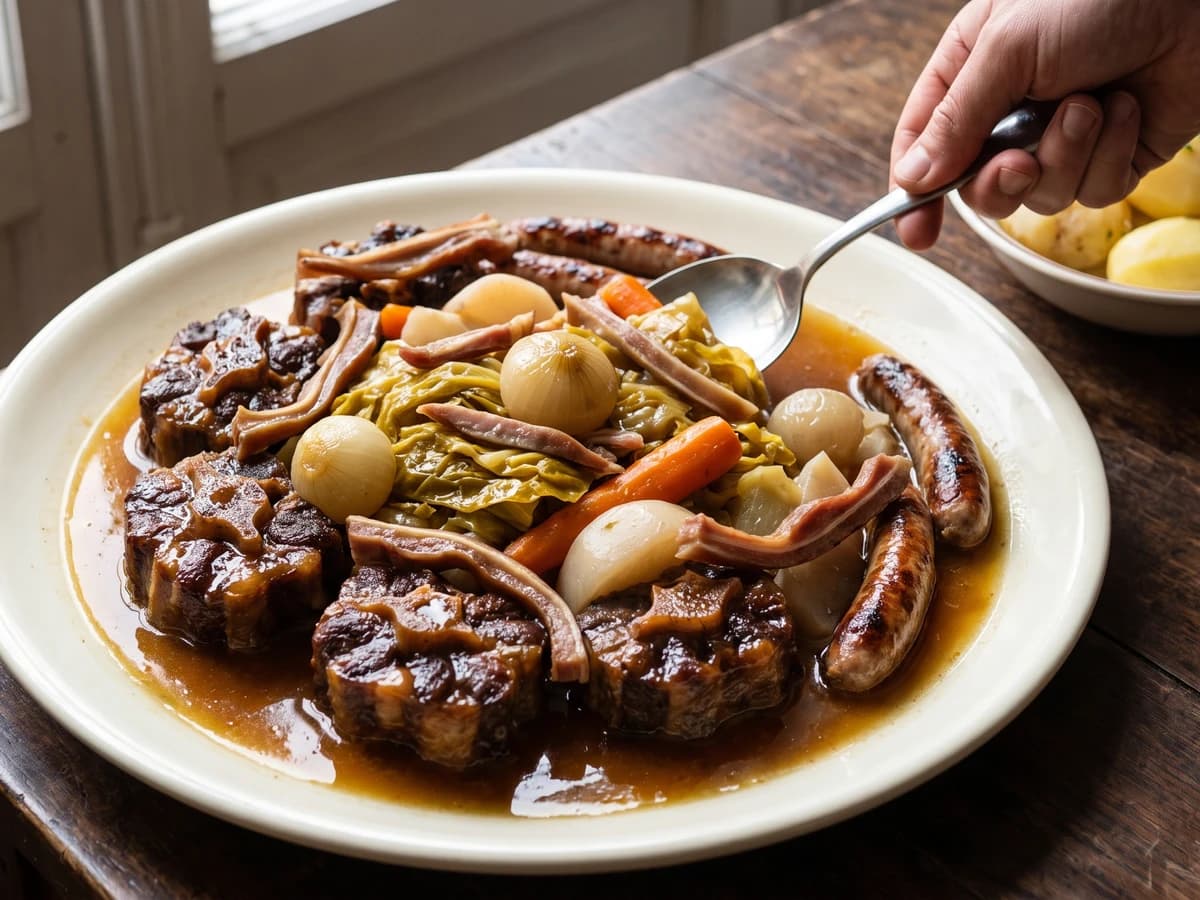
Queue de Bœuf en Hochepot gathers oxtail, pig's trotter and ear, cabbage, roots, and grilled chipolatas around a clear, gelatin-rich broth whose quiet simmer keeps every piece tender and distinct.
Chef Juliette
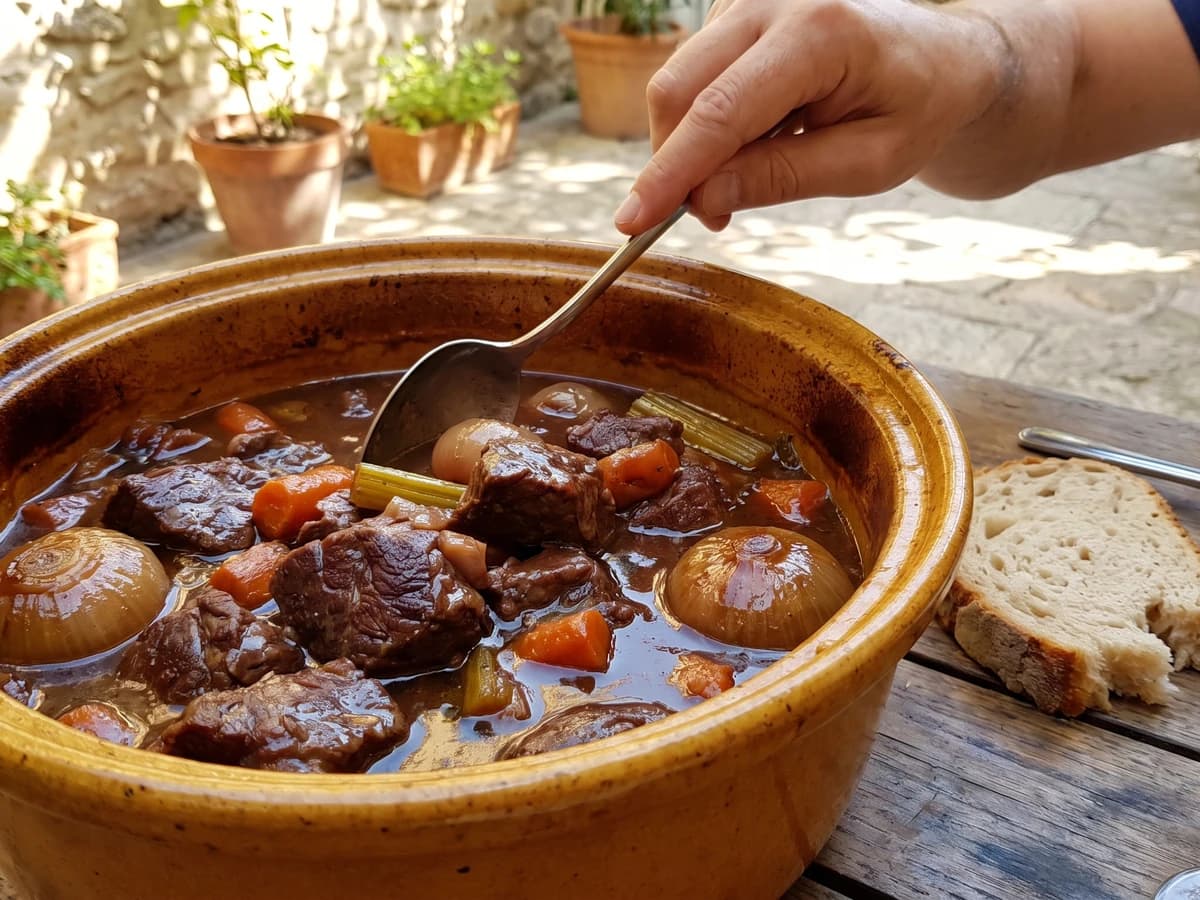
Beef shoulder larded with bacon, sharpened by red wine and vinegar, then sealed with garlic, vegetables, and dry lemon peel until the low oven turns it yielding and the gravy darkly glossy.
Chef Juliette
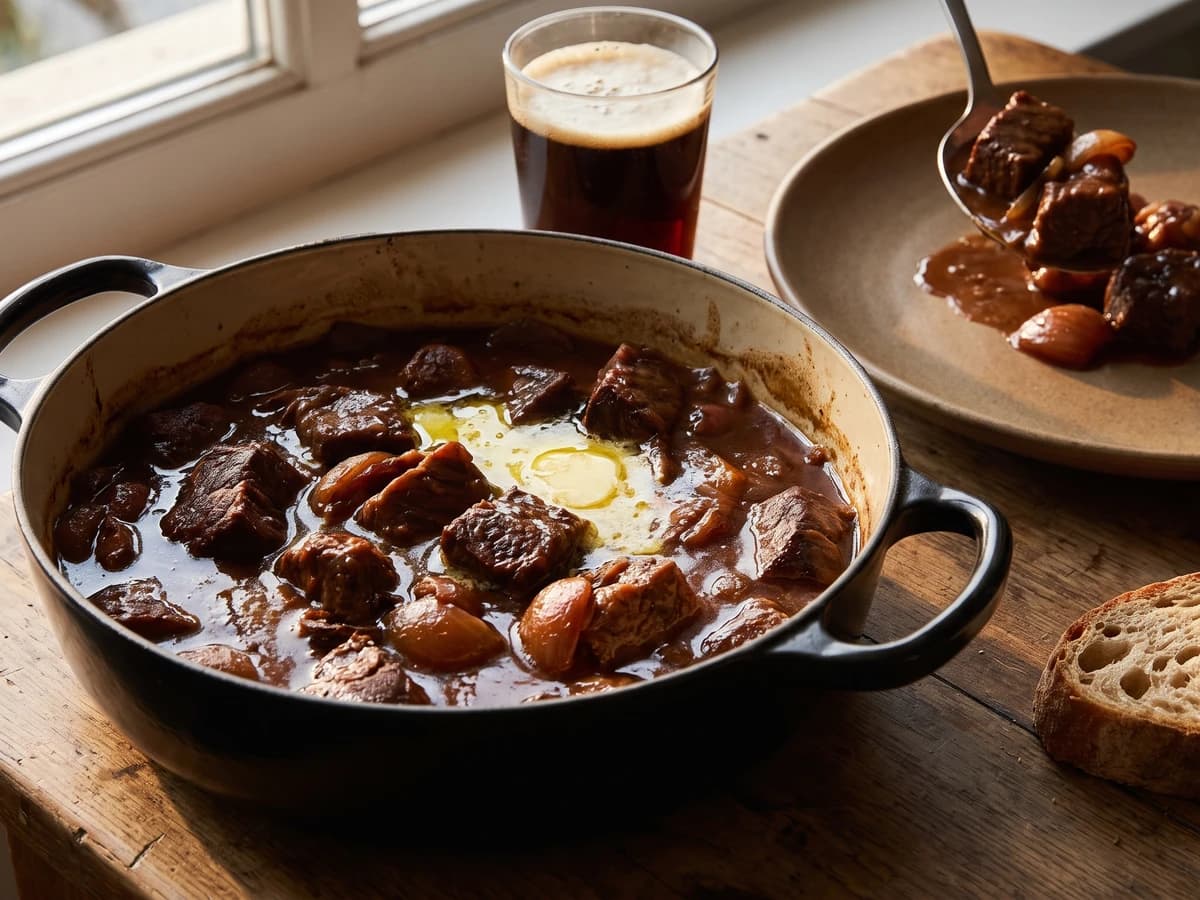
Beef shoulder and browned onions layered under old lambic, brown stock, and roux, then braised until the beer turns glossy and bittersweet: Flanders’ patient lesson in building a sauce.