
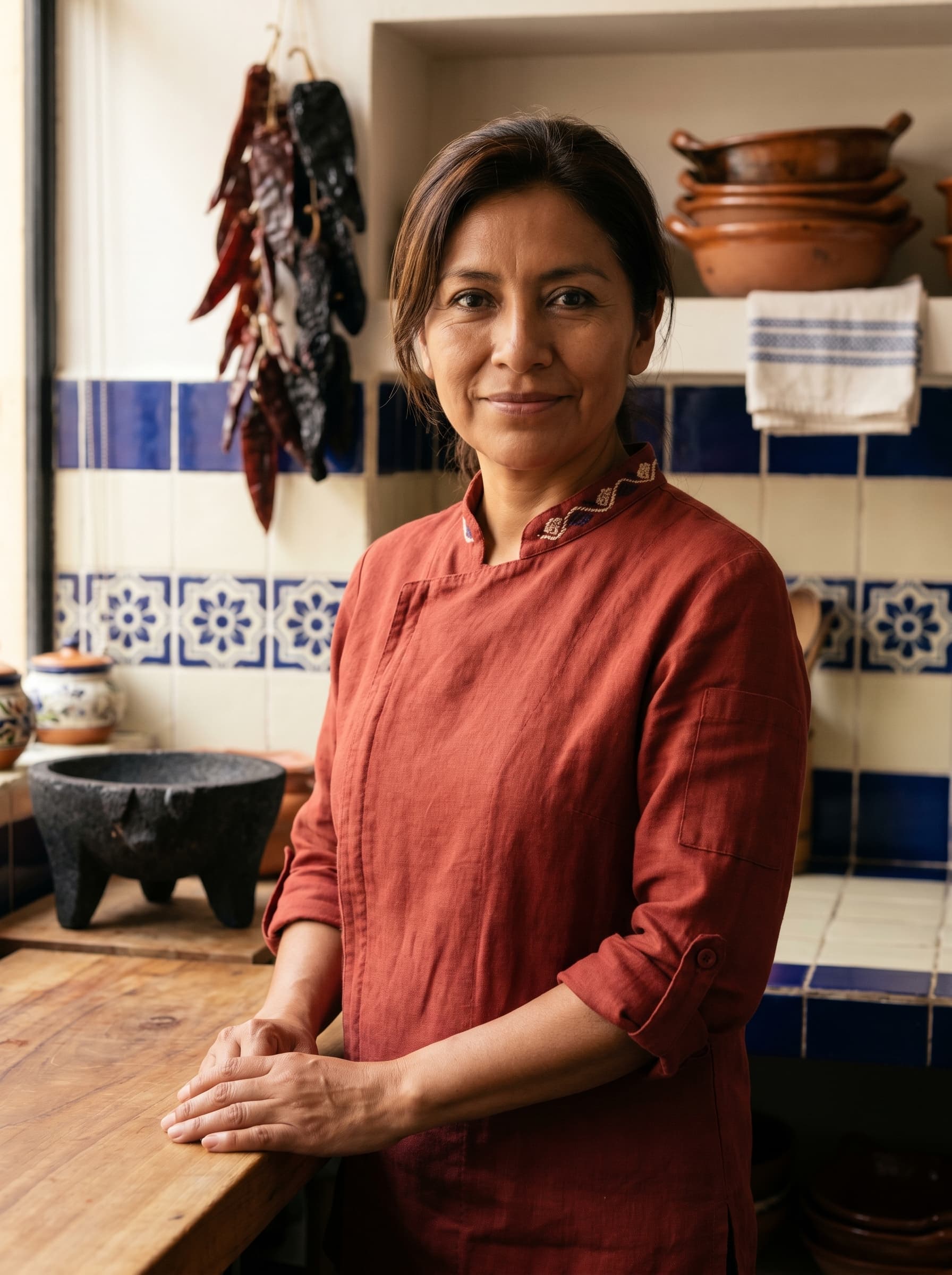
Chef Lupita
Chorote Tabasqueño
Tabasco's Chontal chorote is a thick cacao and nixtamal drink, fermented in banana leaf and beaten into cold water until it tastes earthy, sour, and old in the right way.
Updated May 30, 2026
The bebida tradition of the Maya south, the oldest cacao-drink grammar in the Americas. Pozol, chorote, tascalate, polvillo and pinol from the corn-and-cacao corridor. Pox of the Tzotzil from the Altos de Chiapas. Comiteco distilled from maguey aguamiel in Comitán. Mistela chiapaneca, balché lacandón, guarapo tabasqueño. Café de olla of Soconusco altura beans. Aguas of matalí, chaya and chía. Champurrado and atoles of granillo, frijol and the indigenous highland kitchen. Cada estado, su propia cocina.
A cooking platform built around craft, culture, and the stories behind what we eat.
Chef Lupita
Tabasco's Chontal chorote is a thick cacao and nixtamal drink, fermented in banana leaf and beaten into cold water until it tastes earthy, sour, and old in the right way.

Chef Lupita
Chiapas's Comiteco birthday atole, made with coarse cracked white maize, whole milk, hojas de arrayán, and sugar, cooked slowly until the drink is thick, grainy, and unmistakably from Comitán.

Chef Lupita
Tabasco's Chontalpa drink of toasted maize and cacao, ground into a fine powder and beaten into cold water or milk until it feeds you, cools you, and keeps you standing.

Chef Lupita
Tabasco's daily green refresher from the Chontalpa, made with blanched chaya leaves, limón criollo, and piloncillo, poured over ice for the kind of heat that makes the kitchen slow down.

Chef Lupita
Tabasco's Chontalpa guarapo is sugarcane juice fermented with toasted maize and piloncillo, served cold after the sweetness turns lightly tart and alive.

Chef Lupita
Chiapas' cold-morning atole, built with nixtamalized masa, cacao from Soconusco, canela, and piloncillo, whisked until thick enough to coat a spoon.

Chef Lupita
Chiapas pinol is toasted maize ground with Mexican canela and piloncillo, whisked into cool water until it thickens lightly, then poured into a lacquered jicara the way the mercado taught it.

Chef Lupita
Los Altos de Chiapas drink this agua cold, with chía seeds suspended like tiny pearls, limón criollo for sharpness, and piloncillo for a cane-deep sweetness that belongs to the market.

Chef Lupita
Tabasco's Chontalpa refresher turns purple matalí leaves into a bright pink agua with limón criollo, sugar, and ice, the kind of drink that belongs beside a clay pitcher on a hot table.

Chef Lupita
Chiapas's Los Altos winter punch, built from fresh pineapple, tejocote, sugarcane, canela, and comiteco, the kind of drink that belongs to posadas in Comitán de Domínguez.

Chef Lupita
Chiapas Highland pox served the way the drink asks to be treated: clean, in small clay cups, with maíz criollo, piloncillo, sugarcane, and restraint at the table.

Chef Lupita
Tabasco's fresh sugarcane juice, pressed through a trapiche in the humid lowlands of La Chontalpa, served cold with limón before fermentation turns it into guarapo.
Chef Lupita
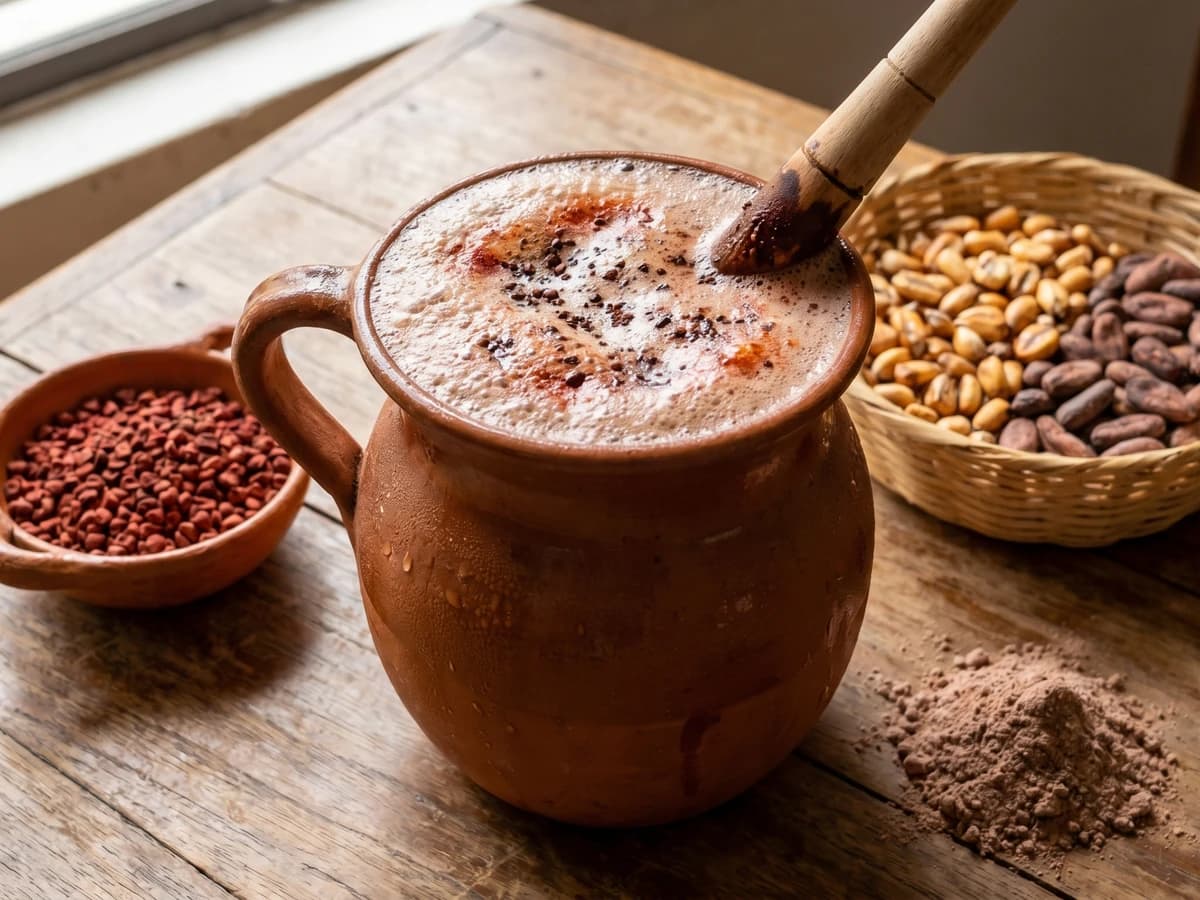
Chiapas's cold cacao and toasted maize drink, red from achiote and fragrant with canela, made into a powder that waits in the pantry for the weeknight glass.

Chef Lupita
Chiapas coffee from Soconusco, brewed clean with filtered water and a cloth filter so the cup tastes like volcanic soil, shade trees, and careful highland picking.

Chef Lupita
Chiapas Selva balche is a Lacandon Maya ceremonial ferment of balche bark, honey, and water, a lightly alcoholic drink that belongs to ritual space, not the bar cart.

Chef Lupita
Chiapas highland atole built from black beans, masa, hierba santa, and toasted chile costeño, served hot in clay cups as the kind of food that fills the stomach without showing off.

Chef Lupita
Chiapas's fruit mistela from Comitán, built with sugarcane aguardiente, ripe seasonal fruit, cinnamon, and time, a sweet digestive poured after dinner or beside strong afternoon coffee.

Chef Lupita
Chiapas coffee from the Soconusco highlands, brewed in clay with piloncillo and canela until the cup tastes dark, rounded, and built for a cold morning in Los Altos.

Chef Lupita
Chiapas's highland spirit from Comitán, born from maguey aguamiel, timbre bark, piloncillo, fermentation, and licensed distillation. Serve it simply so the honeyed, herbal character stays in charge.

Chef Lupita
Chiapas pox from the Altos, infused with toasted Soconusco cacao, Mexican canela, and piloncillo until the bottle tastes dark, warm, and serious.

Chef Lupita
Tabasco's cacao harvest drink, made with the white mucilage around fresh cacao beans, cold water, and piloncillo. Bright, lightly acidic, and only honest when the pod is in season.

Chef Lupita
Chiapas highland cascara tea from Tenejapa, made with dried coffee cherry husks, canela, and jengibre, a bright low-caffeine infusion built from what the coffee bean leaves behind.
Culinary guides, cultural storytelling, and the editorial depth that makes cooking meaningful.
Discover Culinary ExplorerChef Lupita is a fictional culinary guide to Regional Mexican Cuisine, written with the assistance of AI.