Culinary Explorer
A cooking platform built around craft, culture, and the stories behind what we eat.
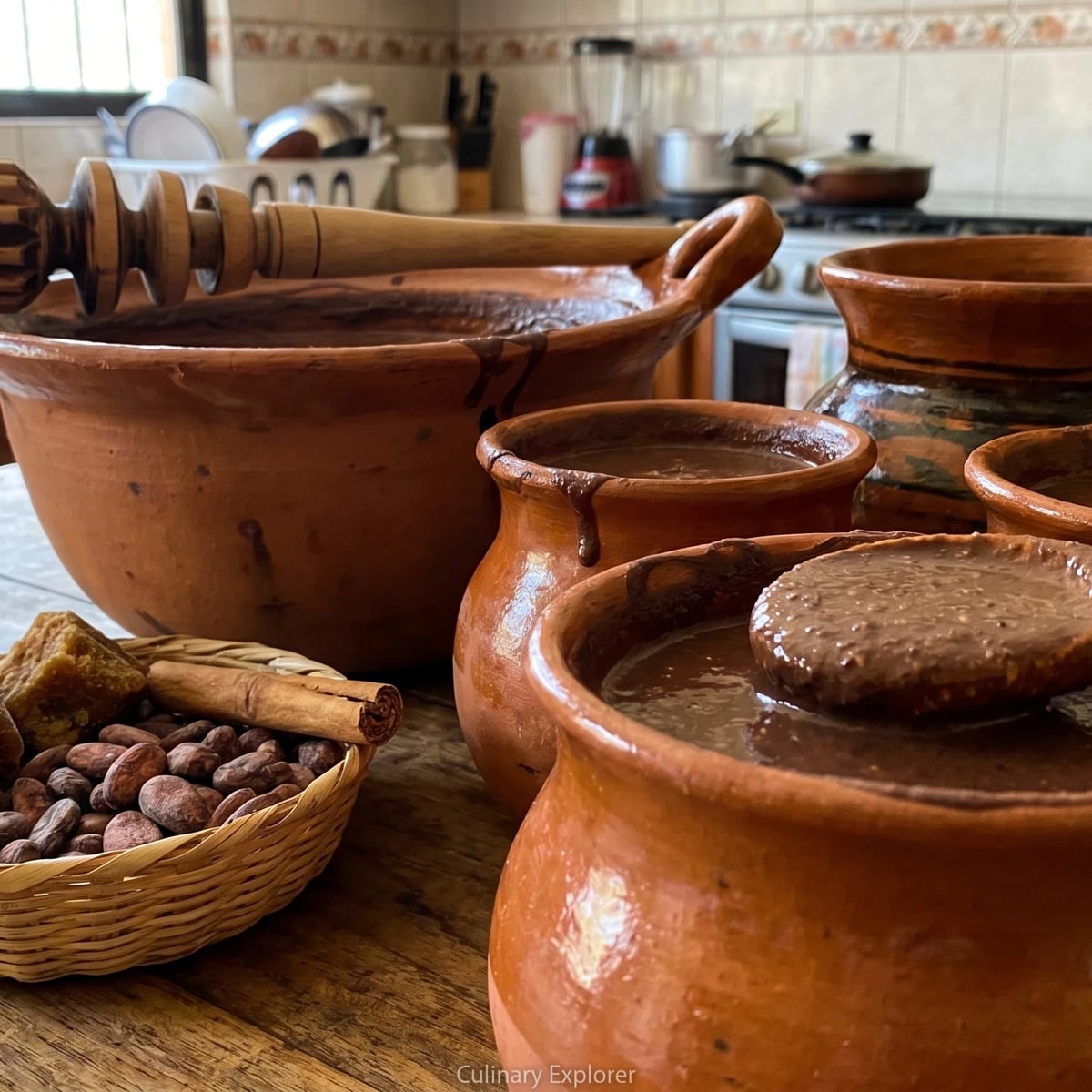
Champurrado Chiapaneco
Created by Chef Lupita
Chiapas' cold-morning atole, built with nixtamalized masa, cacao from Soconusco, canela, and piloncillo, whisked until thick enough to coat a spoon.
Chiapas, especially Los Altos around San Cristobal de las Casas and the road down toward Comitan, knows cold mornings better than people imagine. This champurrado belongs there: a hot atole of nixtamalized corn, cacao, canela, and piloncillo, poured into clay jarritos when the air still bites your fingers. Esto no es comida de un solo Mexico. This is a 32-state cuisine.
The cacao gives this drink its geography. Chiapas has cacao country in Soconusco, near the Pacific coast, where the heat and rain make the pods heavy on the trees. Then the drink climbs into the highlands, where women stretch that cacao with masa de maiz and make it feed more people. That is household intelligence. That is the market teaching the kitchen.
Do not confuse champurrado with thin hot chocolate. The masa is not decoration. It is structure. You dissolve it first, strain it, and cook it slowly until the corn loses its raw taste and the drink coats the spoon. My mother used to write 'sin prisa' in the margin of any atole recipe. Without hurry. She was right. Saber cocinar es saber vivir.
Ingredients
fresh masa de maiz nixtamalizado or masa harina
Quantity
1/2 cup
warm water
Quantity
1 cup
for dissolving the masa
whole milk
Quantity
4 cups
| Ingredient | Quantity |
|---|---|
| fresh masa de maiz nixtamalizado or masa harina | 1/2 cup |
| warm waterfor dissolving the masa | 1 cup |
| whole milk | 4 cups |
Where cooking meets culture.
Culinary guides, cultural storytelling, and the editorial depth that makes cooking meaningful.
Discover Culinary Explorer