
Chef Lupita
Agua de Alfalfa
Ciudad de México's highland market agua fresca, fresh alfalfa blended with pineapple and lime until bright green, strained clean, and poured cold from the vitrolero.
A cooking platform built around craft, culture, and the stories behind what we eat.
Created by
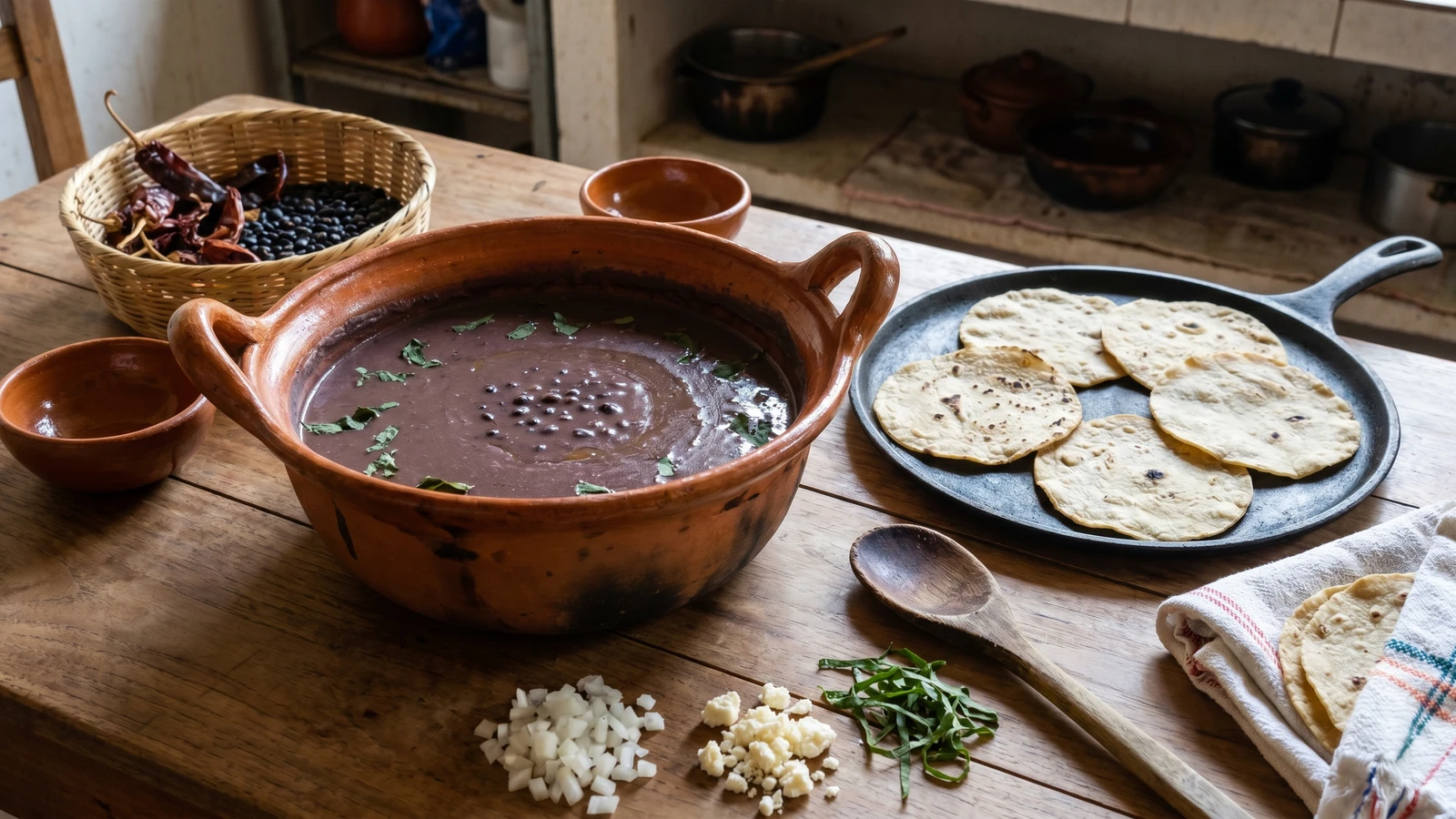
Chiapas highland atole built from black beans, masa, hierba santa, and toasted chile costeño, served hot in clay cups as the kind of food that fills the stomach without showing off.
Chiapas, especially the highland kitchens around San Cristobal de las Casas and the Tzotzil and Tzeltal communities beyond the market roads, is where this atole belongs. This is not the sweet vanilla drink people sell from plastic coolers in the city. This is black bean, masa, hierba santa, and chile, served hot enough to steady you before work or after a cold evening.
The herb is the signature. Hierba santa grows large and fragrant in the humid parts of southern Mexico, with that anise-pepper smell that tells you immediately you are not in Jalisco, not in Sonora, not in Puebla. Cada estado, su propia cocina. In Chiapas it finds its way into tamales, fish, bean pots, and these thick drinks that are really a meal in a cup.
I learned a version of this from a woman near the San Cristobal market who stirred the masa into the beans with the patience of someone who had done it before sunrise for forty years. She did not measure the thickness with a cup. She watched how the spoon moved. That is the lesson here: the masa gives body, the beans give depth, the hierba santa gives place. If any one of those is missing, you are making another thing.
Savory atoles are older than the sweet, milk-based versions now common in central Mexican cities, and they come from the pre-Columbian practice of thickening drinks and porridges with nixtamalized corn. In Chiapas, indigenous Tzotzil, Tzeltal, Zoque, and Tojolabal kitchens kept bean-and-corn preparations central because both crops were grown together in the milpa and eaten across the day, not only at formal meals. Hierba santa, native to Mesoamerica and common in the humid south, marks this version as southern Mexican rather than northern or Bajio cooking.
Quantity
1 cup
picked over and rinsed
Quantity
7 cups, divided
plus more as needed
Quantity
1/2 medium
Quantity
2
peeled
Quantity
2
plus 1 extra leaf for serving if desired
Quantity
1 teaspoon, plus more to taste
Quantity
1/2 cup
if using masa harina, mix with 1/2 cup warm water to make a soft paste
Quantity
2 tablespoons
Quantity
2
stemmed and seeded
Quantity
1
stemmed
Quantity
1/4 cup
for serving
Quantity
for serving
crumbled
Quantity
for serving
warmed
| Ingredient | Quantity |
|---|---|
| dried black beanspicked over and rinsed | 1 cup |
| waterplus more as needed | 7 cups, divided |
| white onion | 1/2 medium |
| garlic clovespeeled | 2 |
| fresh hierba santa leavesplus 1 extra leaf for serving if desired | 2 |
| kosher salt | 1 teaspoon, plus more to taste |
| fresh masa or masa harinaif using masa harina, mix with 1/2 cup warm water to make a soft paste | 1/2 cup |
| manteca de cerdo | 2 tablespoons |
| dried chile costeño or chile seco de Chiapasstemmed and seeded | 2 |
| fresh chile serranostemmed | 1 |
| finely diced white onion (optional)for serving | 1/4 cup |
| queso fresco (optional)crumbled | for serving |
| hand-pressed corn tortillas (optional)warmed | for serving |
Put the black beans in a heavy pot with 6 cups of water, the white onion, garlic, and one leaf of hierba santa. Bring to a steady simmer, then lower the heat and cook until the beans are tender, 75 to 90 minutes. Salt them only after they soften. The bean broth is the body of the atole, so do not drain it like someone who has never been hungry.
Heat a dry comal over medium. Toast the dried chile costeño or chile seco de Chiapas for 15 to 20 seconds per side, just until fragrant and flexible. Toast the serrano until the skin blisters in spots. The dried chile should smell deep and fruity, never burned. Burned chile turns the whole pot bitter.
Remove the cooked onion, garlic, and hierba santa from the bean pot. Transfer 2 cups of cooked beans with their broth to a blender. Add the toasted dried chiles, the toasted serrano, and 1 cup of warm water. Blend until completely smooth. If your blender complains, add a little more bean broth. Strain through a fine-mesh sieve for a smoother drink, or leave it unstrained if your house likes body.
In a bowl, whisk the fresh masa with 1 cup of warm water until it becomes a loose, pourable slurry. If you are using masa harina, mix it first with warm water and let it sit for 10 minutes before thinning it. Masa needs time to drink. Rush it and you get lumps. No me vengas con atajos.
Melt the manteca de cerdo in a clay cazuela or heavy pot over medium heat. Pour in the blended bean and chile puree. It will sputter. Stir for 6 to 8 minutes, until the color deepens and the fat leaves a faint shine on the surface. La manteca es el sabor. Oil will cook it, but lard gives it the roundness this dish expects.
Add the remaining whole beans and their broth back to the pot, then pour in the masa slurry slowly while stirring constantly. Add the second leaf of hierba santa, torn into large pieces. Simmer 12 to 15 minutes, stirring often with a wooden spoon, until the atole coats the spoon like thin cream but still drinks from a clay cup. If it gets too thick, loosen it with hot water. If it tastes flat, it needs salt.
Remove the large pieces of hierba santa. Ladle the atole into clay bowls or wide cups. Scatter a little diced white onion over the top, add queso fresco only if your table uses it, and serve with warm hand-pressed corn tortillas. This sits between soup and drink, between cena and breakfast. That is the point. Saber cocinar es saber vivir.
1 serving (about 350g)
Culinary guides, cultural storytelling, and the editorial depth that makes cooking meaningful.
Discover Culinary ExplorerChef Lupita
Ciudad de México's highland market agua fresca, fresh alfalfa blended with pineapple and lime until bright green, strained clean, and poured cold from the vitrolero.

Chef Lupita
Aguascalientes' Lenten agua fresca, jewel-red from cooked beet and full of apple, banana, orange, lettuce, and ground peanuts, served cold when Holy Week meets the Feria de San Marcos.

Chef Lupita
Sonora and Sinaloa's creamy malted barley water, built on toasted cebada perla, Mexican canela, vanilla from Papantla, and evaporated milk. Pink-beige, rich, and served cold over heavy ice in a heavy glass tumbler. Liquid cookie comfort the northwest way.

Chef Lupita
Yucatán's everyday tonic of boiled chaya leaves blended with lima agria, sugar, and ice. The bright green jarra that sits on every Peninsula table from Mérida to Valladolid.