
Chef Lupita
Agua de Chaya Tabasqueña
Tabasco's daily green refresher from the Chontalpa, made with blanched chaya leaves, limón criollo, and piloncillo, poured over ice for the kind of heat that makes the kitchen slow down.
A cooking platform built around craft, culture, and the stories behind what we eat.
Created by
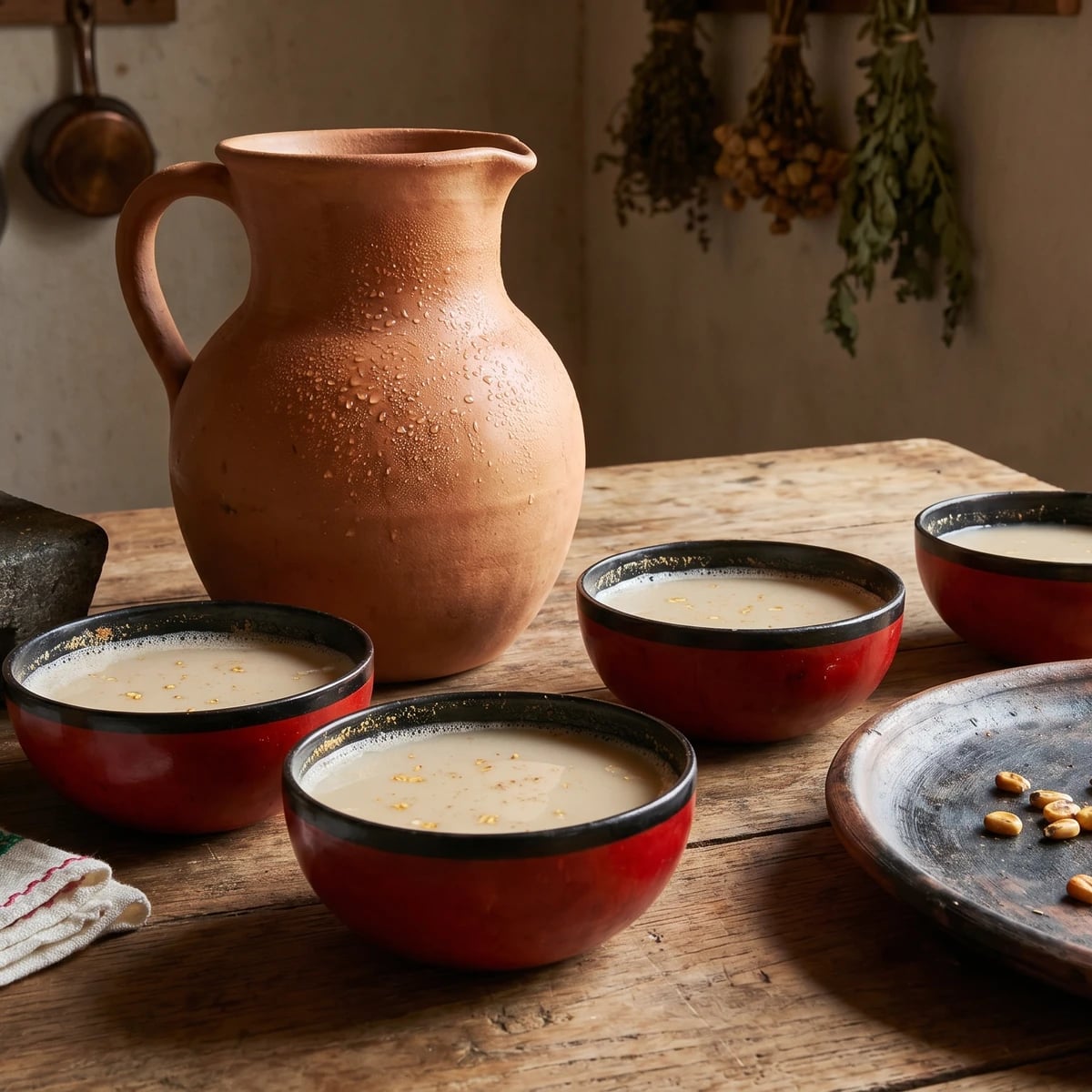
Chiapas pinol is toasted maize ground with Mexican canela and piloncillo, whisked into cool water until it thickens lightly, then poured into a lacquered jicara the way the mercado taught it.
Chiapas, especially the Valles Centrales around Chiapa de Corzo and the market routes up toward San Cristobal, knows pinol as a corn drink before it knows it as a recipe. Toasted maize, canela, piloncillo, water. That is the structure. No chile. No milk by default. Not everything Mexican comes with heat, and anyone who tells you that has not been paying attention.
The maize defines it. Dried criollo corn is toasted on a comal until it smells like warm tortilla and nuts, then ground fine enough to thicken water without turning sandy. This work belongs to women who knew how to keep a kitchen fed from dry goods: a sack of corn, a cone of piloncillo, a piece of canela wrapped in paper, a jicara on the shelf. La cocina no es decoracion, es trabajo.
I learned this version from a senora in the market at Chiapa de Corzo who corrected my first batch before I even asked. Mas tostado, menos azucar, she said. More toast, less sugar. She was right. If you add cacao and achiote, you are walking toward tascalate, another Chiapas drink and a good one. But pinol is plainer, older in its logic, and more stubborn. This is a 32-state cuisine, and this cup belongs to Chiapas. Saber cocinar es saber vivir.
Pinol or pinole derives from the Nahuatl word pinolli, roasted and ground maize, recorded by Bernardino de Sahagun in the 16th-century Florentine Codex as a food that could be eaten dry or mixed with water. In Chiapas, Maya and Zoque communities kept roasted maize flour in the daily kitchen because it traveled well, filled the stomach, and needed no cooking once ground. The state's better-known tascalate adds cacao, achiote, and often milk, but pinol stays closer to the older maize-water form: toasted corn, sweetener, spice, and a vessel made for drinking.
Quantity
1 1/2 cups
picked over; do not use popcorn or sweet corn
Quantity
1 (3-inch) piece
toasted and broken into small pieces
Quantity
1/2 cup, packed
Quantity
1/4 teaspoon
Quantity
6 cups, plus more as needed
| Ingredient | Quantity |
|---|---|
| dried white or yellow criollo maize kernels (maiz criollo seco)picked over; do not use popcorn or sweet corn | 1 1/2 cups |
| Mexican canela sticktoasted and broken into small pieces | 1 (3-inch) piece |
| grated piloncillo | 1/2 cup, packed |
| fine sea salt | 1/4 teaspoon |
| cool drinking water | 6 cups, plus more as needed |
Spread the dried maize on a tray and pick through it with your hands. Remove bits of cob, cracked black kernels, dust, and any small stones. If the maize is dusty, wipe it with a barely damp towel and let it dry completely before it touches the comal. The women who make pinol in Chiapas know this by touch. Your fingers find what your eyes miss.
Heat a dry comal or heavy skillet over medium heat. Add the maize in a single layer, working in batches if needed. Toast for 12 to 18 minutes, shaking the pan often, until the kernels turn golden, smell like toasted tortilla and nuts, and a few crackle against the comal. Do not blacken them. Burned maize makes bitter pinol, and no amount of piloncillo fixes that.
Add the Mexican canela to the hot comal for 30 to 45 seconds, just until it smells sweet and woody. Mexican canela is thin and flaky, not the hard cassia bark sold in many supermarkets. Use the right one. This is a small ingredient, but it tells on you.
Let the maize and canela cool completely. Grind them in batches with the salt using a metate, grain mill, spice grinder, or high-powered blender with a dry-grain jar. Work in short bursts if using a blender. Sift through a fine-mesh sieve and regrind the coarse pieces. You want a flour fine enough to suspend in water, not grit that sinks immediately.
Pulse or whisk the grated piloncillo into the ground maize until evenly mixed. If your piloncillo is hard, shave it with a knife or grate it on the small holes of a box grater. Pebbles of sugar settle at the bottom. Fine piloncillo sweetens the whole drink. Asi se hace y punto.
Put the pinol powder in a large pitcher. Add 1 cup of the cool water and whisk with a molinillo or wooden whisk until you have a smooth paste. Add the remaining 5 cups water a little at a time, whisking hard after each addition. Let it stand 10 minutes, then whisk again. It should be beige, lightly thick, and able to coat the back of a spoon without becoming heavy like atole.
Pour the pinol into lacquered jicaras or small clay cups. Stir before each pour because real maize settles. Serve cool or at room temperature, without garnish. This is not tascalate and it is not a milkshake. It is Chiapas corn, water, canela, and piloncillo. Cada estado, su propia cocina.
1 serving (about 295g)
Culinary guides, cultural storytelling, and the editorial depth that makes cooking meaningful.
Discover Culinary Explorer
Chef Lupita
Tabasco's daily green refresher from the Chontalpa, made with blanched chaya leaves, limón criollo, and piloncillo, poured over ice for the kind of heat that makes the kitchen slow down.

Chef Lupita
Los Altos de Chiapas drink this agua cold, with chía seeds suspended like tiny pearls, limón criollo for sharpness, and piloncillo for a cane-deep sweetness that belongs to the market.

Chef Lupita
Tabasco's Chontalpa refresher turns purple matalí leaves into a bright pink agua with limón criollo, sugar, and ice, the kind of drink that belongs beside a clay pitcher on a hot table.

Chef Lupita
Chiapas highland atole built from black beans, masa, hierba santa, and toasted chile costeño, served hot in clay cups as the kind of food that fills the stomach without showing off.