
Chef Juliette
Smelt (Éperlans)
Tiny éperlans, lightly floured and fried until their tails stand crisp, arrive in a generous heap on a napkin with fried parsley and grooved lemon, a weeknight lesson in heat and restraint.
A cooking platform built around craft, culture, and the stories behind what we eat.
Created by Chef Juliette
Based on No. 335, Moulded Creams, from Le Guide Culinaire (1907) by Auguste Escoffier
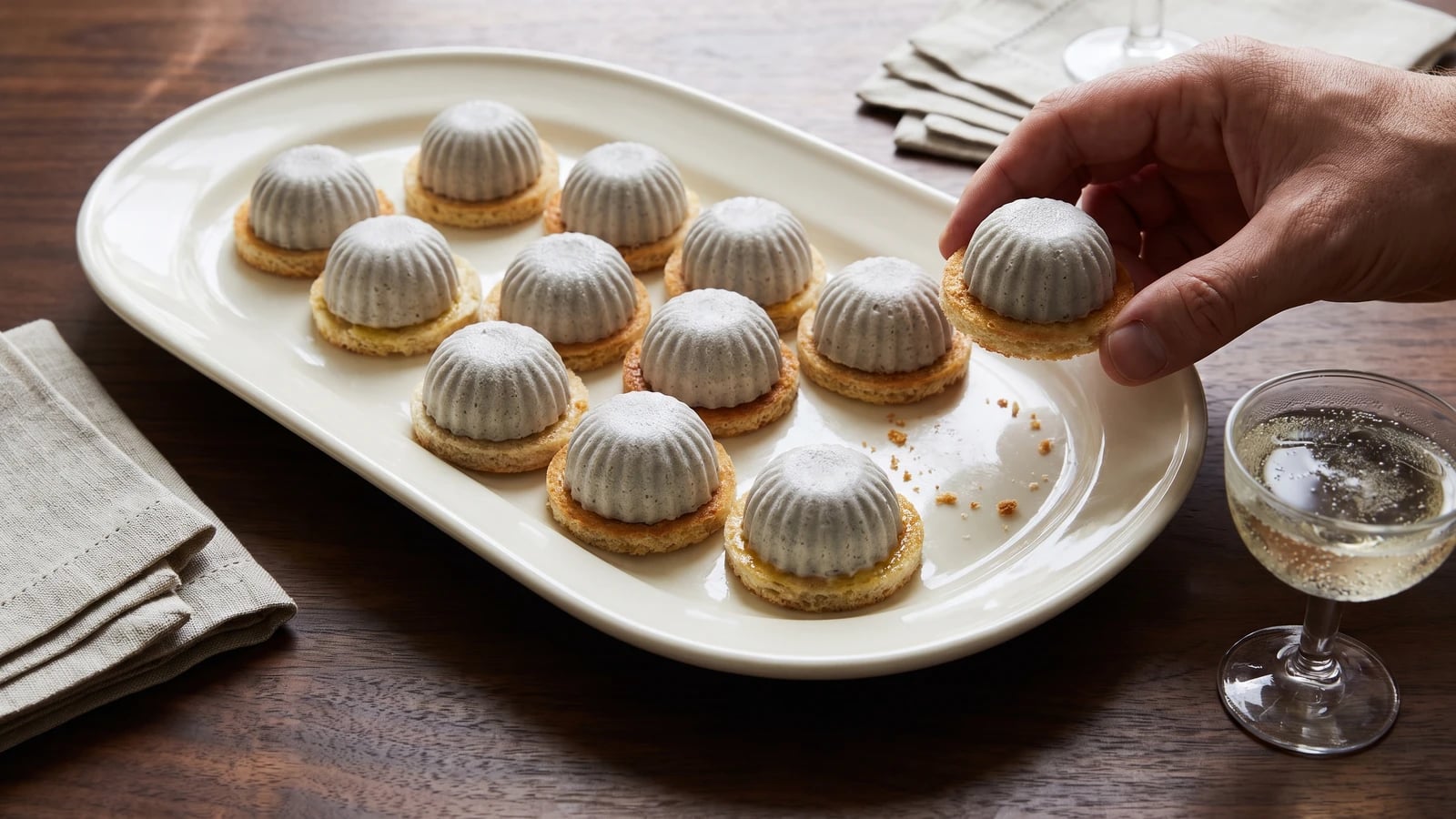
Tiny caviare or chicken creams, butter-set in fluted moulds and turned onto crisp toast at the last moment: a composed French hors-d'oeuvre whose delicacy depends on cold, not complication.
Crèmes moulées (moulded savory creams) teach a beautiful bit of classical grammar: in a cold hors-d’œuvre, butter can be structure as surely as it is flavor. The one true thing to know before you touch a pan is that the cream sets by cold alone. Chill it thoroughly, never freeze it, and the tiny ridges release cleanly while the centre stays light.
The original entry assumed a garde-manger, the cold-kitchen cook, with ice at hand, a drawer of ornamented petits-fours moulds, and enough hands to turn out dozens at the instant of service. At home, a twelve-cavity silicone petit-four mould and the refrigerator do the same honest work. The ice station and brigade quantities were scaffolding and can go; the faint film of oil, the butter-set cream, and last-moment unmoulding are the dish and must stay. One cook, one stove, one evening.
Choose either Caviare Cream (No. 294) or Chicken Cream (No. 299), already made according to its own formula. The caviare version is saline and pearl-grey; the chicken one is pale and gentle. Pack the selected cream into every groove without trapping air, then wait until it is properly firm. That complete chilling is the step that decides whether the mould releases as a crisp little ornament or a soft spoonful.
Crèmes moulées belong not to one province but to the French classical cold hors-d’œuvre table, especially the service of canapés, tartlets, and small composed bites before dinner. Their ornament came from petits-fours moulds borrowed from pastry work, while cooling on ice let the garde-manger prepare variety without shaping every piece by hand. The surprising practicality is in the butter: it was not merely richness, but the setting agent that allowed a soft savory cream to keep a clean relief when turned out.
freshly prepared and cool but spreadable
Quantity
1 teaspoon (5 ml / 4 g)
for the moulds
Quantity
12 rounds, each about 1½ inches (4 cm) wide (about 90 g)
| Ingredient | Quantity |
|---|---|
| finished hors-d’œuvre cream, choose onefreshly prepared and cool but spreadable | ¾ cup (180 ml / about 170 g) of either Caviare Cream (No. 294) or Chicken Cream (No. 299) |
| neutral oilfor the moulds | 1 teaspoon (5 ml / 4 g) |
| thin baguette rounds | 12 rounds, each about 1½ inches (4 cm) wide (about 90 g) |
Set twelve very small fluted moulds, each holding about 1 tablespoon (15 ml), on a rigid tray. Brush their interiors with the thinnest possible film of neutral oil, reaching into every ridge, then blot away anything that pools. The oil is there to release the cream, not to flavor it; visible droplets leave pockmarks instead of a clean pattern.
Choose the finished Caviare Cream (No. 294) or Chicken Cream (No. 299). It should be cool yet supple enough to hold the mark of a spoon. Press or pipe it firmly into the moulds, working it against the patterned sides before filling the centres. Tap the tray twice against the counter to release hidden air, then level each base flush with a small spatula. If the cream is too loose to mound, chill the bowl for 10 minutes; if it is too firm to enter the ridges, work it briefly with the spatula until pliable.
Cover the tray without letting the covering touch the cream and refrigerate for 45 to 60 minutes. The creams are ready when their exposed bases feel firm and no longer yield at the edge under a light touch. The refrigerator replaces the original bed of ice. Do not use the freezer: freezing makes the whipped cream coarse and gives the butter a brittle, waxy set.
While the moulds chill, heat the oven to 350°F (180°C). Arrange the baguette rounds on a baking sheet and toast for 8 to 10 minutes, turning once, until dry, crisp, and pale gold on both sides. Cool them completely on a rack. Warm toast softens the butter holding the creams together, so patience matters here.
Unmould only when you are ready to serve. Place a cold toast round against the base of each cream, invert the mould, and peel back flexible silicone or lift away a metal mould. If a cream refuses to release, hold the outside of the mould in your palm or against a barely warm damp cloth for one or two seconds, then try again. Do not pull at the cream. If it slumps, return it gently to the mould, chill for 15 minutes, and repeat. Ça se rattrape.
Arrange the moulded creams on a cold platter and bring them to the table within 15 minutes, while the relief remains sharp and the toast stays crisp. Their little fluted surfaces are the finish; they need no decorative clutter. The source also permits turning them directly onto a dish or onto filled tartlets, but toast gives one cook the cleanest service. À table!
1 serving (about 50g)
Culinary guides, cultural storytelling, and the editorial depth that makes cooking meaningful.
Discover Culinary ExplorerChef Juliette
Tiny éperlans, lightly floured and fried until their tails stand crisp, arrive in a generous heap on a napkin with fried parsley and grooved lemon, a weeknight lesson in heat and restraint.

Chef Juliette
Brandade de Morue turns salt cod, warm olive oil, and milk into a pale, silky emulsion: keep everything warm and add the oil slowly, then crown the generous dome with butter-fried bread.

Chef Juliette
Salt cod worked warm with cream, one patient spoonful at a time, until the rough flakes become a glossy Nîmes paste, domed generously and ringed with butter-fried croutons for the table.

Chef Juliette
Wine-poached char packed in its earthenware crock beneath butter gold: a make-ahead first course that turns careful cooling, thorough boning, and one unbroken seal into quiet abundance.