
Chef Juliette
Smelt (Éperlans)
Tiny éperlans, lightly floured and fried until their tails stand crisp, arrive in a generous heap on a napkin with fried parsley and grooved lemon, a weeknight lesson in heat and restraint.
A cooking platform built around craft, culture, and the stories behind what we eat.
Created by Chef Juliette
Based on No. 299, Chicken Cream, from Le Guide Culinaire (1907) by Auguste Escoffier
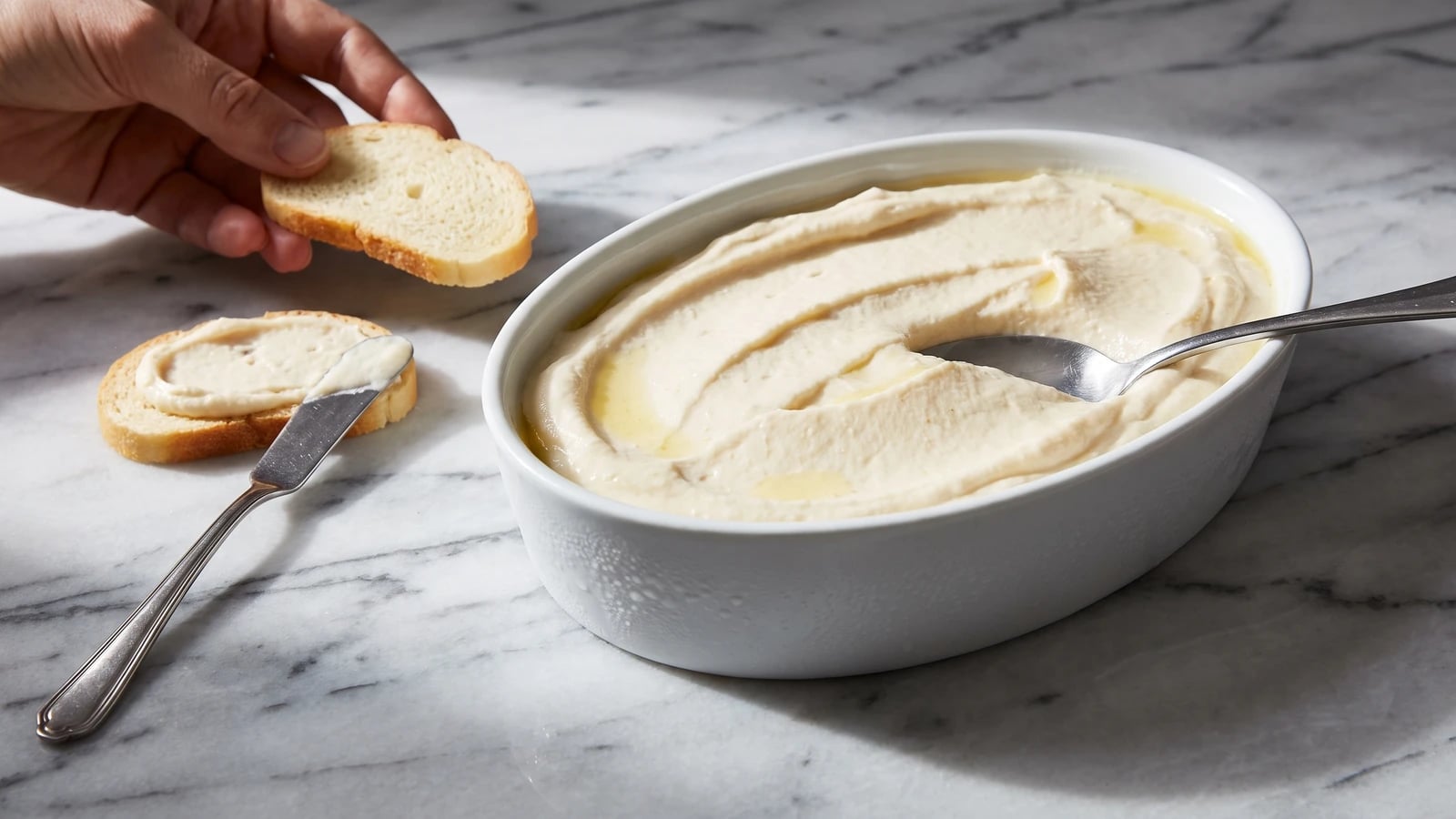
Cold white chicken, butter, and cream worked to silk, pressed through a sieve, then lifted with whipped cream: a pale hors d'oeuvre whose whole art lies in texture and last-minute seasoning.
Crème de Volaille teaches the cool emulsion: cold white chicken, pliable butter, and cream become pale and light only while their temperatures stay in balance. There is no pan to save you with browning and no spice to cover a coarse texture. The one true thing is this: cool keeps the butter inside the purée; warmth lets it leak out.
The source assumed a brigade pantry with cooked white fowl ready, a mortar, a tamis, and another pair of hands to whisk the cream. It calls for neither the saucier's stockpot nor a salamander. At home, a small food processor replaces the pounding arm and a sturdy fine-mesh sieve replaces the tamis; the entry already makes four modest appetizer portions, so every ratio remains exactly as written. One cook, one stove, one evening, and in this case the stove may have the night off.
The mortar is scaffolding and can go. The sieving, softly whipped cream, and last-minute salt are the dish and must stay. If the paste warms and turns shiny, stop and chill it before continuing; ça se rattrape. The step that matters most is the sieve: press the base through while it is cool, then scrape every smooth bit from underneath.
Crème de Volaille belongs to the classical Parisian garde-manger, the cold-pantry repertoire of smooth purées, mousses, and hors d'oeuvres, rather than to one provincial French larder. Cooked white poultry was pounded, enriched, and passed through a tamis so a modest piece of breast could serve as a fine canapé spread or filling at the bourgeois table. The English title can mislead: this is not a soup, and crème describes its smooth, enriched texture as much as the dairy within it.
Quantity
4 ounces (115 g)
skin, fat, and browned edges removed; cut into small pieces
Quantity
2 tablespoons (30 ml / 30 g)
Quantity
1/4 cup (60 ml / 57 g)
softened until pliable but not oily
Quantity
3 tablespoons (45 ml / about 25 g), measured after whipping
whipped just before folding
Quantity
to taste
added immediately before serving
| Ingredient | Quantity |
|---|---|
| cold cooked white chicken meatskin, fat, and browned edges removed; cut into small pieces | 4 ounces (115 g) |
| cold heavy cream | 2 tablespoons (30 ml / 30 g) |
| unsalted buttersoftened until pliable but not oily | 1/4 cup (60 ml / 57 g) |
| softly whipped heavy creamwhipped just before folding | 3 tablespoons (45 ml / about 25 g), measured after whipping |
| fine saltadded immediately before serving | to taste |
Chill the serving dish and keep the chicken and cream cold. Let the butter stand only until a thumb leaves an easy indentation while its surface remains matte, then cut it into four pieces. Cold chicken and pliable butter will bind smoothly; hard butter leaves grains, while oily butter escapes from the purée.
Put the chicken in a small food processor and pulse until it resembles a very fine meal, stopping twice to scrape the bowl. Add the 2 tablespoons of liquid cream in two additions, processing only until each disappears, then add the softened butter one piece at a time. Pulse to a pale, cohesive paste. If a greasy shine appears around the blade, the mixture has become too warm. Stop, chill the processor bowl for 10 minutes, then pulse briefly to bring it together again. Ça se rattrape; adding more cream will only make it loose.
Set a fine-mesh sieve over a chilled bowl. Work the chicken paste through in small portions with a firm flexible scraper, using short strokes rather than smearing the whole batch at once. Scrape the smooth purée from the underside of the sieve as you go and leave the final stringy fibers behind. What falls into the bowl should be pale, close, and entirely free of threads. The processor was the modern scaffolding; this sieving is the dish.
Whisk a small amount of cold heavy cream in a narrow bowl until it falls from the whisk in soft folds and barely holds a rounded crest, then measure exactly 3 tablespoons after whipping. Fold one third into the sieved base to loosen it, followed by the remaining cream in two additions, turning the spatula broadly through the mixture. Stop as soon as no white streaks remain. The Crème de Volaille should hold soft spoon marks without feeling stiff; beating after the cream goes in knocks out the lightness the source worked to create.
Only now fold in the fine salt, beginning cautiously if the chicken was seasoned when cooked. Taste from a chilled spoon, adjust once, and transfer the Crème de Volaille immediately to its cold serving dish, leaving the natural sweep of the spoon across the top. Serve at once with thin toasts of pain de mie or baguette. Keep any second portion refrigerated until needed and never leave the chicken cream at room temperature for more than 2 hours. À table!
1 serving (about 55g)
Culinary guides, cultural storytelling, and the editorial depth that makes cooking meaningful.
Discover Culinary ExplorerChef Juliette
Tiny éperlans, lightly floured and fried until their tails stand crisp, arrive in a generous heap on a napkin with fried parsley and grooved lemon, a weeknight lesson in heat and restraint.

Chef Juliette
Brandade de Morue turns salt cod, warm olive oil, and milk into a pale, silky emulsion: keep everything warm and add the oil slowly, then crown the generous dome with butter-fried bread.

Chef Juliette
Salt cod worked warm with cream, one patient spoonful at a time, until the rough flakes become a glossy Nîmes paste, domed generously and ringed with butter-fried croutons for the table.

Chef Juliette
Wine-poached char packed in its earthenware crock beneath butter gold: a make-ahead first course that turns careful cooling, thorough boning, and one unbroken seal into quiet abundance.