
Chef Juliette
Smelt (Éperlans)
Tiny éperlans, lightly floured and fried until their tails stand crisp, arrive in a generous heap on a napkin with fried parsley and grooved lemon, a weeknight lesson in heat and restraint.
A cooking platform built around craft, culture, and the stories behind what we eat.
Created by Chef Juliette
Based on No. 294, Caviare Cream, from Le Guide Culinaire (1907) by Auguste Escoffier
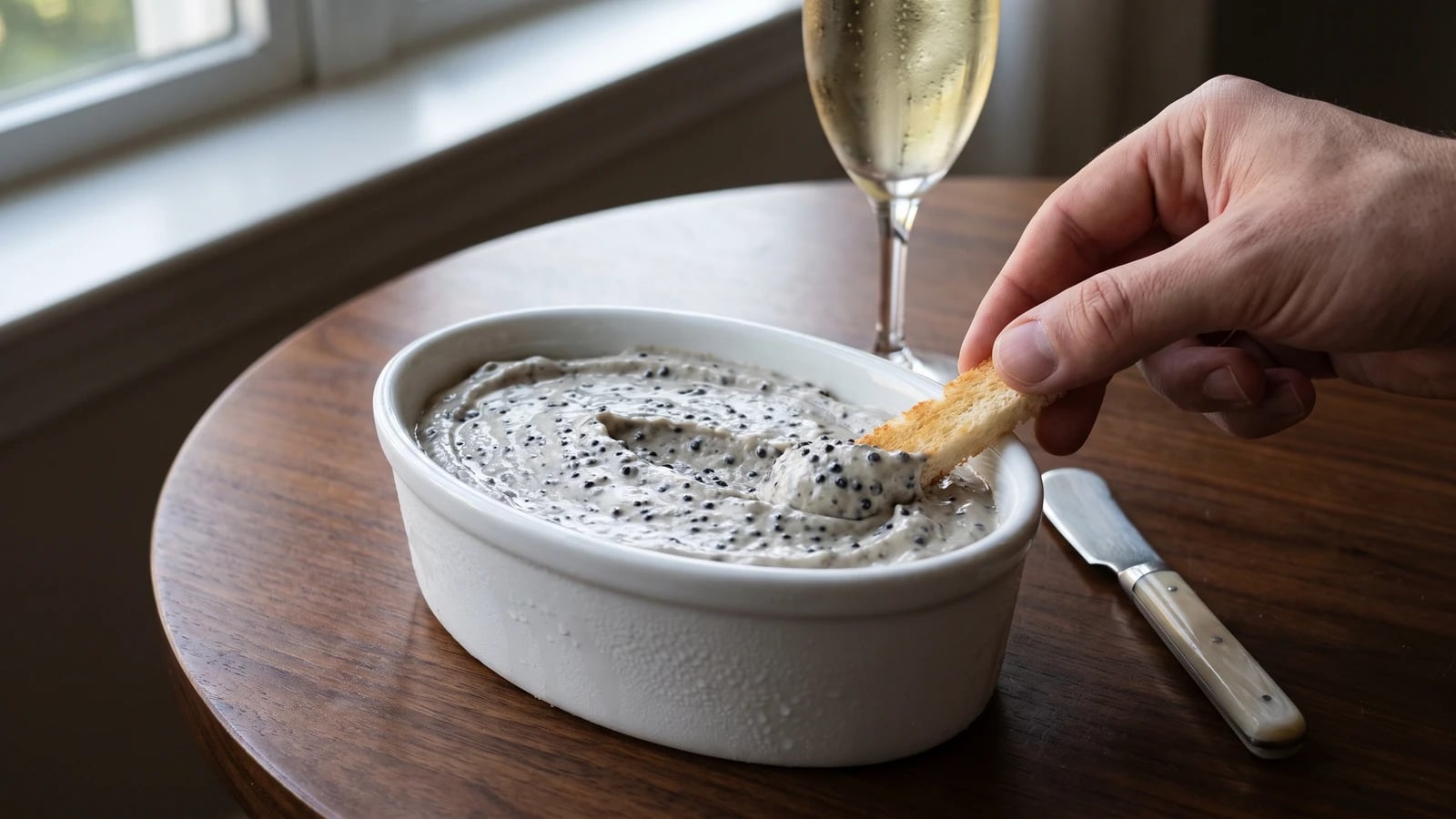
Preserved caviare, fresh cream, and softened butter are pounded and sieved to silk, then lightened with whipped cream: a cold hors d’œuvre whose quiet secret is butter firming in the chill.
Crème de caviar (caviare cream) teaches the grammar of a cold emulsion: softened butter is the structure, not an optional richness. It disappears into the pounded roe while soft enough to yield, then firms in the cold and gives the finished cream its clean, spreadable body. Leave it out and you have a loose cream. We don't apologize for butter, especially when the butter is doing the work.
The original needed neither a saucier, a stock never off the fire, nor a salamander. It assumed a garde-manger (cold-larder cook), a large mortar, a fine tamis, and enough hands to pound, sieve, and whip in parallel. A small mortar or compact food processor, a fine nylon-mesh sieve, and a hand whisk perform that work in sequence at home. The four-ounce formula already makes a sensible dinner-party bowl, so its proportions remain untouched. The spare hands and large equipment are brigade scaffolding; the pounding, gradual additions, softened butter, sieving, and folding are the dish.
When it is right, the cream is cool pearl-gray, deeply savory, and light enough to spread without running. The moment that decides it comes before mixing: the butter must accept an easy fingertip dent while still holding its shape, soft but never melted.
Crème de caviar belongs to the Parisian classical hors-d’œuvre repertoire, although caviare reached those tables through Caspian and Black Sea trade and the influence of Russian service. French garde-manger work absorbed it into the family of crèmes and beurres composés (compound butters), savory preparations used on canapés and in small filled hors d’œuvres. The butter is not a flourish: it allows the cream to replace a beurre composé once chilled, exactly as the classical service intended.
Quantity
½ cup (120 ml / 113 g)
well chilled; drain only if visibly wet
Quantity
2 tablespoons (30 ml / 30 g)
cool but not refrigerator-cold
Quantity
¼ cup (60 ml / 57 g)
softened until pliable but not melted
Quantity
1½ tablespoons (22 ml / 23 g), yielding about 3 tablespoons (45 ml) when whipped
well chilled and whipped to soft peaks
| Ingredient | Quantity |
|---|---|
| preserved caviarewell chilled; drain only if visibly wet | ½ cup (120 ml / 113 g) |
| heavy cream for poundingcool but not refrigerator-cold | 2 tablespoons (30 ml / 30 g) |
| unsalted buttersoftened until pliable but not melted | ¼ cup (60 ml / 57 g) |
| heavy cream for whippingwell chilled and whipped to soft peaks | 1½ tablespoons (22 ml / 23 g), yielding about 3 tablespoons (45 ml) when whipped |
Let the butter soften until a fingertip leaves an easy dent while the block still holds its shape, usually 30 to 45 minutes in a temperate kitchen. Keep the caviare cold until the butter is ready. Chill a small bowl and whisk for 10 minutes; the base needs pliable butter, while the finishing cream needs cold.
Whisk the chilled finishing cream in the cold bowl until it roughly doubles in volume and holds soft peaks that bend at their tips. Measure about 3 tablespoons and return it to the refrigerator. If it becomes grainy, work in ½ teaspoon taken from the 2-tablespoon cream allocation until smooth, then use correspondingly less cream in the next step. Ça se rattrape.
Put the caviare in a small mortar and pound steadily until the eggs are broken and form a thick paste. If using a compact food processor, work in brief pulses and scrape the bowl often so the blades do not warm the roe. Add the 2 tablespoons of cream little by little in four additions, pounding or pulsing each addition completely smooth before adding the next. Pouring it in at once makes the paste swim instead of emulsify.
Add the softened butter about a teaspoon at a time, working each portion fully into the caviare before continuing. The mixture should become cohesive and satin-smooth. If it turns slick and butter beads around the edge, the bowl is too warm; stop, chill it for 5 minutes, then work it smooth before continuing. If pale butter flecks remain, it is too cold; cup the outside of the mortar in warm hands for a minute and keep pounding. Ça se rattrape.
Set a fine nylon-mesh sieve over a clean bowl and rub the caviare mixture through in small batches with a flexible spatula. Scrape every bit of smooth cream from the underside, leaving the tough membranes behind. This sieving is not brigade ceremony; it is what turns pounded roe into a refined cream. If the mixture becomes too firm to pass, let it stand for 2 or 3 minutes. Do not dilute it.
Stir the first spoonful of whipped cream into the sieved base to loosen it, then fold in the remaining cream with broad, gentle strokes until no white streaks remain. Spoon the crème de caviar into a small serving crock, cover closely, and chill for at least 2 hours. The softened butter now performs its essential work, setting the cream firm enough to hold a spreader's track. Let it stand for 8 to 10 minutes before serving so it spreads without losing its cool body. À table!
1 serving (about 28g)
Culinary guides, cultural storytelling, and the editorial depth that makes cooking meaningful.
Discover Culinary ExplorerChef Juliette
Tiny éperlans, lightly floured and fried until their tails stand crisp, arrive in a generous heap on a napkin with fried parsley and grooved lemon, a weeknight lesson in heat and restraint.

Chef Juliette
Brandade de Morue turns salt cod, warm olive oil, and milk into a pale, silky emulsion: keep everything warm and add the oil slowly, then crown the generous dome with butter-fried bread.

Chef Juliette
Salt cod worked warm with cream, one patient spoonful at a time, until the rough flakes become a glossy Nîmes paste, domed generously and ringed with butter-fried croutons for the table.

Chef Juliette
Wine-poached char packed in its earthenware crock beneath butter gold: a make-ahead first course that turns careful cooling, thorough boning, and one unbroken seal into quiet abundance.