
Chef Juliette
Smelt (Éperlans)
Tiny éperlans, lightly floured and fried until their tails stand crisp, arrive in a generous heap on a napkin with fried parsley and grooved lemon, a weeknight lesson in heat and restraint.
A cooking platform built around craft, culture, and the stories behind what we eat.
Created by Chef Juliette
Based on No. 329d, Cucumber à la Danoise, from Le Guide Culinaire (1907) by Auguste Escoffier
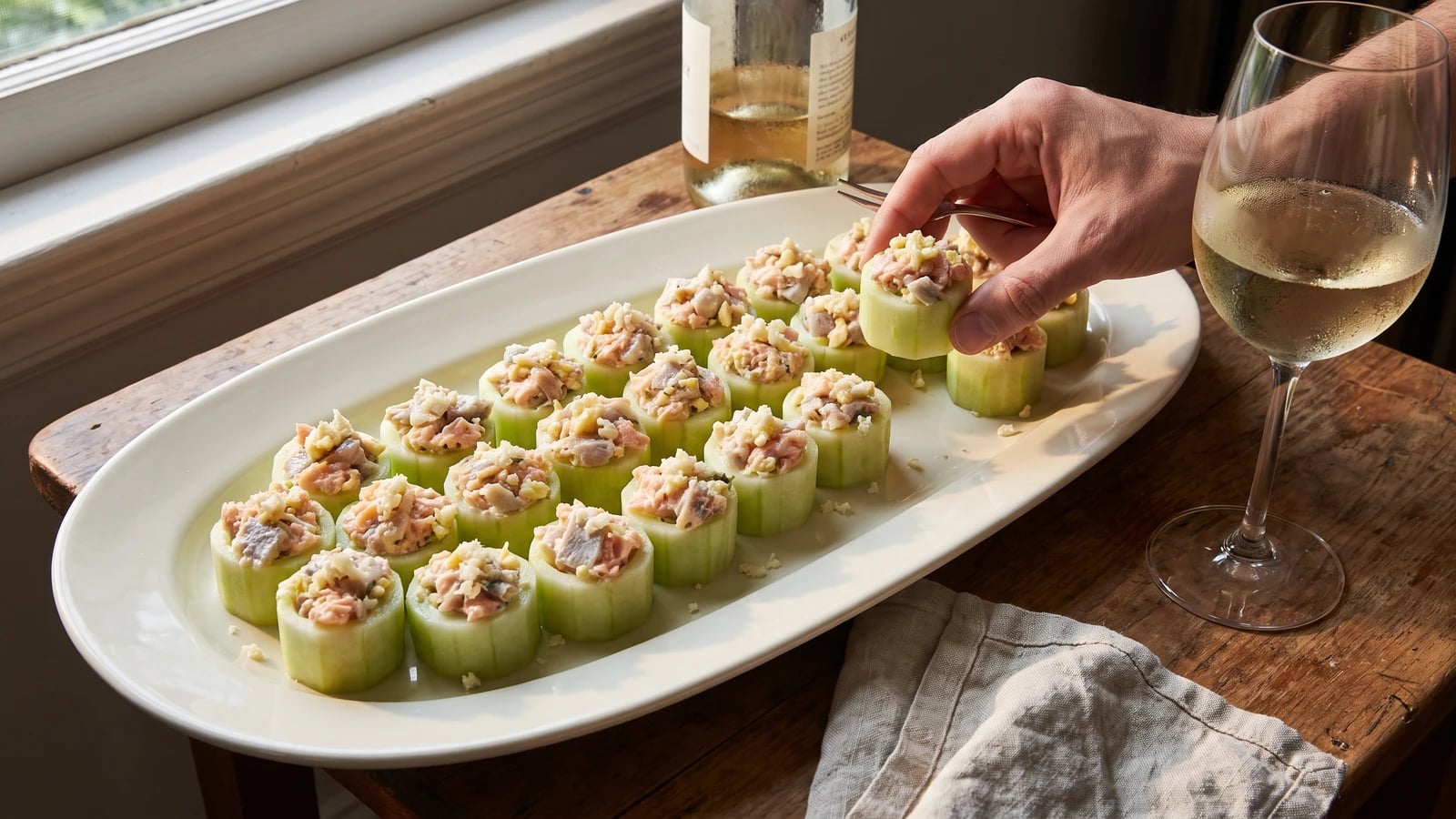
Cool cucumber cassolettes hold an equal-parts filling of salmon purée, herring, and hard-boiled egg, with fresh horseradish over the top: a precise little hors d’œuvre built for making ahead.
Concombre à la Danoise (Danish-style cucumber cups) teaches control in cold cookery. The cucumber must accept enough heat and marinade to become seasoned and supple, yet keep the clean walls that hold its filling. The one true thing to know before you set water to boil is simple: stop the blanching while the cucumber still resists your thumb. Cold does not repair softness.
The source assumed a garde-manger, the cold station, with Cooked Marinade for Venison (No. 168) already prepared by the batch, cured herring trimmed, and hands available to carve trays of cassolettes or Barquettes (No. 314). At home, use two straight cucumbers, one cup of the finished marinade, a melon baller, and a kitchen scale. The vat and brigade volume were scaffolding, so they go. Blanchings (No. 273), the cooked marinade, equal weights of salmon, herring, and egg, and the final horseradish are the dish, so they stay.
Once properly drained, the pale cucumber cups carry a coarse, rosy filling sharpened by herring and fresh horseradish. There is no mayonnaise or cream hiding the three-part garnish. Keep the blanch brief and dry the marinated cups thoroughly; everything depends on a cassolette that can stand.
Concombre à la Danoise belongs to the French grand-hotel cold hors d’œuvre table, where garnish names described whole flavor families and à la Danoise pointed north toward salmon, herring, egg, and horseradish. It is not evidence that every Danish household served cucumber this way, but the French canon’s translation of the Danish cold-table larder into a shaped individual bite. The cucumber cassolette shows that journey clearly: preserved fish and egg placed inside a formal vegetable cup, then sharpened by a cooked wine-and-vinegar marinade.
Quantity
1 cup (240 ml / 245 g) Cooked Marinade for Venison (No. 168)
fully chilled
Quantity
1 small fillet, 4½ oz (125 g) raw, yielding ½ cup (120 ml / 100 g) cooked purée
bones removed
Quantity
⅔ cup lightly packed (160 ml / 100 g)
well drained and finely chopped
Quantity
2, yielding about ½ cup (120 ml / 100 g) without shells
hard-boiled and finely chopped
Quantity
2 teaspoons (10 ml / 6 g)
very finely chopped
| Ingredient | Quantity |
|---|---|
| large seedless cucumbers | 2 large (about 1 lb 7 oz / 650 g total), for cassolettes or Barquettes (No. 314) and Blanchings (No. 273) |
| Cooked Marinade for Venisonfully chilled | 1 cup (240 ml / 245 g) Cooked Marinade for Venison (No. 168) |
| skinless salmon filletbones removed | 1 small fillet, 4½ oz (125 g) raw, yielding ½ cup (120 ml / 100 g) cooked purée |
| plain ready-to-eat cured herring filletswell drained and finely chopped | ⅔ cup lightly packed (160 ml / 100 g) |
| large eggshard-boiled and finely chopped | 2, yielding about ½ cup (120 ml / 100 g) without shells |
| fresh horseradish rootvery finely chopped | 2 teaspoons (10 ml / 6 g) |
Put the eggs in a small saucepan, cover with cold water, and bring to a boil. Cover, remove from the heat, and leave for 10 minutes before cooling them completely in cold water. Return the water to a bare simmer and poach the salmon gently until its center is opaque and separates into moist flakes, 6 to 8 minutes. Cool it completely, weigh out 100 g, and process or press it through a fine sieve until it becomes a close purée. Peel and chop the eggs, weighing out the same 100 g. Cold ingredients are essential here; warmth draws moisture from the cucumber and makes the filling smear.
Peel the cucumbers and trim their ends. Cut each crosswise into eight pieces about 1⅜ inches (3.5 cm) tall. With a small melon baller, hollow each piece from one end, leaving a base and walls about ¼ inch (6 mm) thick. This is the cassolette, a small drum-shaped cup. The source also permits the boat profile represented by Barquettes (No. 314), but upright cassolettes are steadier on a home platter and waste less cucumber.
Apply the vegetable treatment from Blanchings (No. 273) to the shaped cucumber, stopping after 45 to 60 seconds, when the pale green brightens and the walls bend only slightly under a fingertip. Cool the pieces as that preparation directs, then stand them cavity-side down to drain. If a cup softens, support it upright in a snug ramekin while it cools; if its wall tears, chop that piece for the cook and continue with the sound cups. The structure cannot be cooked back in, so pull them early.
Place the cucumber cups in a narrow covered container or reusable food bag and add the chilled Cooked Marinade for Venison (No. 168). Turn gently so the marinade reaches every cavity, then refrigerate for 20 minutes. Drain the cups cavity-side down for another 20 minutes and blot the interiors carefully. If liquid beads again, chill them uncovered for 10 minutes and blot once more. A wet cup dilutes the filling and slides about the platter; drying is part of the preparation, not decoration.
Work the cold salmon purée against the side of a bowl until cohesive, then fold in exactly 100 g each of chopped herring and hard-boiled egg. Mix only until evenly distributed; the filling should remain visibly coarse but hold a mound from the spoon. If it crumbles, press one quarter of the mixture firmly against the bowl until the salmon and egg yolk bind it, then fold that portion back through. If it feels loose, chill it for 20 minutes. Ça se rattrape. Do not add mayonnaise or cream, which would change the book’s equal-parts garnish.
Set the drained cassolettes upright and spoon about 1 generous tablespoon (15 ml / 18 g) of filling into each one. Press lightly so the mixture reaches the bottom without splitting the cucumber, then leave a small, rough mound above the rim. Arrange the cups on their serving platter and refrigerate for at least 30 minutes, loosely covered. Fill them no more than 2 hours before serving, or the cucumber begins giving water back to the garnish.
Just before serving, sprinkle each cassolette with a small pinch of the finely chopped fresh horseradish. It should sharpen the first bite without burying the salmon and herring. Bring the platter to the table cold and let guests take the cups with their fingers or small forks. Cooking well is not cooking fancy. À table!
1 serving (about 210g)
Culinary guides, cultural storytelling, and the editorial depth that makes cooking meaningful.
Discover Culinary ExplorerChef Juliette
Tiny éperlans, lightly floured and fried until their tails stand crisp, arrive in a generous heap on a napkin with fried parsley and grooved lemon, a weeknight lesson in heat and restraint.

Chef Juliette
Brandade de Morue turns salt cod, warm olive oil, and milk into a pale, silky emulsion: keep everything warm and add the oil slowly, then crown the generous dome with butter-fried bread.

Chef Juliette
Salt cod worked warm with cream, one patient spoonful at a time, until the rough flakes become a glossy Nîmes paste, domed generously and ringed with butter-fried croutons for the table.

Chef Juliette
Wine-poached char packed in its earthenware crock beneath butter gold: a make-ahead first course that turns careful cooling, thorough boning, and one unbroken seal into quiet abundance.