Chef Juliette
Ordinary or White Consommé
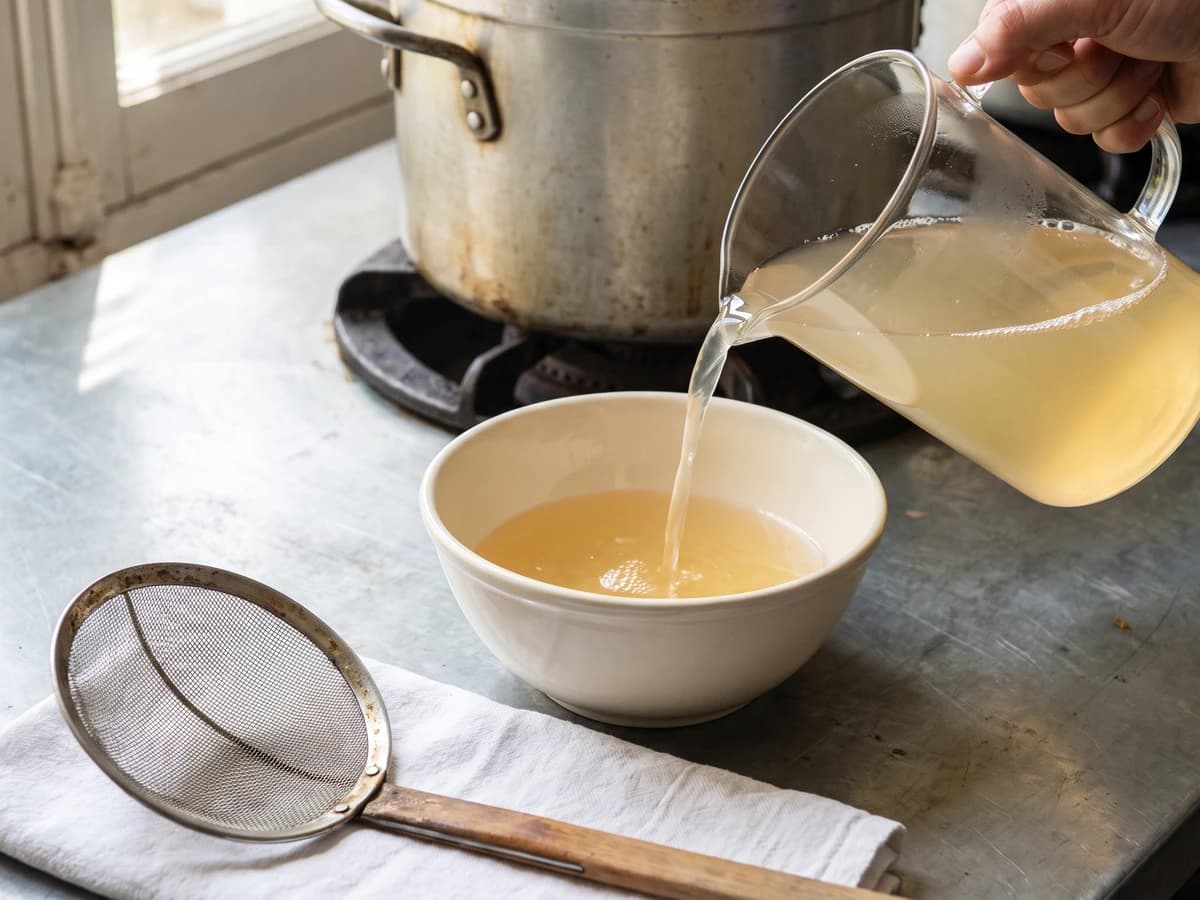
Beef shin, lean beef, and fowl begin in cold water and rise slowly toward a tremble. Skim before the boil, and you learn the quiet discipline that gives every clear French broth its backbone.
A cooking platform built around craft, culture, and the stories behind what we eat.
Created by Chef Juliette
Based on No. 168, Cooked Marinade for Venison, from Le Guide Culinaire (1907) by Auguste Escoffier
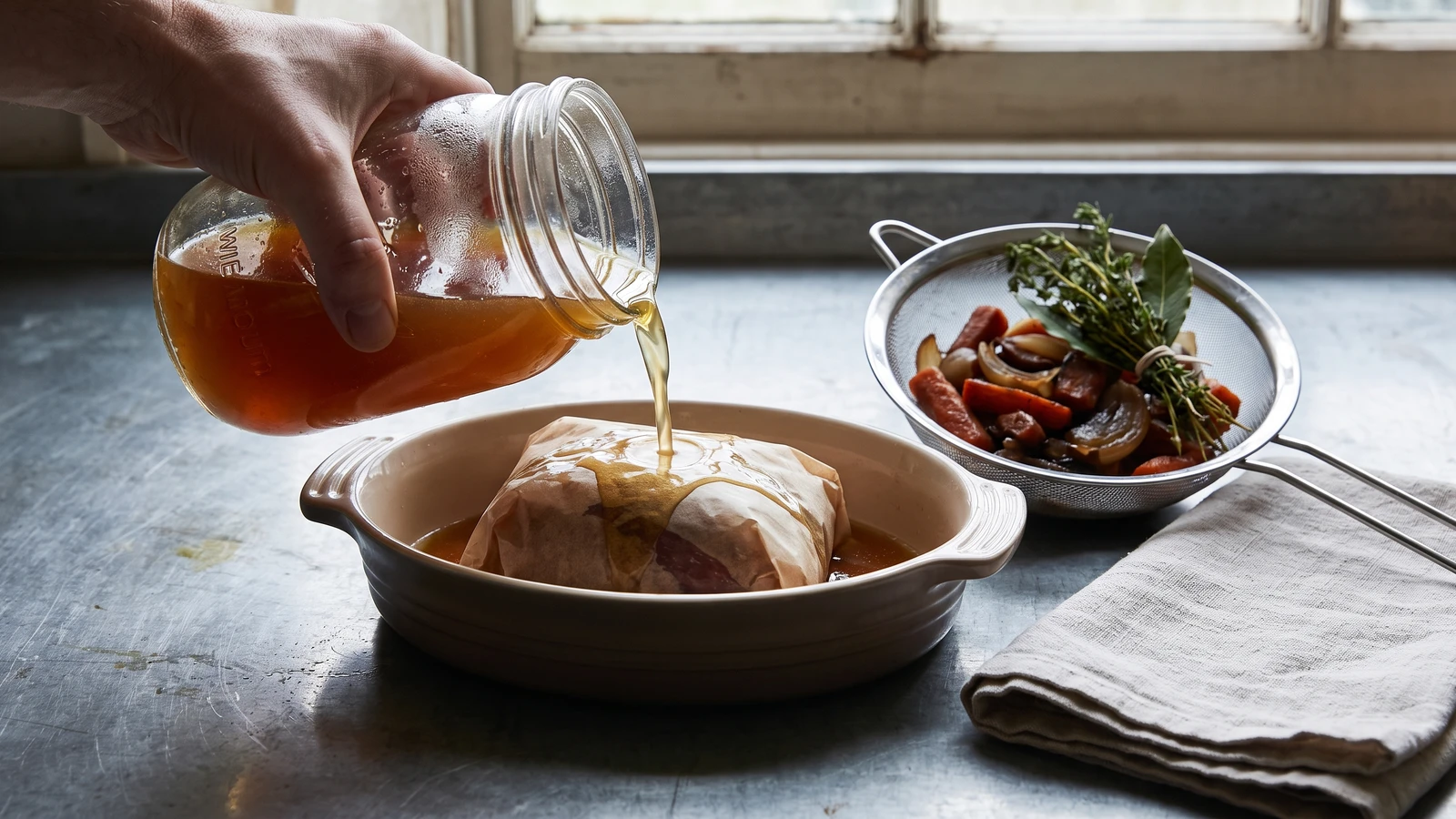
Marinade cuite draws sweetness from browned aromatics, bite from vinegar, and perfume from white wine and herbs, then asks one nonnegotiable thing: chill it stone cold before the venison goes in.
Marinade cuite pour venaison (cooked marinade for venison) teaches that aromatics are cooked for extraction, but the meat meets them cold. Stone cold. A warm marinade starts cooking the venison's surface while inviting spoilage, so temperature is not a detail here. It is the dish's one absolute.
The book's formula assumes a saucier beside a five-quart stewpan and a cold larder large enough to receive it. It asks for neither the perpetual stockpot nor the salamander, because water and a short open simmer are deliberate. For one cook, one stove, one evening, a four-quart nonreactive saucepan, an ice bath, and a refrigerator do the same work. Every divisible quantity has been reduced to two-fifths for about two quarts; the single garlic clove and herb sprigs become small specimens because fractions of leaves and cloves give false precision.
Repeated summer boiling was brigade storage scaffolding, not the dish, and it does not belong in a modern kitchen once raw meat juices enter the marinade. What must stay is the sequence: color the carrot and onion, add the delicate aromatics, simmer twenty minutes, season, simmer ten more, strain, and chill. Before the venison goes in, verify that the marinade is at or below 40°F (4°C), not merely cool to the touch.
Marinade cuite belongs to the French game table rather than to one province, serving hunting households and classical kitchens wherever venison and other strongly flavored meats needed aromatic preparation. It traveled from the game larder into the codified repertoire as a practical liquor that could season meat and later contribute character to its braise. Despite the name, it is neither a finished sauce nor a deep tenderizer: cooking extracts the vegetables and herbs, while cold contact seasons the meat primarily from the surface.
Quantity
6 tablespoons plus 1 teaspoon (95 ml / 87 g)
Quantity
2/3 cup (160 ml / 91 g)
finely minced
Quantity
1/2 cup plus 1 tablespoon (135 ml / 91 g)
finely minced
Quantity
3 tablespoons (45 ml / 23 g)
finely minced
Quantity
1 small clove
crushed
Quantity
1 small bundle: 1/2 loosely packed cup (120 ml / 11 g) parsley stalks, 1 small rosemary sprig, 1 small thyme sprig, and 1 bay leaf
tied securely
Quantity
3/4 cup plus 2 teaspoons (190 ml / 190 g)
Quantity
2 1/2 cups (600 ml / 595 g)
Quantity
4 3/4 cups (1.14 liters / 1.14 kg)
Quantity
1 tablespoon plus 3/4 teaspoon (19 ml / 23 g)
Quantity
2 1/2 teaspoons (12 ml / 6 g)
Quantity
1/4 packed cup (60 ml / 45 g)
| Ingredient | Quantity |
|---|---|
| neutral frying oil | 6 tablespoons plus 1 teaspoon (95 ml / 87 g) |
| carrotsfinely minced | 2/3 cup (160 ml / 91 g) |
| onionsfinely minced | 1/2 cup plus 1 tablespoon (135 ml / 91 g) |
| shallotsfinely minced | 3 tablespoons (45 ml / 23 g) |
| garliccrushed | 1 small clove |
| bouquet garni (herb bundle)tied securely | 1 small bundle: 1/2 loosely packed cup (120 ml / 11 g) parsley stalks, 1 small rosemary sprig, 1 small thyme sprig, and 1 bay leaf |
| plain wine vinegar, 5% acidity | 3/4 cup plus 2 teaspoons (190 ml / 190 g) |
| dry white wine | 2 1/2 cups (600 ml / 595 g) |
| water | 4 3/4 cups (1.14 liters / 1.14 kg) |
| fine sea salt | 1 tablespoon plus 3/4 teaspoon (19 ml / 23 g) |
| whole black peppercorns | 2 1/2 teaspoons (12 ml / 6 g) |
| brown sugar | 1/4 packed cup (60 ml / 45 g) |
Mince the carrots, onions, and shallots separately so the shallots can enter later. Crush the garlic and tie the parsley stalks, rosemary, thyme, and bay leaf into a compact bouquet garni, the herb bundle that perfumes the liquid without leaving debris behind. Measure every liquid before heating the pan; once the vegetables begin coloring, the work moves quickly.
Heat the oil in a four-quart stainless steel or enameled saucepan over medium heat. Add the carrots and onions and fry them for 8 to 10 minutes, stirring frequently, until they soften and their edges just begin to brown. You want a golden fond, the browned film on the pan, not dark caramelization. If a few pieces catch, lower the heat and add 1 tablespoon from the measured water, scraping them free. If they turn black or smell bitter, transfer the unburned vegetables to a clean pan and leave the black flecks behind. Ça se rattrape.
When the carrots and onions first show brown edges, add the shallots, crushed garlic, and bouquet garni. Stir for about 30 seconds, just until the garlic becomes fragrant. Do not wait for it to brown; if it begins coloring, pour in the vinegar immediately and move on.
Pour in the vinegar first and scrape the fond clean from the bottom of the pan. Add the white wine, then the water, keeping the book's sequence intact. Bring the liquid to a gentle simmer and cook uncovered for 20 minutes. It should tremble steadily, never boil hard. If an overenthusiastic boil lowers the liquid well below its starting level, replace only the lost volume with freshly boiled water; the proportion can be restored.
After the first 20 minutes, add the salt, whole peppercorns, and brown sugar. Stir until the sugar dissolves, then maintain the same gentle simmer for 10 minutes. The liquid will taste sharper and saltier than a sauce because it is a working marinade, meant to season meat rather than be spooned directly onto a plate.
Pass the marinade through a fine-mesh strainer into a large heatproof nonreactive bowl. Let the vegetables drain, but do not crush them through the mesh; pressing muddies the liquid and can extract bitterness from the herbs. Do not skim away the fine oil sheen. Oil is part of this formula, not an accident.
Nest the bowl in a larger bowl of ice water and stir the marinade with a clean spoon so the heat escapes evenly. Once it has dropped below 70°F (21°C), cover and refrigerate until the center reads no more than 40°F (4°C), about 2 hours in total. If it remains warm, keep chilling. Never add venison to hurry the cooling; warm marinade starts cooking the meat's surface and creates precisely the problem this method is meant to avoid.
Place the venison in a snug glass, glazed ceramic, stainless steel, or food-safe container and pour over only the fully chilled marinade. Keep the meat submerged and refrigerated at or below 40°F (4°C), turning it once or twice for even contact. Allow 6 to 12 hours for a tender roasting cut or 24 to 48 hours for a large braising cut. Do not preserve used marinade by periodically reboiling it. Discard it after marinating unless it goes immediately into the venison's cooking pot and is brought to a full rolling boil before the heat is lowered.
1 serving (about 240g)
Culinary guides, cultural storytelling, and the editorial depth that makes cooking meaningful.
Discover Culinary ExplorerChef Juliette
Beef shin, lean beef, and fowl begin in cold water and rise slowly toward a tremble. Skim before the boil, and you learn the quiet discipline that gives every clear French broth its backbone.
Chef Juliette
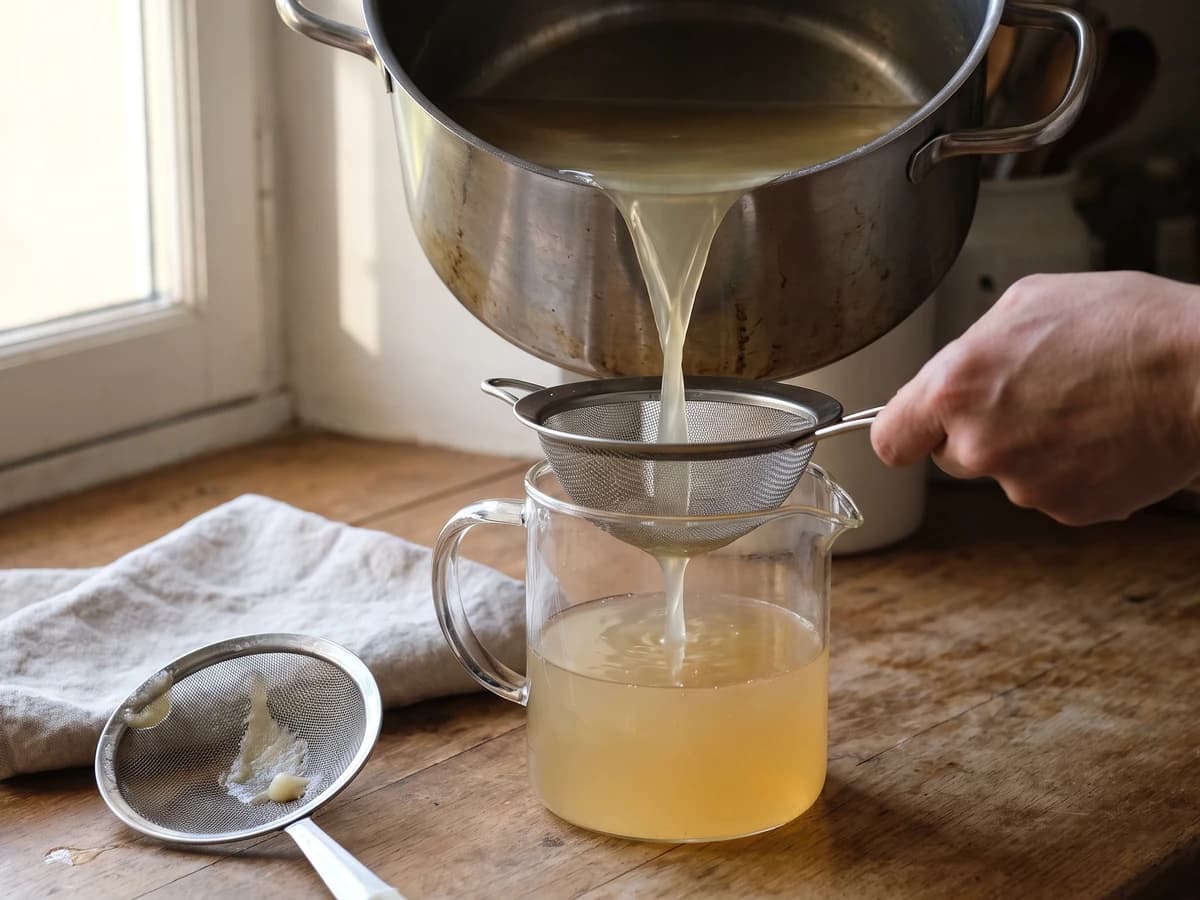
Break the veal bones small, then give them eight hours at a bare tremble. This pale, gelatinous fond becomes the quiet foundation beneath velouté, blanquette, and every sauce that must stay light.
Chef Juliette
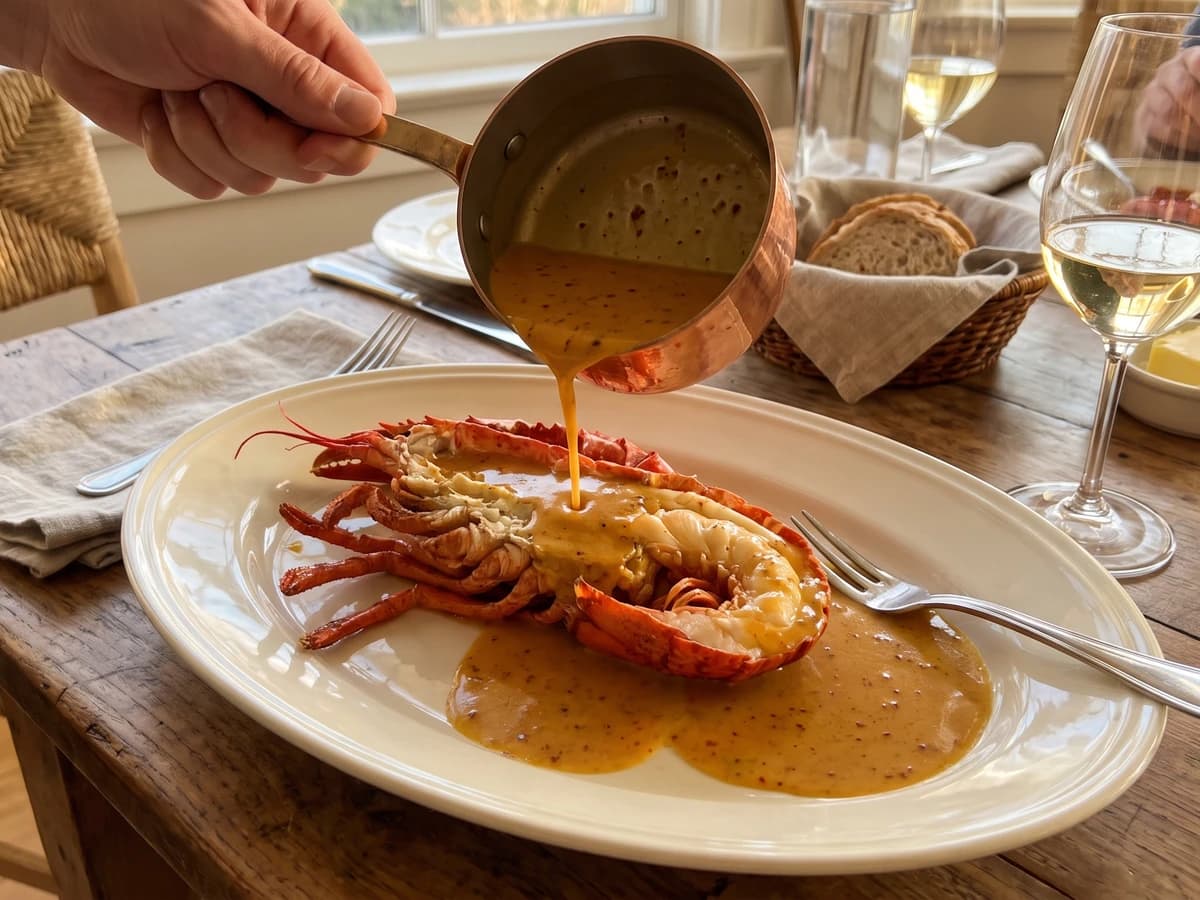
Sauce Orientale concentrates lobster-rich American Sauce with curry, then folds in cream away from the fire: a glossy, gently spiced derivative made for lobster, crayfish, and firm fish.
Chef Juliette
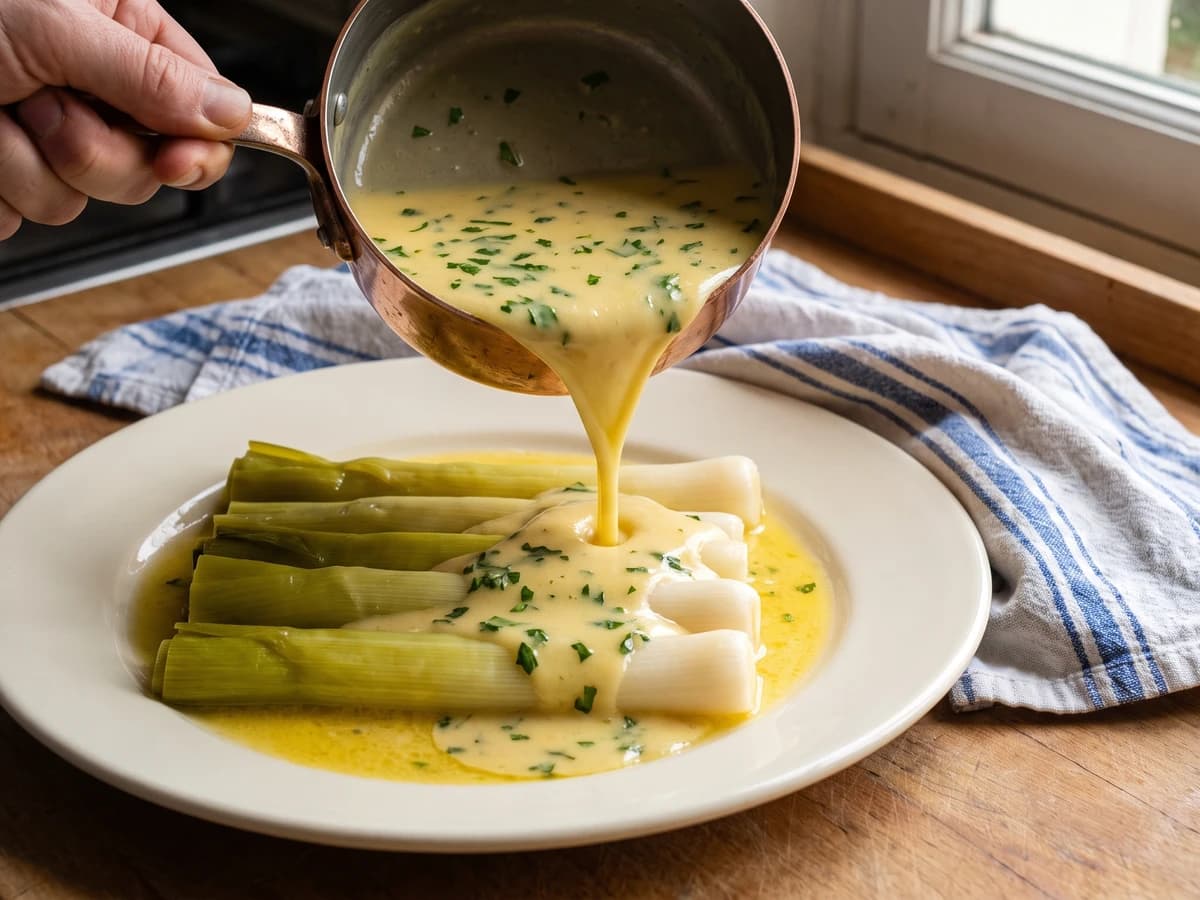
An old lesson in sauce families: Sauce Allemande takes mushroom liquor, then butter, lemon, and parsley, becoming a glossy Poulette for sheep's trotters, leeks, cauliflower, and anything needing gentle richness with a bright edge.