Chef Juliette
Suet Dumpling
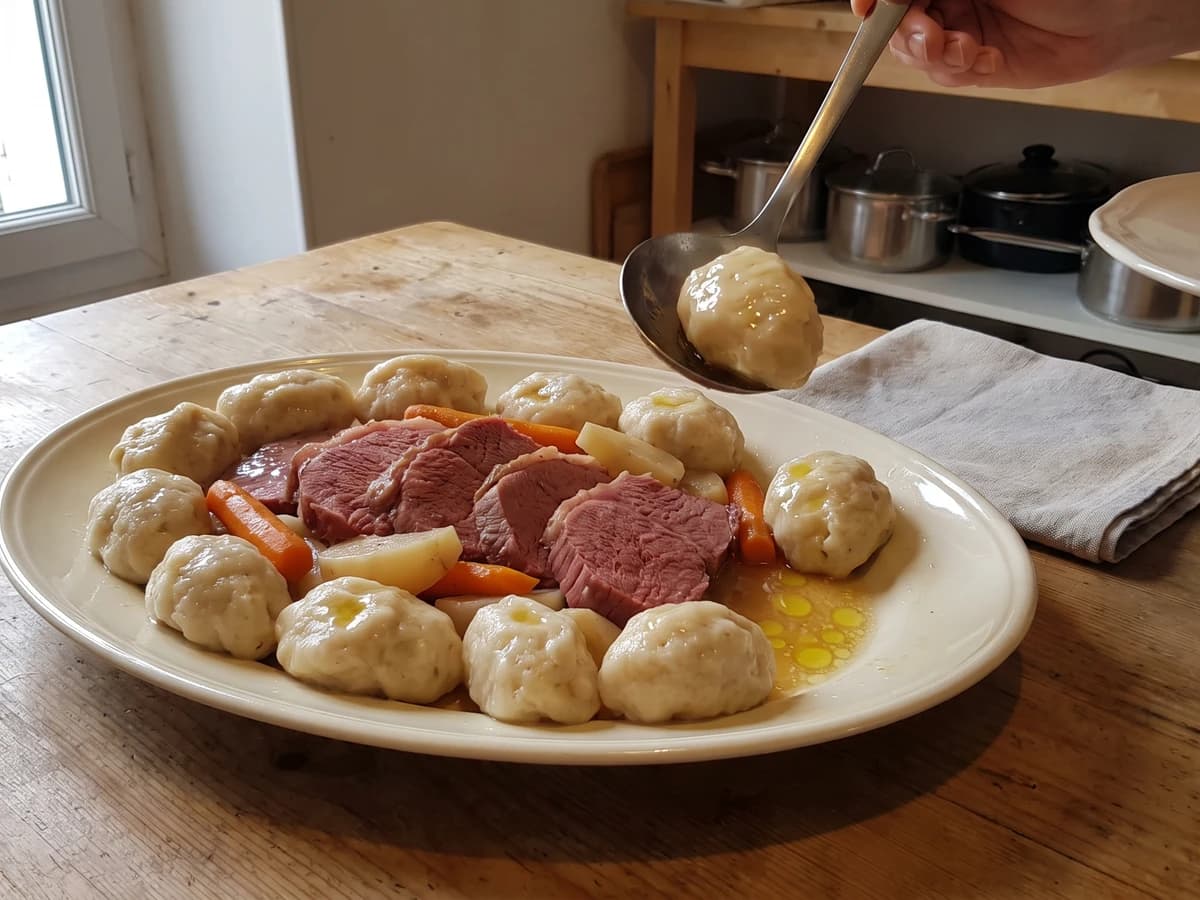
Boulettes au suif, poached beside salt beef, turn equal weights of flour and finely chopped suet into tender, rich dumplings. Keep the beef liquor at a bare tremble and the old garnish works beautifully at home.
A cooking platform built around craft, culture, and the stories behind what we eat.
Created by Chef Juliette
Based on No. 273, Blanchings, from Le Guide Culinaire (1907) by Auguste Escoffier
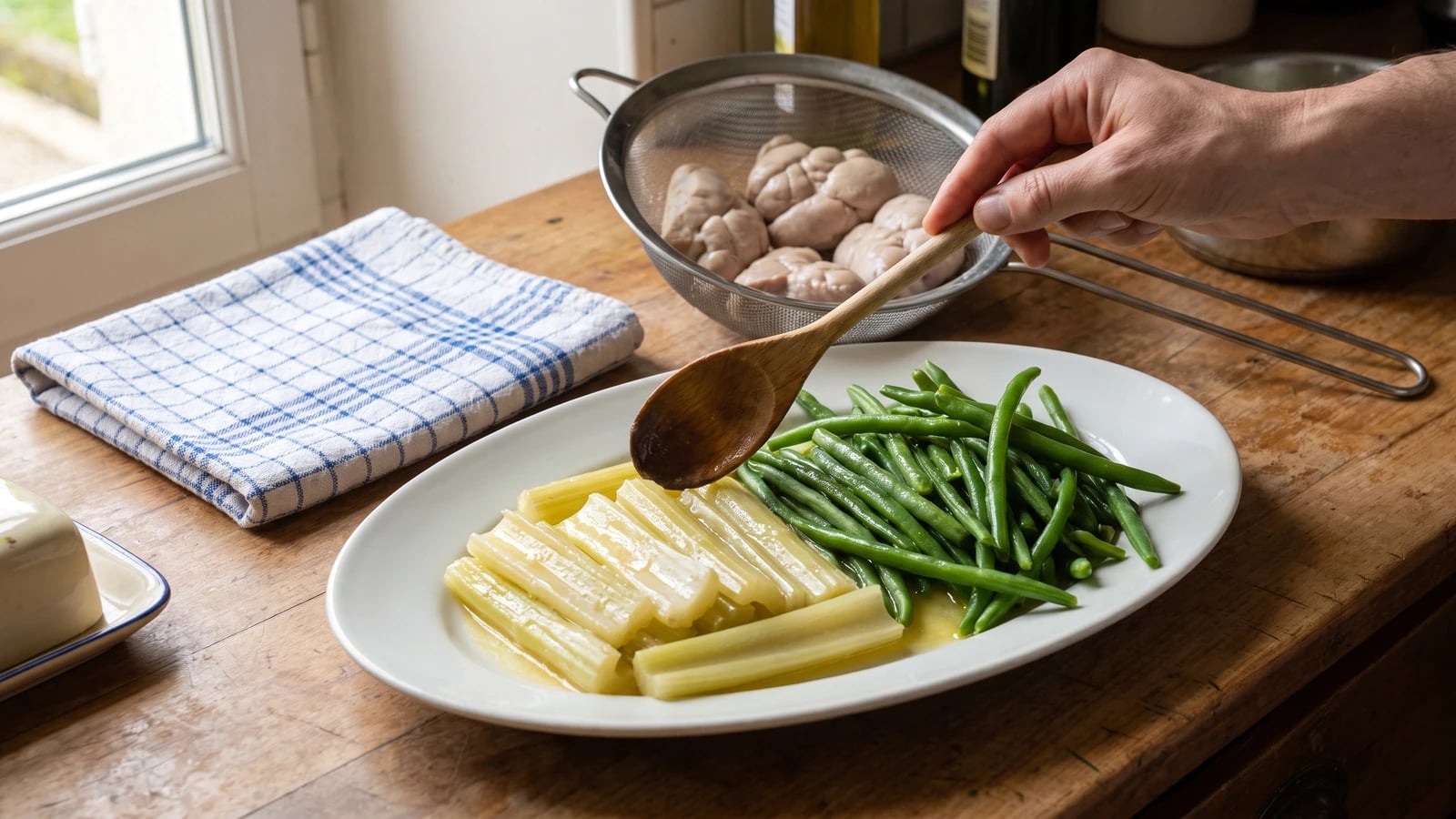
One awkward term, three distinct operations: firm sweetbreads gently, tame celery before its butter braise, and cook green beans fully à l’Anglaise. The timing, not the cold water, decides each result.
Blanchir (to blanch) is not one operation but three, and the one true thing to know before touching a pan is that each has a different stopping point. Sweetbreads are firmed for another cooking, celery is only partly cooked to soften its pungency, and green beans are cooked through in salted water. Confuse those endpoints and you get tough offal, watery celery, or beans still raw at the centre.
The original entry assumed a brigade prep bench, several pots moving at once, and cold running water used freely for soaking and cooling. This home version uses one broad pot in sequence, a refrigerated bowl of water changed twice, and one ice bath. The entry supplied no portions because a brigade repeated the work as service demanded; here the representative batch is scaled for four. The water use and pace have changed, not the intended degree of cooking. One cook, one stove, one evening.
Routine blanching is not a kindness to every pale meat. Fine veal or poultry destined for blanquette or fricassée should begin in cold water or stock and rise slowly while you skim; soaking and blanching only wash away savor. Sweetbreads are the exception demonstrated here. Watch the clock once each ingredient reaches its proper water, because timing is the step that decides all three.
Blanchir belongs to the working vocabulary of the classical French professional kitchen, especially the garde-manger and vegetable stations, rather than to any single regional larder. The term came to cover three unlike operations as brigade shorthand traveled into home cookery: firming certain offal, parboiling pungent vegetables before braising, and fully cooking green vegetables in salted water. That last job is properly cuisson à l’Anglaise, while routine soaking and blanching of fine meat for blanquette or fricassée was rejected because careful cooking keeps good meat pale without washing away its savor.
Quantity
1 pound (454 g)
Quantity
1, about 12 ounces (340 g)
trimmed and cut into 4-inch (10 cm) lengths
Quantity
8 ounces (225 g)
trimmed
Quantity
8 quarts (7.6 L / 7.6 kg), divided, plus more as needed
kept cold for soaking and cooling where directed
Quantity
8 cups (1.9 L / about 1 kg)
Quantity
3 tablespoons (45 ml / 54 g), divided
Quantity
4 tablespoons (60 ml / 57 g), divided
Quantity
1 finished preparation of Poëlings (No. 250)
Quantity
1 finished preparation of Anglaise (for Egg-and-bread-crumbing) (No. 174)
| Ingredient | Quantity |
|---|---|
| veal sweetbreads | 1 pound (454 g) |
| celery hearttrimmed and cut into 4-inch (10 cm) lengths | 1, about 12 ounces (340 g) |
| haricots verts or slender green beanstrimmed | 8 ounces (225 g) |
| waterkept cold for soaking and cooling where directed | 8 quarts (7.6 L / 7.6 kg), divided, plus more as needed |
| ice | 8 cups (1.9 L / about 1 kg) |
| fine sea salt | 3 tablespoons (45 ml / 54 g), divided |
| unsalted butter | 4 tablespoons (60 ml / 57 g), divided |
| Poëlings (optional) | 1 finished preparation of Poëlings (No. 250) |
| Anglaise (for Egg-and-bread-crumbing) (optional) | 1 finished preparation of Anglaise (for Egg-and-bread-crumbing) (No. 174) |
Keep the sweetbreads, celery, and beans separate, because they are not receiving the same treatment. Put the sweetbreads in a deep bowl, cover generously with cold water, and refrigerate for 1 hour, changing the water twice, until it remains nearly clear. A bowl replaces the original running-water soak without changing its purpose, which is to draw excess blood from this particular offal while keeping it cold.
Drain the sweetbreads and place them in a saucepan with enough fresh cold water to cover them by 2 inches (5 cm). Bring the water gradually to the boil over medium heat, then hold a gentle boil for 10 minutes, never longer than 12. If the water begins racing, lower the heat and add 1 cup (240 ml / 240 g) cold water to arrest it. Ça se rattrape, provided you stop the hard boil quickly. Transfer the sweetbreads immediately to the ice bath and cool them completely, then drain. They are firmed for a final recipe, not ready to eat; cook them fully during that final treatment, reaching 160°F (71°C) at the centre.
Bring 3 quarts (2.8 L / 2.8 kg) water to a full boil and season it with 1 tablespoon (15 ml / 18 g) salt. Add the celery and boil for 2 minutes if it is young and tender, or 4 to 5 minutes if the stalks are mature. You are softening pungency and beginning the cooking, not finishing it. Bite a thin piece: if its harshness remains, return the celery to the boiling water for 1 minute before cooling. Ça se rattrape. Move it into cold water only until barely lukewarm, then drain in a sieve for at least 10 minutes.
Melt 2 tablespoons (30 ml / 28 g) butter in a wide covered skillet without letting it brown. Add the drained celery and 1 cup (240 ml / 240 g) water, cover, and cook gently for 8 to 12 minutes, until a knife slips through with slight resistance. Uncover and turn the pieces while the remaining liquid reduces around the butter into a light glaze. If the pan dries before the celery is tender, add water a tablespoon at a time; if the butter threatens to brown, add one cold spoonful and shake the pan until the glaze comes together again.
Bring a fresh 3 quarts (2.8 L / 2.8 kg) water to a strong boil and add 1 tablespoon (15 ml / 18 g) salt. Drop in the beans and cook uncovered for 4 to 6 minutes, until vivid green, tender throughout, and still lively under the teeth. This is cuisson à l’Anglaise, cooking plainly in water, not a token dip followed by another cooking. Drain very thoroughly, return the beans to the dry warm pot, and toss with the remaining 2 tablespoons (30 ml / 28 g) butter. If water collects beneath them, warm the pot briefly before adding the butter; butter can coat a dry bean, but it cannot cling through a puddle.
Serve the glazed celery and buttered beans at once, or cool them promptly for meal preparation. For a fuller plate, reach for the finished Poëlings (No. 250) from its own entry and set the vegetables alongside. Keep any finished item using Anglaise (for Egg-and-bread-crumbing) (No. 174) distinct: that Anglaise is an egg-and-crumb coating, while the glossary Anglaise used for the beans means plain water cooking. They share a word, not a method. À table!
1 serving (about 235g)
Culinary guides, cultural storytelling, and the editorial depth that makes cooking meaningful.
Discover Culinary ExplorerChef Juliette
Boulettes au suif, poached beside salt beef, turn equal weights of flour and finely chopped suet into tender, rich dumplings. Keep the beef liquor at a bare tremble and the old garnish works beautifully at home.

Chef Juliette
Bread, flour, frangipane, and rice become four cool, supple panades for binding forcemeats, each changing body and flavor while preserving tenderness. The finest Mousselines need none, and knowing that distinction is the lesson.

Chef Juliette
Panade au pain is bread, milk, salt, heat, and attention: stir until the paste releases cleanly, butter it against a skin, and you have the quiet binder behind tender French farces.

Chef Juliette
Panade de farine teaches the drying stroke behind pâte à choux: flour meets boiling buttered water, then stays over the fire until the paste gathers, smooths, and quits the pan cleanly.