
Chef Juliette
John Dory (St. Pierre)
John Dory has the delicacy of sole and the firmness of turbot. A light flouring, a quick butter sauté, and nut-brown beurre noisette show exactly why looks never mattered.
A cooking platform built around craft, culture, and the stories behind what we eat.
Created by Chef Juliette
Based on No. 250, Poëlings, from Le Guide Culinaire (1907) by Auguste Escoffier
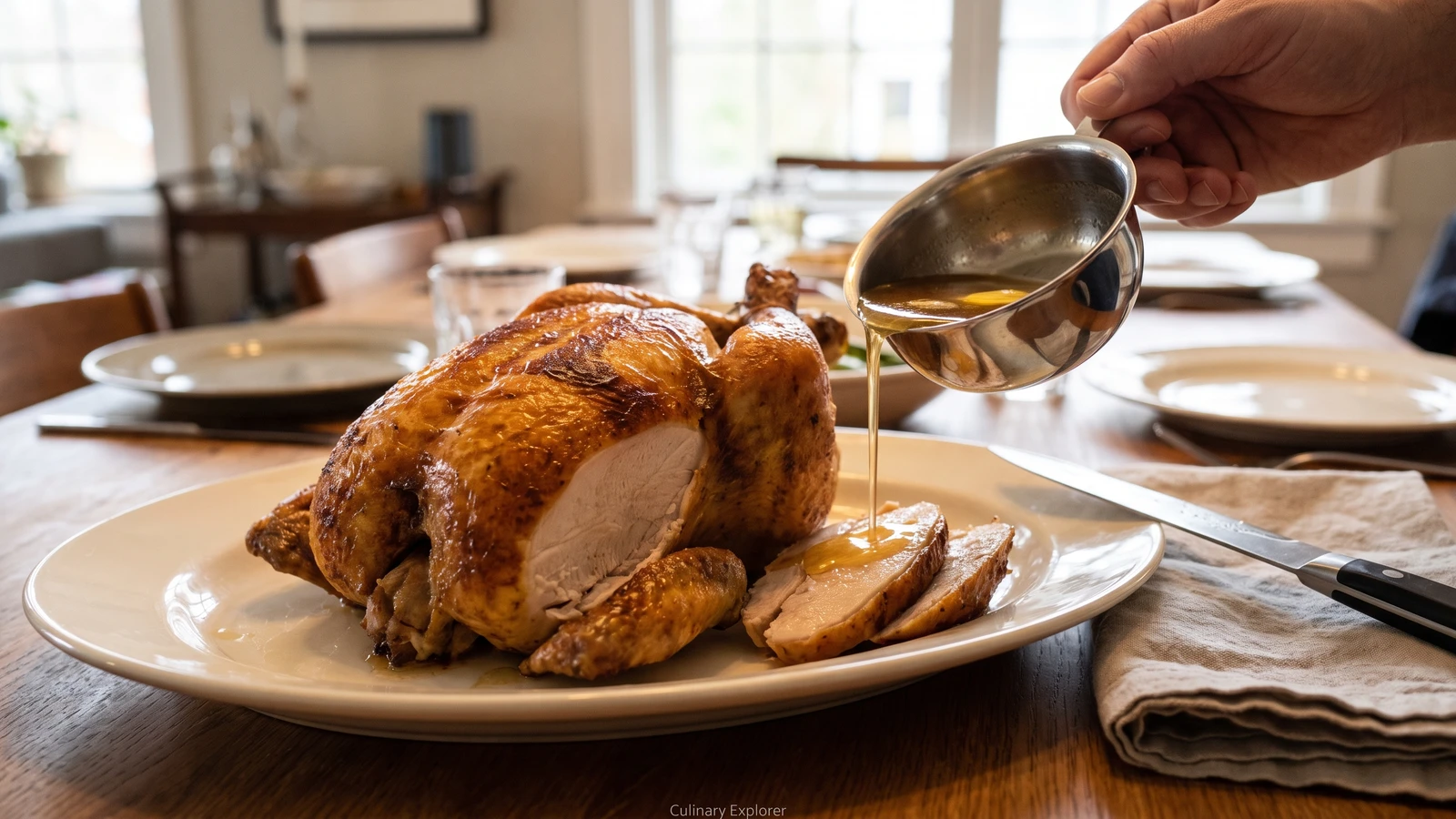
A whole chicken poêlé in butter over matignon, bronzed uncovered and served with its clear cooking juices: no liquid enters the pot until the bird leaves it.
Poêlé de volaille (poultry pot-roasted in butter) teaches one rule above all: the bird cooks without a drop of stock or water. Butter carries the savour between the chicken and its bed of Matignon (No. 227), while the covered pot keeps the flesh tender. Add liquid during cooking and you have begun a braise. Pleasant, certainly, but it is no longer poêlé. The word carries the technique.
The classical kitchen assumed a large bird, a saucier on staff, Brown Veal Stock (No. 9) never off the fire, another pair of hands for basting, and a salamander waiting to give the skin its final colour. For four people, one chicken and a snug modern cocotte do the work. A short finish in a hot oven replaces the salamander, while a fine sieve replaces the serviette. The wrapping of pork fat and buttered paper used for very large joints was brigade scaffolding, so it can go. The covered butter cooking, the absence of liquid, and the ten-minute extraction of the matignon into the stock must stay. One cook, one stove, one evening.
The finished bird should be deeply bronzed, moist at the joint, and accompanied by a clear amber sauce tasting of chicken, butter, and aromatic vegetables. We don't apologize for butter. Watch the matignon as closely as the chicken: if it darkens too quickly, lower the heat and add butter, never stock. That dry, butter-rich cooking is the step that decides the dish.
Poêlé belongs to the national French classical repertoire and the bourgeois en cocotte table rather than to one regional larder. Its more elaborate ancestor enclosed a browned joint in matignon, thin pork fat, and buttered paper before roasting and basting it; working kitchens retained the butter, covered vessel, and aromatic bed while shedding much of the wrapping. Despite its name, poêlé is neither sautéed nor braised, because the defining practice is that stock touches the cooking vessel only after the meat has been removed.
Quantity
1 whole chicken, 4 lb (1.8 kg)
giblets removed and skin patted dry
Quantity
1½ teaspoons (7.5 ml / 9 g)
Quantity
¾ teaspoon (3.75 ml / 1.5 g)
Quantity
7 tablespoons (105 ml / 100 g)
melted and kept warm
Quantity
1½ cups (355 ml / 355 g) Brown Veal Stock (No. 9)
prepared, hot, and well seasoned
| Ingredient | Quantity |
|---|---|
| whole oven-ready chickengiblets removed and skin patted dry | 1 whole chicken, 4 lb (1.8 kg) |
| fine sea salt | 1½ teaspoons (7.5 ml / 9 g) |
| freshly ground black pepper | ¾ teaspoon (3.75 ml / 1.5 g) |
| Matignonprepared and cooled | 1½ cups (355 ml / 300 g) Matignon (No. 227) |
| unsalted buttermelted and kept warm | 7 tablespoons (105 ml / 100 g) |
| Brown Veal Stockprepared, hot, and well seasoned | 1½ cups (355 ml / 355 g) Brown Veal Stock (No. 9) |
Set a rack in the lower third of the oven and heat it to 325°F (165°C). Let the chicken stand outside the cold for 30 minutes, then season the cavity and skin evenly with the salt and pepper. Tuck the wing tips underneath and tie the legs loosely together so the bird cooks compactly without closing the cavity completely.
Spread the Matignon (No. 227) across the bottom of the cocotte in an even, compact layer. Set the chicken breast-side up directly on the matignon and pour 5 tablespoons (75 ml / 70 g) of the melted butter over it, working the butter across the breast, legs, and wings with a spoon. Cover the cocotte tightly.
Cook the covered chicken for 50 minutes. Open the pot every 20 minutes and baste the bird with the butter and juices gathered around the matignon, adding some of the reserved melted butter whenever there is too little to spoon. Do not add stock or water. If the vegetables smell sharply toasted or begin catching at the edges, lower the oven to 300°F (150°C) and add a spoonful of butter. Ça se rattrape. Liquid would save the vegetables by changing the dish, which is no rescue at all.
After 50 minutes, insert an instant-read thermometer into the thickest part of the breast without touching bone. Continue covered cooking and basting until it reaches about 145°F (63°C), usually another 10 to 20 minutes. The thigh should already be approaching 160°F (71°C). Judge by temperature, not a rigid clock, because the shape and starting chill of a chicken matter more than its label.
Raise the oven to 425°F (220°C), uncover the cocotte, and baste the chicken with the remaining butter. Roast uncovered for 15 to 20 minutes, until the skin is burnished and the breast reaches 165°F (74°C), with the thigh at least 170°F (77°C). If the matignon is already deep brown, lift the chicken onto a shallow roasting tray before this final colouring and keep the vegetables in their cocotte off the heat. If the meat is done but the skin remains pale, give the bird 1 to 2 minutes under the broiler, watching it constantly. That is the home salamander.
Transfer the chicken to a warm platter and cover it loosely, leaving space for the skin to remain dry. Rest it for 15 minutes while you make the poëling stock. Keep every drop in the cocotte, including the butter. This is the unusual point: do not remove the fat yet, because it holds much of the aroma extracted from the chicken and matignon.
Set the cocotte over medium heat and pour the hot Brown Veal Stock (No. 9) directly onto the greasy matignon. Bring it to a gentle simmer, scraping the fond from the pot floor, and cook for a full 10 minutes. The stock needs that time in contact with the aromatic butter to reclaim the savour carried there during roasting. Keep the simmer calm so the stock extracts rather than evaporates away.
Pour the contents of the cocotte through a fine sieve lined with damp muslin or a clean, lint-free cloth, allowing the liquid to pass without crushing the matignon. Let it settle briefly, then skim the butter carefully or use a fat separator. Add any clear resting juices from the chicken. If small beads of fat remain, draw a clean strip of paper towel lightly across the surface. Ça se rattrape. Taste the sauce: if it seems weak, reduce it for a few minutes until clear, savoury, and lightly coating, but do not thicken it with flour.
Remove the trussing, carve the chicken, and arrange the breast and leg pieces generously on the warm platter. Pour only a spoonful of sauce around the meat so the skin stays bronzed, then send the remaining poëling stock to the table in a warmed sauceboat. Serve at once. À table!
1 serving (about 340g)
Culinary guides, cultural storytelling, and the editorial depth that makes cooking meaningful.
Discover Culinary ExplorerChef Juliette
John Dory has the delicacy of sole and the firmness of turbot. A light flouring, a quick butter sauté, and nut-brown beurre noisette show exactly why looks never mattered.

Chef Juliette
Fresh haddock proves its delicacy in the meunière pan: a fine flour crust, moist pearly flakes, and beurre noisette sharpened with lemon and parsley, ready from one skillet in half an hour.

Chef Juliette
Éperlans à l’Anglaise turns small fish into a lesson in disciplined coating: boned smelts under a close, crisp crumb, pan-fried in clarified butter and finished with bright, half-melted maître d’hôtel butter.

Chef Juliette
Tiny smelts, shallot, mushrooms, white wine, gratin sauce, and fine bread raspings meet a fierce oven, where the fish must turn tender in the same breath the buttered crust bronzes.