
Chef Juliette
Fresh Haddock (Eglefin)
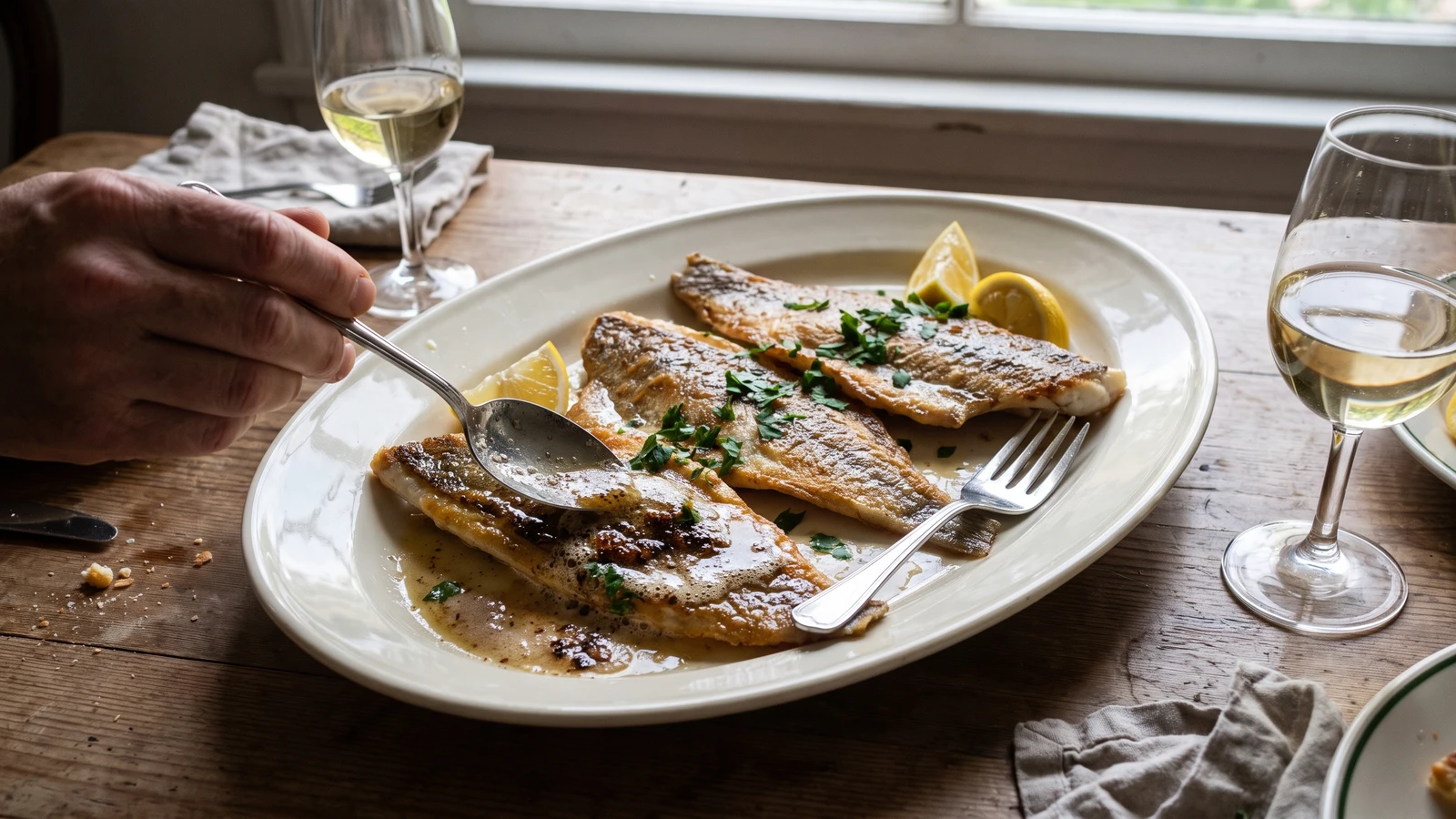
Fresh haddock proves its delicacy in the meunière pan: a fine flour crust, moist pearly flakes, and beurre noisette sharpened with lemon and parsley, ready from one skillet in half an hour.
A cooking platform built around craft, culture, and the stories behind what we eat.
Created by Chef Juliette
Based on No. 1000, John Dory (St. Pierre), from Le Guide Culinaire (1907) by Auguste Escoffier
John Dory has the delicacy of sole and the firmness of turbot. A light flouring, a quick butter sauté, and nut-brown beurre noisette show exactly why looks never mattered.
Saint-Pierre meunière (John Dory, lightly floured and pan-fried in butter) teaches the discipline behind every good fish sauté: the surface must be dry, the flour must be fresh, and the pan must be ready before the fillet touches it. John Dory's appearance has frightened away more cooks than its cooking ever should. Beneath the spines and great solemn head lies white, firm flesh with the delicacy of sole and enough structure to turn cleanly in a skillet.
The classical entry doesn't burden Saint-Pierre with a new garnish. It sends the fillets into the same working repertoire as sole and chicken-turbot. A brigade could give the awkward whole fish to a fish cook, keep clarified butter ready, and leave the final pan to a saucier. At home, ask the fishmonger to skin and pin-bone the fillets, then use one wide skillet for both fish and sauce. Those separate hands are scaffolding and can go. The last-minute flouring, clarified butter, and beurre noisette, hazelnut-browned butter, are the dish and must stay. One cook, one stove, one evening.
When it is right, each fillet carries a fine golden crust around a moist, pearly centre, with lemon-bright butter pooling underneath and parsley caught in the foam. Dry the fish thoroughly and don't flour it until the pan is hot. That is the one step that decides the dish.
Saint-Pierre belongs to the Atlantic fish markets of Brittany and the Vendée, though it is also landed in France's Mediterranean ports; the dark round mark on each flank inspired the traditional story of Saint Peter's thumbprint. Classical kitchens overcame the fish's unpopular appearance by filleting it and applying the methods used for sole and chicken-turbot, allowing its whiteness, firmness, and delicacy to speak plainly. Its ugliness is no warning of coarse flesh, only a test of whether the cook knows better than fashion.
Quantity
4 fillets, 5 to 6 ounces (140 to 170 g) each
pin bones removed
Quantity
1 teaspoon (5 ml / 6 g)
Quantity
¼ teaspoon (1.25 ml / 0.6 g)
Quantity
½ cup (120 ml / 65 g)
Quantity
6 tablespoons (90 ml / 82 g)
4 tablespoons for frying and 2 tablespoons held in reserve
Quantity
8 tablespoons (120 ml / 113 g)
6 tablespoons for the sauce and 2 tablespoons held in reserve
Quantity
3 tablespoons (45 ml / 45 g)
Quantity
¼ cup (60 ml / 15 g)
finely chopped
Quantity
1
cut into 4 wedges
| Ingredient | Quantity |
|---|---|
| skinless John Dory filletspin bones removed | 4 fillets, 5 to 6 ounces (140 to 170 g) each |
| fine sea salt | 1 teaspoon (5 ml / 6 g) |
| finely ground white pepper | ¼ teaspoon (1.25 ml / 0.6 g) |
| all-purpose flour | ½ cup (120 ml / 65 g) |
| clarified butter4 tablespoons for frying and 2 tablespoons held in reserve | 6 tablespoons (90 ml / 82 g) |
| unsalted butter6 tablespoons for the sauce and 2 tablespoons held in reserve | 8 tablespoons (120 ml / 113 g) |
| freshly squeezed lemon juice | 3 tablespoons (45 ml / 45 g) |
| flat-leaf parsley leavesfinely chopped | ¼ cup (60 ml / 15 g) |
| lemoncut into 4 wedges | 1 |
Run your fingertips over each fillet and pull any remaining pin bones with tweezers. Trim only ragged edges, preserving as much flesh as possible, then pat the fish thoroughly dry on both sides. Set it uncovered on a rack or clean towel while you arrange the pan. Moisture turns the flour to paste, and paste steams instead of forming the fine crust meunière requires.
Put the lemon juice and chopped parsley beside the stove, with the unsalted butter measured and ready. Warm an oval platter, then remove it from the heat. The sauce takes only minutes and waits for nobody, so this small mise en place replaces the extra hands of a brigade.
Season the fillets evenly with the salt and white pepper. Spread the flour in a shallow dish, coat only the first two fillets, and shake them firmly until nothing remains but a whisper-thin veil. Flour the second pair while the first cooks. If flour sits on damp fish, it becomes glue; last-minute flouring is not brigade ceremony, it is the meunière.
Heat 2 tablespoons of the clarified butter in a 12-inch (30 cm) heavy skillet over medium-high heat until it shimmers without smoking. Lay in two fillets, smooth presentation side down, and cook without disturbing them for 2 to 3 minutes, until a narrow golden edge appears. If a fillet clings, don't pry at it. Give the crust another 20 seconds and ease a fish spatula underneath; ça se rattrape, and the fillet will release when its flour has browned. Turn once and cook the second side for 1 to 2 minutes, until the flesh is opaque at the edges, pearly at the centre, and reaches 145°F (63°C) at its thickest point. Transfer to the warm platter and repeat with 2 more tablespoons clarified butter and the remaining fillets. If the first butter has collected black flour specks, wipe out the skillet and use the reserved clarified butter rather than carrying bitterness into the next batch.
Wipe any scorched flour from the skillet and lower the heat to medium. Add 6 tablespoons of unsalted butter. Swirl as it melts, foams, and quiets; when the milk solids turn hazelnut brown and smell toasted, pull the pan from the heat immediately. If the colour races too quickly, set the pan on a folded damp towel and keep swirling. If the solids turn black or smell acrid, discard the butter, wipe the pan, and begin again with the reserved butter. Burnt butter cannot be disguised, but the sauce can still be rescued.
Standing back from the first lively sputter, add the lemon juice to the beurre noisette and swirl until the butter looks glossy. Stir in the parsley and taste one drop for salt and acidity. If it tastes sharp rather than bright, soften it with a small knob of the reserved butter. Spoon the sauce over and around the fillets, making sure each receives some of the toasted milk solids. Serve at once with the lemon wedges. À table!
1 serving (about 175g)
Culinary guides, cultural storytelling, and the editorial depth that makes cooking meaningful.
Discover Culinary ExplorerChef Juliette
Fresh haddock proves its delicacy in the meunière pan: a fine flour crust, moist pearly flakes, and beurre noisette sharpened with lemon and parsley, ready from one skillet in half an hour.

Chef Juliette
Éperlans à l’Anglaise turns small fish into a lesson in disciplined coating: boned smelts under a close, crisp crumb, pan-fried in clarified butter and finished with bright, half-melted maître d’hôtel butter.

Chef Juliette
Tiny smelts, shallot, mushrooms, white wine, gratin sauce, and fine bread raspings meet a fierce oven, where the fish must turn tender in the same breath the buttered crust bronzes.

Chef Juliette
Éperlans Grillés make delicacy from discipline: smelts opened along the back, partly boned, floured and buttered, then broiled in minutes and served with lemon, crisp parsley, and beurre maître d’hôtel.