Chef Juliette
Ordinary or White Consommé
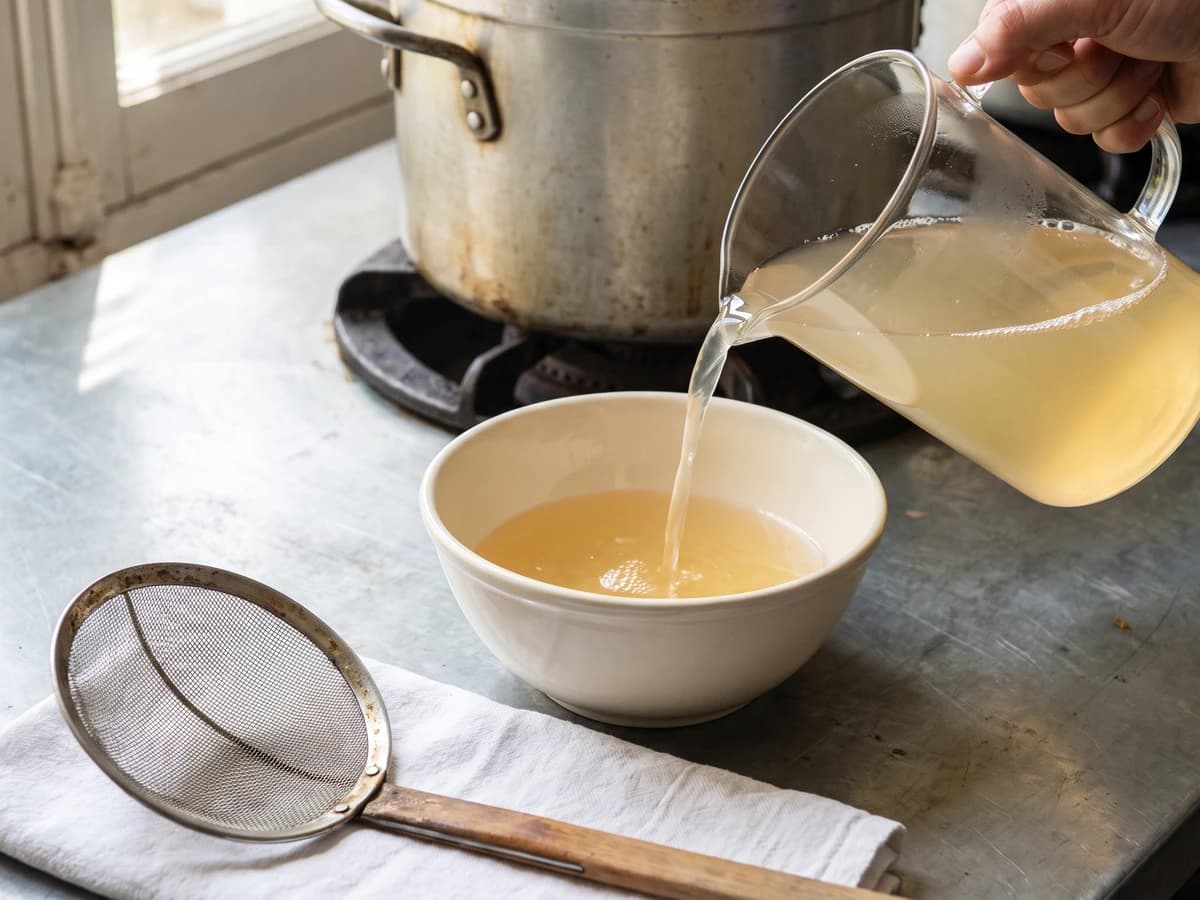
Beef shin, lean beef, and fowl begin in cold water and rise slowly toward a tremble. Skim before the boil, and you learn the quiet discipline that gives every clear French broth its backbone.
A cooking platform built around craft, culture, and the stories behind what we eat.
Created by Chef Juliette
Based on No. 9, Brown Veal Stock, from Le Guide Culinaire (1907) by Auguste Escoffier
Fond brun de veau teaches the foundation beneath the sauce: roast without scorching, simmer without boiling, and eight hours later you have a neutral, gelatinous stock ready to carry poultry, quail, or veal.
Fond brun de veau teaches the first law of stock-making: color must be earned before water touches the bones. Brown them to mahogany and the liquor comes away clear, gelatinous, and quietly savory; scorch them and bitterness follows you into every sauce. Neutral is not timid here. It means the fond can take the aroma of poultry, veal, or quail without arguing.
The original formula borrows its proportions from White Veal Stock, and Poultry Stock (No. 10) and assumes a saucier, shin bones broken in the kitchen, two stockpots, and a fire never allowed to die. At home, ask the butcher to saw the bones, then use one roasting pan and one tall pot. Adding the browned meat and vegetables directly to the bone liquor eliminates the second stockpot, which is brigade scaffolding; hard browning, steady skimming, and the full extraction are the dish. This half batch gives about two quarts, one cook, one stove, one long day.
Watch the roasting pan. Deep bronze fond is flavor, black fond is ash. If one corner catches, discard the scorched pieces and keep the clean brown ones. Ça se rattrape. That judgment, more than any equipment, decides the stock.
Fond brun de veau belongs to the classical sauce kitchens of Paris, where neutral veal fonds could turn toward poultry, feathered game, or thickened veal stock without carrying a dominant flavor. Its use with Poëlings (No. 250), butter-basted covered roasts, shows why that neutrality matters: the stock absorbs the character of the meat and its cooking juices rather than masking them. The particular praise reserved for poached quail corrects a common misconception, because a neutral fond is not weak; it is disciplined enough to support a delicate bird without tasting louder than it.
Quantity
4 pounds (1.8 kg), following White Veal Stock, and Poultry Stock (No. 10)
meat separated and cut into large pieces; bones sawed into 2-inch (5 cm) pieces
Quantity
1, about 1 pound (450 g)
broken into several pieces
Quantity
2¾ quarts (2.6 liters / 2.6 kg), plus up to 2 cups (480 ml / 480 g) as needed
Quantity
1½ cups (360 ml / 170 g)
cut into large chunks
Quantity
1, about ⅔ cup (160 ml / 85 g)
peeled and quartered
Quantity
1
Quantity
1 packed cup (240 ml / 55 g)
cleaned and cut into long pieces
Quantity
½ stalk, about ¼ cup (60 ml / 20 g)
cut into long pieces
Quantity
½ packed cup (120 ml / 14 g)
Quantity
1
Quantity
1
| Ingredient | Quantity |
|---|---|
| bone-in veal shinmeat separated and cut into large pieces; bones sawed into 2-inch (5 cm) pieces | 4 pounds (1.8 kg), following White Veal Stock, and Poultry Stock (No. 10) |
| small raw chicken carcass (optional)broken into several pieces | 1, about 1 pound (450 g) |
| cold water | 2¾ quarts (2.6 liters / 2.6 kg), plus up to 2 cups (480 ml / 480 g) as needed |
| carrotscut into large chunks | 1½ cups (360 ml / 170 g) |
| small yellow onionpeeled and quartered | 1, about ⅔ cup (160 ml / 85 g) |
| whole clove | 1 |
| leekcleaned and cut into long pieces | 1 packed cup (240 ml / 55 g) |
| celery stalkcut into long pieces | ½ stalk, about ¼ cup (60 ml / 20 g) |
| parsley stems and leaves | ½ packed cup (120 ml / 14 g) |
| small bay leaf | 1 |
| small thyme sprig | 1 |
The quantity of shin and aromatics is the home-scale half batch drawn from White Veal Stock, and Poultry Stock (No. 10). Ask the butcher to separate the shin meat and saw the bones into 2-inch (5 cm) pieces; a cleaver and heroic intentions are poor substitutes for a butcher's saw. Keep the meat cold for the later roasting. Tie the leek and celery together, then bind the parsley, bay, and thyme into a bouquet garni.
Heat the oven to 450°F (230°C). Pat the veal bones and optional chicken carcass dry, spread them in one uncrowded layer in a heavy roasting pan, and roast for 45 to 60 minutes, turning twice, until every broad surface is a deep coppery brown. Pour off accumulated fat as needed so the bones roast instead of frying. Do not add oil, salt, or tomato. If a few tips blacken, remove them before they taint the pot; if one area of fond burns, leave that black patch behind when deglazing. Ça se rattrape.
Transfer the roasted bones to a tall 6 to 8-quart stockpot. Let the roasting pan settle for five minutes, add 2 cups of the measured cold water, and scrape up every clean brown deposit with a wooden spoon. Pour this fond into the pot, add the remaining measured water, and bring it slowly to the first boil. Skim away the grey foam and loose fat without stirring, then lower the heat until the surface barely trembles. Mark the liquid level and simmer the bones gently for 4 hours, uncovered or with the lid slightly ajar, adding a little cold water only when bones rise above the surface. If it boils hard, lower the heat, add ½ cup (120 ml / 120 g) cold water, wait for the fat and foam to gather, and skim again. The stock may lose a little clarity, but its flavor is safe.
When the bones have simmered for about 3 hours 15 minutes, return the cleaned roasting pan to the 450°F (230°C) oven with the reserved veal meat spread in one layer. Roast for 20 minutes, then add the carrots and onion and continue for 25 to 35 minutes, turning once, until the meat is well browned and the vegetables carry dark bronze edges. Press the clove into one softened onion quarter after roasting. If a vegetable scorches, discard it and replace it rather than sending bitterness into eight hours of work.
Add the browned veal meat, carrots, clove-studded onion, tied leek and celery, and bouquet garni to the bone liquor. Ladle a little hot stock into the roasting pan and scrape up its clean fond, then return that liquor to the pot. Restore the liquid to its marked level with cold water, bring it just to a boil, skim carefully, and return it at once to a bare tremble. Simmer gently for 3 more hours. No hard boiling and no stirring; agitation pushes fat and particles into the liquid when they belong on top where you can remove them.
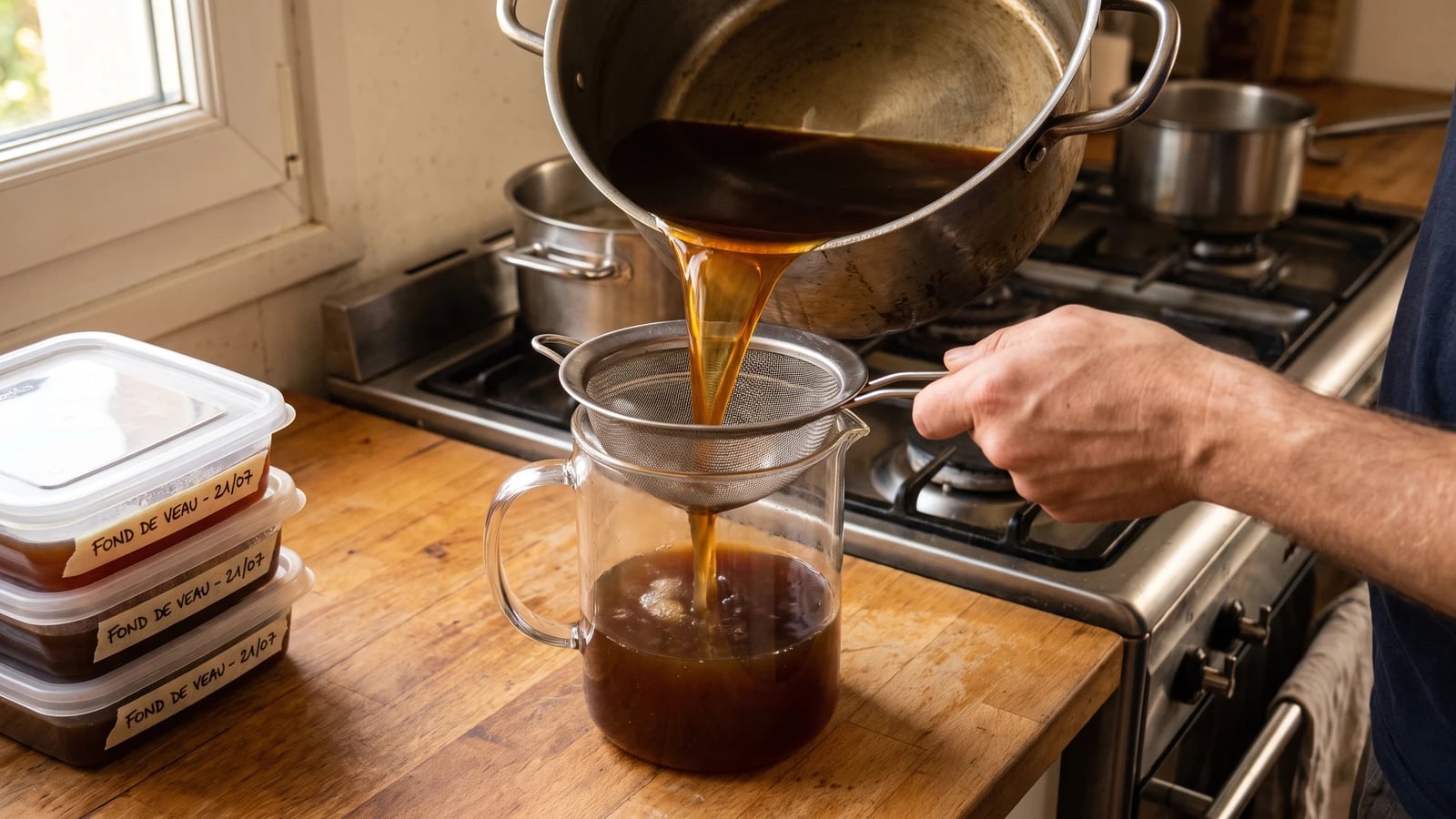
Lift out the large bones and meat with tongs, then pass the stock through a fine-mesh chinois or a strainer lined with damp cheesecloth into a clean pot. Let gravity work and do not press the solids, because pressing clouds the fond and gives it a coarse, spent taste. You should have about 2 quarts (1.9 liters). If there is more, simmer the strained stock gently until it reaches that quantity; if there is a little less, keep its honest concentration and loosen individual dishes only when needed.
Skim the obvious fat from the hot stock, then divide it among shallow heatproof containers and set them in an ice-water bath. Stir the stock occasionally until it is cool enough to refrigerate, getting it into the cold within 2 hours rather than putting one large hot pot straight into the refrigerator. Chill until the remaining fat forms a firm cap, then lift it off completely. The source calls for a stock free of grease, and that clean finish is what lets later meat and butter speak clearly.
Cold fond brun de veau should set into a soft, trembling jelly. If it remains liquid, it still has flavor; reduce the quantity required for a sauce until it gains body. Portion the finished stock unsalted for the freezer. Use it clear in Poëlings (No. 250), as a poaching liquor for quail, with poultry, or as the neutral foundation for thickened veal stock.
1 serving (about 240g)
Culinary guides, cultural storytelling, and the editorial depth that makes cooking meaningful.
Discover Culinary ExplorerChef Juliette
Beef shin, lean beef, and fowl begin in cold water and rise slowly toward a tremble. Skim before the boil, and you learn the quiet discipline that gives every clear French broth its backbone.
Chef Juliette
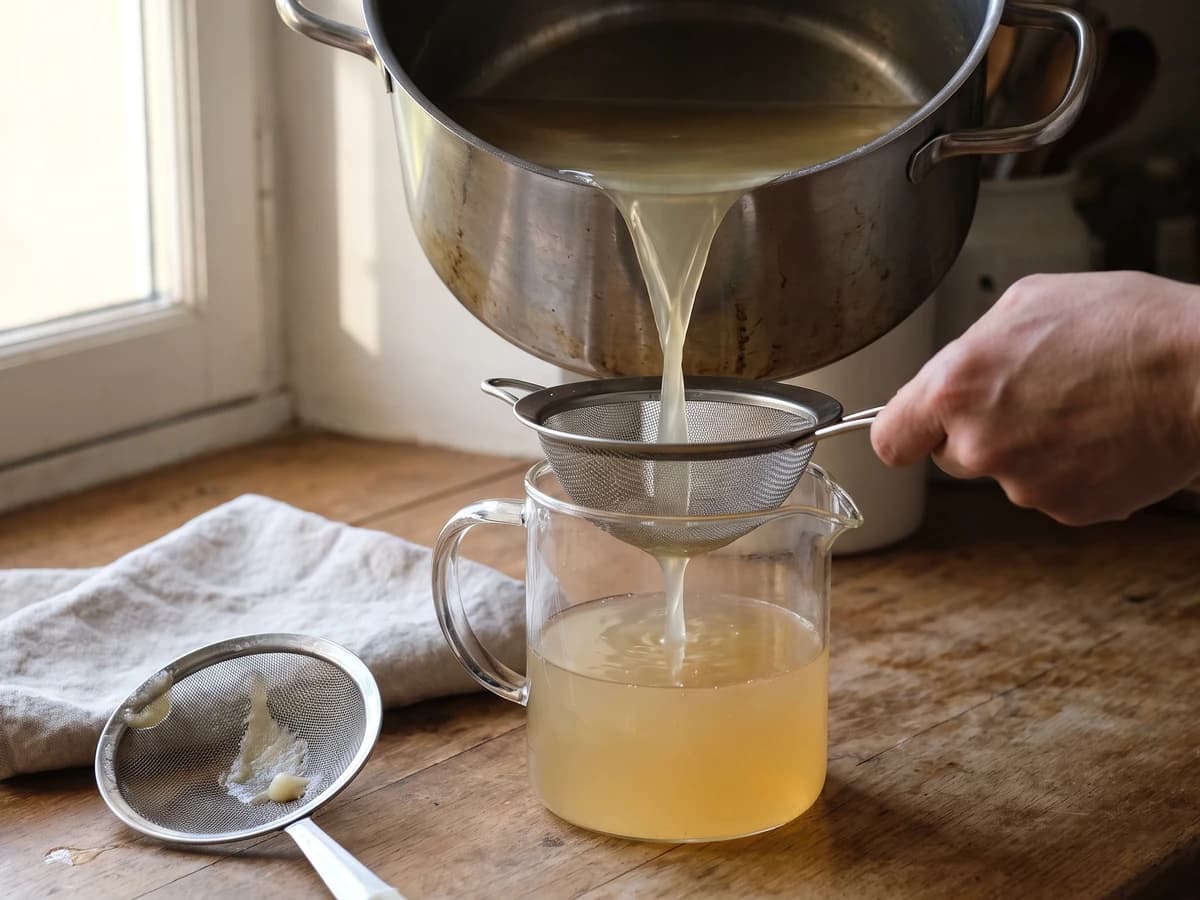
Break the veal bones small, then give them eight hours at a bare tremble. This pale, gelatinous fond becomes the quiet foundation beneath velouté, blanquette, and every sauce that must stay light.
Chef Juliette
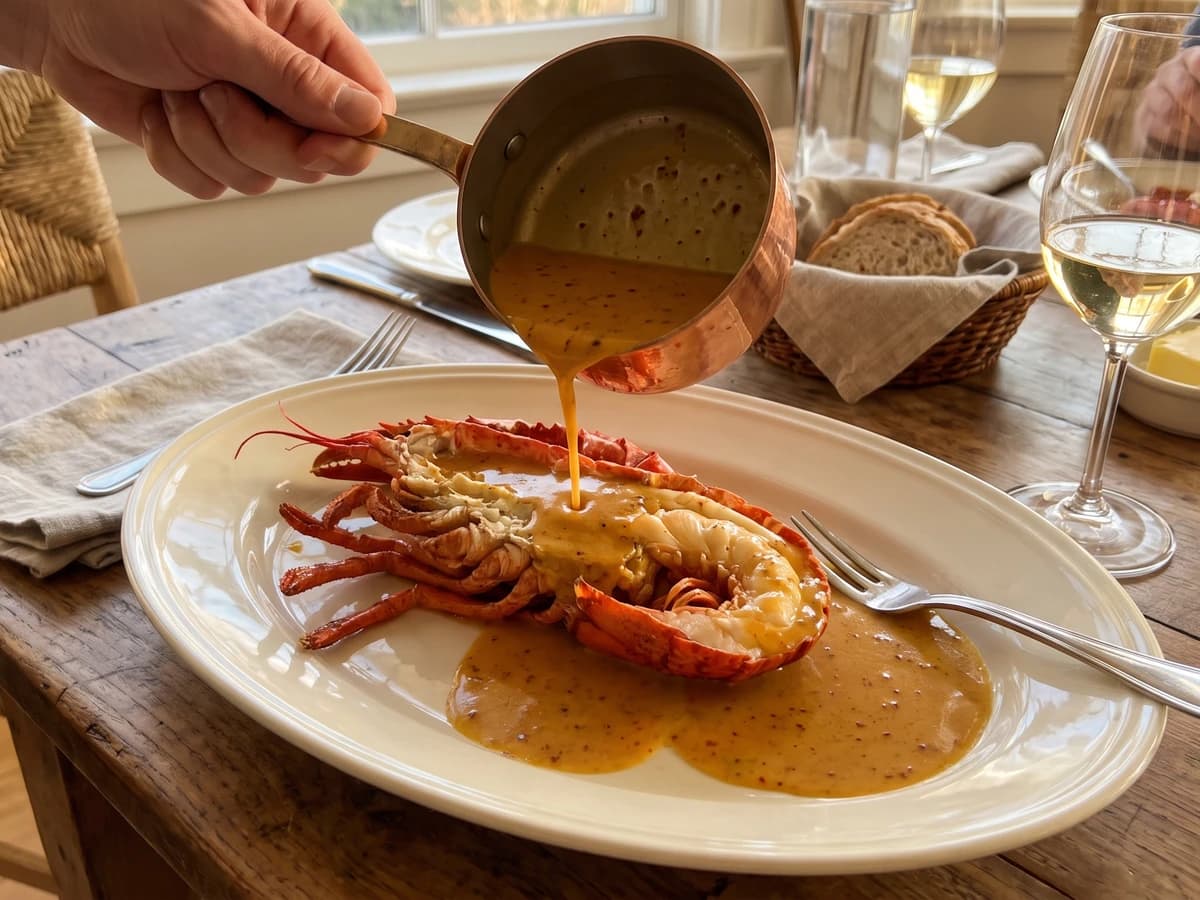
Sauce Orientale concentrates lobster-rich American Sauce with curry, then folds in cream away from the fire: a glossy, gently spiced derivative made for lobster, crayfish, and firm fish.
Chef Juliette
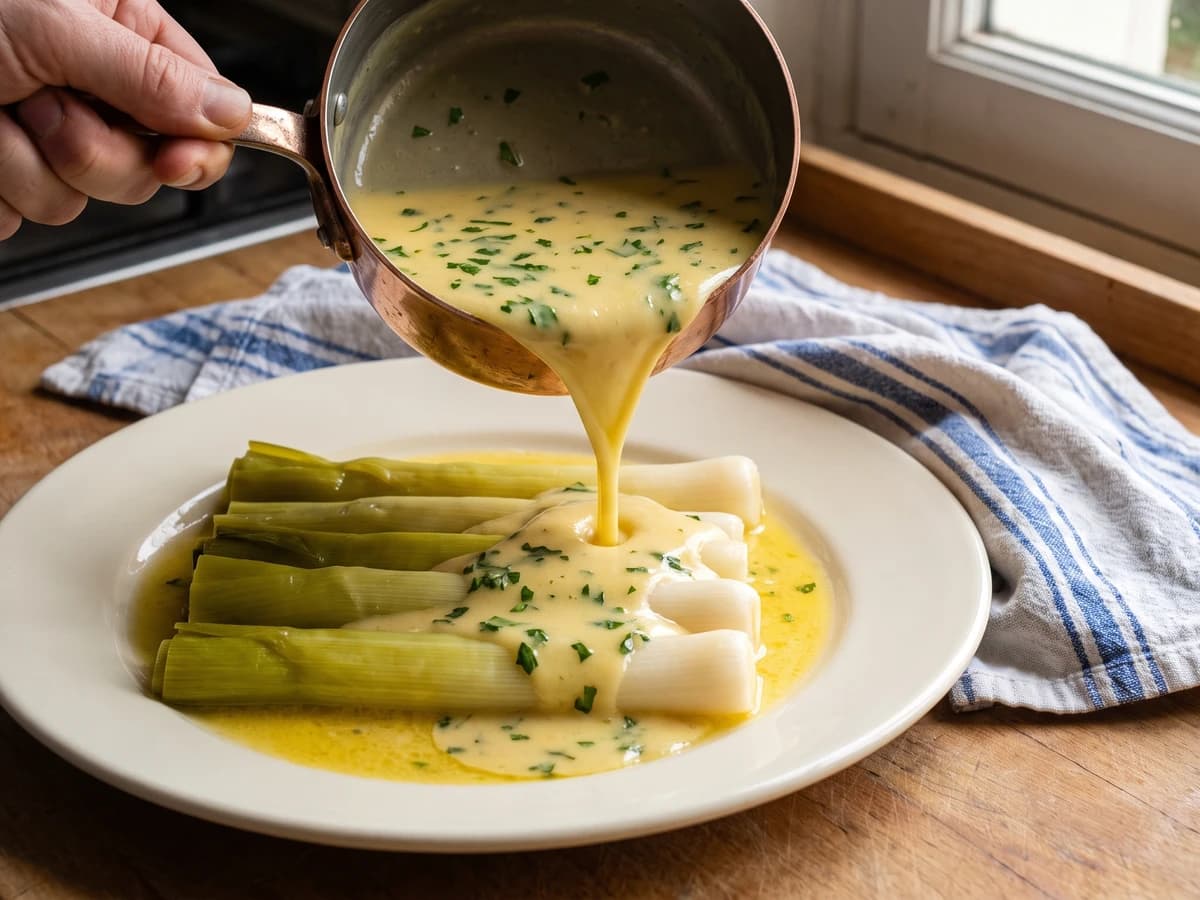
An old lesson in sauce families: Sauce Allemande takes mushroom liquor, then butter, lemon, and parsley, becoming a glossy Poulette for sheep's trotters, leeks, cauliflower, and anything needing gentle richness with a bright edge.