Chef Juliette
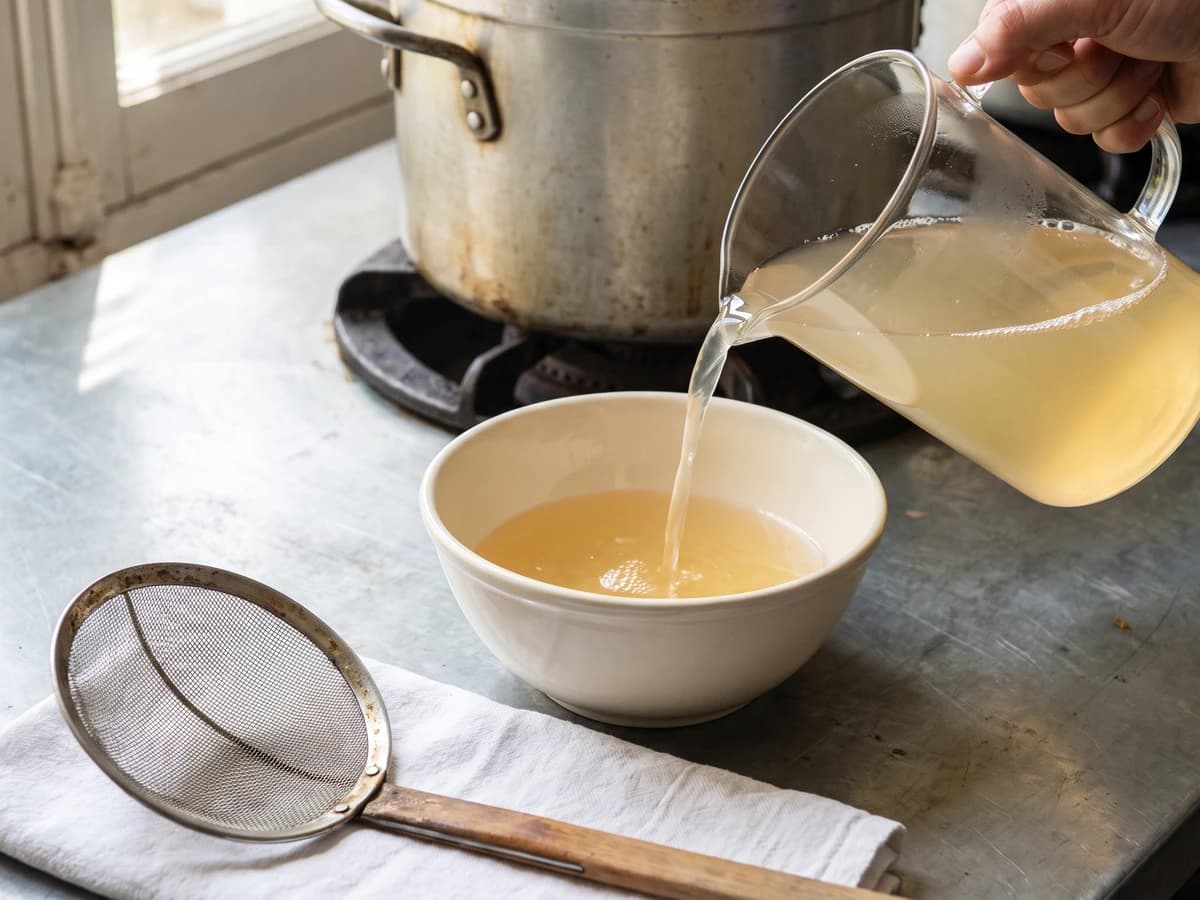
Ordinary or White Consommé
Beef shin, lean beef, and fowl begin in cold water and rise slowly toward a tremble. Skim before the boil, and you learn the quiet discipline that gives every clear French broth its backbone.
A cooking platform built around craft, culture, and the stories behind what we eat.
Created by Chef Juliette
Based on No. 2973, Tomato Jelly (2nd Method), from Le Guide Culinaire (1907) by Auguste Escoffier
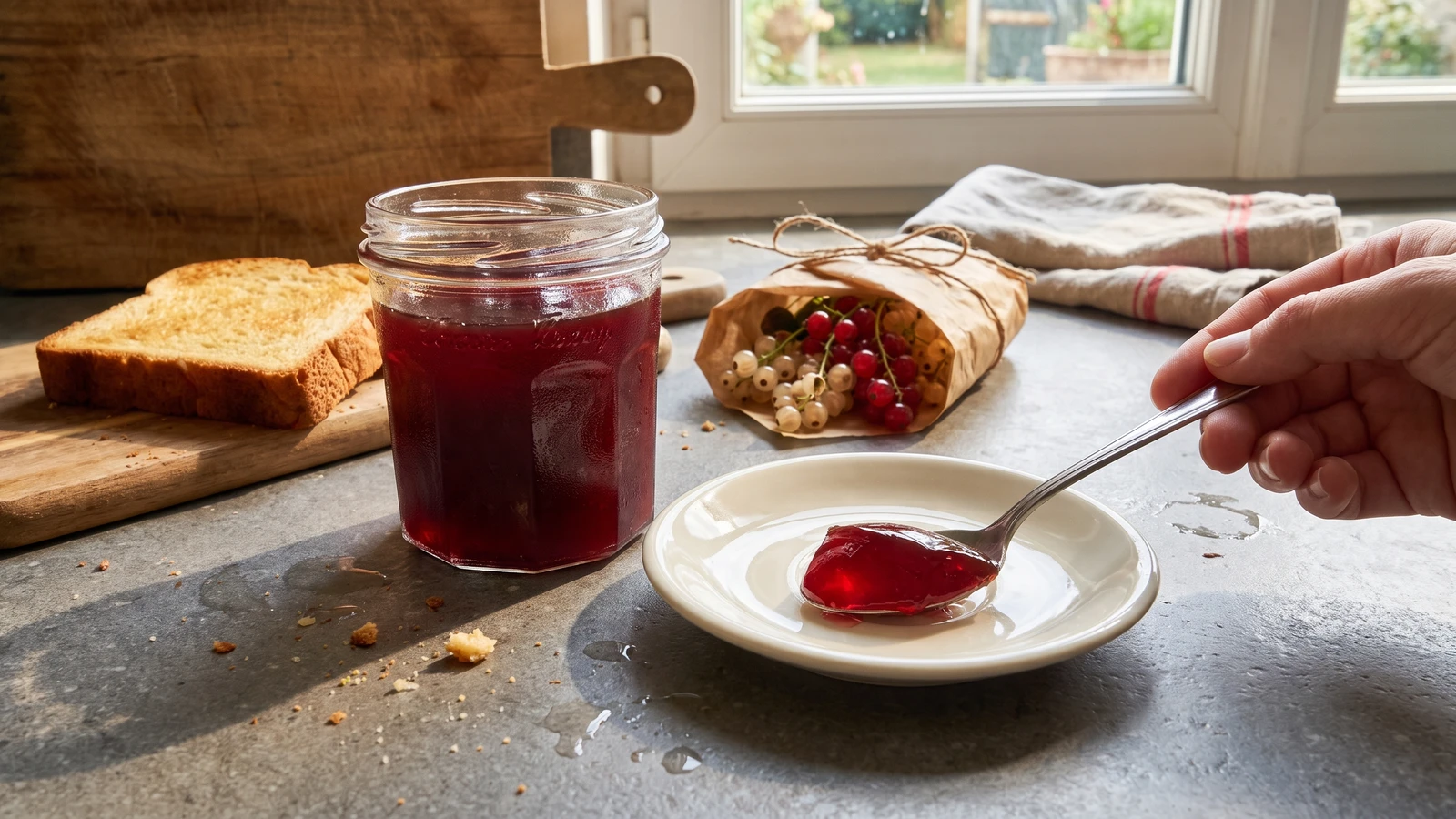
Red and white currant jelly gives this tomato preserve its garnet depth and firm set, while vanilla and sugar cooked to small crack prepare it for one brief, fierce boil to nappe.
Gelée de tomates, deuxième méthode (tomato jelly, second method) teaches one hard truth about preserving: the final set must happen quickly. A timid simmer dulls the tomato before enough water escapes; a fierce boil reaches nappe while the colour remains deep, the vanilla clear, and the currant acidity alive.
The original formula assumed a copper preserving pan, a cook stationed beside the sugar, fingertip tests, and jars closed with glycerine paper. For one cook, one stove, one evening, a wide stainless-steel pan, a digital sugar thermometer, and clean jars kept under refrigeration are the honest equivalents. The copper, finger tests, and paper seals were working-kitchen scaffolding and can go. The one-third red to two-thirds white currant ratio, the small-crack sugar, the brief low heat after combining, and the fiercest final boil are the dish itself, so they stay.
The finished gelée is garnet-red, glossy, and firm enough to sit proudly on a spoon without becoming rubbery. The step that decides the jar is the final fierce boil: stop at nappe, not before, and not a minute after.
Gelée de tomates belongs to French confiserie and the preserving rooms of the Parisian grand kitchen, where tomatoes could be treated as fruit when sugar, vanilla, and a clear set suited the table. The second method replaces apple jelly with currant jelly, using two parts white currants to one part red so the tomato remains visible beneath a deeper garnet colour. Its firm texture comes from currant pectin and rapid concentration, not from gelatin, despite the word jelly.
Quantity
8 medium, about 3 lb (1.35 kg), yielding 3 cups (720 ml / 700 g) pulp
peeled, seeded, and sieved
Quantity
3½ cups (840 ml / 700 g), for The Cooking of Sugar (No. 2344)
Quantity
⅓ cup (80 ml / 80 g)
Quantity
½ bean
split lengthwise
Quantity
1 cup (240 ml / 300 g), prepared under The Cooking, Potting, and Sealing of Jams (No. 2955)
made from one-third red currants and two-thirds white currants
| Ingredient | Quantity |
|---|---|
| ripe tomatoespeeled, seeded, and sieved | 8 medium, about 3 lb (1.35 kg), yielding 3 cups (720 ml / 700 g) pulp |
| granulated sugar | 3½ cups (840 ml / 700 g), for The Cooking of Sugar (No. 2344) |
| water | ⅓ cup (80 ml / 80 g) |
| vanilla beansplit lengthwise | ½ bean |
| red-currant jellymade from one-third red currants and two-thirds white currants | 1 cup (240 ml / 300 g), prepared under The Cooking, Potting, and Sealing of Jams (No. 2955) |
Cut a shallow cross in the base of each tomato, lower them into boiling water for 20 to 30 seconds, then cool them in cold water and slip off the skins. Halve them across the middle and press the seed pockets through a fine sieve, saving the clear juice and discarding the seeds. Chop the flesh, combine it with the juice, and cook covered over low heat for about 10 minutes, until completely collapsed. Pass everything through the sieve and measure exactly 3 cups (720 ml / 700 g) of smooth pulp.
Measure the red-currant jelly prepared from one-third red currants and two-thirds white currants under The Cooking, Potting, and Sealing of Jams (No. 2955). Warm it gently with the tomato pulp until fluid but not boiling. Place two small saucers in the freezer for testing, and warm four clean half-pint jars so the hot preserve cannot shock the glass.
Put the sugar, water, and split vanilla bean into a wide, heavy preserving pan. Following The Cooking of Sugar (No. 2344), heat gently until the sugar dissolves, then bring it to a boil without stirring. Skim away any cloudy foam at the beginning and wash crystals from the pan wall with a pastry brush dipped in water. Cook to the small-crack stage, 285°F (140°C), then remove the pan from the heat at once. The syrup should remain clear and barely coloured.
Stand back from the pan and add the warm tomato and currant mixture to the hot sugar in four small additions, stirring carefully with a long-handled spoon after each. The syrup will surge sharply. Return the pan to low heat for 2 to 3 minutes, the home-stove equivalent of holding it at the side of the range, and stir until every hardened thread of sugar has dissolved. If the sugar seizes into a solid lump, keep the heat low and add 1 tablespoon (15 ml / 15 g) hot water; it will melt back into the mixture.
Turn the heat to its highest setting and bring the gelée to a full rolling boil that cannot be calmed by stirring. Cook quickly, scraping the base often, until it reaches nappe, the sheeting stage, at about 221 to 222°F (105 to 106°C). Lift the spoon: the preserve should gather toward its edge and fall in broad, slow drops that join into a sheet. A teaspoon placed on a frozen saucer should wrinkle lightly when pushed after 30 seconds. Remove the pan immediately and lift out the vanilla bean.
Let the gelée stand for 7 to 8 minutes, skim away the last foam, then ladle it into the warm jars, leaving ¼ inch (6 mm) headspace. Wipe the rims and close with clean lids. This refrigerated home method replaces the paper-and-glycerine closure described in The Cooking, Potting, and Sealing of Jams (No. 2955); it does not claim pantry stability. Cool undisturbed, refrigerate, and leave the gelée to set for at least 12 hours before serving. À table!
1 serving (about 20g)
Culinary guides, cultural storytelling, and the editorial depth that makes cooking meaningful.
Discover Culinary ExplorerChef Juliette
Beef shin, lean beef, and fowl begin in cold water and rise slowly toward a tremble. Skim before the boil, and you learn the quiet discipline that gives every clear French broth its backbone.
Chef Juliette
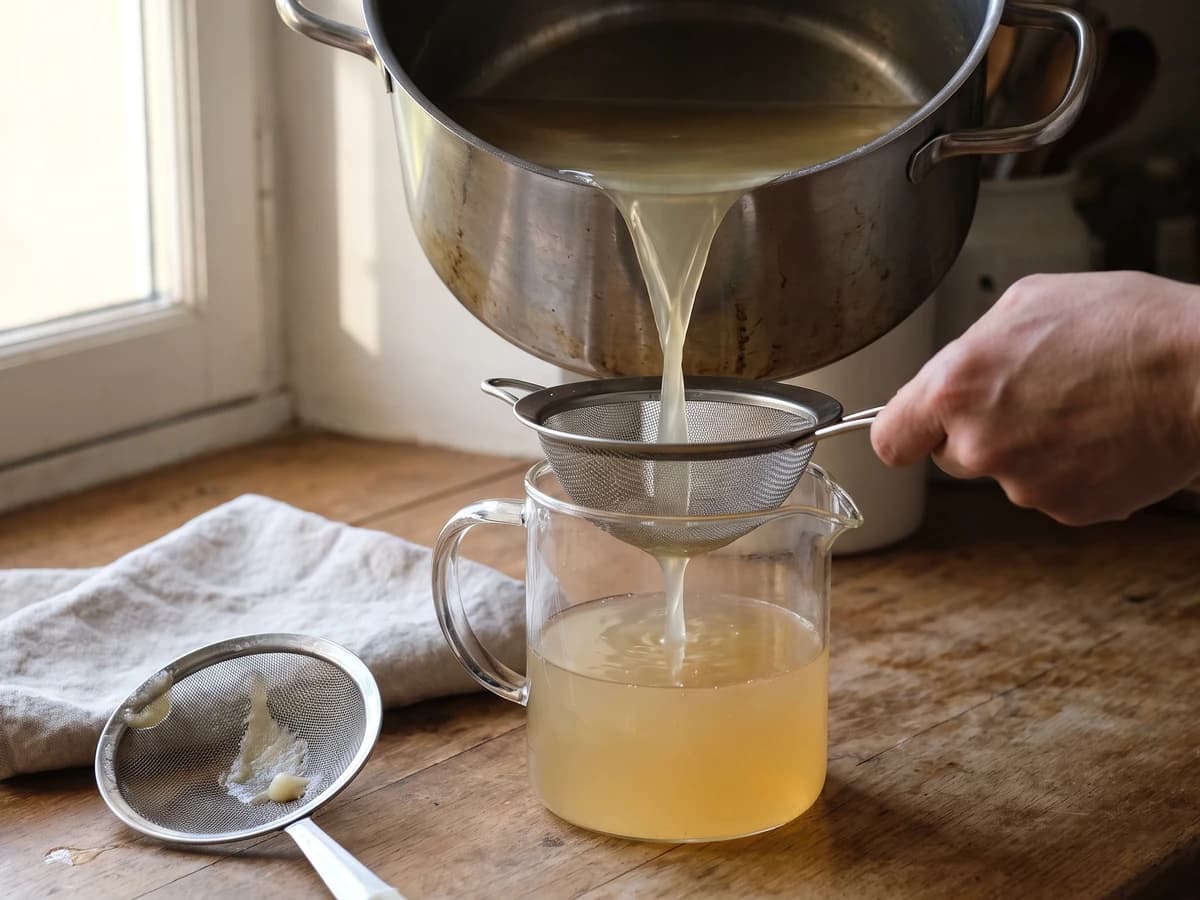
Break the veal bones small, then give them eight hours at a bare tremble. This pale, gelatinous fond becomes the quiet foundation beneath velouté, blanquette, and every sauce that must stay light.
Chef Juliette
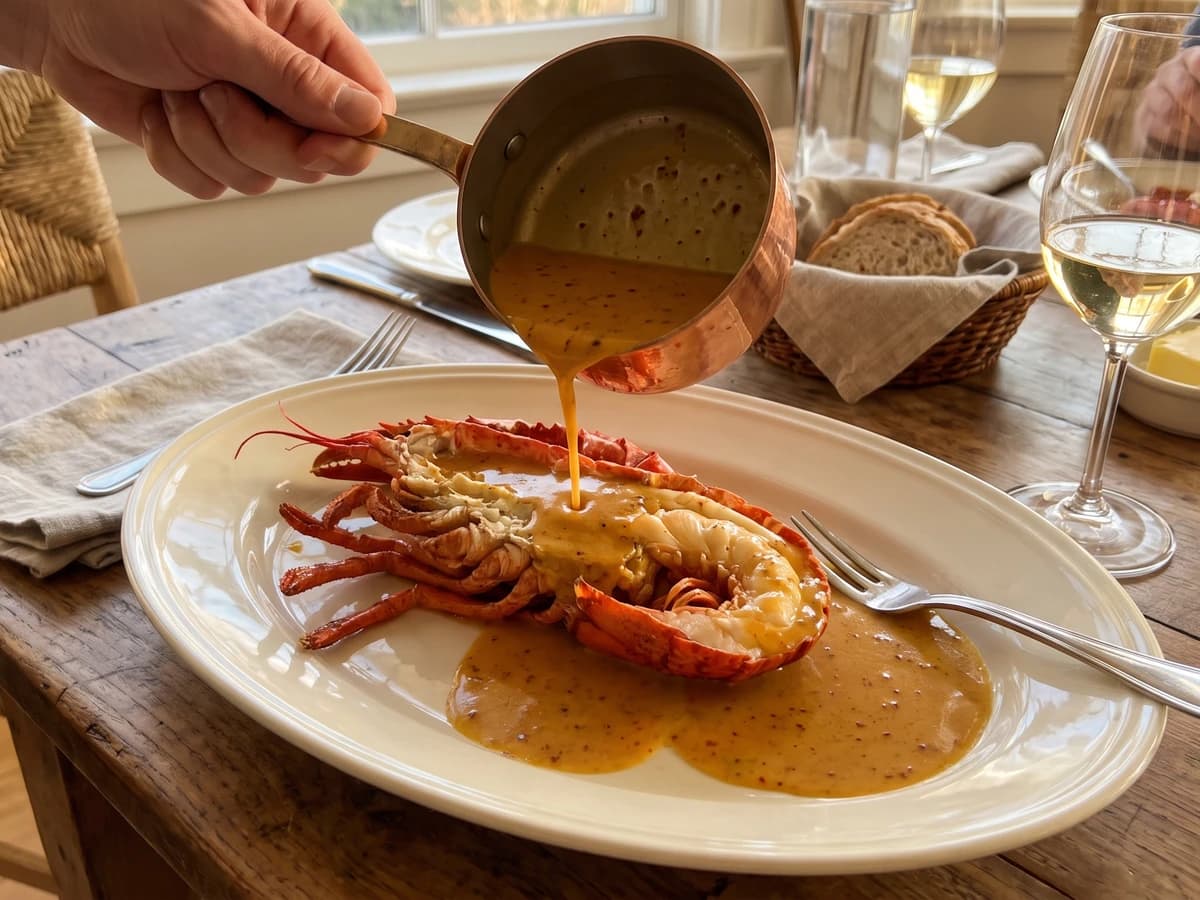
Sauce Orientale concentrates lobster-rich American Sauce with curry, then folds in cream away from the fire: a glossy, gently spiced derivative made for lobster, crayfish, and firm fish.
Chef Juliette
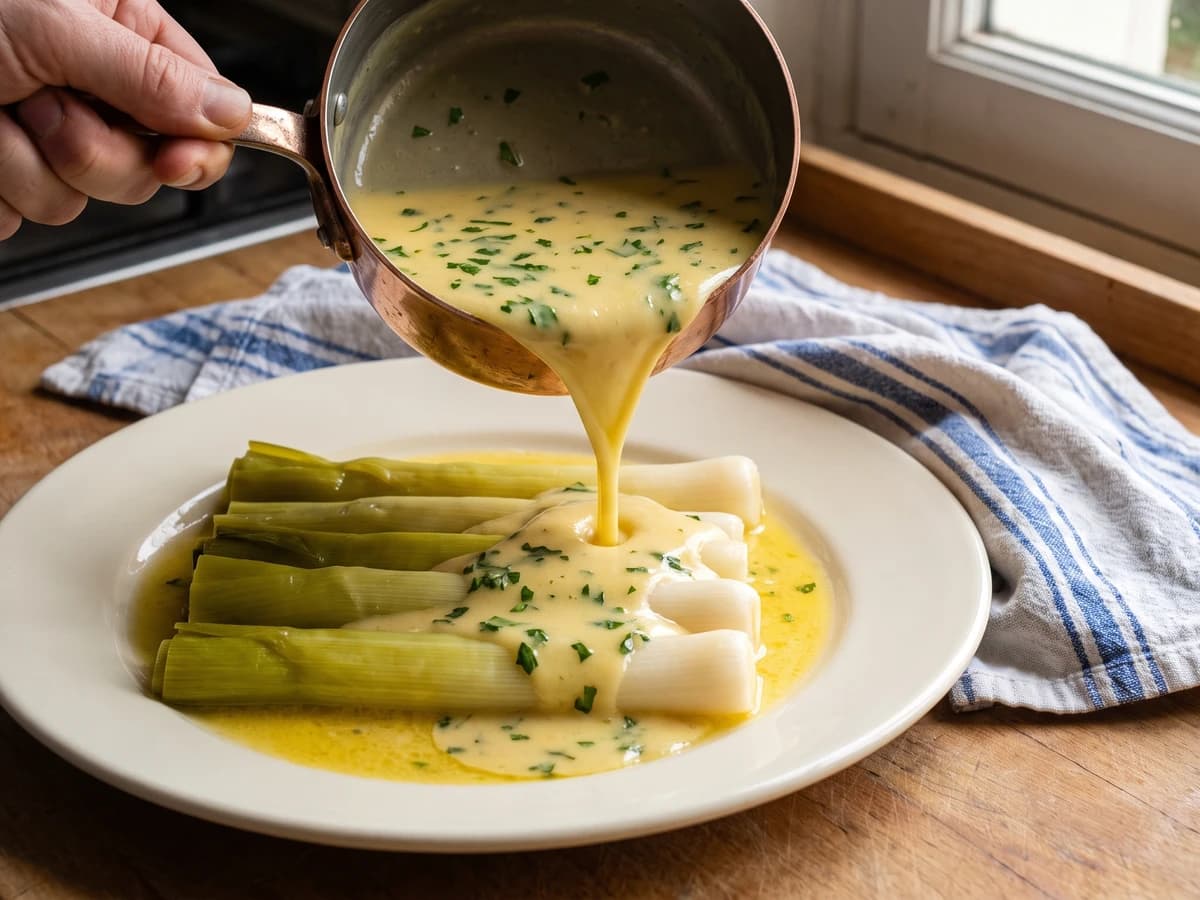
An old lesson in sauce families: Sauce Allemande takes mushroom liquor, then butter, lemon, and parsley, becoming a glossy Poulette for sheep's trotters, leeks, cauliflower, and anything needing gentle richness with a bright edge.