Chef Juliette
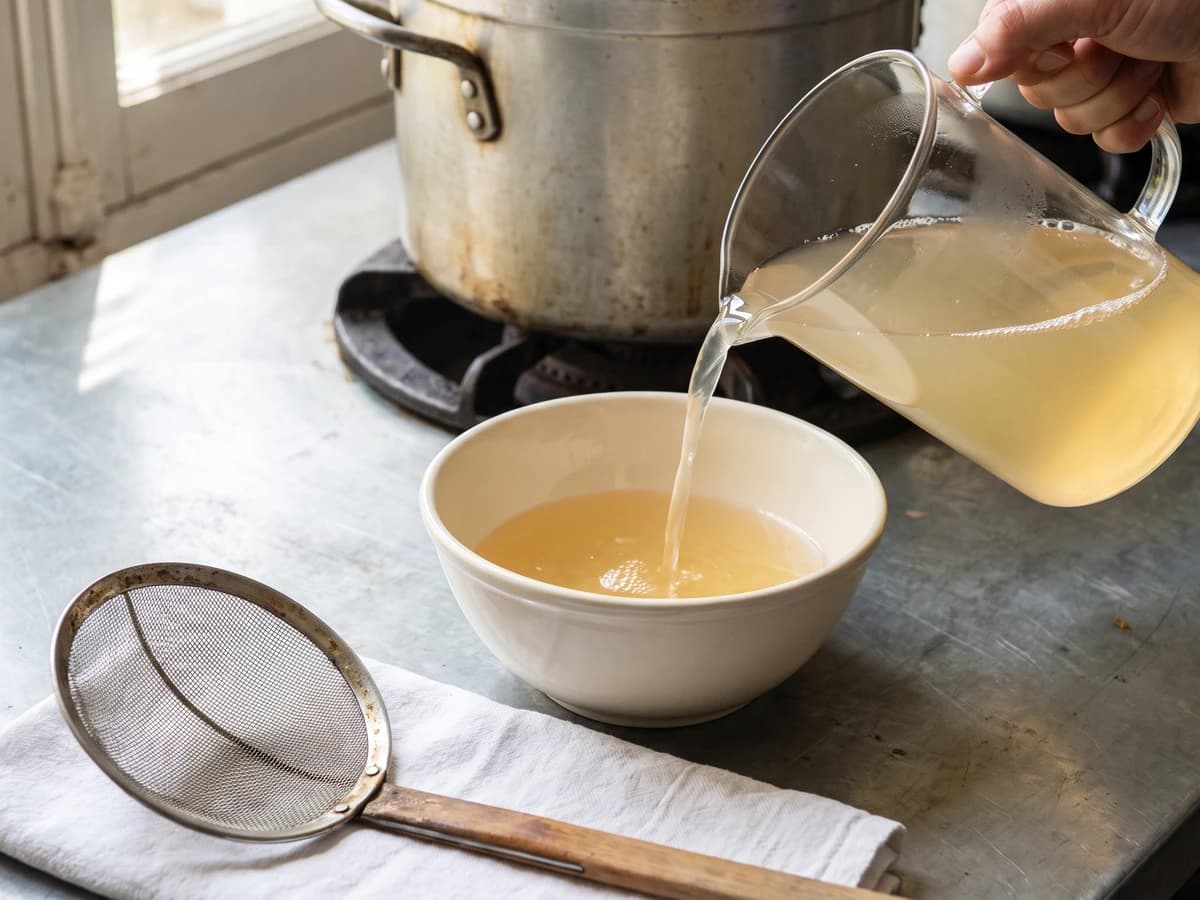
Ordinary or White Consommé
Beef shin, lean beef, and fowl begin in cold water and rise slowly toward a tremble. Skim before the boil, and you learn the quiet discipline that gives every clear French broth its backbone.
A cooking platform built around craft, culture, and the stories behind what we eat.
Created by Chef Juliette
Based on No. 2955, The Cooking, Potting, and Sealing of Jams, from Le Guide Culinaire (1907) by Auguste Escoffier
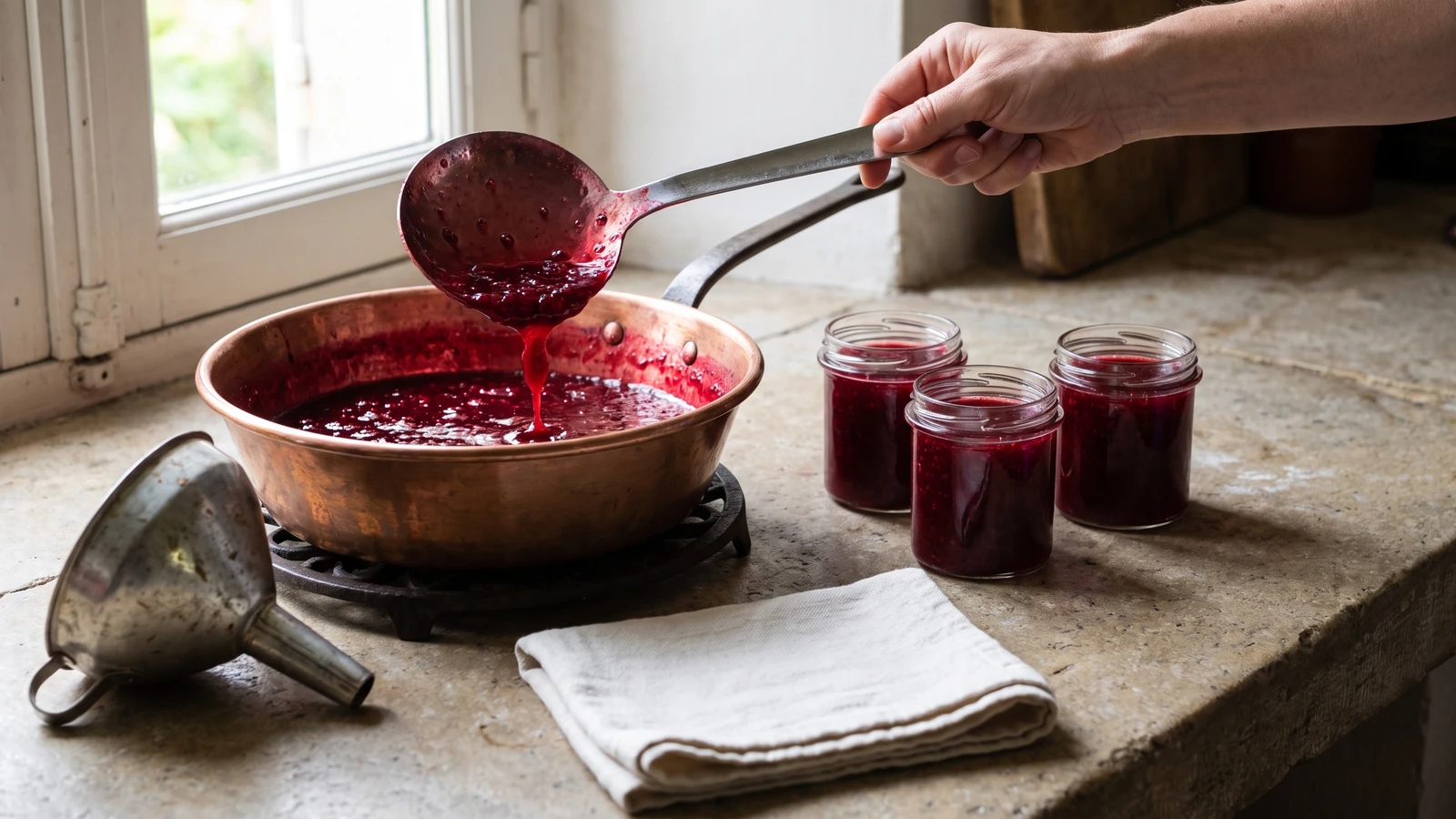
The nappe tells you when jam is done: it gathers at the skimmer’s centre and falls in slow, heavy drops. Keep the cooking quick, then pot hot and seal it safely for the pantry.
Cuisson, mise en pots et fermeture des confitures (cooking, potting, and sealing jams) teaches one true thing: no clock decides when a preserve is done. The fire, the width of the pan, and the water held by that particular fruit change every batch. Watch instead for the nappe, the sheeting stage, when jam gathers at the centre of a lifted skimmer and falls in slow, heavy drops.
The classical method assumed a broad copper preserving pan, a fierce range, an attentive cook, warmed glass pots, and paper seals laid over the surface. A wide stainless-steel pan gives the same rapid evaporation on a home stove, while modern canning jars, fitted lids, and a boiling-water bath replace glycerine-soaked paper because they make a safer, verifiable seal. The copper was useful heat management, not a sacrament, and the paper cap was storage scaffolding. The quick cooking and the nappe are the dish and must stay. One cook, one stove, one evening.
Because this entry governs cooking and sealing rather than a fruit-to-sugar ratio, no ratio is invented here. Begin with a tested, fruit-specific preserve formula and keep its quantities of fruit, sugar, acid, and pectin intact. Cook whole-fruit jam briskly but under control so it doesn't catch; give strained jelly the strongest boil the pan can safely hold. The step that matters most is lifting the skimmer often near the end and stopping the instant the nappe appears.
Confitures belong to household larders throughout France, with Normandy's orchard fruit, Alsace's quetsches, and Provence's apricots each preserved according to its own harvest and local practice. Classical pastry kitchens codified the household cook's judgment as the nappe, measuring doneness by the way concentrated syrup leaves a skimmer rather than by a fixed number of minutes. Paper and glycerine caps belonged to dry pantry storage, but the identity of the method lies in rapid evaporation and precise stopping, not in that obsolete seal.
Quantity
Enough to make about 8 cups (1.9 liters / 2.4 kilograms) finished preserve, proportioned by a tested fruit-specific formula and judged with The Cooking of Sugar (No. 2344)
Include any acid or pectin required by the tested formula
| Ingredient | Quantity |
|---|---|
| prepared high-acid fruit-and-sugar preserve mixtureInclude any acid or pectin required by the tested formula | Enough to make about 8 cups (1.9 liters / 2.4 kilograms) finished preserve, proportioned by a tested fruit-specific formula and judged with The Cooking of Sugar (No. 2344) |
Prepare the fruit, sugar, acid, and pectin exactly as directed by a tested formula for that particular preserve. This master method tells you how to cook, judge, pot, and seal the batch; it does not replace the fruit-specific proportions that control set, acidity, and safe storage. Do not reduce the sugar or enlarge the batch casually, because either change alters evaporation and may prevent a proper set.
Wash eight 250 ml canning jars, their new lids, and screw bands. Inspect the jar rims for chips. Set the jars upright on a rack in the canning pot, cover them with water, and hold them hot at about 180°F (82°C) while the jam cooks. Wash the lids according to their maker's directions, but don't boil modern sealing lids unless instructed. Bring a kettle of extra water to the boil so the filled jars can later be covered by 1 to 2 inches (2.5 to 5 cm).
Put the preserve mixture into a broad, heavy, nonreactive pan, leaving at least half the pan empty for the rising boil. Heat rapidly, stirring across the floor and into the corners with a long spoon. For whole-fruit jam, keep a strong but controlled boil and stir often enough to prevent scorching without crushing the fruit to paste. For strained jelly, use the most vigorous boil the pan safely contains; rapid evaporation protects its colour and fresh flavour.
As the preserve concentrates, its bubbles will become heavier and the surface easier to see. Dip a broad skimmer into the mixture, lift it clear, and watch the underside. At first the preserve runs off quickly in many small drops. Test frequently now, because the final change is fast. The nappe is reached when the preserve gathers toward the skimmer's centre and falls at long intervals in slow, heavy drops, corresponding to the large-thread stage in The Cooking of Sugar (No. 2344). A thermometer may read about 222°F (106°C) at sea level, but the skimmer remains the governing test because boiling temperature changes with elevation. If the drops still run thin, boil another 20 to 30 seconds and test again. If the preserve has tightened too far but has not scorched, ça se rattrape: remove it from the heat, stir in boiling water 1 tablespoon (15 ml / 15 g) at a time, return it to a full boil, and test again. If it smells burned, do not scrape the pan floor; transfer the untouched portion to a clean pan at once. A truly scorched flavour cannot be hidden.
Remove the pan from the heat the instant the nappe appears. Skim off any persistent surface foam, then let the preserve stand for 7 to 8 minutes. This short rest settles the boil and helps whole pieces of fruit remain distributed instead of floating into a cap. Do not wander away and let the batch cool until it sets in the pan.
Lift one hot jar at a time from the water and drain it. Ladle in the preserve through a canning funnel, leaving 1/4 inch (6 mm) headspace. Run a clean nonmetallic spatula around whole-fruit jam to release trapped air, then adjust the level if needed. Wipe the rim with a clean damp cloth, centre a lid over it, and tighten the band only to fingertip tight. An over-tight band prevents air from escaping during processing.
Lower the filled jars onto the rack without letting them touch. The water must cover the lids by 1 to 2 inches (2.5 to 5 cm); add boiling water if needed. Cover the pot, bring it to a full boil, and process for 10 minutes at elevations up to 1,000 feet (305 m), or for any longer time required by the tested fruit formula. Above that elevation, add 5 minutes up to 3,000 feet (915 m), 10 minutes up to 6,000 feet (1,830 m), 15 minutes up to 8,000 feet (2,440 m), or 20 minutes up to 10,000 feet (3,050 m). If the boil stops, bring it back fully and restart the processing time.
Turn off the heat, remove the lid, and wait 5 minutes. Lift the jars straight up and set them on a towel with space between them. Leave them undisturbed for 12 to 24 hours, then remove the bands and press each lid at the centre; a sealed lid is concave and does not flex. Refrigerate any unsealed jar and use it promptly, or reprocess it within 24 hours with a new lid according to the tested formula. Label the sealed jars and keep them in a cool, dark, dry cupboard. Never use paper, glycerine, paraffin, or an inverted jar as the seal. Open one when the table needs toast, brioche, or a spoonful beside fromage blanc. À table!
1 serving (about 300g)
Culinary guides, cultural storytelling, and the editorial depth that makes cooking meaningful.
Discover Culinary ExplorerChef Juliette
Beef shin, lean beef, and fowl begin in cold water and rise slowly toward a tremble. Skim before the boil, and you learn the quiet discipline that gives every clear French broth its backbone.
Chef Juliette
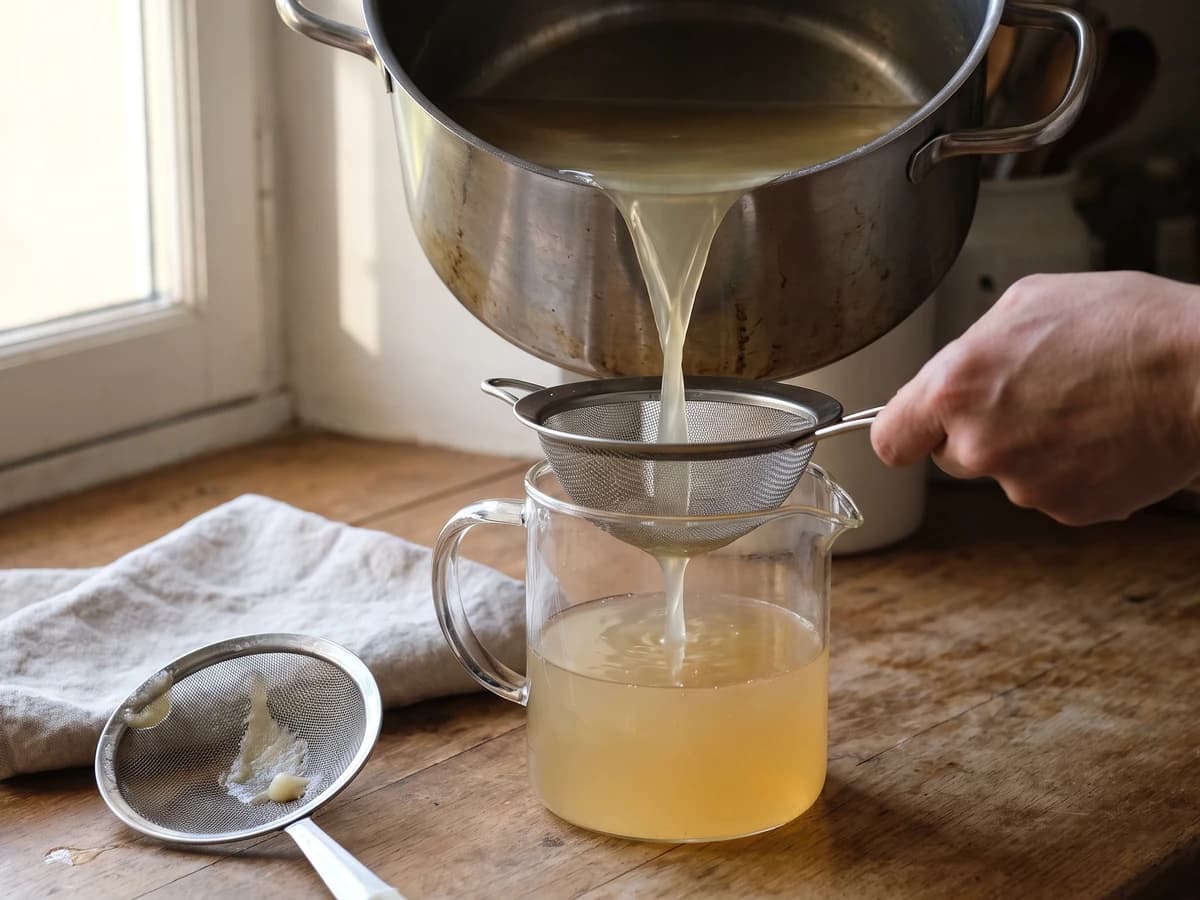
Break the veal bones small, then give them eight hours at a bare tremble. This pale, gelatinous fond becomes the quiet foundation beneath velouté, blanquette, and every sauce that must stay light.
Chef Juliette
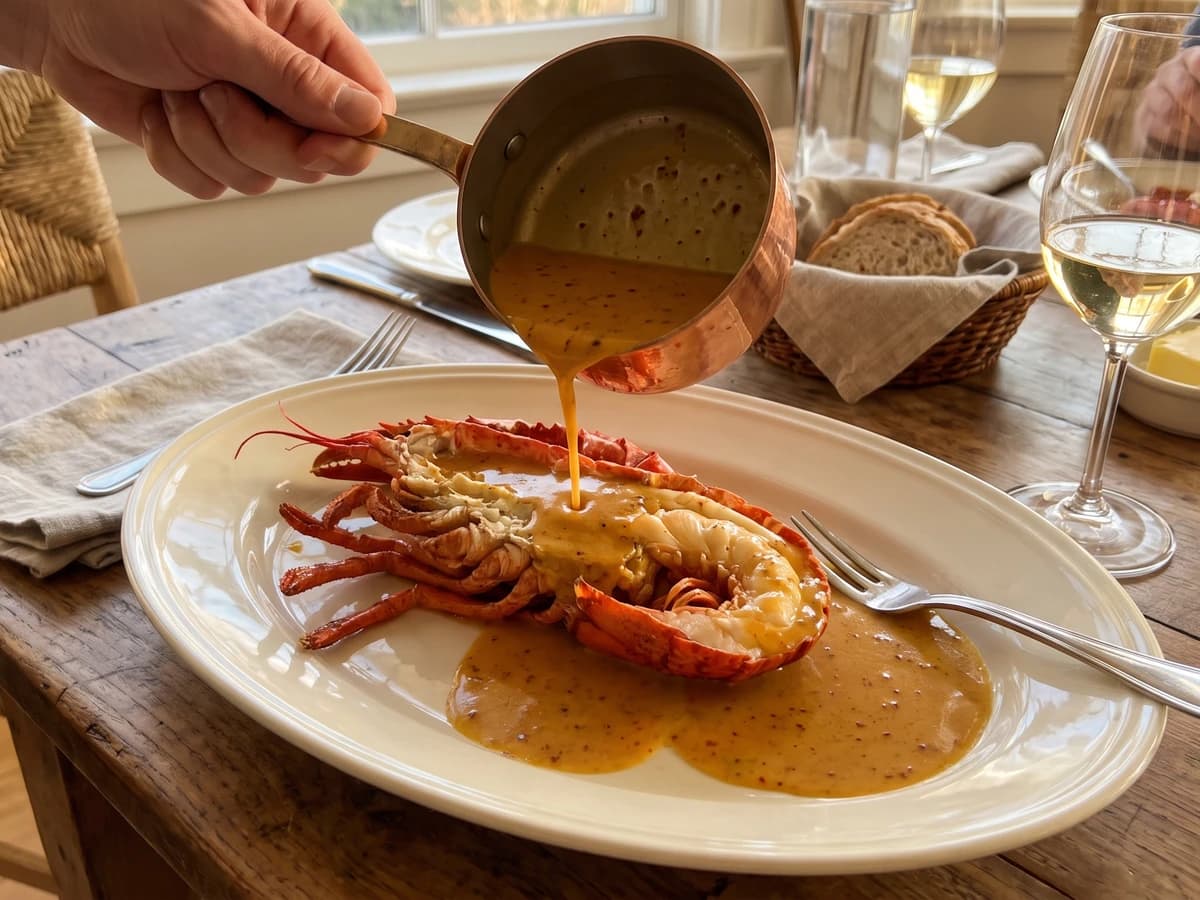
Sauce Orientale concentrates lobster-rich American Sauce with curry, then folds in cream away from the fire: a glossy, gently spiced derivative made for lobster, crayfish, and firm fish.
Chef Juliette
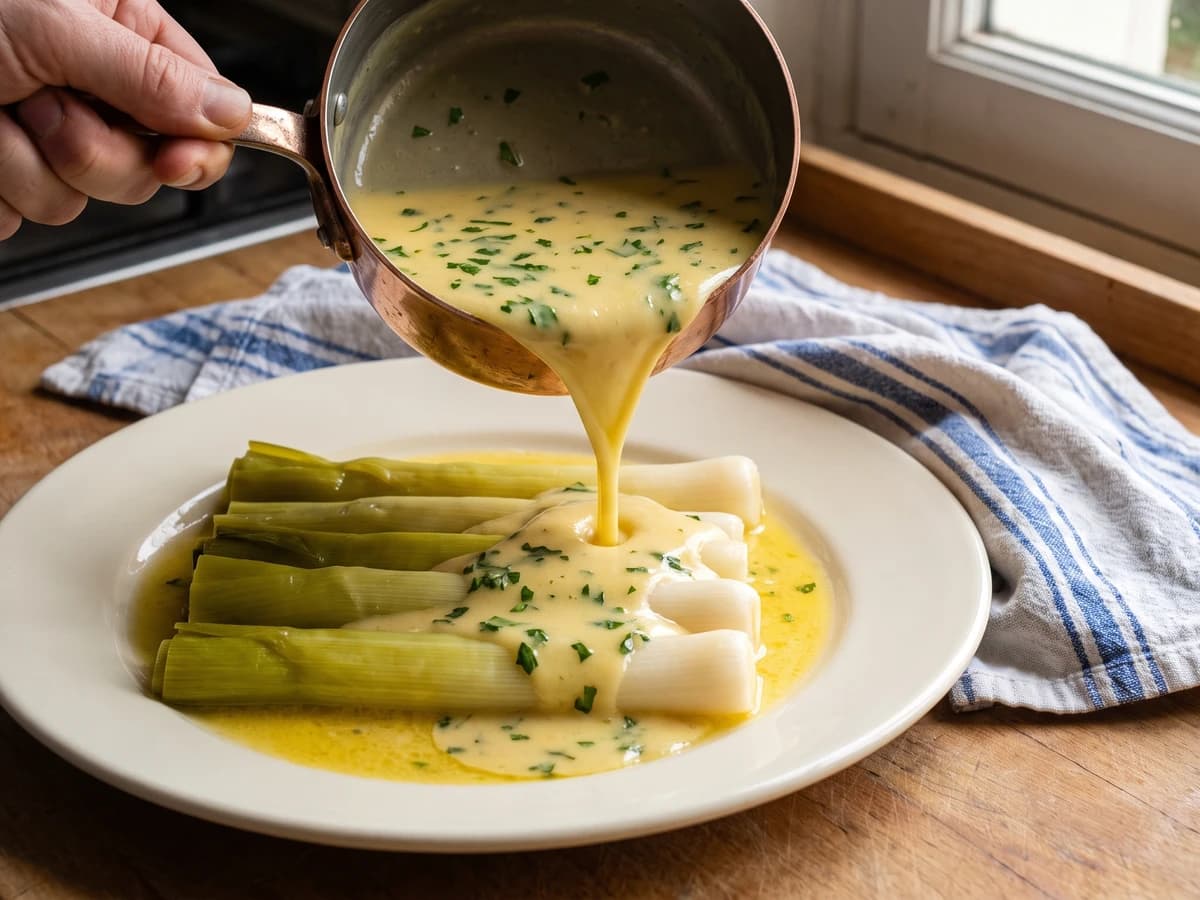
An old lesson in sauce families: Sauce Allemande takes mushroom liquor, then butter, lemon, and parsley, becoming a glossy Poulette for sheep's trotters, leeks, cauliflower, and anything needing gentle richness with a bright edge.