Chef Juliette
Ordinary or White Consommé
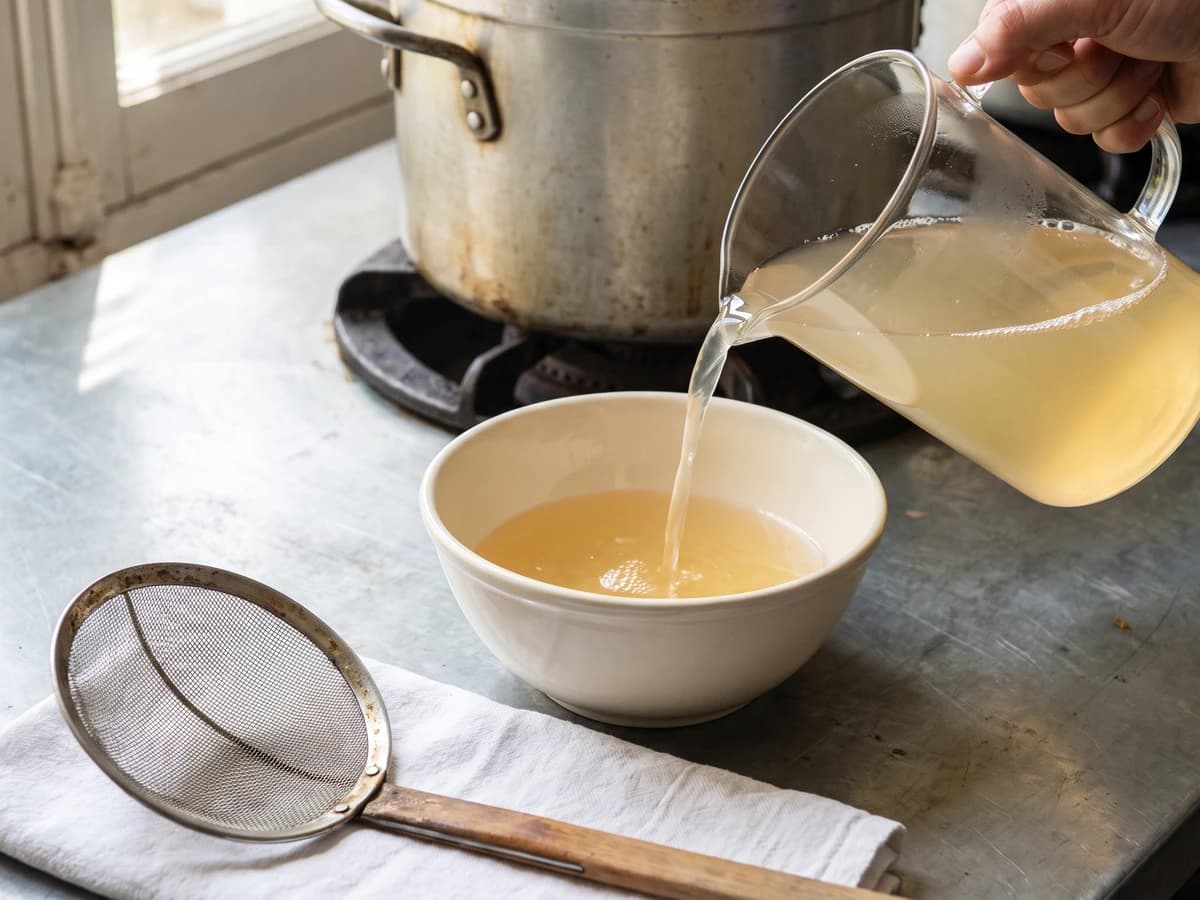
Beef shin, lean beef, and fowl begin in cold water and rise slowly toward a tremble. Skim before the boil, and you learn the quiet discipline that gives every clear French broth its backbone.
A cooking platform built around craft, culture, and the stories behind what we eat.
Created by Chef Juliette
Based on No. 2967, Red-currant Jelly (Method C), from Le Guide Culinaire (1907) by Auguste Escoffier
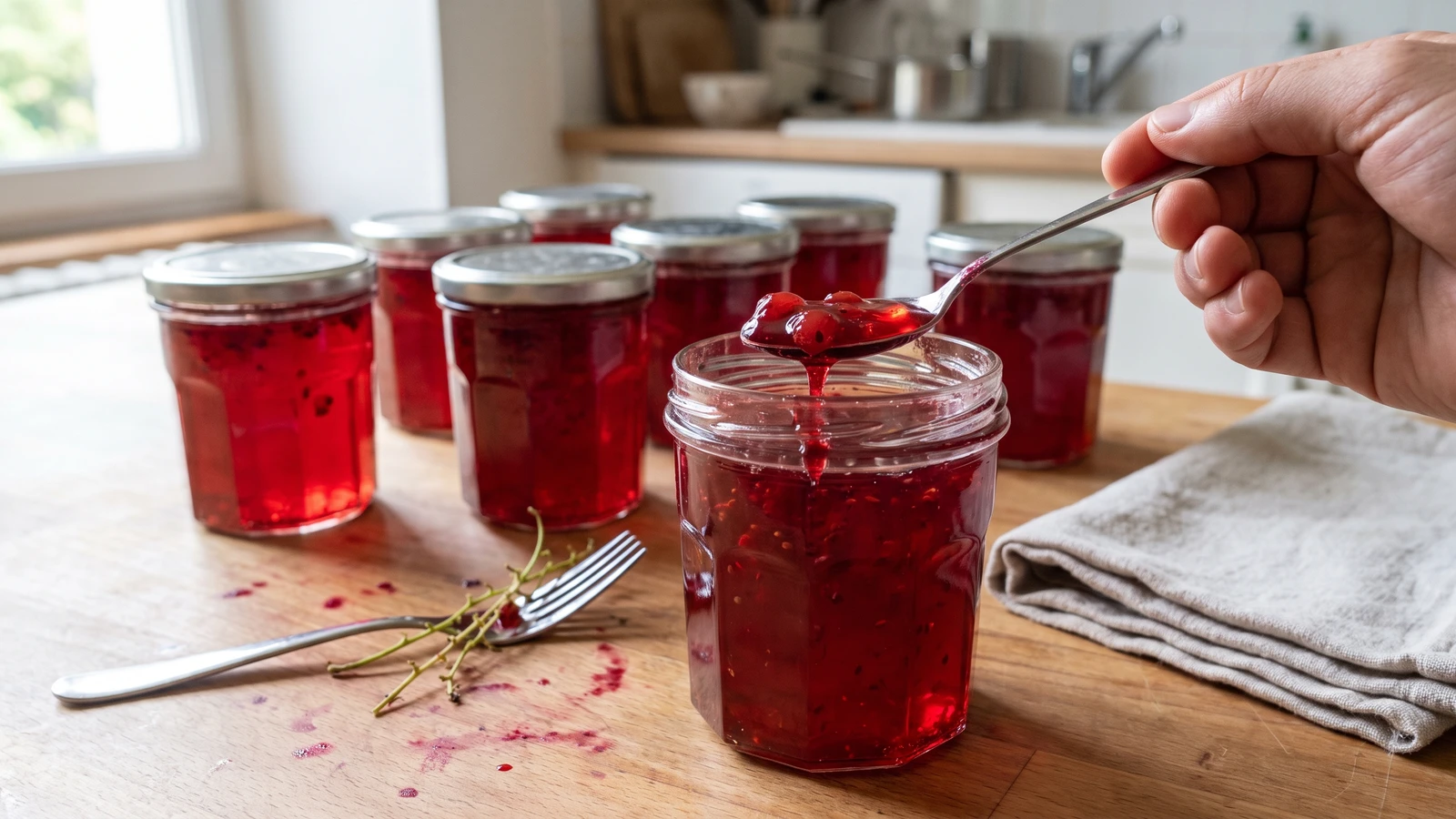
Currants and raspberries meet syrup already at small-ball, then release their juice gently before a fierce final boil: the classical path to a jewel-bright gelée with a firm, clean set.
Gelée de groseilles, méthode C (red-currant jelly, Method C) teaches concentration before fruit. The one true thing is this: the sugar reaches petit boulé, the small-ball stage, before a single berry enters. That early concentration lets red currants, white currants, and raspberries surrender their juice quickly, preserving their sharp flavor and luminous color without a long, dull boil.
The original method assumed a broad copper preserving pan, a range with a cooler side, and a preserving cook free to skim without turning away. Your honest equivalents are a wide 12-quart stainless-steel pan, a reliable thermometer, and the lowest burner for the seven or eight minutes at the side of the fire. The equal fruits are scaled to an eight-jar home batch, loaf sugar becomes the same weight of white granulated sugar, and the paper-and-glycerine closure gives way to boiling-water processing. That closure was preserving-room scaffolding; small-ball, the gentle release of juice, the fierce finish, and nappe remain the dish.
One cook, one stove, one evening, but no wandering away once the syrup boils. Watch the syrup, not the clock: reaching small-ball cleanly, without crystallizing or caramelizing it, is the step that decides the batch.
Gelée de groseilles belongs to preserving cupboards across northern and eastern France, where currants thrive and their natural pectin gives a dependable set. Lorraine’s Bar-le-Duc made currant preserves famous through a painstaking whole-berry preparation seeded by hand, but Method C is not that confection: equal quantities of red currants, white currants, and raspberries enter syrup already cooked to small-ball. From the household cupboard to the classical sauce pantry, the tart preserve found work at breakfast, in pastries, and beside game, where sweetness needs a clean acidic edge.
Quantity
5⅓ cups (1.26 L / 600 g)
removed from their stalks
Quantity
5⅓ cups (1.26 L / 600 g)
removed from their stalks
Quantity
4⅞ cups (1.15 L / 600 g)
carefully sorted
Quantity
6¾ cups (1.60 L / 1.35 kg)
Quantity
1⅛ cups (270 ml / 270 g)
Quantity
1 application of The Cooking of Sugar (No. 2344)
used for the small-ball syrup
Quantity
1 application of The Cooking, Potting, and Sealing of Jams (No. 2955)
used for the nappe and potting stages
| Ingredient | Quantity |
|---|---|
| white currantsremoved from their stalks | 5⅓ cups (1.26 L / 600 g) |
| red currantsremoved from their stalks | 5⅓ cups (1.26 L / 600 g) |
| raspberriescarefully sorted | 4⅞ cups (1.15 L / 600 g) |
| white granulated sugar | 6¾ cups (1.60 L / 1.35 kg) |
| water | 1⅛ cups (270 ml / 270 g) |
| The Cooking of Sugarused for the small-ball syrup | 1 application of The Cooking of Sugar (No. 2344) |
| The Cooking, Potting, and Sealing of Jamsused for the nappe and potting stages | 1 application of The Cooking, Potting, and Sealing of Jams (No. 2955) |
Set eight clean 240 ml half-pint jars on a rack in a boiling-water canner, cover them with water, and hold them hot. Prepare new lids according to their manufacturer’s directions. This is the safe home closure for The Cooking, Potting, and Sealing of Jams (No. 2955); the paper-and-glycerine seal is omitted because it does not provide dependable shelf storage. Chill two small saucers for testing the set. Pull the currants from their stalks with the tines of a fork, sort all three fruits carefully, and rinse only if necessary. Dry them well and keep them at cool room temperature while the syrup cooks.
Following The Cooking of Sugar (No. 2344), put the sugar and water in the wide preserving pan. Heat gently, stirring only until every grain dissolves, then bring the syrup to a full boil and stop stirring. Skim away any gray foam, and wash crystals from the pan wall with a pastry brush dipped in clean water. Cook to 236°F (113°C), the small-ball stage, then take the pan from the fierce heat at once. A thermometer replaces the original finger test; hot syrup has no business touching your skin.
Move the pan to the lowest burner, or take it fully off the heat for a moment, and add the currants and raspberries in three careful additions. Fold them through with a long-handled spoon, keeping your face and hands clear of any splash. Hold the pan over the gentlest heat for seven or eight minutes without allowing a real boil. The fruit will soften and release enough juice to loosen the syrup while keeping its fresh acidity. Do not crush it. If the syrup stiffens around the cooler berries, keep the heat gentle and fold the emerging juice over the clumps; they will dissolve.
Return the pan to fierce heat and bring the preserve to its fullest rolling boil. Skim carefully and stir along the pan floor only often enough to prevent catching. Following The Cooking, Potting, and Sealing of Jams (No. 2955), cook to nappe, the coating stage: preserve lifted on the skimmer gathers toward its center and falls in large, slow, joined drops rather than running away in separate beads. Begin testing after six minutes. A drop on a chilled saucer should gel lightly after thirty seconds, and a finger drawn through it should leave a path that does not immediately flood. Remove the pan the instant nappe is reached; another minute only trades color for stiffness.
Set the pan off the heat for seven or eight minutes, exactly as directed by The Cooking, Potting, and Sealing of Jams (No. 2955). Skim away the last pale foam without disturbing the clear preserve beneath it. Ladle the gelée into the hot jars while it is still thoroughly hot, leaving ¼ inch (6 mm) headspace. Release trapped bubbles with a clean nonmetallic utensil, wipe the rims, center the lids, and tighten the bands only fingertip-tight.
Lower the filled jars into boiling water, keeping at least 1 inch (2.5 cm) of water above the lids. At elevations up to 1,000 feet (305 m), process for 10 minutes; at higher elevations, use the increased time specified by your local preserving authority. Turn off the heat, wait five minutes, then lift the jars out without tilting. Cool undisturbed for 12 to 24 hours and check every seal. The gelée may need as long as 48 hours to reach its final set. Refrigerate any jar that does not seal, and never store it in the cupboard. Open a sealed jar, let the tart ruby gelée catch the light, and bring out the bread or the roast. À table!
1 serving (about 20g)
Culinary guides, cultural storytelling, and the editorial depth that makes cooking meaningful.
Discover Culinary ExplorerChef Juliette
Beef shin, lean beef, and fowl begin in cold water and rise slowly toward a tremble. Skim before the boil, and you learn the quiet discipline that gives every clear French broth its backbone.
Chef Juliette
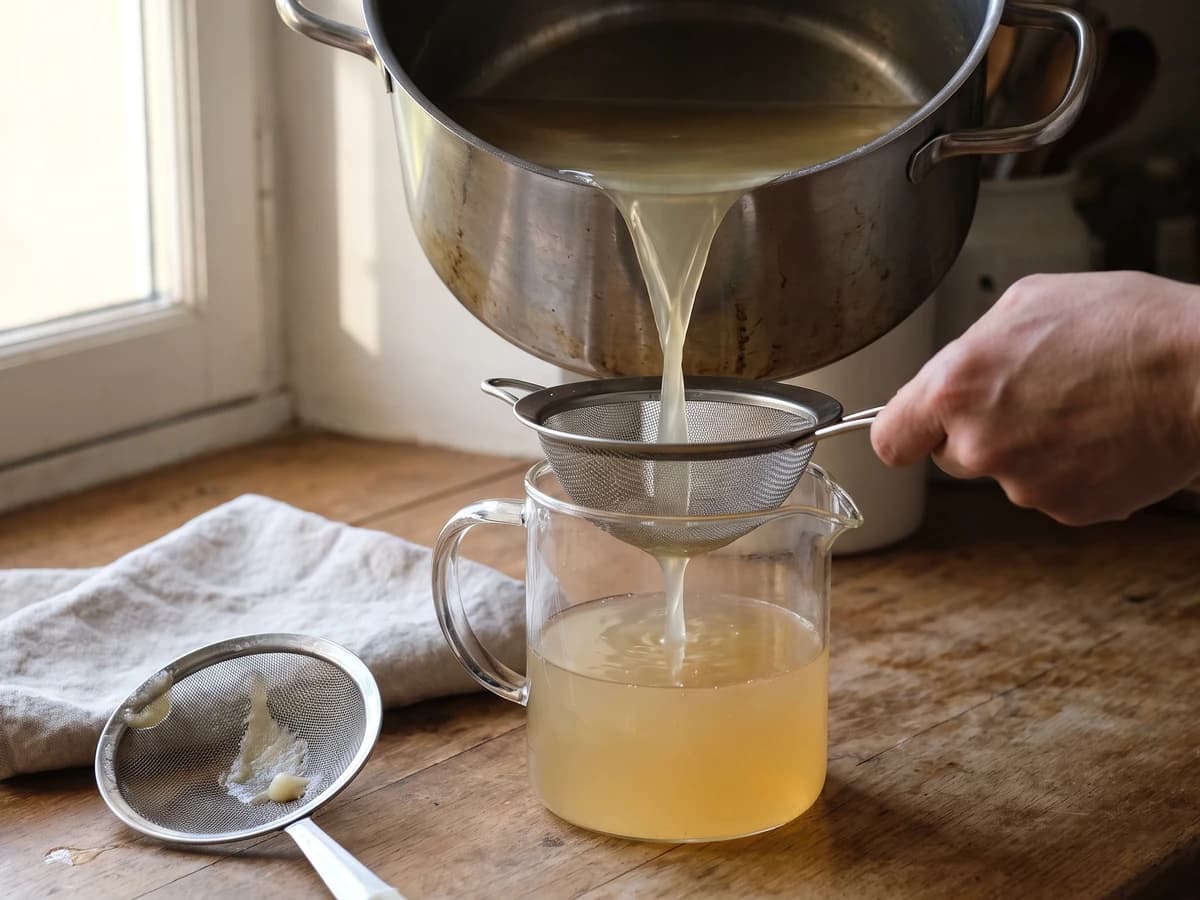
Break the veal bones small, then give them eight hours at a bare tremble. This pale, gelatinous fond becomes the quiet foundation beneath velouté, blanquette, and every sauce that must stay light.
Chef Juliette
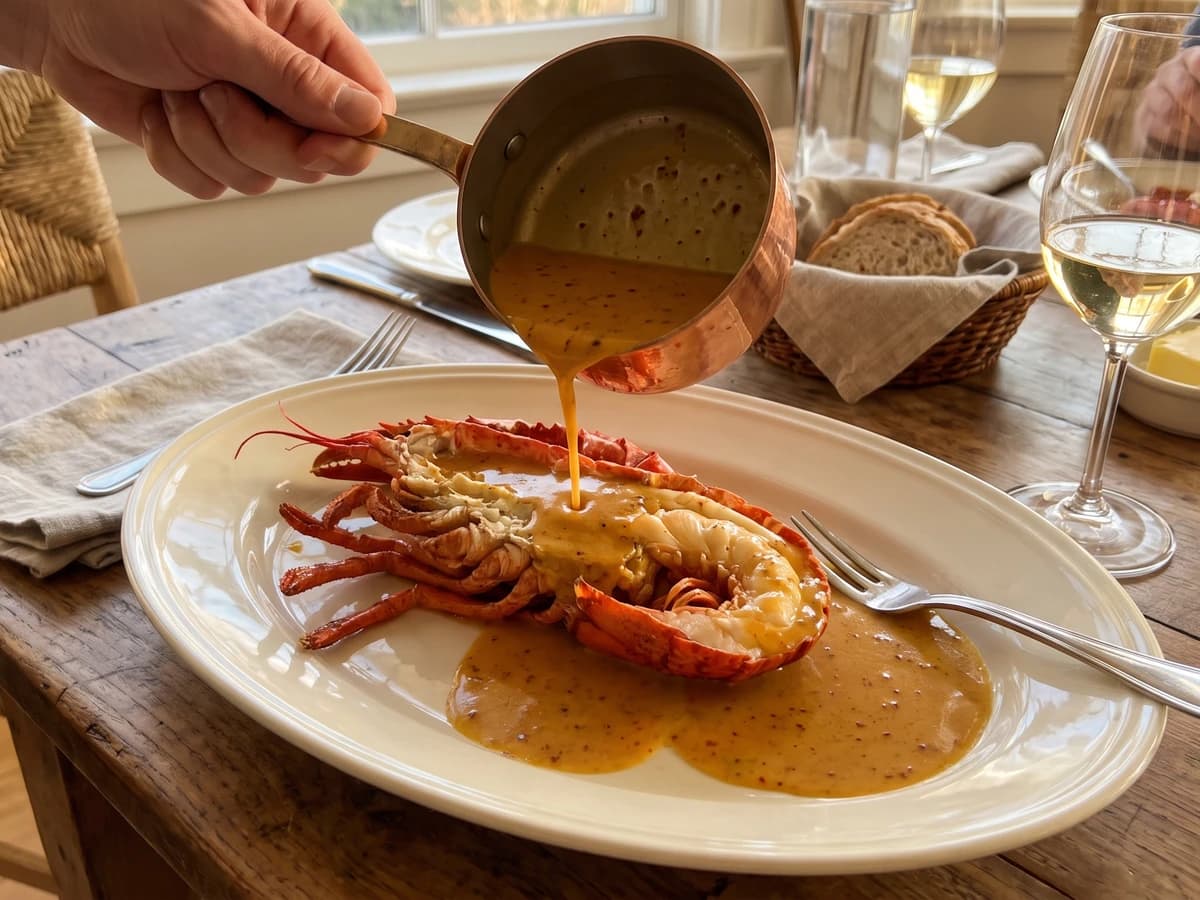
Sauce Orientale concentrates lobster-rich American Sauce with curry, then folds in cream away from the fire: a glossy, gently spiced derivative made for lobster, crayfish, and firm fish.
Chef Juliette
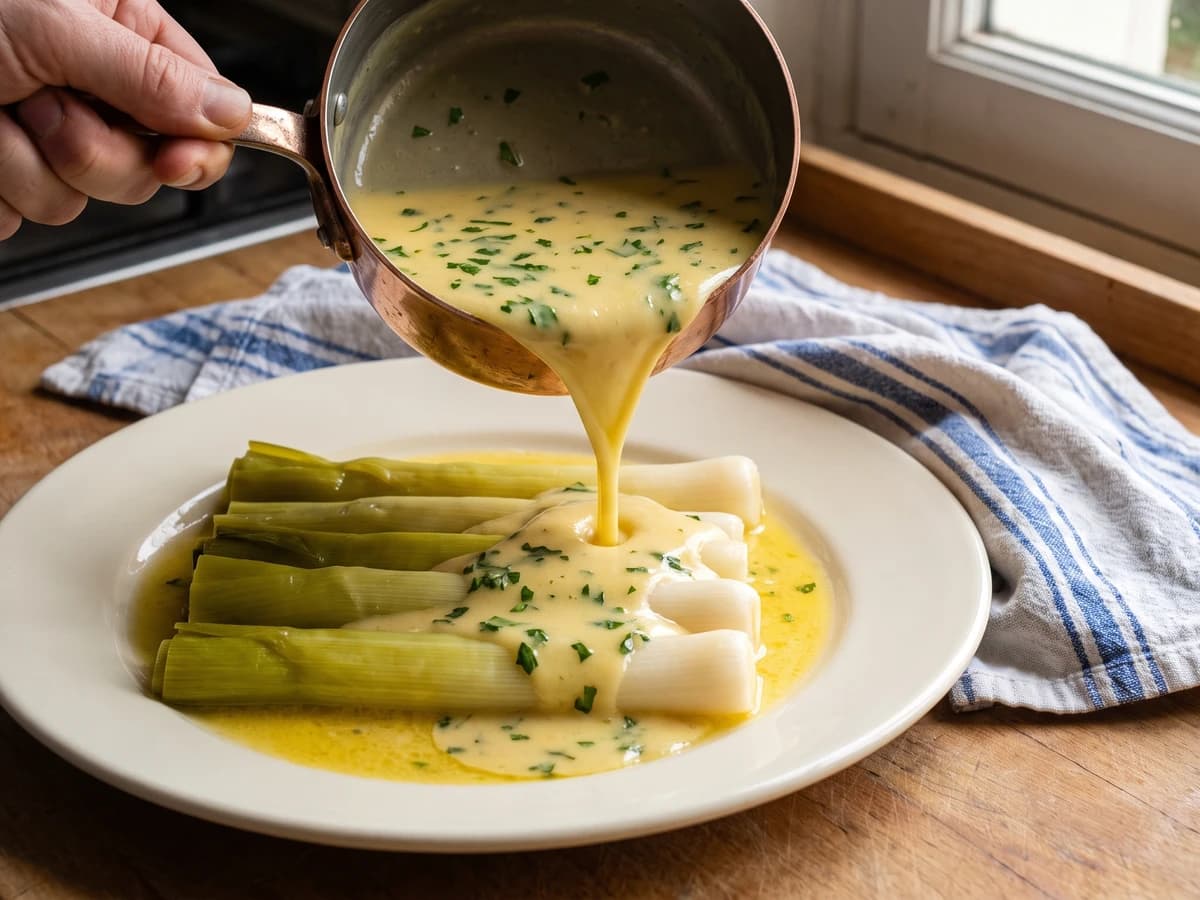
An old lesson in sauce families: Sauce Allemande takes mushroom liquor, then butter, lemon, and parsley, becoming a glossy Poulette for sheep's trotters, leeks, cauliflower, and anything needing gentle richness with a bright edge.