Chef Juliette
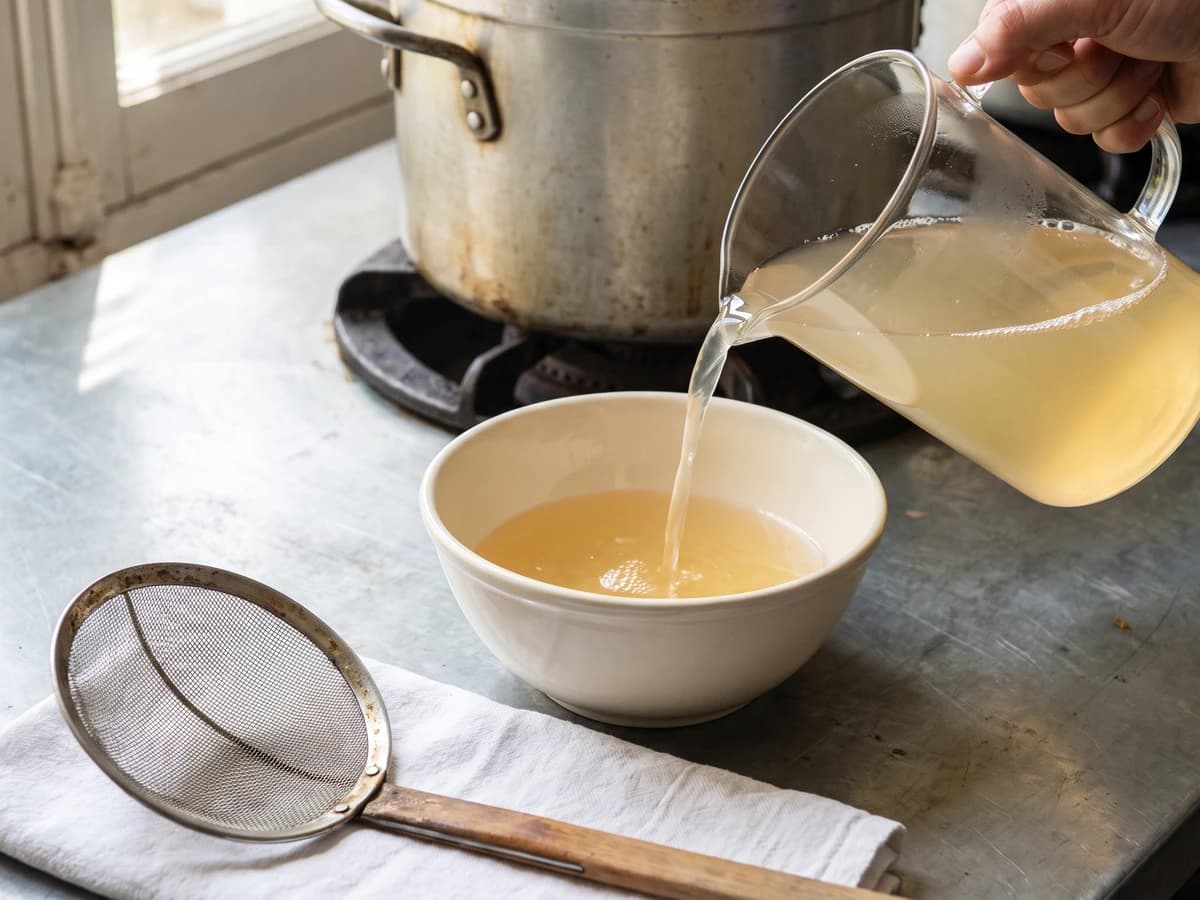
Ordinary or White Consommé
Beef shin, lean beef, and fowl begin in cold water and rise slowly toward a tremble. Skim before the boil, and you learn the quiet discipline that gives every clear French broth its backbone.
A cooking platform built around craft, culture, and the stories behind what we eat.
Created by Chef Juliette
Based on No. 2963, Black-currant Jelly, from Le Guide Culinaire (1907) by Auguste Escoffier
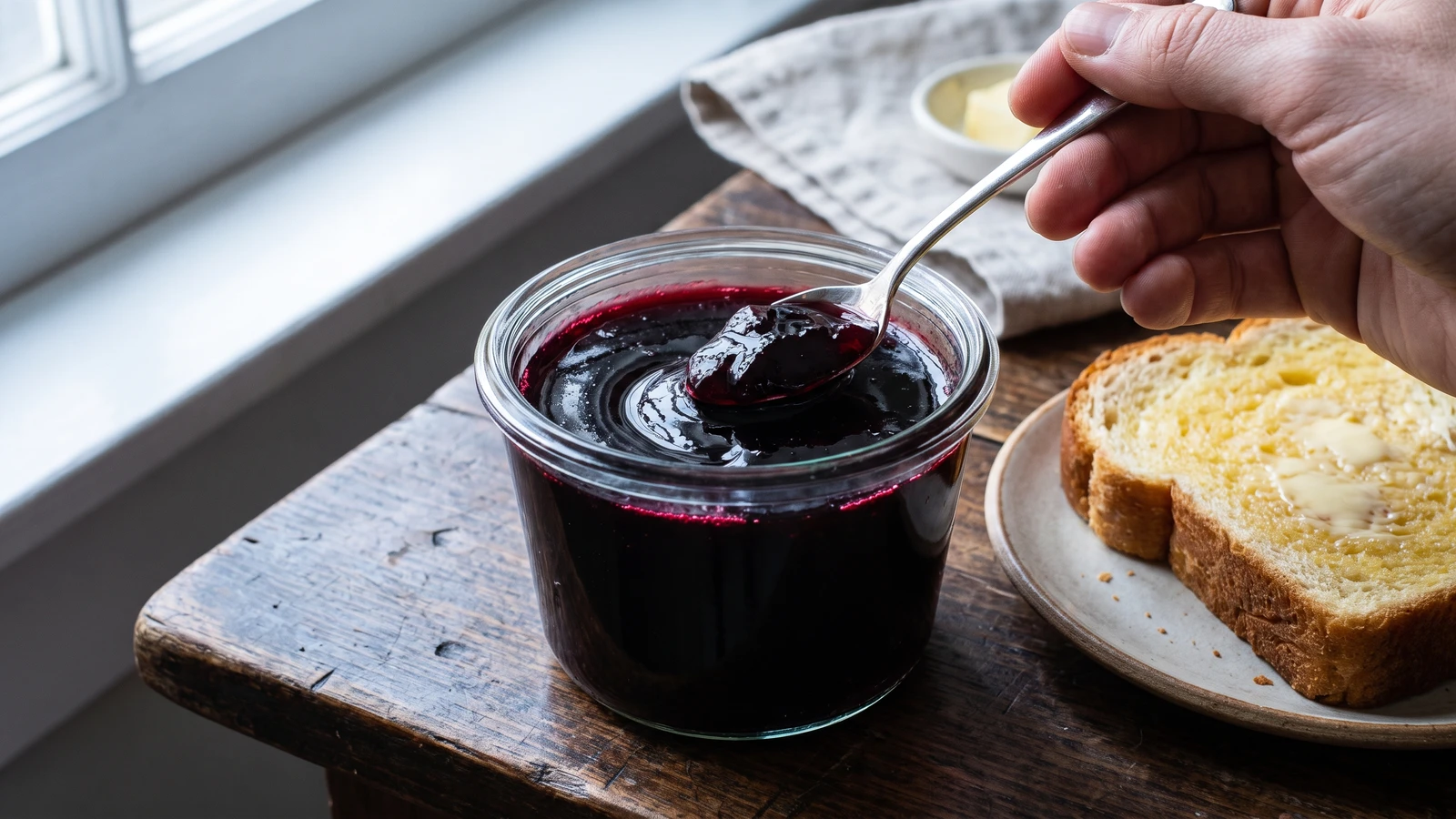
Gelée de cassis turns ripe black currants into a clear, wine-dark preserve by patient dripping, small-ball sugar, and a brisk final boil, while white-currant juice keeps its color alive.
Gelée de cassis teaches the first law of clear preserves: extract by heat and gravity, never by force. Very ripe cassis burst in a little water, their juice drips through a sieve, and the cook keeps impatient hands away. Wring the fruit and you drive pulp through the sieve; the perfume survives, but the ruby-black clarity is gone.
The old preserving room assumed a broad copper pan, fruit arriving by the basket, a sugar cook who judged petit boulé, the small-ball stage, with wet fingers, and another pair of hands ready to skim. Here the batch is six pounds, the copper is an eight-quart stainless-steel pan, and the fingers are replaced by a thermometer. The paper and glycerine seal becomes a modern two-piece lid and boiling-water process. Those are brigade scaffolding, changed for scale, control, and safety. The fruit ratio, petit boulé syrup, unpressed sieve, white-currant juice, and fierce final boil are the dish and stay. One cook, one stove, one evening.
White-currant juice is the quiet correction. It lightens a blackness that can read as ink without muting the cassis. Watch the sugar closely, then stop the jelly just shy of nappe, the sheeting stage, when the drops gather into a broad, reluctant fall from the spoon. That judgment decides the set.
Gelée de cassis belongs particularly to Burgundy, where black currants are at home in the Dijon larder and their perfume appears in preserves as naturally as in liqueur. The jelly traveled from household preserving pans into the classical pastry and sauce pantry, prized for the concentrated fruit note a single spoonful could carry. Adding pale white-currant juice is a preserving-room correction, not dilution: it tempers the nearly black color while keeping the currant family intact.
Quantity
about 20 cups (4.7 L / 2.72 kg)
stripped from their stems and cleaned
Quantity
¾ cup (180 ml / 180 g)
Quantity
3 cups (710 ml / 730 g), or half the measured volume of black-currant juice
Quantity
3⅜ cups (800 ml / 680 g), or 1 pound per quart of measured black-currant juice
Quantity
¾ cup (180 ml / 180 g)
Quantity
1 reference: The Cooking, Potting, and Sealing of Jams (No. 2955)
for potting and sealing
| Ingredient | Quantity |
|---|---|
| very ripe black currantsstripped from their stems and cleaned | about 20 cups (4.7 L / 2.72 kg) |
| water for the black currants | ¾ cup (180 ml / 180 g) |
| strained, unsweetened white-currant juice | 3 cups (710 ml / 730 g), or half the measured volume of black-currant juice |
| granulated sugar | 3⅜ cups (800 ml / 680 g), or 1 pound per quart of measured black-currant juice |
| water for moistening the sugar | ¾ cup (180 ml / 180 g) |
| reference methodfor petit boulé syrup | 1 reference: The Cooking of Sugar (No. 2344) |
| reference methodfor potting and sealing | 1 reference: The Cooking, Potting, and Sealing of Jams (No. 2955) |
Wash the jars, new lids, funnel, and ladle well. Keep the jars hot in a boiling-water canner fitted with a rack, following the potting principle of The Cooking, Potting, and Sealing of Jams (No. 2955). The book's paper and glycerine covering is not used here; two-piece canning lids and a boiling-water process provide the reliable modern seal. Set two small saucers in the freezer for testing the jelly.
Put the cleaned black currants and ¾ cup water into the preserving pan. The standardized measure replaces the source's variable household glassful and preserves its ratio of ¼ cup water per 2 pounds of fruit. Bring to a boil over medium-high heat, stirring carefully along the pan floor, then boil for 8 to 12 minutes, until the skins have split and dark juice pools freely around the fruit. Let heat do the crushing; don't pound the currants into pulp.
Set a fine sieve lined with damp muslin or a damp jelly bag over a deep bowl. Ladle in the fruit and leave it to drain by gravity for 45 to 60 minutes. Do not stir, press, twist, or wring. That restraint is the technique: pressure forces fine pulp through the cloth and clouds the gelée de cassis. If some pulp escapes, ça se rattrape: let the juice settle for 10 minutes, then pour it gently through a freshly rinsed damp cloth without disturbing the sediment.
Measure the black-currant juice. For every 4 cups (950 ml) of black-currant juice, weigh 1 pound (454 g) of sugar and measure 2 cups (475 ml) of white-currant juice. The listed batch assumes 6 cups (1.4 L) black-currant juice, giving 3 cups white-currant juice and 1½ pounds sugar. If the fruit gives less, reduce both in exact proportion; never top up the cassis with water. If it gives more than 6 cups, reserve the excess rather than crowding the pan.
Put the measured sugar and the second ¾ cup water into the clean preserving pan. Warm gently, stirring only until every grain dissolves, then follow The Cooking of Sugar (No. 2344): bring the syrup to a full boil, skim away any scum, and cook without stirring until a candy thermometer reads 236°F (113°C), the petit boulé stage. If crystals form on the sides and the syrup turns grainy, stop. Ça se rattrape: add 2 tablespoons (30 ml / 30 g) water, cover for one minute so condensation washes the sides, then uncover and dissolve the sugar gently before beginning the boil again.
While the sugar cooks, warm the black-currant and white-currant juices together in a separate saucepan until hot but not boiling. Pull the petit boulé syrup off the heat, stand back, and add the warm juice a ladleful at a time; the first additions will hiss and rise. Set the pan over low heat for 2 to 3 minutes, stirring gently until any hardened sugar has dissolved. This is the home equivalent of moving the preserving pan to the quiet side of the old stove.
Raise the heat and boil the jelly fiercely in the broad, uncovered pan, skimming carefully as foam gathers. After about 5 minutes, begin testing every 30 seconds. Lift a cool metal spoon from the jelly: at first it runs away in quick separate drops, then the final drops gather toward the center and fall slowly, nearly joining into a broad sheet. Remove the pan just before a full sheet forms, usually near 219 to 220°F (104 to 105°C) at sea level. The brisk boil preserves the cassis perfume and color; a timid simmer only cooks them away.
Leave the pan undisturbed for 7 to 8 minutes, then skim away the last foam. Using the modern sealing equivalent of The Cooking, Potting, and Sealing of Jams (No. 2955), ladle the jelly into hot jars, leaving ¼ inch (6 mm) headspace. Wipe the rims, apply the lids fingertip-tight, and process the jars upright in boiling water that covers them by at least 1 inch (2.5 cm) for 10 minutes once the water returns to a full boil. Increase the processing time for elevation according to current local canning guidance.
Lift the jars out without tilting and leave them untouched for 12 to 24 hours. Check that each lid has drawn firmly inward; refrigerate any jar that failed to seal. The gelée de cassis may look loose while warm, so give it the full rest before judging. If it remains fluid after 24 hours, ça se rattrape: within that first day, empty it into a clean pan, return it briefly to nappe, refill clean hot jars with new lids, and repeat the complete water process. Once set, open a jar, draw a spoon through that dark garnet gloss, and bring the brioche. À table!
1 serving (about 20g)
Culinary guides, cultural storytelling, and the editorial depth that makes cooking meaningful.
Discover Culinary ExplorerChef Juliette
Beef shin, lean beef, and fowl begin in cold water and rise slowly toward a tremble. Skim before the boil, and you learn the quiet discipline that gives every clear French broth its backbone.
Chef Juliette
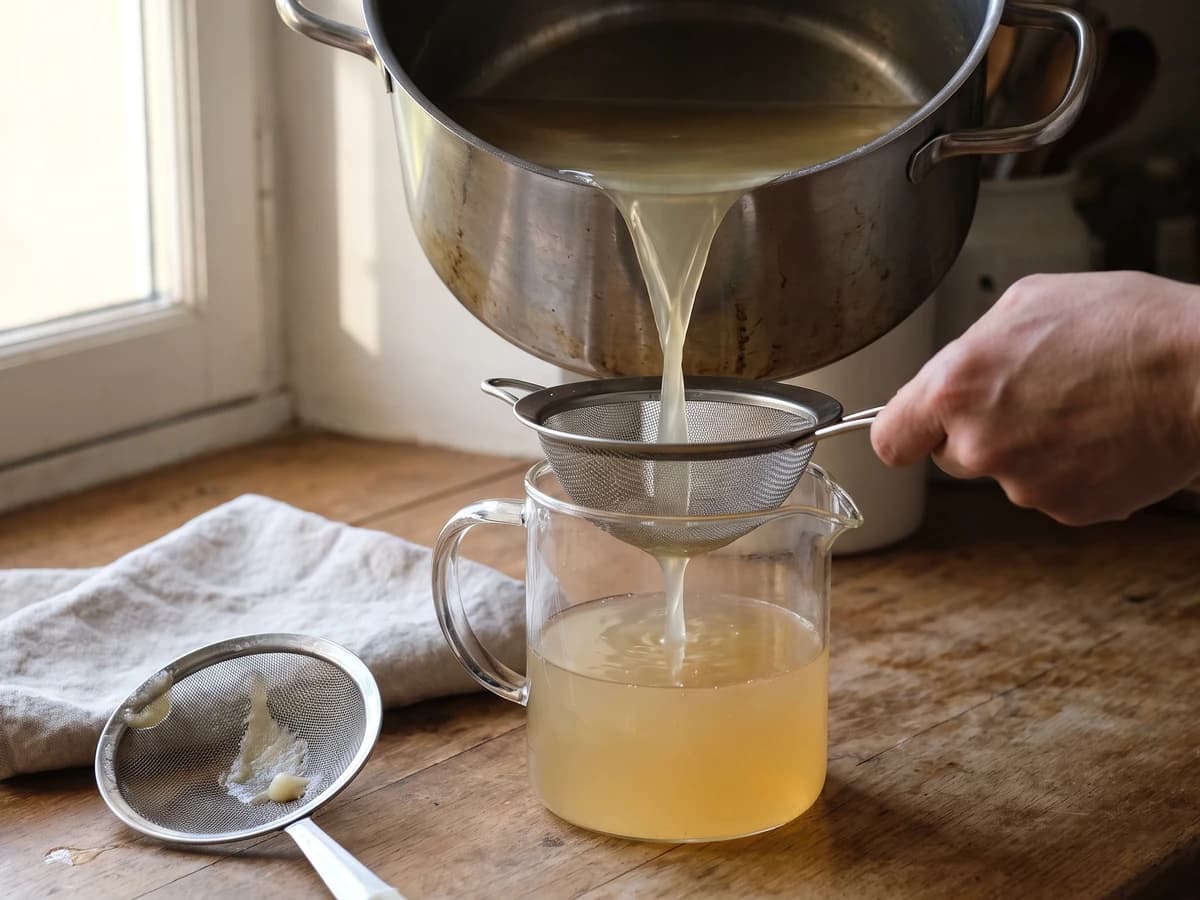
Break the veal bones small, then give them eight hours at a bare tremble. This pale, gelatinous fond becomes the quiet foundation beneath velouté, blanquette, and every sauce that must stay light.
Chef Juliette
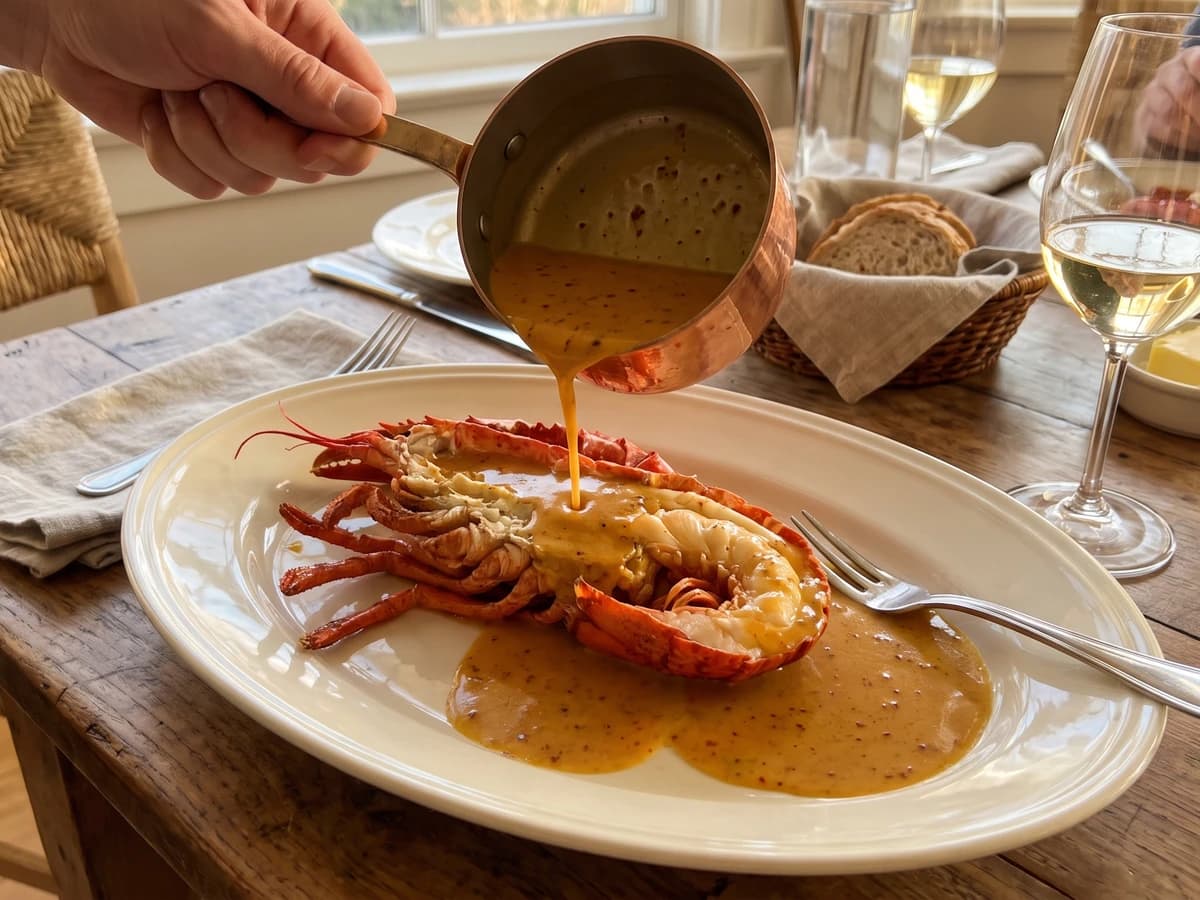
Sauce Orientale concentrates lobster-rich American Sauce with curry, then folds in cream away from the fire: a glossy, gently spiced derivative made for lobster, crayfish, and firm fish.
Chef Juliette
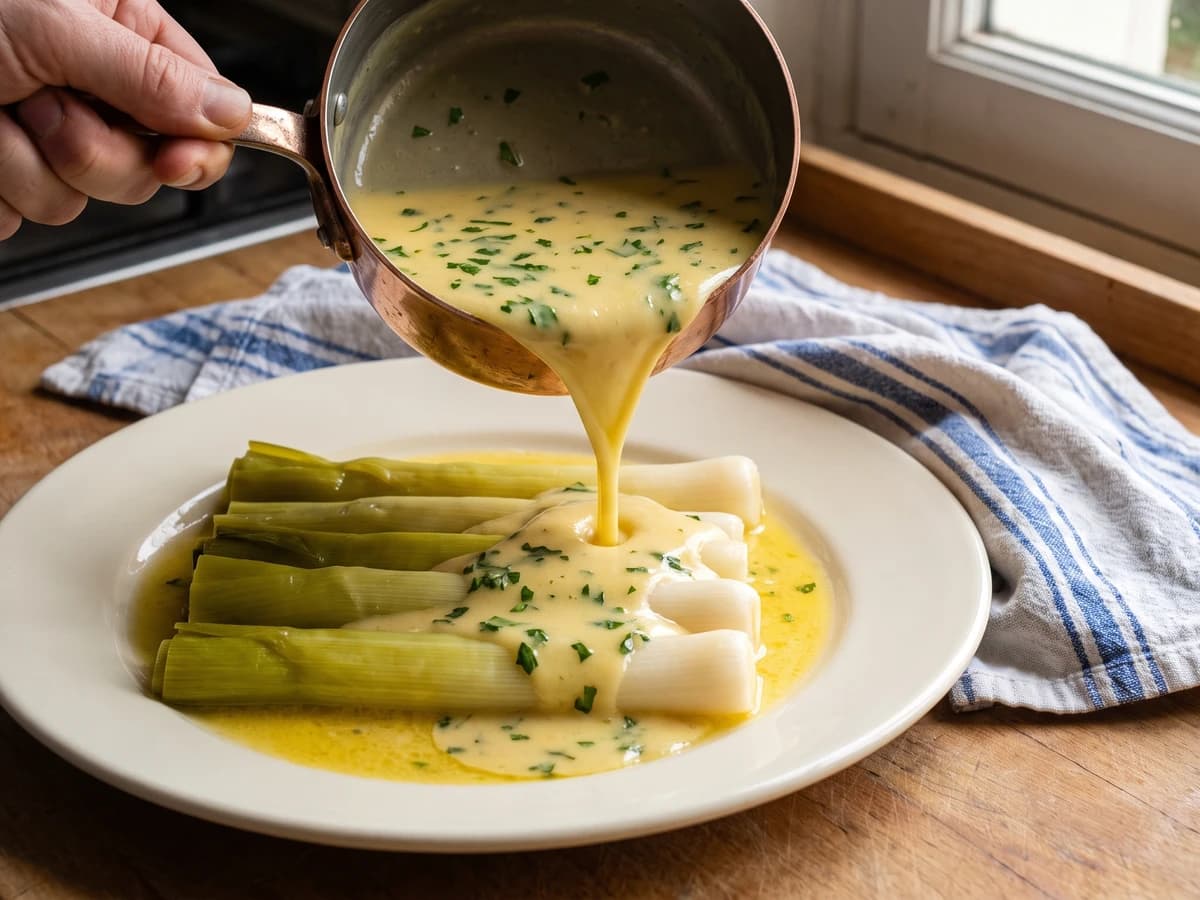
An old lesson in sauce families: Sauce Allemande takes mushroom liquor, then butter, lemon, and parsley, becoming a glossy Poulette for sheep's trotters, leeks, cauliflower, and anything needing gentle richness with a bright edge.