Chef Juliette
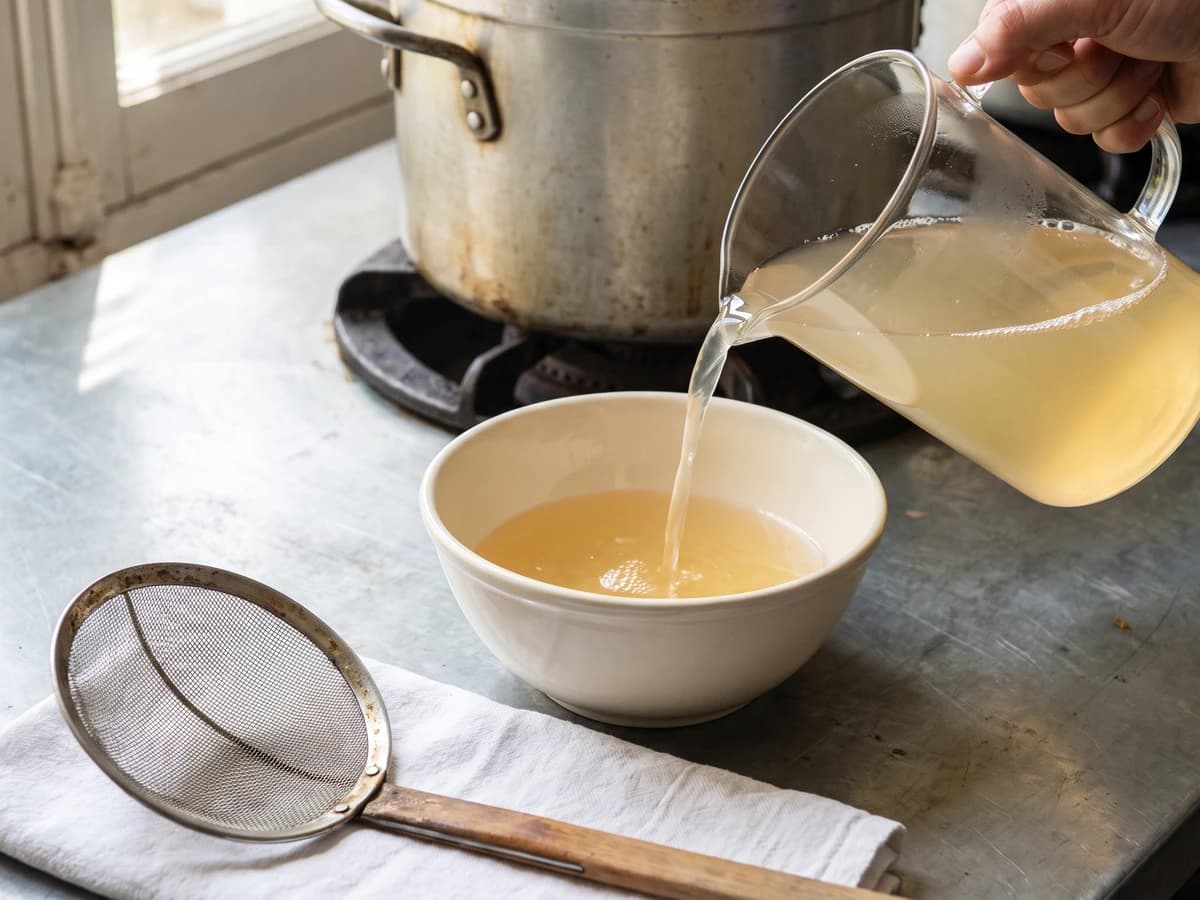
Ordinary or White Consommé
Beef shin, lean beef, and fowl begin in cold water and rise slowly toward a tremble. Skim before the boil, and you learn the quiet discipline that gives every clear French broth its backbone.
A cooking platform built around craft, culture, and the stories behind what we eat.
Created by Chef Juliette
Based on No. 2962, Tomato Jam, from Le Guide Culinaire (1907) by Auguste Escoffier
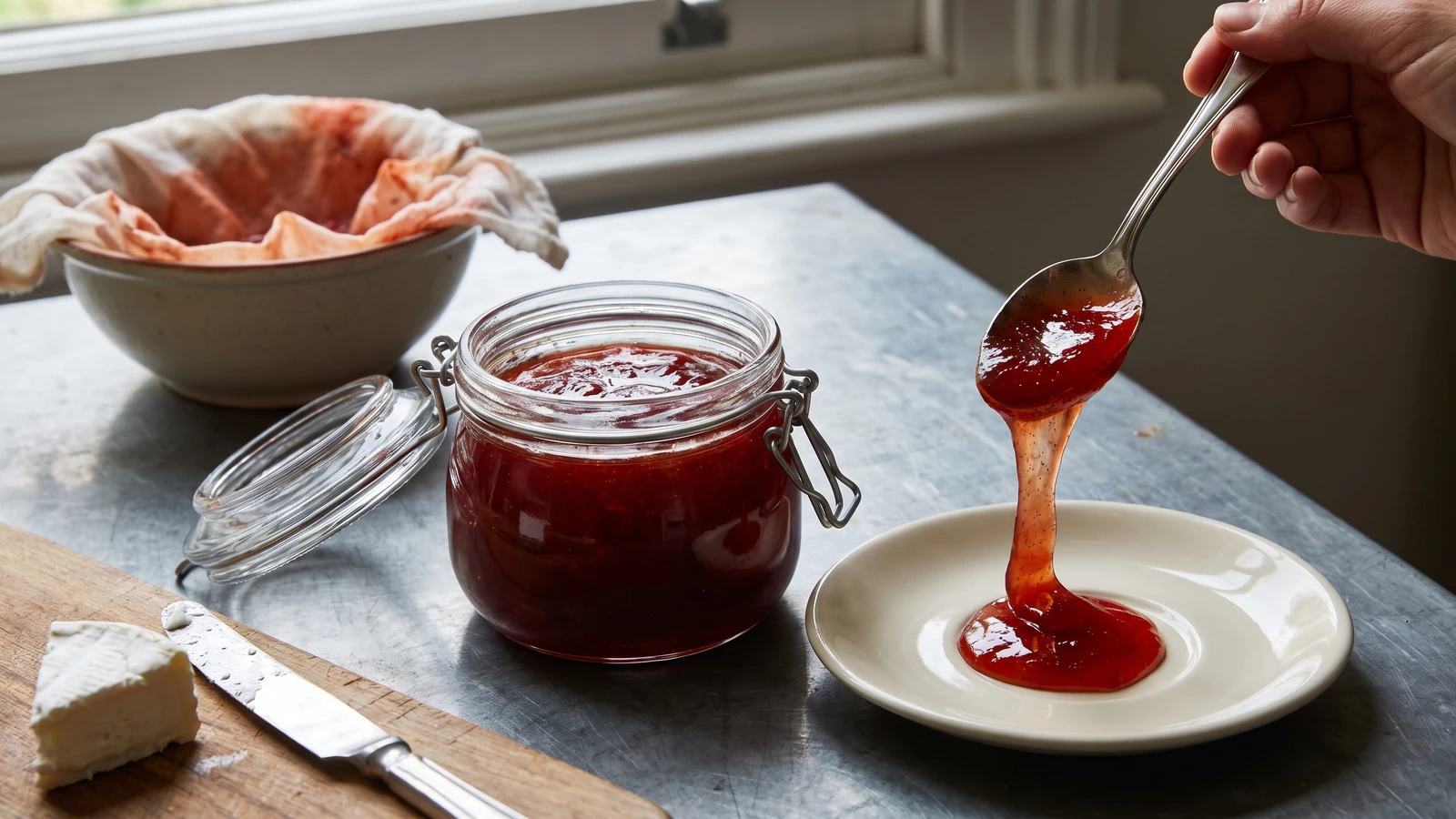
Five pounds of tomato become one pound of concentrated pulp, then vanilla and red-currant juice turn it into a glossy confiture with a clean set and the deep sweetness of ripe fruit.
Confiture de tomates (tomato jam) teaches the first law of preserves: the set must come from somewhere. Tomato brings perfume, colour, and sweetness, but almost no cohesive power of its own. Red-currant juice supplies that structure, vanilla turns the fruit unmistakably toward confiture, and neither is optional. Before you touch the pan, know this: five pounds of tomatoes are only the beginning, because the usable drained pulp may be barely one pound.
The original recipe assumed a jam kitchen comfortable with small-ball sugar, a copper preserving pan, and a napkin stretched between the legs of an overturned stool. At home, a wide stainless-steel pan, a thermometer, and a jelly bag set over a deep bowl do the same honest work. The stool and paper-and-string sealing are scaffolding and can go; the full draining, sugar equal to the pulp by weight, vanilla, red-currant juice, and final nappe cannot. Clean lidded jars and refrigeration replace the paper seal because this adaptation is not a tested shelf-stable canning process.
Done properly, the confiture is garnet-red and translucent, thick enough to fold from a spoon yet soft enough to settle around cheese or a slice of terrine. One cook, one stove, one evening. The step that decides everything comes first: let the tomato pulp drain until it has no loose water left.
Confiture de tomates is at home in the preserving kitchens of Provence and Languedoc, where abundant ripe tomatoes entered the same household confiture practice used for orchard fruit. In the classical French pantry, draining the pulp nearly dry brought the preparation into the discipline of confiserie, with vanilla marking it as a sweet preserve and pectin-rich red-currant juice supplying the set. The currant is not a decorative flavouring, as is sometimes assumed; it is the structure of the jam.
Quantity
5 pounds (2.27 kg; about 12 to 15 medium)
finely sliced
Quantity
2¼ cups (454 g), or exactly the weight of the drained tomato pulp, for The Cooking of Sugar (No. 2344)
Quantity
½ cup (120 ml / 120 g), divided, for The Cooking of Sugar (No. 2344)
Quantity
1
split lengthwise, seeds scraped
Quantity
9 tablespoons plus 1 teaspoon (140 ml / about 145 g)
finely strained
Quantity
3 jars, each 8 fluid ounces (240 ml), for The Cooking, Potting, and Sealing of Jams (No. 2955)
| Ingredient | Quantity |
|---|---|
| ripe red tomatoesfinely sliced | 5 pounds (2.27 kg; about 12 to 15 medium) |
| granulated sugar | 2¼ cups (454 g), or exactly the weight of the drained tomato pulp, for The Cooking of Sugar (No. 2344) |
| water | ½ cup (120 ml / 120 g), divided, for The Cooking of Sugar (No. 2344) |
| vanilla beansplit lengthwise, seeds scraped | 1 |
| pure unsweetened red-currant juicefinely strained | 9 tablespoons plus 1 teaspoon (140 ml / about 145 g) |
| clean, hot preserving jars with fitted lids | 3 jars, each 8 fluid ounces (240 ml), for The Cooking, Potting, and Sealing of Jams (No. 2955) |
Slice the tomatoes finely, then pass every bit through a food mill fitted with its fine disk, or rub them firmly through a fine sieve. Keep both the juice and purée, discarding only the skins and seeds. A blender is not the equivalent here because it pulverizes the skins and seeds into the preserve instead of removing them.
Put the tomato juice and purée into a wide, heavy, nonreactive preserving pan. Bring them to a full boil and cook for exactly five minutes, stirring continuously across the pan floor. The brief boil loosens the remaining water from the vegetable pulp without cooking away the fresh tomato character.
Line a large sieve or colander with damp scalded muslin, or set a jelly bag over a deep bowl. Pour in the boiled tomato mixture and leave it to drain for 4 hours, moving the setup to the refrigerator once it is no longer fiercely hot. Do not squeeze the bag, which forces watery sediment through the cloth. The pulp is ready when it is thick, matte, and no longer releases a steady drip. If liquid still runs when you lift the cloth, give it another hour. This draining is the dish, not idle waiting; water left here demands longer boiling later and flattens both tomato and vanilla.
Weigh the drained pulp. Five pounds of tomatoes should give about 1 pound (454 g), though variety and ripeness decide the exact result. Measure an equal weight of sugar and 9 tablespoons plus 1 teaspoon (140 ml) red-currant juice for every pound (454 g) of pulp. For another yield, use 100 g sugar and 31 ml red-currant juice for each 100 g pulp. Trust the scale here, not the apparent volume.
Use the measured sugar, 6 tablespoons (90 ml / 90 g) of the water, and the split vanilla bean with its seeds to prepare The Cooking of Sugar (No. 2344), stopping at the small-ball stage, 236°F (113°C). A thermometer is the honest home equivalent of testing boiling syrup with the fingers. Skim away any froth as the syrup boils. If crystals gather around the rim, cover the pan for one minute so condensation washes them down. If the syrup turns grainy, lift it from the heat, add the reserved water 1 tablespoon at a time, and warm gently until it is clear before returning to small-ball stage.
Take the syrup off the heat before adding the tomato pulp in three portions, stirring with a long-handled spoon because the mixture can spit. Stir in the measured red-currant juice, then return the pan to high heat. Boil rapidly and stir without stopping, sweeping the corners and the entire floor of the pan, until the jam reaches nappe, the coating stage: it gathers toward the centre of the lifted spoon and falls in slow, heavy drops instead of quick drips. Cook for 2 minutes more, then remove it from the heat. If the bottom catches, do not scrape it. Immediately pour the unburnt upper jam into a clean pan and finish over slightly lower heat. Ça se rattrape. If the cooled jam proves loose, return it to the pan and boil it back to nappe.
Remove the vanilla bean and let the confiture settle for 7 to 8 minutes. Use the hot-filling discipline of The Cooking, Potting, and Sealing of Jams (No. 2955), with a modern safety translation: ladle the jam into the clean hot jars, leave ¼ inch (6 mm) headspace, wipe the rims, and fit the lids. Cool completely, then refrigerate. The paper and glycerine closure described by the book is not used, and this refrigerator preserve should not be stored at room temperature. Let it rest overnight before serving so the vanilla settles through the tomato. À table!
1 serving (about 20g)
Culinary guides, cultural storytelling, and the editorial depth that makes cooking meaningful.
Discover Culinary ExplorerChef Juliette
Beef shin, lean beef, and fowl begin in cold water and rise slowly toward a tremble. Skim before the boil, and you learn the quiet discipline that gives every clear French broth its backbone.
Chef Juliette
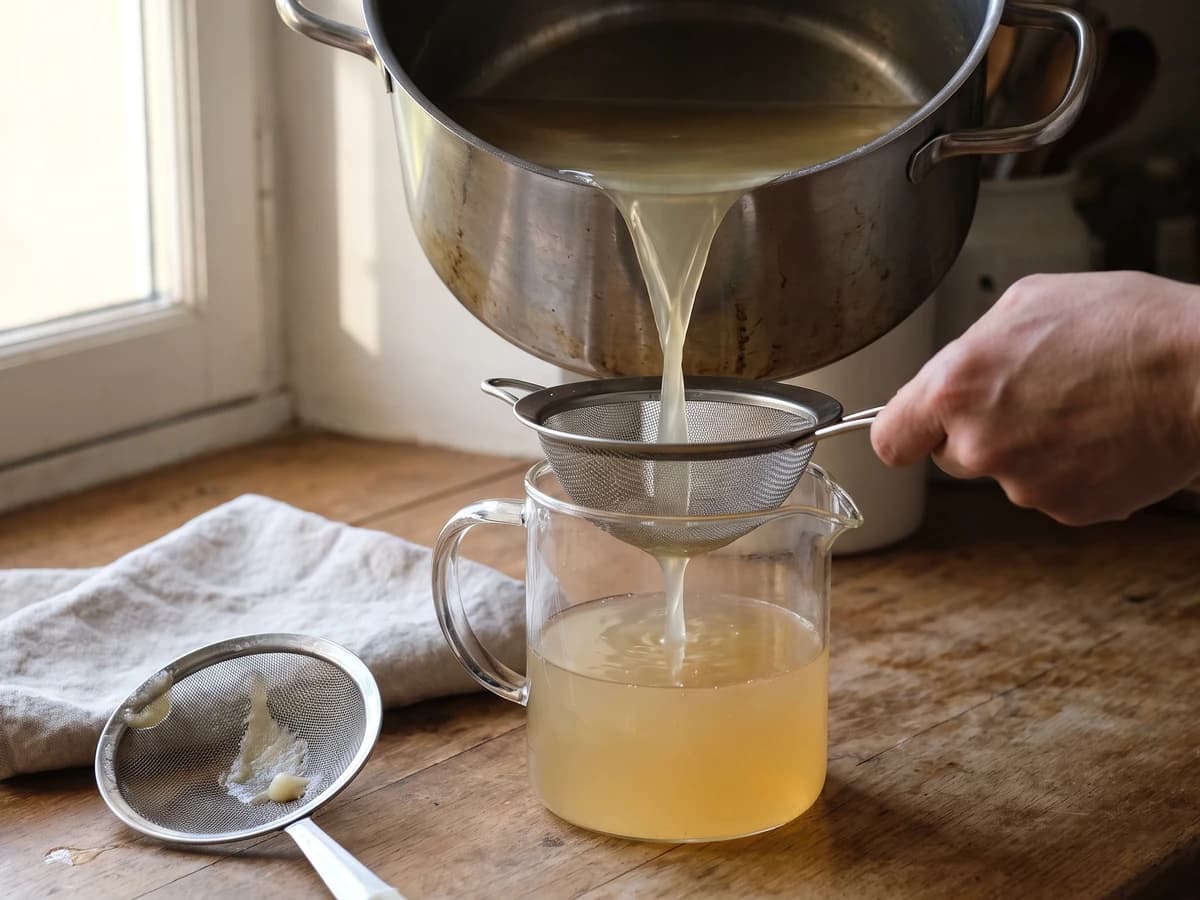
Break the veal bones small, then give them eight hours at a bare tremble. This pale, gelatinous fond becomes the quiet foundation beneath velouté, blanquette, and every sauce that must stay light.
Chef Juliette
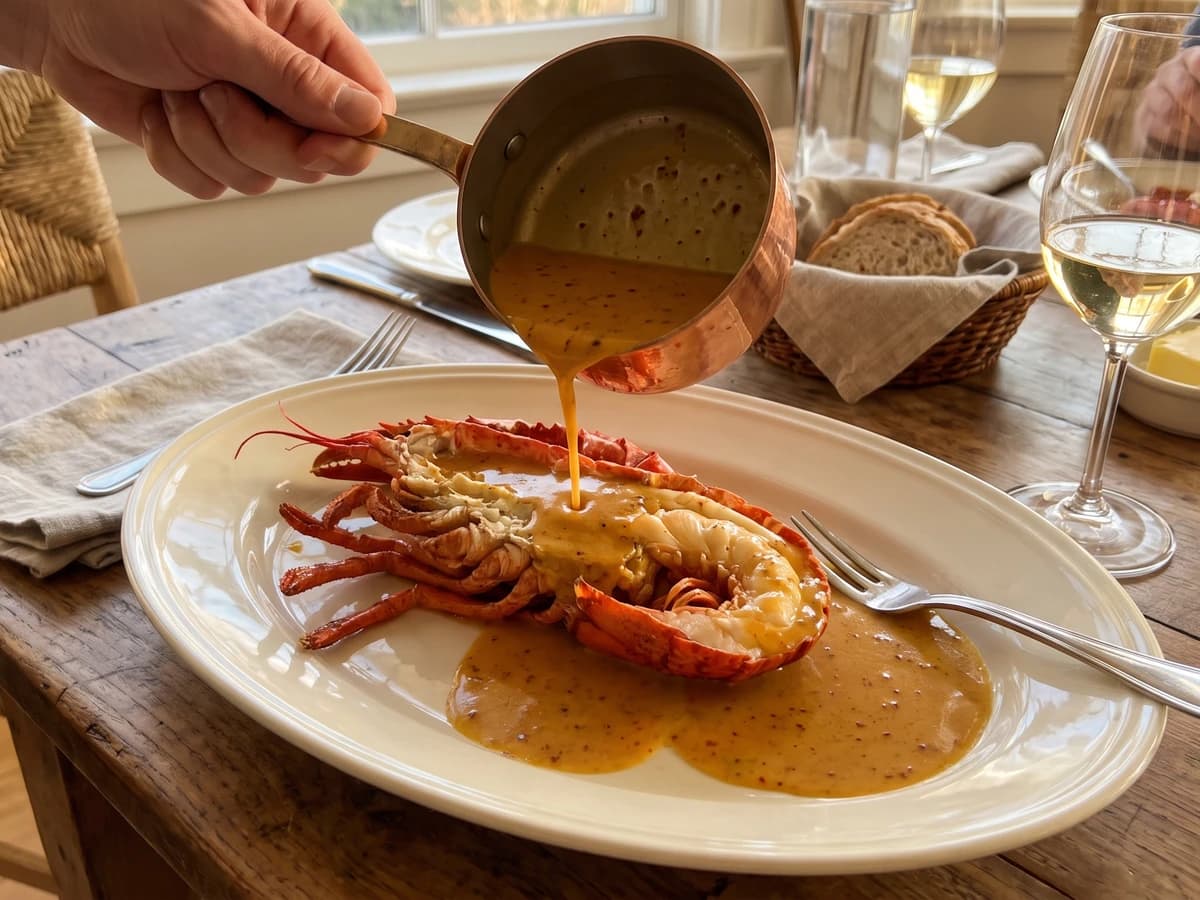
Sauce Orientale concentrates lobster-rich American Sauce with curry, then folds in cream away from the fire: a glossy, gently spiced derivative made for lobster, crayfish, and firm fish.
Chef Juliette
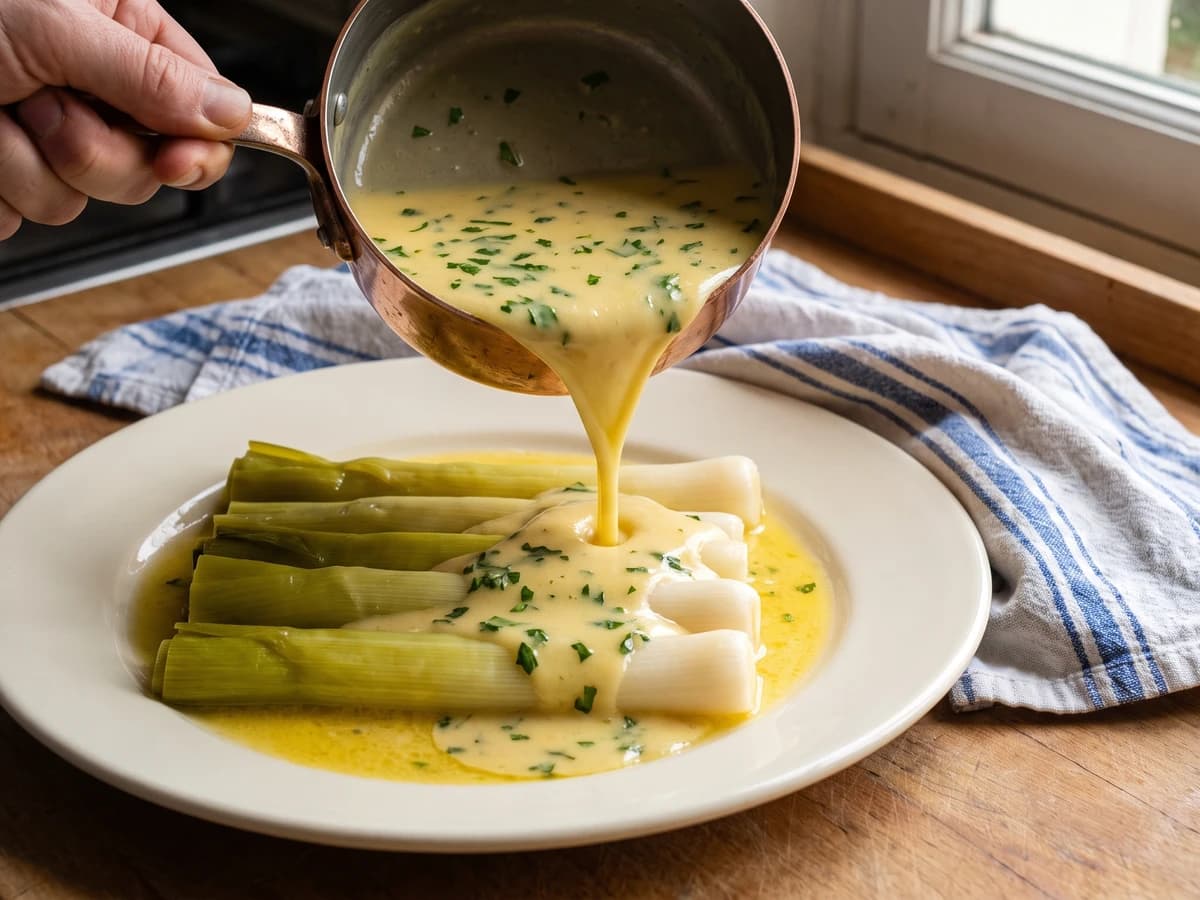
An old lesson in sauce families: Sauce Allemande takes mushroom liquor, then butter, lemon, and parsley, becoming a glossy Poulette for sheep's trotters, leeks, cauliflower, and anything needing gentle richness with a bright edge.