Chef Juliette
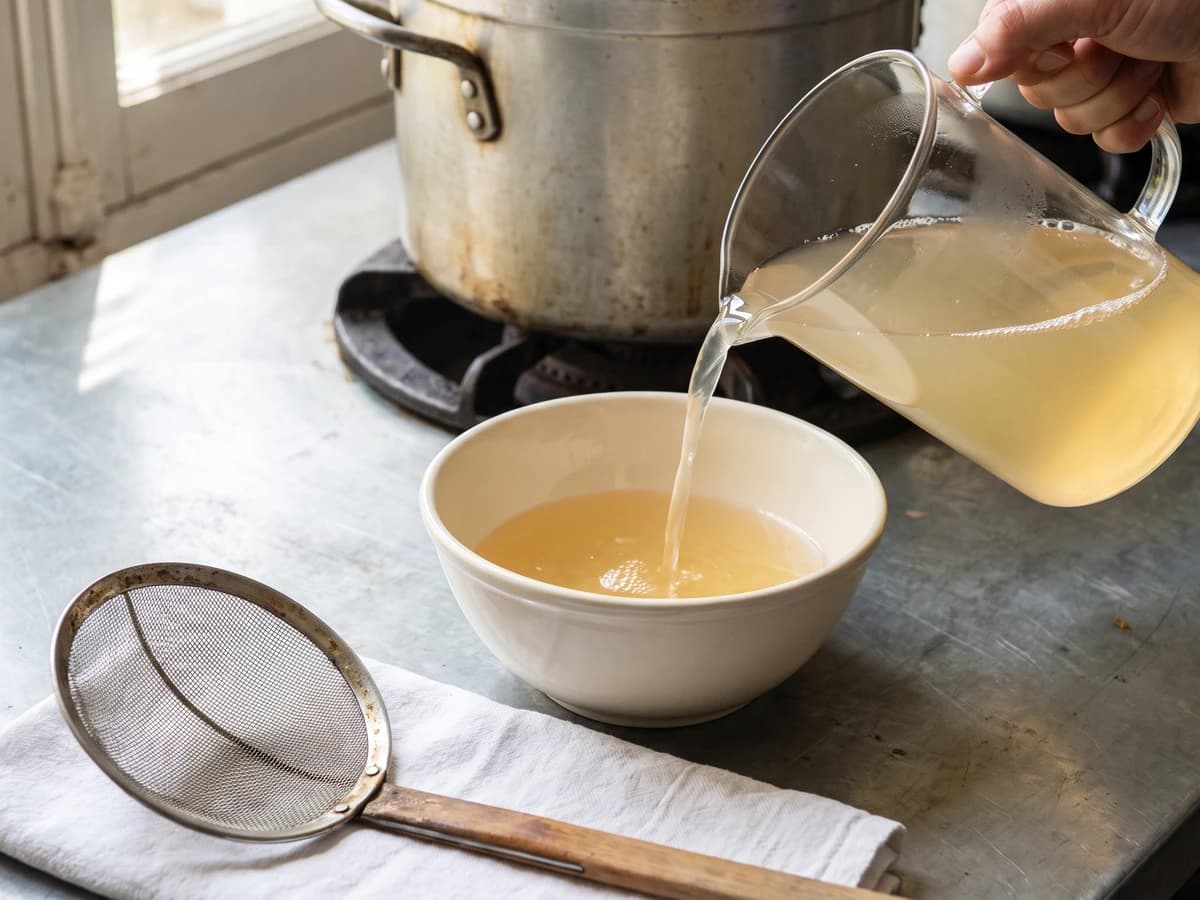
Ordinary or White Consommé
Beef shin, lean beef, and fowl begin in cold water and rise slowly toward a tremble. Skim before the boil, and you learn the quiet discipline that gives every clear French broth its backbone.
A cooking platform built around craft, culture, and the stories behind what we eat.
Created by Chef Juliette
Based on No. 2958, Strawberry Jam, from Le Guide Culinaire (1907) by Auguste Escoffier
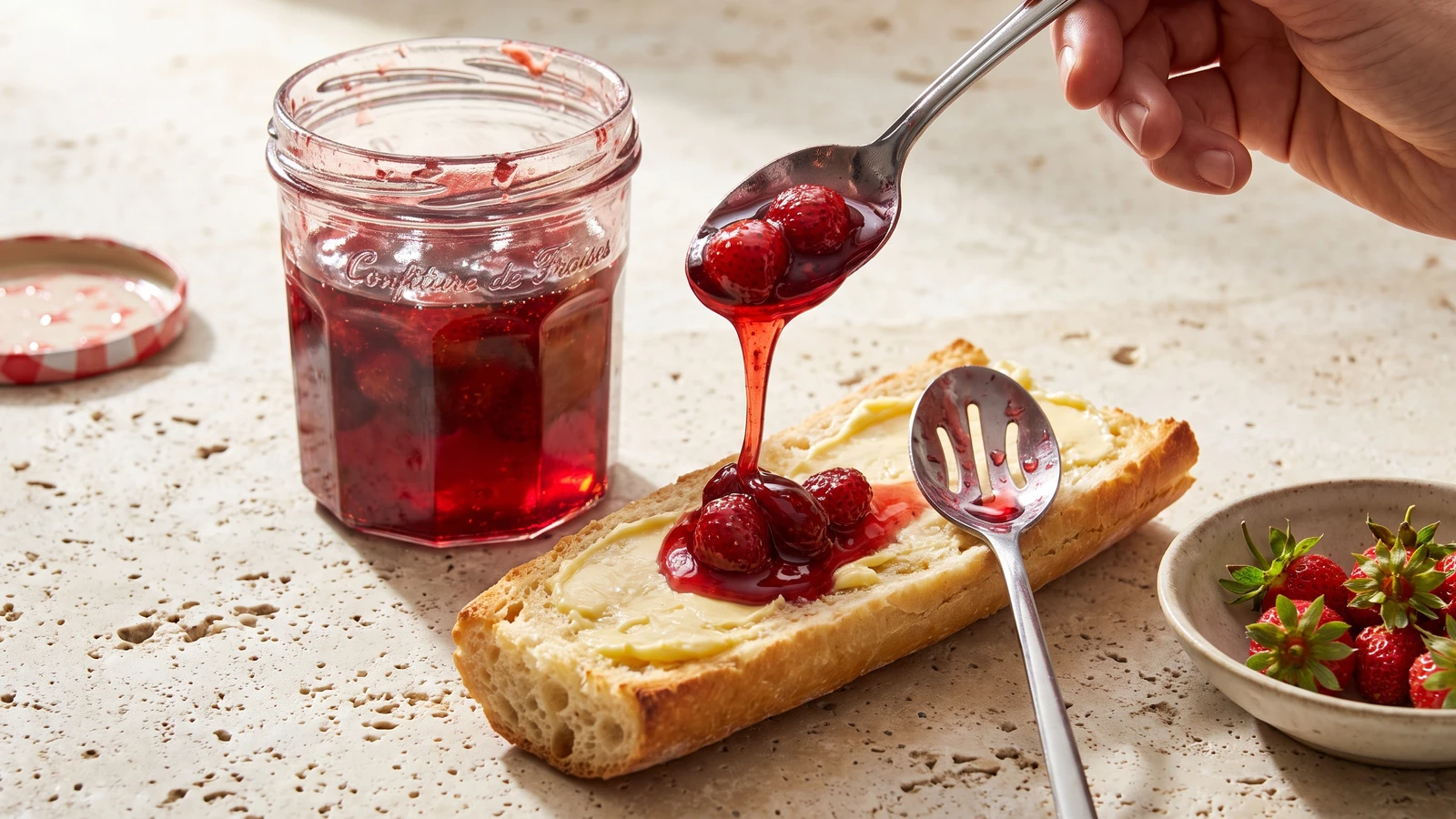
Whole strawberries suspended in clear ruby syrup, made by cooking sugar to large ball, lifting the fruit while the syrup reaches nappe, then bringing both together for five exact minutes.
Confiture de fraises (strawberry jam) teaches one true thing: whole berries and their syrup do not finish cooking at the same moment. Leave them together throughout and the syrup stays thin while the fruit collapses. Lift the berries at tenderness, reduce their syrup alone to nappe, the coating stage when it falls from a spoon in a slow broad sheet, then reunite them for five minutes. That separation is the dish.
The original method assumed a copper preserving pan, a coal range with a cooler side, practiced fingers for testing dangerous sugar, and extra hands for skimming and filling pots. Your honest equivalents are a wide stainless-steel pan, a digital sugar thermometer, a large slotted spoon, and hot glass jars with tested lids. The paper and glycerine seal has gone because safe boiling-water processing does its work better. The batch is scaled to four pounds of fruit, but the book's proportion remains exact: twelve ounces of sugar for every pound of strawberries. One cook, one stove, one evening.
The skimming and extra potting hands were brigade scaffolding, so they can go. Cooking the sugar to large ball, removing the berries before reducing the syrup, and returning them for the final five minutes must stay. Watch the nappe rather than the clock. That is the moment that decides the confiture.
Confiture de fraises belongs to household preserving kitchens throughout France, although the strawberry fields of Plougastel-Daoulas in Brittany gave the fruit a particularly celebrated market identity. Grand kitchens refined the domestic preserve through precise sugar cooking, removing the tender berries while their diluted syrup concentrated alone. This is not a stiff pectin gel, but whole fruit suspended in syrup brought carefully to nappe, a distinction that protects the berries' shape and perfume.
Quantity
12½ cups whole (3 L / 4 lb / 1.81 kg), prepared for The Cooking, Potting, and Sealing of Jams (No. 2955)
sorted, hulled, and left whole
Quantity
6¾ cups (1.6 L / 3 lb / 1.36 kg), for The Cooking of Sugar (No. 2344)
Quantity
1¼ cups (300 ml / 300 g)
Quantity
8 half-pint (240 ml) jars, prepared according to The Cooking, Potting, and Sealing of Jams (No. 2955)
| Ingredient | Quantity |
|---|---|
| just-ripe strawberriessorted, hulled, and left whole | 12½ cups whole (3 L / 4 lb / 1.81 kg), prepared for The Cooking, Potting, and Sealing of Jams (No. 2955) |
| granulated sugar | 6¾ cups (1.6 L / 3 lb / 1.36 kg), for The Cooking of Sugar (No. 2344) |
| water | 1¼ cups (300 ml / 300 g) |
| hot preserving jars with new two-piece lids | 8 half-pint (240 ml) jars, prepared according to The Cooking, Potting, and Sealing of Jams (No. 2955) |
Prepare the hot jars, lids, and boiling-water canner according to The Cooking, Potting, and Sealing of Jams (No. 2955). Sort the strawberries ruthlessly: discard any berry showing mould, fermentation, or deep bruising rather than trying to trim it. Hull the sound fruit and leave it whole. If grit makes washing necessary, rinse the berries briefly before hulling and dry them thoroughly; excess water weakens the syrup.
Put the sugar and water into a wide, heavy 8-quart preserving pan. Warm gently, stirring only until every dry pocket of sugar dissolves. Once the syrup boils, stop stirring, skim any grey froth, and wash crystals from the pan wall with a pastry brush dipped in water. Cook according to The Cooking of Sugar (No. 2344) until the syrup reaches the large-ball stage, 248°F (120°C). Use a thermometer instead of putting fingers near boiling sugar. If crystals begin forming at the rim, lower the heat and cover the pan for two minutes so the trapped moisture washes them down. Ça se rattrape.
Take the pan off the fierce heat. Slide in the strawberries carefully with a long spoon, keeping your hands and face away from any splash. Set the pan over the lowest burner for 7 to 8 minutes, moving the berries once or twice without crushing them. Their moisture will loosen the concentrated sugar into a flowing ruby syrup.
Return the pan to high heat and boil rapidly for 10 to 12 minutes. Skim the pale froth as it gathers and draw a heatproof spatula gently across the pan floor from time to time, especially near the end. The berries should darken slightly and become tender while remaining recognizably whole. A fierce boil preserves colour through speed, but a scorched pan cannot be rescued, so reduce the heat slightly if the syrup catches at the bottom.
Lift the strawberries into a heatproof bowl with a spider or large slotted spoon, letting their syrup drain back into the pan. Work gently and leave the accumulated juice in the bowl until the last berry is removed, then pour that juice into the pan. This pause protects the fruit while the syrup receives the concentration it still needs.
Boil the syrup alone, rapidly and uncovered. Test it often with a cool metal spoon: at nappe, the syrup gathers toward the spoon's lower edge and falls slowly in a broad sheet rather than scattering in quick drops. A thermometer may read around 222°F (106°C) at sea level, but the spoon gives the final judgment. If the syrup still runs like juice, keep boiling. If it ropes heavily and threatens to set hard, remove the pan, wait for the bubbling to subside, then stir in boiling water one tablespoon at a time until it sheets again. Ça se rattrape.
Return the drained strawberries and any juice they have released to the syrup. Boil for exactly 5 minutes, folding the fruit through once or twice without mashing it. The finished confiture should hold whole berries in a clear, glossy garnet syrup that coats the spoon. Remove the pan immediately and skim the last froth.
Let the confiture stand off the heat for 5 minutes, then fill the hot jars little by little according to The Cooking, Potting, and Sealing of Jams (No. 2955). Divide one shallow ladleful among all the jars before beginning the next round; this distributes the berries through the syrup instead of letting them rise together at the top. Leave ¼ inch (6 mm) headspace, wipe the rims, apply the lids, and process in boiling water for 10 minutes, increasing the time for altitude according to current local preserving guidance. Cool undisturbed and check every seal before storage. Any jar that fails to seal goes into the refrigerator. À table!
1 serving (about 20g)
Culinary guides, cultural storytelling, and the editorial depth that makes cooking meaningful.
Discover Culinary ExplorerChef Juliette
Beef shin, lean beef, and fowl begin in cold water and rise slowly toward a tremble. Skim before the boil, and you learn the quiet discipline that gives every clear French broth its backbone.
Chef Juliette
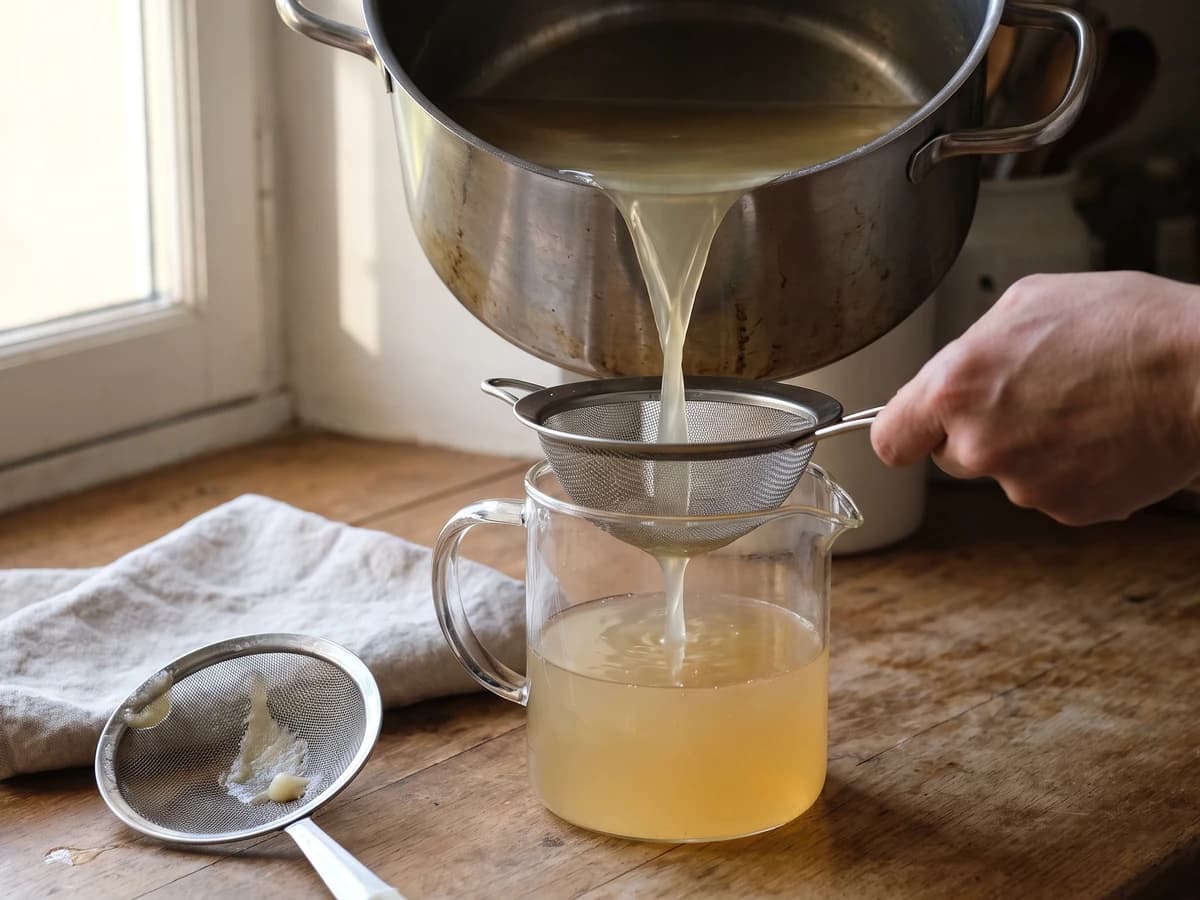
Break the veal bones small, then give them eight hours at a bare tremble. This pale, gelatinous fond becomes the quiet foundation beneath velouté, blanquette, and every sauce that must stay light.
Chef Juliette
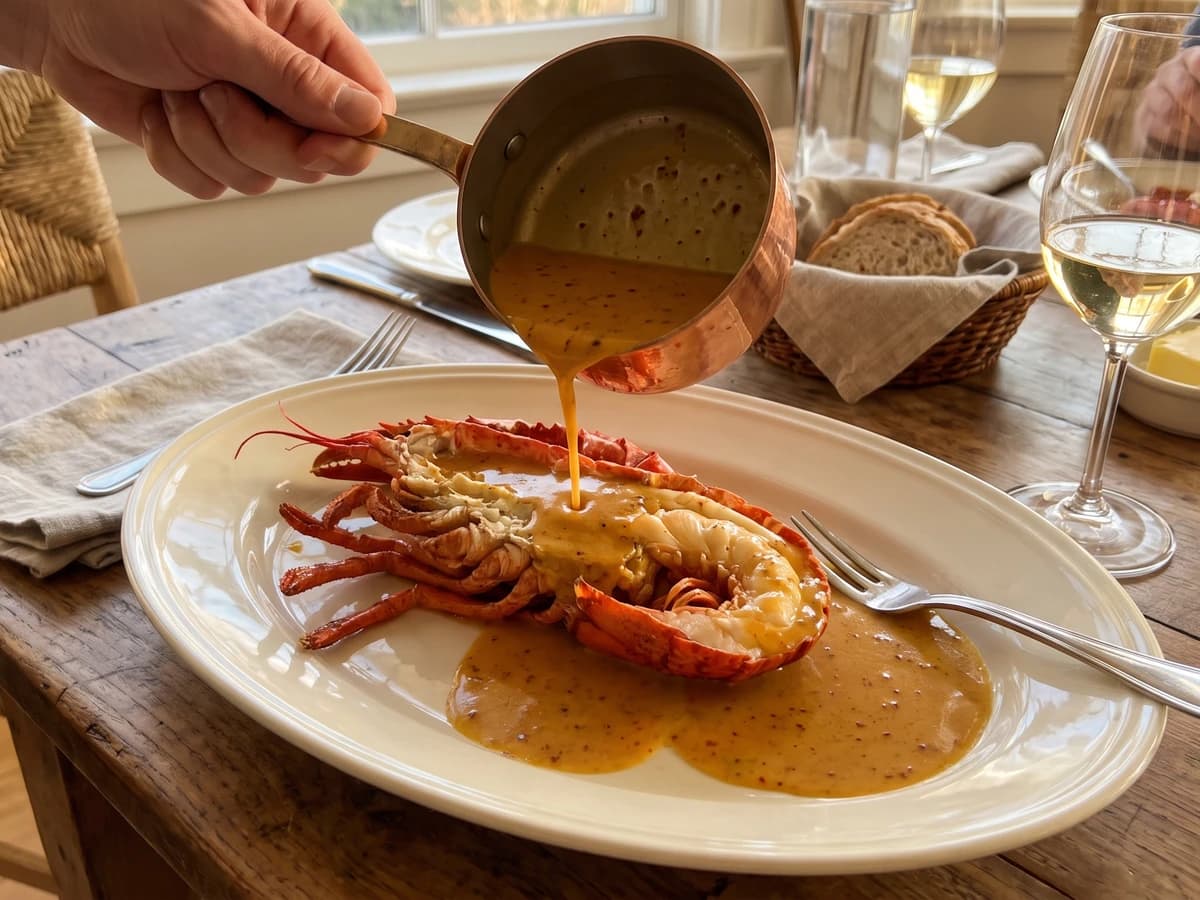
Sauce Orientale concentrates lobster-rich American Sauce with curry, then folds in cream away from the fire: a glossy, gently spiced derivative made for lobster, crayfish, and firm fish.
Chef Juliette
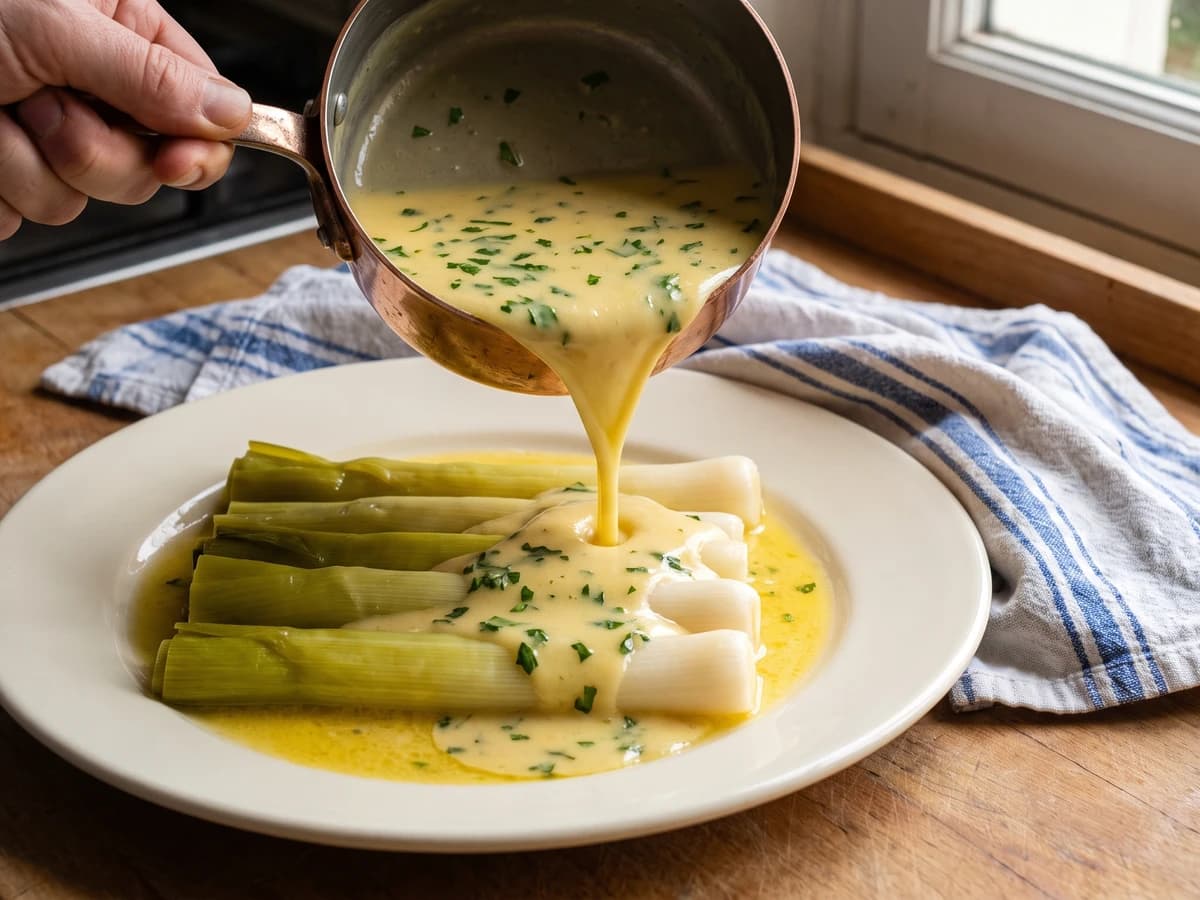
An old lesson in sauce families: Sauce Allemande takes mushroom liquor, then butter, lemon, and parsley, becoming a glossy Poulette for sheep's trotters, leeks, cauliflower, and anything needing gentle richness with a bright edge.