
Chef Juliette
Smelt (Éperlans)
Tiny éperlans, lightly floured and fried until their tails stand crisp, arrive in a generous heap on a napkin with fried parsley and grooved lemon, a weeknight lesson in heat and restraint.
A cooking platform built around craft, culture, and the stories behind what we eat.
Created by Chef Juliette
Based on No. 289, Montpellier Butter (Green Butter), from Le Guide Culinaire (1907) by Auguste Escoffier
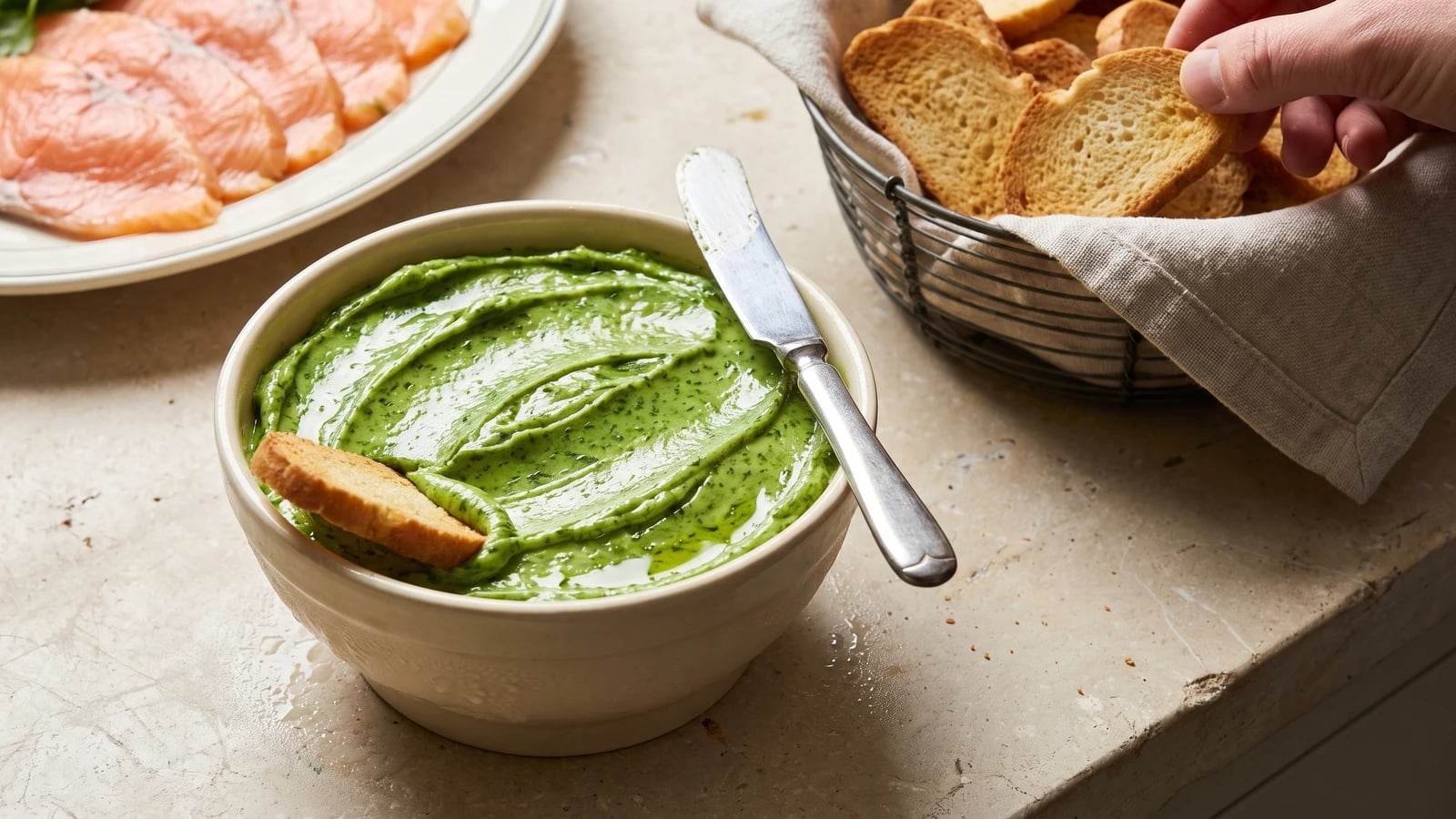
Beurre Montpellier is the cold emulsion that teaches water control: blanched herbs pressed dry, sharpened with caper, gherkin, and anchovy, then worked into butter until it glows green beside salmon or trout.
Beurre Montpellier (Montpellier green butter) teaches the rule behind every cold emulsion: control the water before you add the fat. It should glow a deep herb green, taste first of butter and fresh leaves, then answer with caper, gherkin, anchovy, and cayenne. The one true thing to know before touching a pan is this: the blanched greens must be pressed until they cannot surrender another drop.
The original formula assumed a garde-manger, the cold-kitchen cook, with a mortar, a tammy cloth, and enough hands to work one and one-half pounds of butter for a grand cold-fish service. Here the quantity is quartered for eight appetizer portions, while a small food processor replaces the mortar and a fine-mesh sieve replaces the tammy. The fractions of yolk are weighed so the original proportions survive. The long pounding and brigade volume were scaffolding; the two-minute blanch, forceful pressing, ingredient sequence, gradual oil, and final sieving are the dish itself.
Once made, the butter is generous and wonderfully practical: spread it over toast, spoon it beside chilled salmon, or let it soften across slices of cold trout. One cook, one stove, one evening. Press those greens absolutely dry, and the rest will follow.
Beurre Montpellier takes its name from Montpellier in Languedoc, and its watercress, abundant herbs, capers, gherkins, anchovy, and oil carry the sharp green profile of France's Mediterranean south. In the classical cold kitchen it became both accompaniment and decorative covering for salmon and trout, bringing regional flavors into formal cold-fish service. Its English nickname can mislead: this is an egg-bound butter-and-oil emulsion, not merely softened butter stirred with chopped herbs.
Quantity
⅓ cup loosely packed (80 ml / 8.5 g)
Quantity
⅓ cup loosely packed (80 ml / 8.5 g)
Quantity
⅔ cup loosely packed (160 ml / 8.5 g)
Quantity
3 tablespoons (45 ml / 8.5 g)
finely cut
Quantity
⅓ cup loosely packed (80 ml / 8.5 g)
Quantity
1 tablespoon (15 ml / 11 g)
chopped
Quantity
2 tablespoons loosely packed (30 ml / 3.5 g)
Quantity
¾ teaspoon (3.75 ml / 4 g)
drained and pressed dry
Quantity
3 tablespoons (45 ml / 28 g)
chopped
Quantity
¼ small clove (about 1 g)
Quantity
1 fillet (about 4 g)
rinsed well and patted dry
Quantity
¾ large yolk (about 14 g)
Quantity
½ large yolk (about 9 g)
Quantity
Scant ¼ cup (57 ml / 52 g)
Quantity
1/16 teaspoon (0.3 ml / 0.4 g), plus more to taste
Quantity
1 small pinch (about 1/32 teaspoon / 0.05 g)
| Ingredient | Quantity |
|---|---|
| watercress leaves | ⅓ cup loosely packed (80 ml / 8.5 g) |
| flat-leaf parsley leaves | ⅓ cup loosely packed (80 ml / 8.5 g) |
| fresh chervil leaves | ⅔ cup loosely packed (160 ml / 8.5 g) |
| fresh chivesfinely cut | 3 tablespoons (45 ml / 8.5 g) |
| fresh tarragon leaves | ⅓ cup loosely packed (80 ml / 8.5 g) |
| shallotchopped | 1 tablespoon (15 ml / 11 g) |
| spinach leaves | 2 tablespoons loosely packed (30 ml / 3.5 g) |
| capersdrained and pressed dry | ¾ teaspoon (3.75 ml / 4 g) |
| gherkinschopped | 3 tablespoons (45 ml / 28 g) |
| garlic | ¼ small clove (about 1 g) |
| anchovy filletrinsed well and patted dry | 1 fillet (about 4 g) |
| unsalted buttersoftened but cool | ¾ cup (180 ml / 170 g) for Montpellier Butter (No. 153) |
| hard-boiled egg yolk | ¾ large yolk (about 14 g) |
| pasteurized raw egg yolk | ½ large yolk (about 9 g) |
| neutral-flavored oil | Scant ¼ cup (57 ml / 52 g) |
| fine salt | 1/16 teaspoon (0.3 ml / 0.4 g), plus more to taste |
| cayenne pepper | 1 small pinch (about 1/32 teaspoon / 0.05 g) |
Hard-boil one egg for ten minutes, cool it completely in cold water, and remove the yolk. Weigh out 14 g, about three-quarters of the yolk, and save the remainder and white for another dish. Whisk one pasteurized raw yolk just enough to combine it, then weigh out 9 g. These small measurements preserve the source formula's exact balance without leaving you with a brigade-sized bowl of butter.
Bring a large saucepan of water to a full boil. Add the watercress, parsley, chervil, chives, tarragon, shallot, and spinach together, submerge them with a spoon, and boil for exactly two minutes. Drain immediately and cool under very cold water to stop the cooking. The blanch softens the herbs enough to become a unified paste and steadies their green color; raw chopped herbs would leave the butter coarse and grassy.
Gather the cooled greens and shallot in a clean lint-free towel, twist the bundle tightly, and press until no more water escapes. Open the towel, loosen the greens, then twist and press once more. This is the step that decides the butter. Water left in the leaves dilutes the flavor and works against the emulsion; if the towel still feels wet beneath the bundle, keep pressing.
Put the pressed greens and shallot in a small food processor with the capers, gherkins, garlic, and rinsed anchovy. Process in short bursts, scraping the bowl often, until the mixture becomes a very fine, evenly green paste with no visible pieces of gherkin or leaf. A mortar gives the same result through patient pounding; the processor simply supplies the missing pair of brigade hands.
Add the softened butter in three portions, processing briefly after each until no pale streaks remain. Add the hard-boiled yolk and work it in completely, then add the measured raw yolk and process again until smooth. This sequence builds Montpellier Butter (No. 153) as the source directs: aromatic paste first, butter second, cooked and raw yolks only after the butter is fully incorporated.
Run the processor on low and add the oil drop by drop for the first tablespoon, then in the thinnest steady thread you can manage. Stop once or twice to scrape the bowl. The mixture should loosen slightly while staying dense, glossy, and entirely unified. If oil beads appear and the butter turns slick, stop immediately. Ça se rattrape: chill the processor bowl for ten minutes, then pulse in short bursts until it comes together. If the mixture instead looks grainy because the butter became too cold, warm the outside of the detached bowl in lukewarm water for five seconds, dry it, and pulse again.
Press the butter through a fine-mesh sieve with a flexible spatula, working in small portions and scraping the smooth green butter from the underside. The sieve replaces the old tammy cloth, but the passing itself stays: it removes herb fibers and gives the butter its proper satin finish. Beat it vigorously with a wooden spoon until smooth, then season with the measured salt and cayenne. Taste before adding more salt, since the capers, gherkin, and anchovy have already spoken.
Pack the Beurre Montpellier into a shallow bowl, press parchment or reusable wrap directly against the surface, and chill for at least two hours. Set it out for fifteen minutes before serving so it is cool and spreadable, not refrigerator-hard. Spoon it beside cold poached salmon or trout, or pass it with crisp toast points as an appetizer. À table!
1 serving (about 42g)
Culinary guides, cultural storytelling, and the editorial depth that makes cooking meaningful.
Discover Culinary ExplorerChef Juliette
Tiny éperlans, lightly floured and fried until their tails stand crisp, arrive in a generous heap on a napkin with fried parsley and grooved lemon, a weeknight lesson in heat and restraint.

Chef Juliette
Brandade de Morue turns salt cod, warm olive oil, and milk into a pale, silky emulsion: keep everything warm and add the oil slowly, then crown the generous dome with butter-fried bread.

Chef Juliette
Salt cod worked warm with cream, one patient spoonful at a time, until the rough flakes become a glossy Nîmes paste, domed generously and ringed with butter-fried croutons for the table.

Chef Juliette
Wine-poached char packed in its earthenware crock beneath butter gold: a make-ahead first course that turns careful cooling, thorough boning, and one unbroken seal into quiet abundance.