Chef Juliette
Ordinary or White Consommé
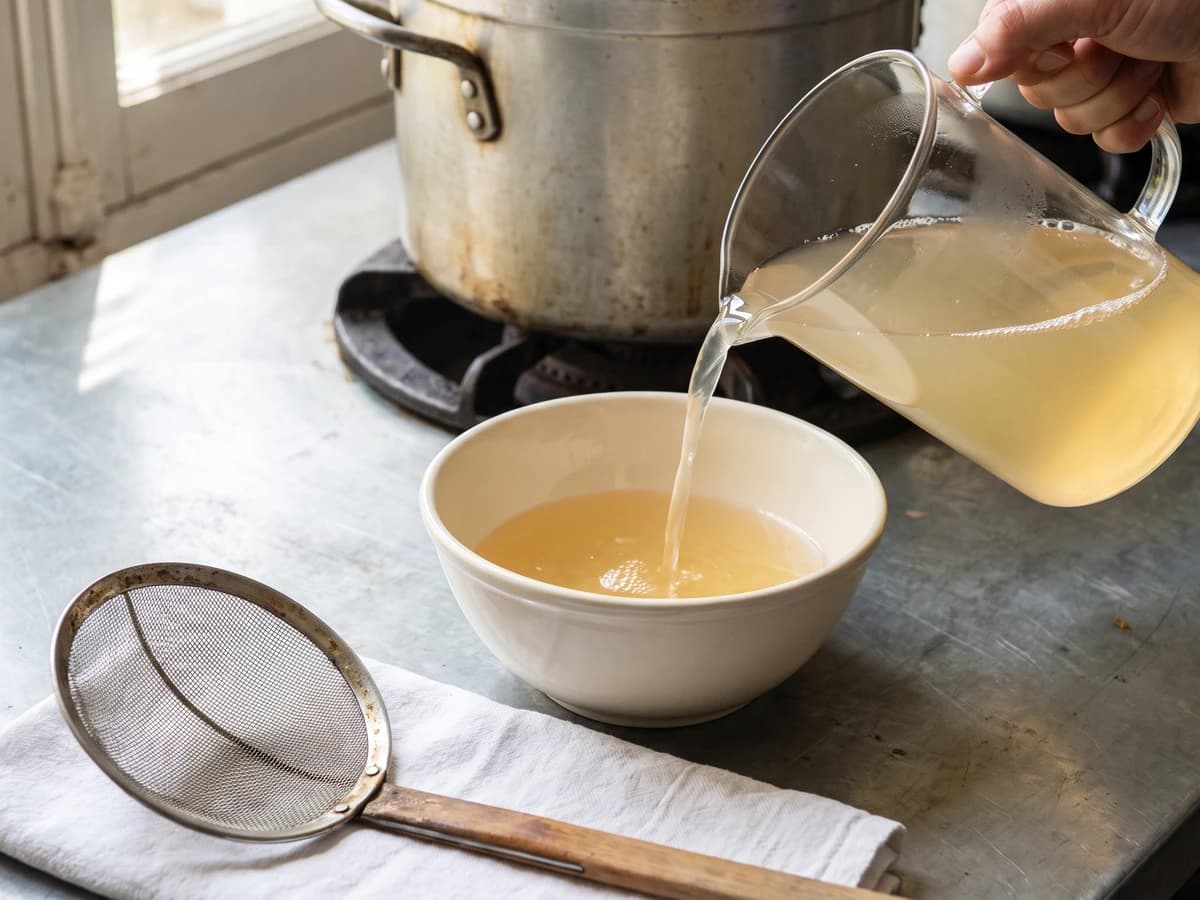
Beef shin, lean beef, and fowl begin in cold water and rise slowly toward a tremble. Skim before the boil, and you learn the quiet discipline that gives every clear French broth its backbone.
A cooking platform built around craft, culture, and the stories behind what we eat.
Created by Chef Juliette
Based on No. 153, Montpellier Butter, from Le Guide Culinaire (1907) by Auguste Escoffier
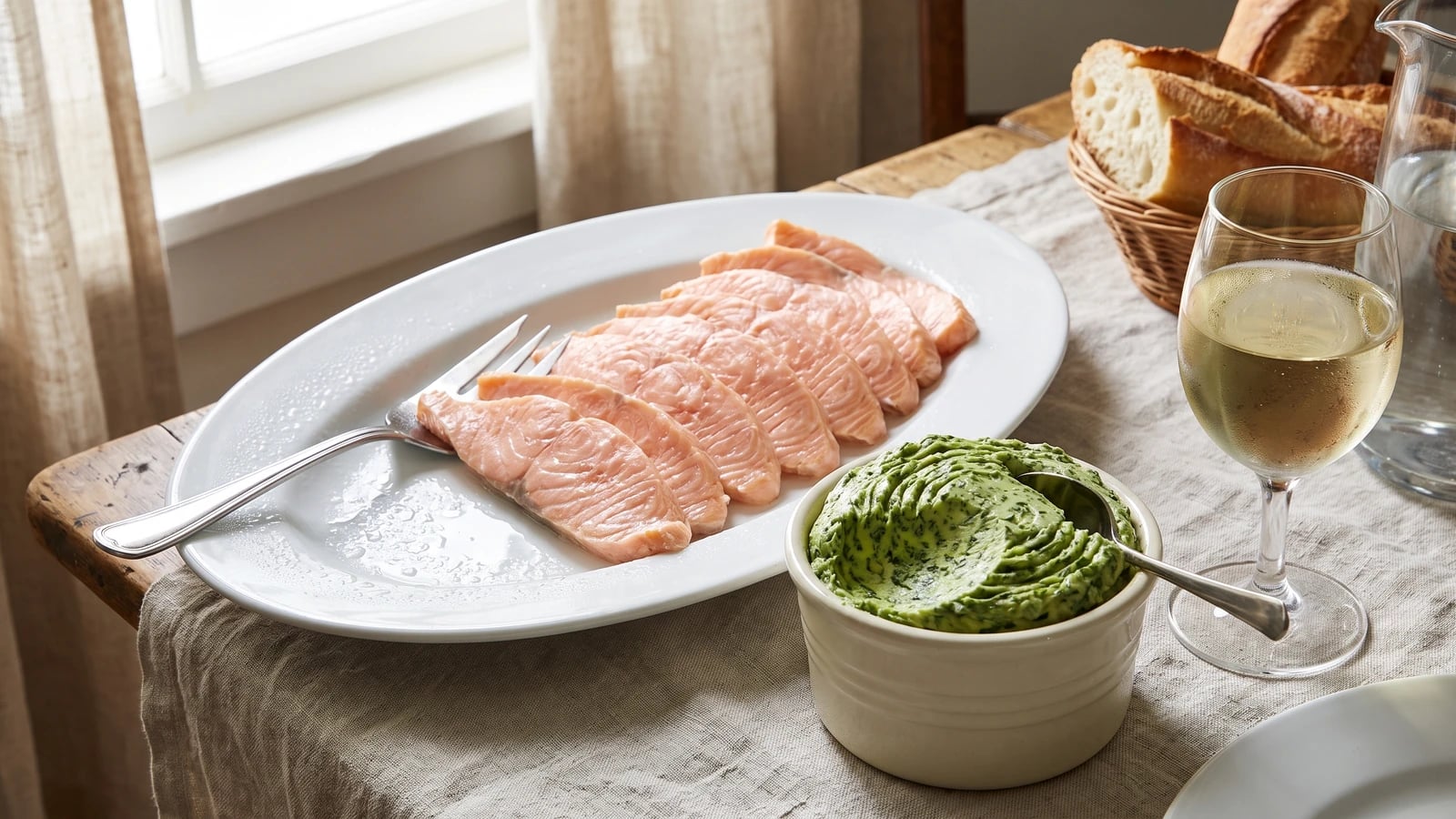
Beurre de Montpellier, bright with five herbs, capers, gherkins, anchovy, and garlic, teaches the cold emulsion: expel every drop of blanching water, then let butter, yolks, and oil become one.
Beurre de Montpellier (Montpellier butter) teaches the cold emulsion: butter can carry herbs, yolks, and oil only when water is kept under command. Before you touch the saucepan, know this one thing: the blanched greens must be wrung nearly dry. Leave water clinging to them and the butter turns loose and dull.
The book's kitchen assumed a saucier on staff, a large mortar, a tammy, and a quantity built to deck several large fish. Here the formula is exactly one-third: a mini processor does the pounding, a fine-mesh sieve replaces the tammy, and eight ounces of butter give a generous dinner-party bowl. Hand-pounding and brigade volume are scaffolding and can go. The two-minute blanch, the hard pressing, the order of butter, yolks, then oil, and the final sieving are the dish, so they stay.
Finished Beurre de Montpellier is vivid green, supple under the spoon, and sharply balanced by anchovy, caper, gherkin, and tarragon. It should hold a soft ridge without leaking oil. One cook, one stove, one evening, but set out a clean towel before you begin, because drying the greens is the step that decides everything.
Beurre de Montpellier bears the name of Montpellier in Languedoc, yet its practical home is the classical garde-manger (cold-kitchen station), where green compound butters decorated cold poached salmon and trout. The preserved bite of capers, gherkins, and anchovy gives the fresh herbs enough force to stand against rich fish, and the preparation traveled from grand cold buffets to bourgeois tables because it could be made ahead. The source preserves an essential distinction often lost: yolks and oil make the butter supple for spooning and decorating, but both are omitted when plain butter must set into a firm coat over a whole fish.
Quantity
1¾ loosely packed cups total (415 ml / 57 g)
leaves picked and weighed in equal quantities
Quantity
2 tablespoons (30 ml / 14 g)
finely chopped
Quantity
¼ loosely packed cup (60 ml / 5 g)
Quantity
1 teaspoon (5 ml / 5 g)
rinsed, drained, and squeezed dry
Quantity
¼ cup (60 ml / 38 g)
chopped
Quantity
⅓ large clove (1 ml / 1 g)
chopped
Quantity
1⅓ fillets (about 7 g)
well rinsed and patted dry
Quantity
1 cup (240 ml / 227 g)
softened but still cool
Quantity
1
hard-boiled, yolk only
Quantity
2 teaspoons (10 ml / 12 g)
beaten; preferably pasteurized
Quantity
5 tablespoons (75 ml / 69 g)
Quantity
⅛ teaspoon (0.6 ml / 0.8 g), plus more as needed
Quantity
1 small pinch, about 1/16 teaspoon (0.3 ml / 0.1 g)
Quantity
2 quarts (1.9 L / 1.9 kg)
for blanching
| Ingredient | Quantity |
|---|---|
| watercress leaves, parsley, chervil, chives, and tarragonleaves picked and weighed in equal quantities | 1¾ loosely packed cups total (415 ml / 57 g) |
| shallotfinely chopped | 2 tablespoons (30 ml / 14 g) |
| spinach leaves | ¼ loosely packed cup (60 ml / 5 g) |
| capersrinsed, drained, and squeezed dry | 1 teaspoon (5 ml / 5 g) |
| gherkinschopped | ¼ cup (60 ml / 38 g) |
| garlicchopped | ⅓ large clove (1 ml / 1 g) |
| anchovy filletswell rinsed and patted dry | 1⅓ fillets (about 7 g) |
| unsalted buttersoftened but still cool | 1 cup (240 ml / 227 g) |
| large egghard-boiled, yolk only | 1 |
| raw egg yolkbeaten; preferably pasteurized | 2 teaspoons (10 ml / 12 g) |
| mild-tasting oil | 5 tablespoons (75 ml / 69 g) |
| fine salt | ⅛ teaspoon (0.6 ml / 0.8 g), plus more as needed |
| cayenne | 1 small pinch, about 1/16 teaspoon (0.3 ml / 0.1 g) |
| waterfor blanching | 2 quarts (1.9 L / 1.9 kg) |
If the cooked yolk isn't ready, place the whole egg in a saucepan, cover it with cold water, and bring it to a gentle boil. Cook for 10 minutes, cool under cold water, peel, and reserve the firm yolk. Beat a preferably pasteurized raw yolk in a small cup and measure 2 teaspoons (10 ml / 12 g); this slightly awkward measure is what preserves the book's proportions in a home-sized batch.
Bring the 2 quarts (1.9 L / 1.9 kg) water to a strong boil in a roomy saucepan. Add the five herbs, chopped shallot, and spinach together, pressing them beneath the water. Boil for exactly 2 minutes, counting from the moment they enter the pan. The blanch softens the fibers, tempers the raw shallot, and sets the butter's clear herb-green character.
Drain the blanched mixture immediately and cool it briefly under cold running water. Gather it in a clean, unscented kitchen towel and twist firmly until no more water falls from the bundle. Open the towel, loosen the greens, then squeeze once more. This is the step that decides the butter: trapped water makes the finished emulsion loose, pale, and weeping.
Put the pressed greens, capers, gherkins, garlic, and anchovy into a mini food processor. Pulse, scrape the sides, and continue until the mixture becomes a very fine, even paste with no obvious strands of herb. A large mortar gives the same result by hand. Don't add oil to help the blades along; the oil belongs later, and the order is part of the emulsion.
Add the softened butter in four additions, processing or pounding each one fully into the herb paste before adding the next. The butter should take a thumbprint but never look melted. Push the hard-boiled yolk through a small sieve into the mixture, work it in completely, then add the measured raw yolk and mix until smooth.
With the processor running at low speed, add the oil first by droplets, then in a slender thread, waiting until each addition disappears before giving the butter more. The mixture should become supple and satin-smooth while still holding its shape. If it slumps and looks greasy, it is too warm; chill it for 5 minutes, then beat again. If oil beads against a stiff, grainy butter, warm the outside of the bowl over barely warm water for 10 seconds and continue beating. Ça se rattrape.
While the butter remains soft, press it through a fine-mesh sieve into a cool bowl, scraping firmly with a flexible spatula. The sieve is the home equivalent of a tammy, and it removes stubborn herb fibers and any remaining anchovy fragments. Stir vigorously with a wooden spoon until glossy and uniform, then season with the salt and cayenne. Taste before adding more salt because the anchovy, capers, and gherkins already bring plenty.
Cover the surface closely and chill for about 30 minutes, just until the Beurre de Montpellier holds rounded spoonfuls without becoming hard. Serve it generously beside cold poached salmon, trout, or smaller slices of cold fish. If refrigerated longer, let it soften for 15 to 20 minutes before serving and stir once to restore its smooth texture. À table!
1 serving (about 43g)
Culinary guides, cultural storytelling, and the editorial depth that makes cooking meaningful.
Discover Culinary ExplorerChef Juliette
Beef shin, lean beef, and fowl begin in cold water and rise slowly toward a tremble. Skim before the boil, and you learn the quiet discipline that gives every clear French broth its backbone.
Chef Juliette
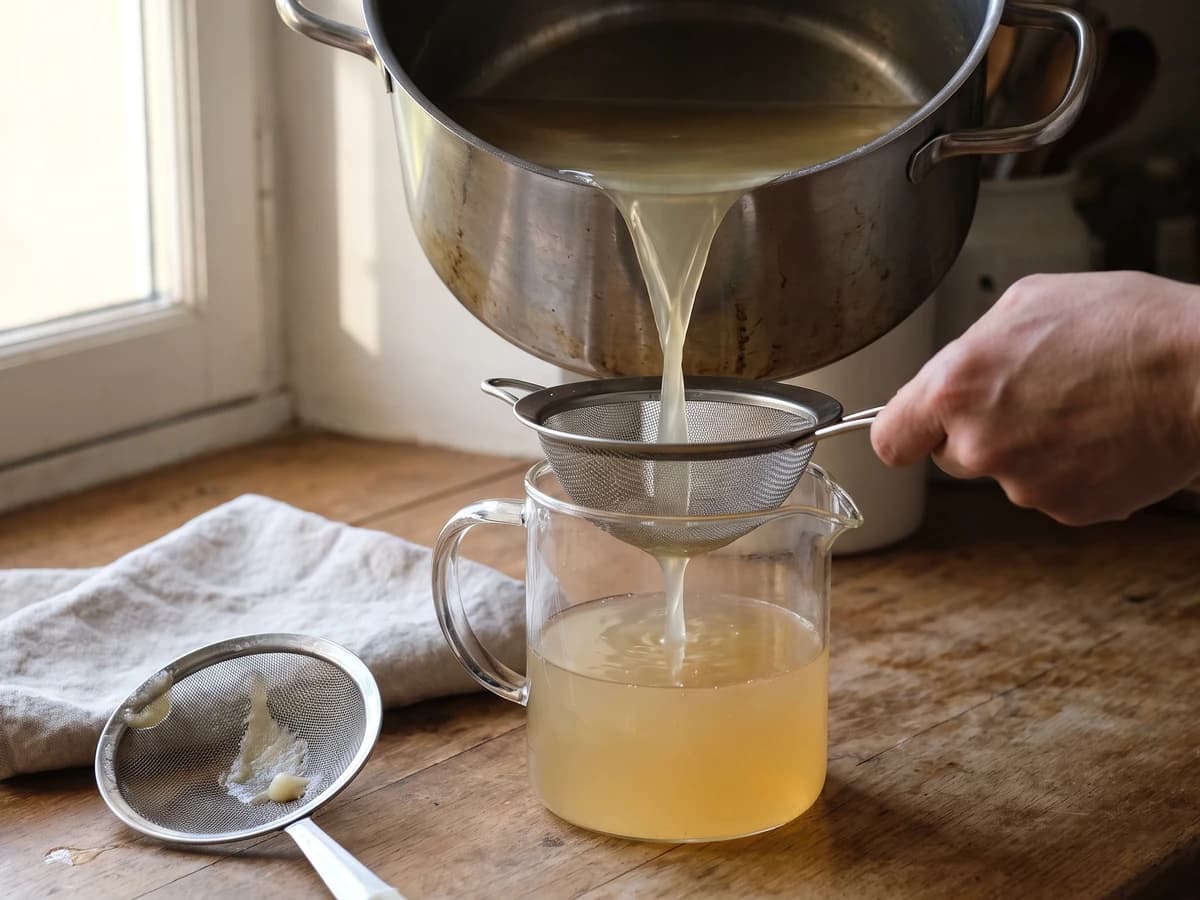
Break the veal bones small, then give them eight hours at a bare tremble. This pale, gelatinous fond becomes the quiet foundation beneath velouté, blanquette, and every sauce that must stay light.
Chef Juliette
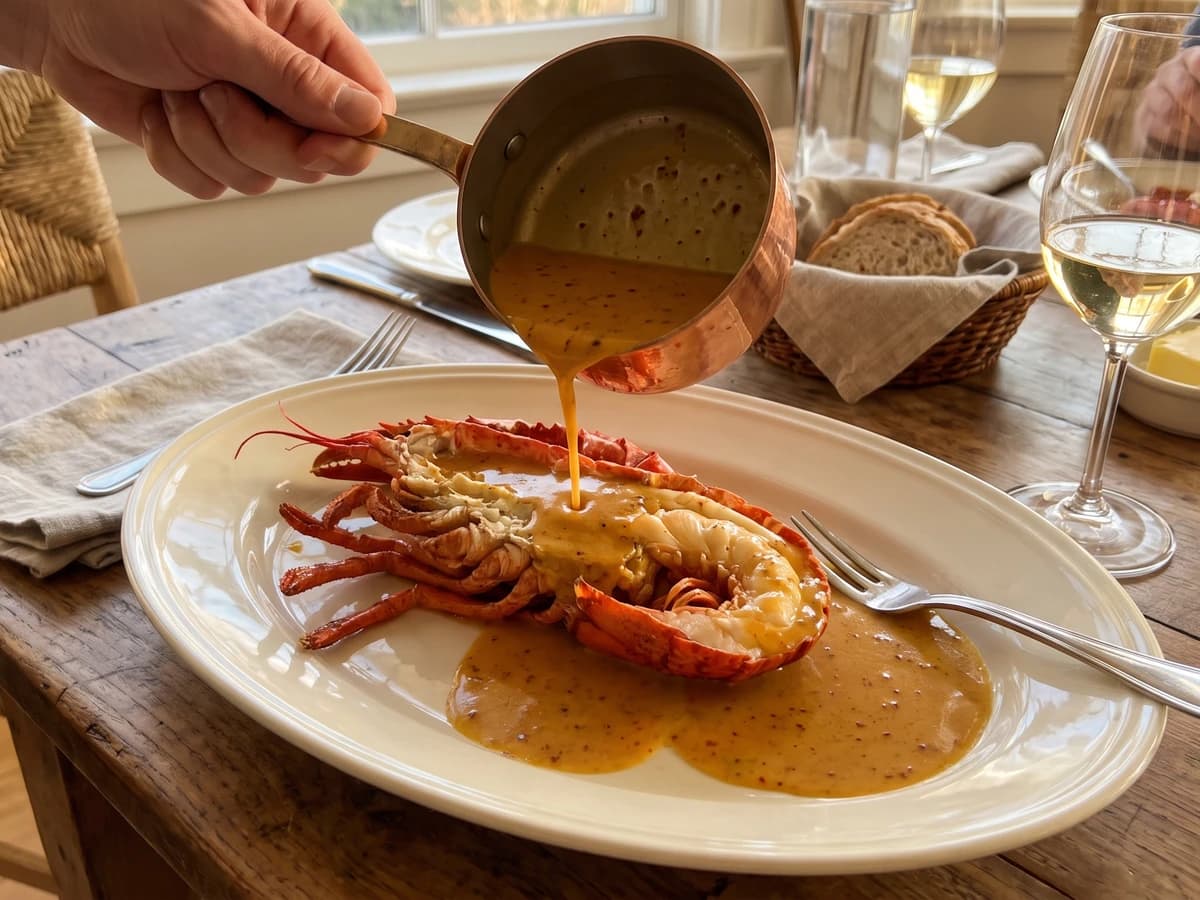
Sauce Orientale concentrates lobster-rich American Sauce with curry, then folds in cream away from the fire: a glossy, gently spiced derivative made for lobster, crayfish, and firm fish.
Chef Juliette
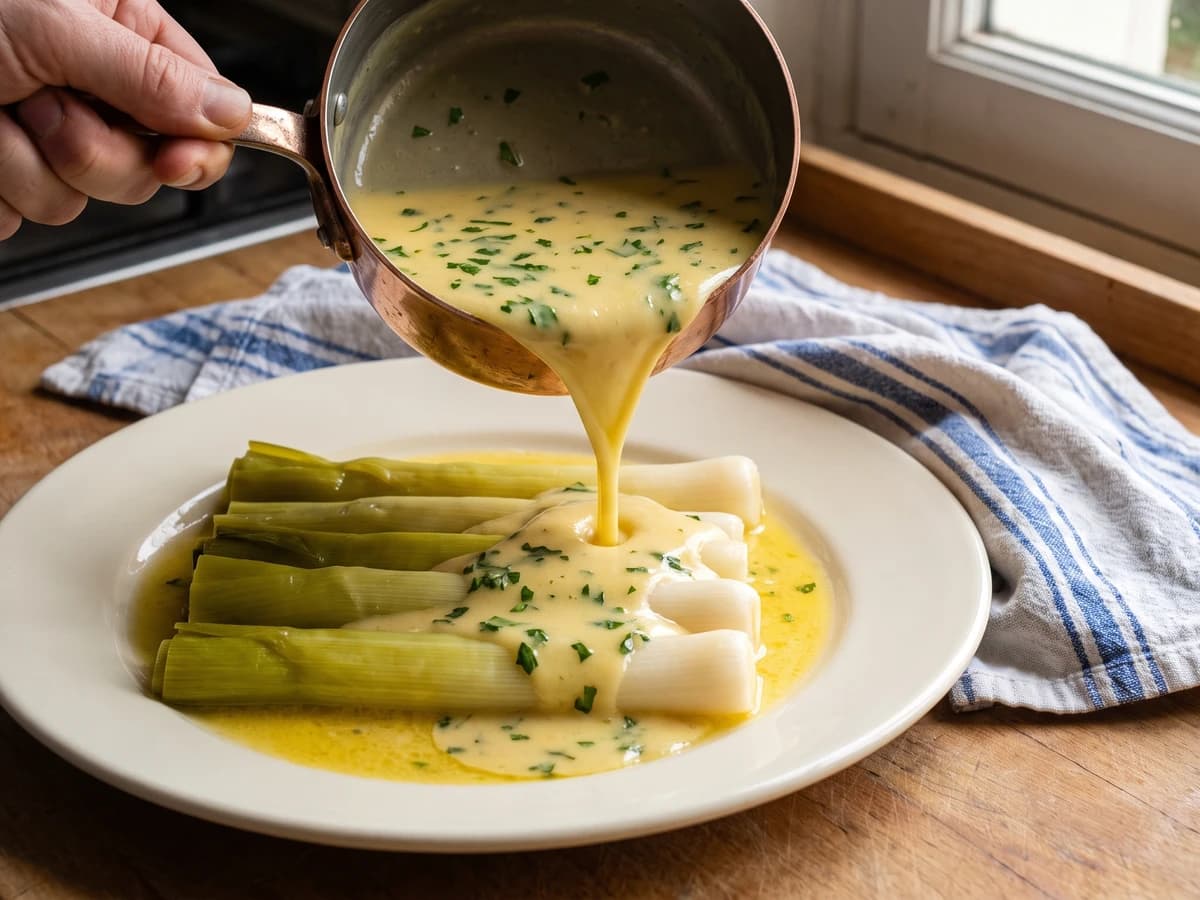
An old lesson in sauce families: Sauce Allemande takes mushroom liquor, then butter, lemon, and parsley, becoming a glossy Poulette for sheep's trotters, leeks, cauliflower, and anything needing gentle richness with a bright edge.