
Chef Juliette
Various Almond Preparations
Five almond preparations, one discipline: remove the skins cleanly, dry every kernel through, then cut, toast, or cloak it in pale caramel without letting its fragrant oils escape.
A cooking platform built around craft, culture, and the stories behind what we eat.
Created by Chef Juliette
Based on No. 2501, Rice Pudding, from Le Guide Culinaire (1907) by Auguste Escoffier
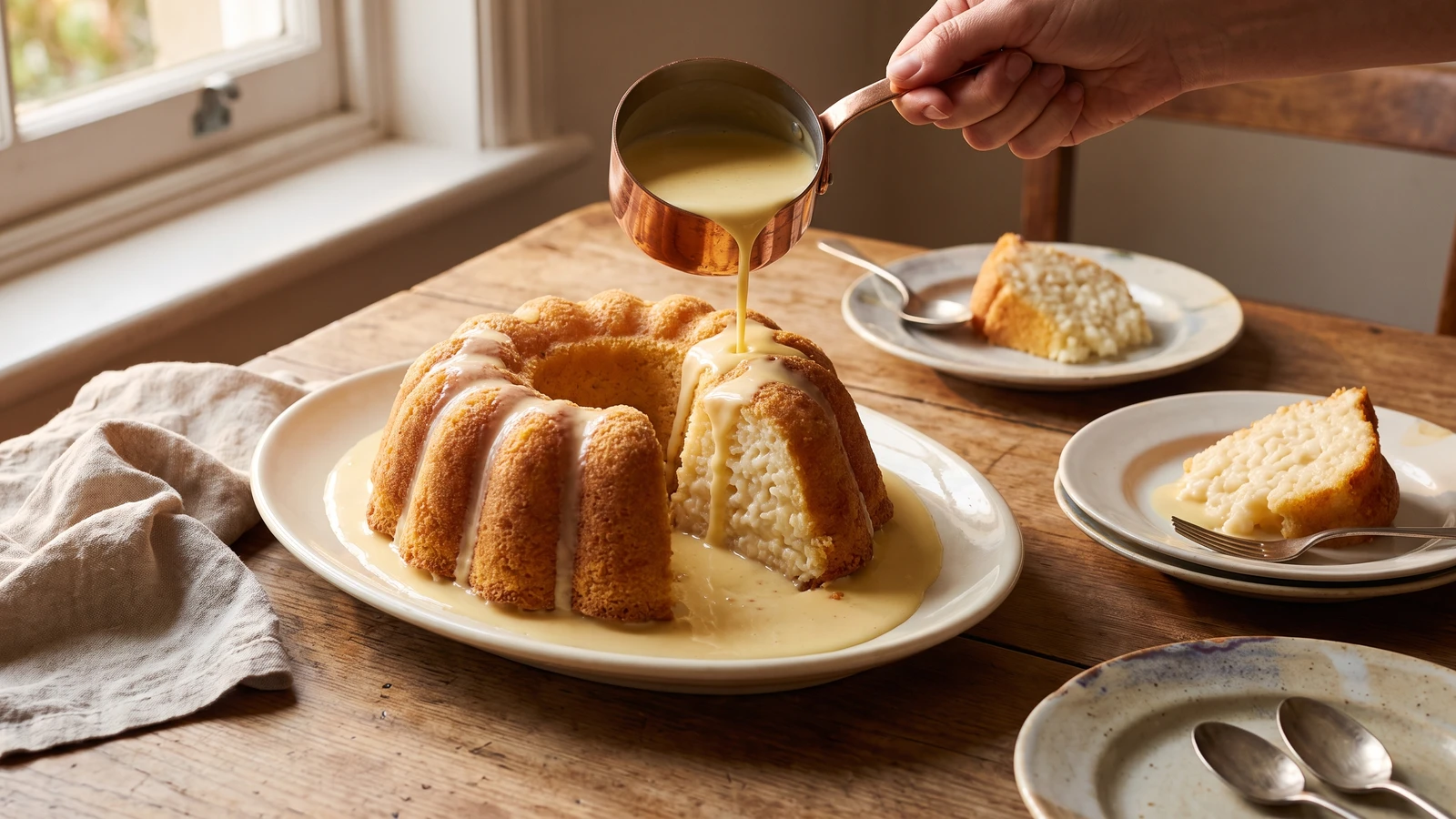
Pouding de riz rises from whole vanilla-scented grains and beaten whites into a tender moulded pudding, butter-gold at the edges and light enough to carry custard, sabayon, or fruit sauce.
Pouding de riz (rice pudding) teaches one true thing before the pan is warm: the grains must remain whole. This is not loose riz au lait. It is a moulded entremets, vanilla-scented rice held tender by yolks, lifted with beaten whites, then poached gently until it gives back beneath a finger. Break the rice by stirring and it sets into paste. Fold with a fork, and the cut slice keeps both lightness and grain.
The original assumes a pound of raw rice, fifteen beaten whites, several moulds, and a brigade able to pass numbered preparations between stations. Here, the scale comes down to a quarter batch of Rice Preparation for Entremets (No. 2404), 112 grams of white measured from four eggs, and one 1-litre mould. The professional run of moulds is scaffolding and can go. The crumb lining, stiff froth, careful fold, and gentle bain-marie remain, because those are the dish. One cook, one stove, one evening.
The links to Tapioca (No. 2493) and Sago Pudding (No. 2494) supply the shared poaching treatment and the same family of accompanying sauces. They are references, not additions, so no tapioca or sago enters this pudding. The fold decides everything. If the whites turn dry or the grains begin to smear, stop where I tell you. Ça se rattrape, but only while you still have the nerve not to stir.
Pouding de riz belongs to the entremets tradition of Parisian bourgeois and grand kitchens, where cooked rice was bound with yolks, lightened with whites, moulded, and served with sauce. It is not the loose, spoonable riz au lait of the family bowl: the breadcrumb-lined mould and bain-marie turn the same grain into a pudding that can be unmoulded and cut. The formula traveled easily to home tables because milk, eggs, sugar, and stale bread raspings made a generous dessert from modest stores.
Quantity
1 home-scale batch (about 2¼ cups / 550 g) Rice Preparation for Entremets (No. 2404), prepared from ¼ lb (113 g) raw rice
flavoured with vanilla
Quantity
7 tablespoons plus 1½ teaspoons (112 ml / 112 g), measured from 4 large egg whites
small remainder reserved
Quantity
1 tablespoon (15 ml / 14 g)
softened, for the mould
Quantity
¼ cup (60 ml / 25 g)
for the mould
Quantity
1 cup (240 ml / 220 to 250 g), chosen as directed for Tapioca (No. 2493) and Sago Pudding (No. 2494)
for serving
| Ingredient | Quantity |
|---|---|
| Rice Preparation for Entremetsflavoured with vanilla | 1 home-scale batch (about 2¼ cups / 550 g) Rice Preparation for Entremets (No. 2404), prepared from ¼ lb (113 g) raw rice |
| large egg whitessmall remainder reserved | 7 tablespoons plus 1½ teaspoons (112 ml / 112 g), measured from 4 large egg whites |
| unsalted buttersoftened, for the mould | 1 tablespoon (15 ml / 14 g) |
| fine dry bread raspings or plain breadcrumbsfor the mould | ¼ cup (60 ml / 25 g) |
| crème anglaise, sabayon, or fruit sauce (optional)for serving | 1 cup (240 ml / 220 to 250 g), chosen as directed for Tapioca (No. 2493) and Sago Pudding (No. 2494) |
Have the vanilla-flavoured Rice Preparation for Entremets (No. 2404) finished and its grains intact. If it has just been made, spread it gently in a wide bowl and leave it until barely warm; a hot base cooks the whites on contact. If it was chilled, let it lose its chill naturally and lift it once or twice with a fork to make it supple. Do not beat or stir it smooth. Smooth rice is precisely what this pudding must not become.
Heat the oven to 325°F (160°C). Butter a 1-litre cylinder, charlotte, or brioche mould generously, reaching into every ridge and corner. Add the bread raspings, turn the mould until they coat the butter evenly, then tap out the loose excess. The lining gives the delicate pudding a dry butter-gold skin and enough structure to leave the mould cleanly.
Put the measured 112 grams of egg white in a spotless bowl, keeping the small unmeasured remainder nearby. Whisk until the whites hold stiff, glossy peaks. The source asks for a stiff froth, not a dry heap. If they become dull, clumpy, or difficult to lift, stop. Ça se rattrape: add the reserved raw white and whisk only until the mixture turns glossy and supple again.
Add one quarter of the beaten whites to the rice and lift through it with a large fork to loosen the base. Add the remaining whites in two portions, cutting down through the centre, lifting rice from the bottom, and turning the bowl after each stroke. Never stir around the bowl. Stop as soon as no large pockets of white remain; a few fine streaks are safer than broken grains. If the rice begins smearing against the bowl, stop folding and mould it at once. The pudding may be slightly denser, but forcing it further is how paste happens.
Spoon the mixture lightly into the prepared mould without pressing it down, then level the top with two or three strokes of the fork. Set the mould in a deep roasting pan and pour hot water around it to reach halfway up the sides. This bain-marie, a gentle water bath, is the poaching treatment specified for Tapioca (No. 2493) and carried through Sago Pudding (No. 2494). Bake for 35 to 45 minutes, until the pudding is risen, resilient beneath a light fingertip, and no longer liquid at the centre. If the top colours too quickly, lay a loose sheet of parchment over it.
Lift the mould from the water and let the pudding stand for 7 to 8 minutes, exactly long enough for its structure to settle without fastening itself to the mould. Run a thin knife only around the upper edge, cover with a warm serving plate, and invert decisively. If it clings, wrap the mould in a warm damp towel for 30 seconds and try again. Serve with crème anglaise, sabayon, or fruit sauce, following the accompaniments named for Tapioca (No. 2493) and Sago Pudding (No. 2494). À table!
1 serving (about 165g)
Culinary guides, cultural storytelling, and the editorial depth that makes cooking meaningful.
Discover Culinary ExplorerChef Juliette
Five almond preparations, one discipline: remove the skins cleanly, dry every kernel through, then cut, toast, or cloak it in pale caramel without letting its fragrant oils escape.

Chef Juliette
A pastry pantry lesson in one tray: filberts warmed only until their red skins release, rubbed clean, cooled, and chopped into a fragrant mise-en-place for cakes, creams, pralines, and petits fours.

Chef Juliette
The smallest pâtisserie discipline decides whether a cake leaves its mould intact: clarified butter in every corner, followed by the lightest veil of dry flour or fécule.

Chef Juliette
Four whites, one spotless bowl, and a patient change of speed: whisk gently until loosened, then briskly to glossy stiffness, with powdered sugar waiting if the foam begins to granulate.