
Chef Juliette
Various Almond Preparations
Five almond preparations, one discipline: remove the skins cleanly, dry every kernel through, then cut, toast, or cloak it in pale caramel without letting its fragrant oils escape.
A cooking platform built around craft, culture, and the stories behind what we eat.
Created by Chef Juliette
Based on No. 2493, Tapioca, from Le Guide Culinaire (1907) by Auguste Escoffier
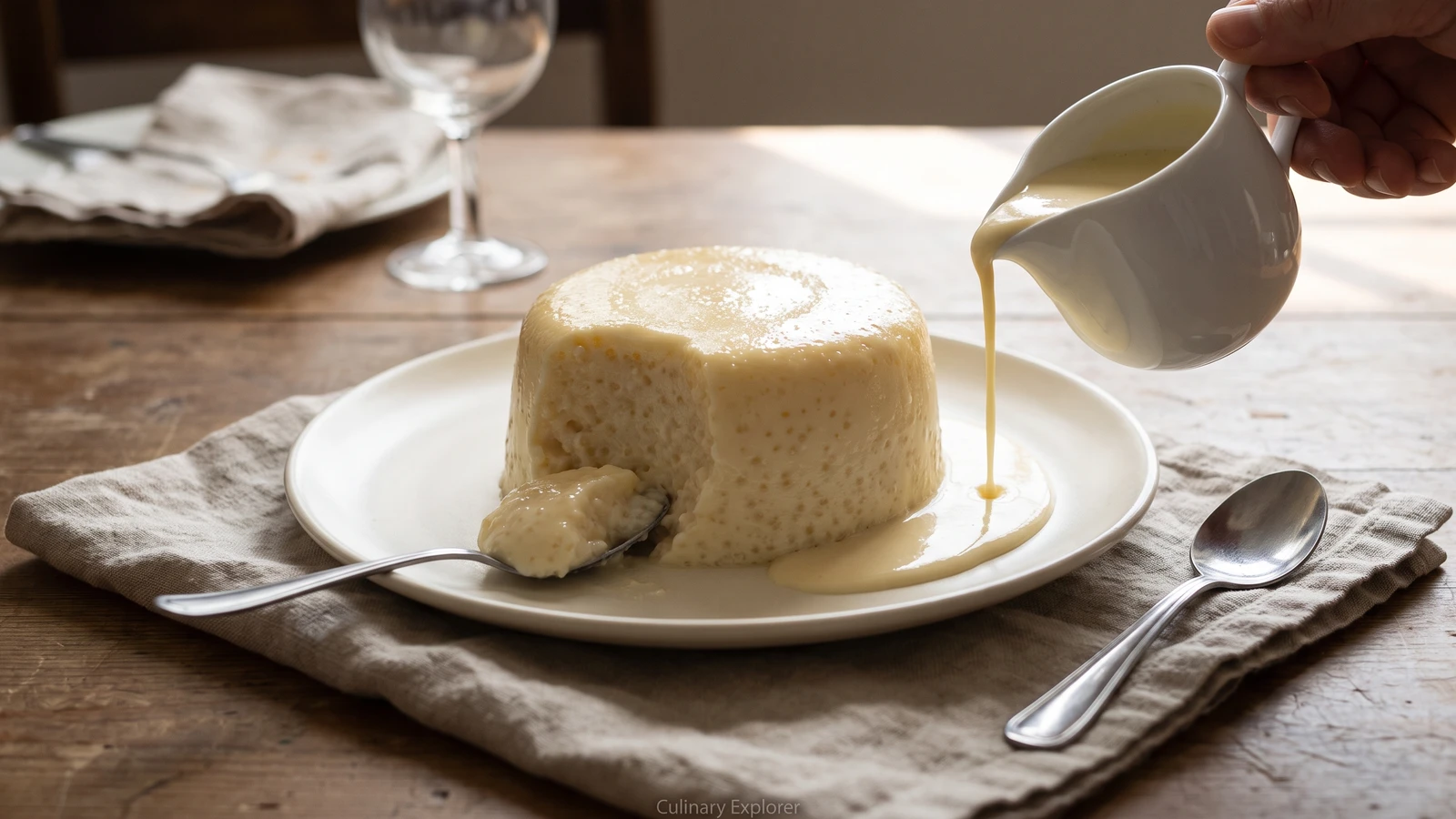
A modest tapioca pudding with the full grammar of a soufflé: milk-swollen pearls, yolks for richness, whites for lift, and a gentle bain-marie that sets it just firm enough to turn out.
Tapioca au lait moulé (moulded milk tapioca pudding) teaches one true thing: the tapioca must be completely tender before the eggs enter. The bain-marie can set yolks and preserve the lift of whipped whites, but it cannot soften a chalky pearl trapped inside the finished pudding.
The old formula assumes a generous cylinder mould and a cook able to move the hot base into a second saucepan before the eggs arrive. For four, I halve every stated quantity, use a 1-liter charlotte mould or straight-sided pudding basin, and transfer the base to a cool heatproof bowl. The second saucepan is brigade scaffolding; the transfer itself stays because dropping the residual heat protects the yolks. A roasting tin becomes the bain-marie (hot-water bath). One cook, one stove, one evening.
When it is right, the pudding turns out in one pale, softly resilient cylinder, rich with butter yet lightened by the whites, with tiny translucent beads catching beneath its surface. Cook the tapioca until no chalky center remains before you touch the eggs. That is the step that decides the dish.
Tapioca's French home is the bourgeois dessert table and the codified grand-kitchen repertory of entremets, rather than any single province. Cassava starch traveled from South America into European pantries as granules prized for swelling gently, and French cooks used it in both potages and sweet milk preparations. This moulded version gives the pantry pudding a more formal shape, enriching it with yolks and lifting it with whipped whites while preserving its comforting simplicity.
Quantity
scant ¾ cup (170 ml / 113 g)
Quantity
2 cups plus 1 tablespoon (500 ml / 515 g)
Quantity
¼ cup plus 1 teaspoon (65 ml / 57 g)
Quantity
⅛ teaspoon (0.6 ml / 0.8 g)
Quantity
3 tablespoons (45 ml / 43 g)
Quantity
3
Quantity
2½ tablespoons (37 ml / 35 g)
cut into small pieces
Quantity
2
Quantity
1 teaspoon (5 ml / 5 g)
softened
Quantity
1 teaspoon (5 ml / 3 g)
| Ingredient | Quantity |
|---|---|
| quick-cooking granulated tapioca, very small pearls | scant ¾ cup (170 ml / 113 g) |
| whole milk | 2 cups plus 1 tablespoon (500 ml / 515 g) |
| granulated sugar | ¼ cup plus 1 teaspoon (65 ml / 57 g) |
| fine salt | ⅛ teaspoon (0.6 ml / 0.8 g) |
| unsalted butter | 3 tablespoons (45 ml / 43 g) |
| large egg yolks | 3 |
| unsalted buttercut into small pieces | 2½ tablespoons (37 ml / 35 g) |
| large egg whites | 2 |
| unsalted butter for the mouldsoftened | 1 teaspoon (5 ml / 5 g) |
| quick-cooking granulated tapioca for the mould | 1 teaspoon (5 ml / 3 g) |
Heat the oven to 350°F (180°C). Butter a 1-liter charlotte mould or straight-sided heatproof pudding basin thoroughly, reaching into every corner, then sprinkle in the teaspoon of tapioca and turn the mould until the base and sides are lightly coated. Tap out any loose excess. Set a kettle of water to heat for the later bain-marie.
Bring the milk, sugar, salt, and 3 tablespoons of butter to a full boil in an ovenproof saucepan, stirring so the sugar dissolves without catching. Sprinkle in the tapioca in a slow rain while whisking; dumping it in at once makes knots that stay hard at their centers. Return the mixture just to the boil, then place the uncovered saucepan in the oven for 20 minutes, stirring once halfway through. The mixture is ready when it is thick, the grains are swollen, and no chalky white centers remain. If the tapioca is still firm, give it another 5 minutes in the oven before proceeding.
Transfer the hot tapioca to a clean heatproof mixing bowl and let it stand for 3 minutes. Whisk the yolks together in a small bowl, stir in a large spoonful of the tapioca to temper them, then whisk this mixture back into the pudding. Add the 2½ tablespoons of butter piece by piece and stir until it disappears into a glossy emulsion. If yellow threads begin to form, stop the heat immediately, whisk in the cool butter, and set the bowl briefly over cool water. Ça se rattrape if you catch the yolks before they curdle fully.
Lower the oven to 325°F (165°C). Beat the egg whites in a perfectly clean bowl until they hold stiff but still glossy peaks. Stir one-third of the whites into the warm tapioca to loosen its weight, then fold in the remainder with broad strokes from the bottom of the bowl. Stop as soon as no large white pockets remain. The whites are the lift, so fold with attention, not force.
Spoon the mixture into the prepared mould and smooth the top lightly without pressing out the air. Set the mould in a deep roasting tin, then pour boiling water into the tin until it reaches halfway up the mould. Bake in this Bain-Marie for 35 to 45 minutes, until the top springs back under a light fingertip and the center reaches at least 160°F (71°C). The water should quiver, never boil hard; if it begins bubbling fiercely, add a little cool water to the roasting tin and lower the oven slightly.
Lift the mould from the water and leave the pudding undisturbed for 8 minutes. This short stand lets the egg structure settle enough to hold while remaining tender. Run a thin knife around the edge, place a warm serving plate over the mould, and invert them together. If the pudding clings, wrap the mould in a hot damp towel for 30 seconds and try again. Never shake it into submission.
Serve the tapioca warm, accompanied as the classical entry directs by English custard, sabayon, or a tart fruit sauce. Spoon the chosen sauce around the pudding rather than drowning its softly beaded surface. À table!
1 serving (about 200g)
Culinary guides, cultural storytelling, and the editorial depth that makes cooking meaningful.
Discover Culinary ExplorerChef Juliette
Five almond preparations, one discipline: remove the skins cleanly, dry every kernel through, then cut, toast, or cloak it in pale caramel without letting its fragrant oils escape.

Chef Juliette
A pastry pantry lesson in one tray: filberts warmed only until their red skins release, rubbed clean, cooled, and chopped into a fragrant mise-en-place for cakes, creams, pralines, and petits fours.

Chef Juliette
The smallest pâtisserie discipline decides whether a cake leaves its mould intact: clarified butter in every corner, followed by the lightest veil of dry flour or fécule.

Chef Juliette
Four whites, one spotless bowl, and a patient change of speed: whisk gently until loosened, then briskly to glossy stiffness, with powdered sugar waiting if the foam begins to granulate.