
Chef Juliette
Various Almond Preparations
Five almond preparations, one discipline: remove the skins cleanly, dry every kernel through, then cut, toast, or cloak it in pale caramel without letting its fragrant oils escape.
A cooking platform built around craft, culture, and the stories behind what we eat.
Created by Chef Juliette
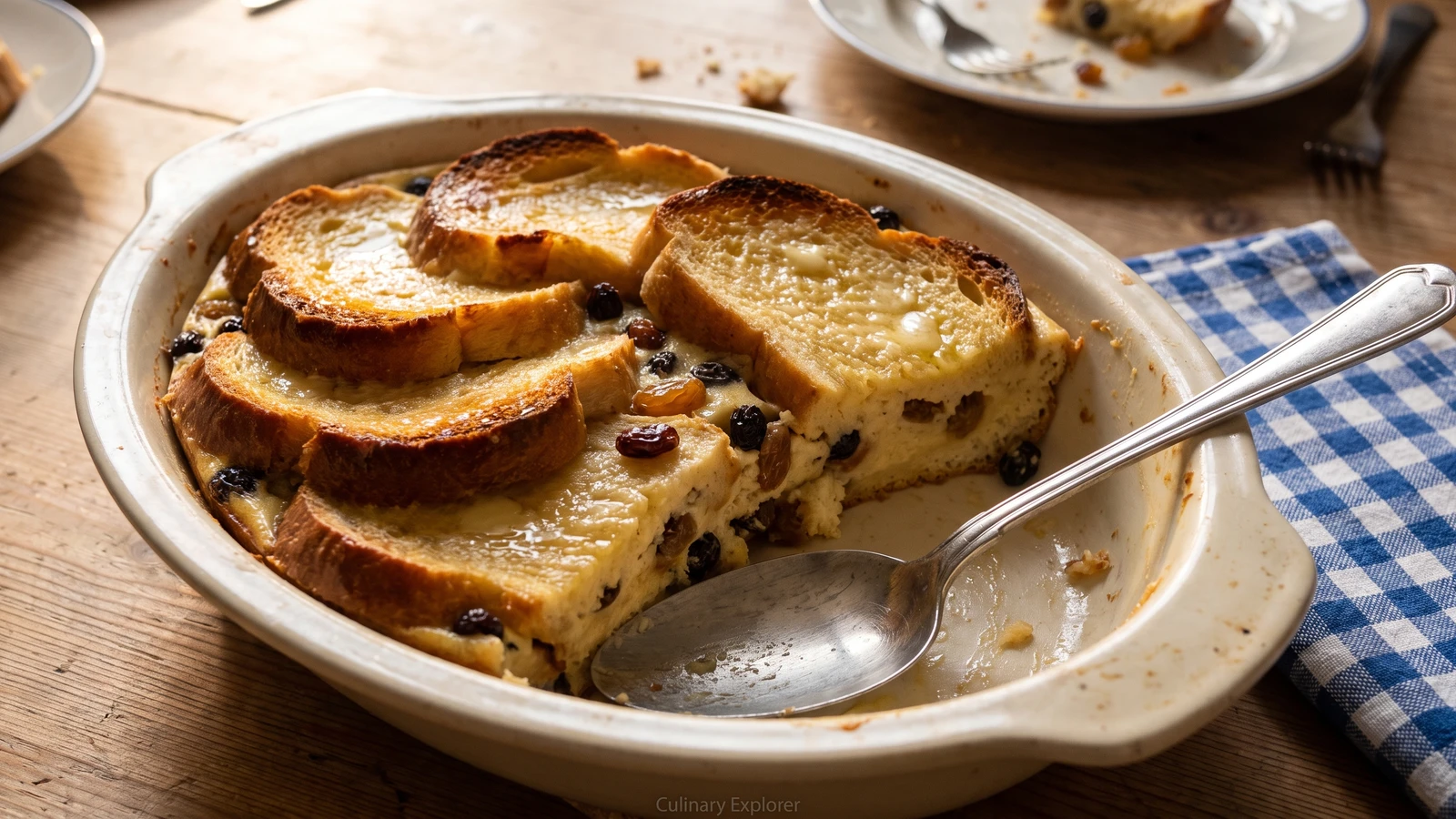
Based on No. 2489, English Bread Pudding, from Le Guide Culinaire (1907) by Auguste Escoffier
Butter each slice, swell the fruit, and let a shallow bain-marie do its quiet work: this economical custard pudding rewards patience with tender crumb and a softly set centre.
Pouding de pain à l’anglaise teaches the central rule of custard puddings: control where the liquid goes. The thin bread must drink deeply, while the currants and sultanas must arrive already plump. Put them in dry and they steal the custard, leaving the pudding close and thirsty instead of tender.
The source assumes Creams (No. 2638) ready from its own preparation and a range oven with a gentler zone at the front, not a saucier, stockpot, or salamander. Your honest equivalent is a shallow bain-marie (water bath) in a low oven. Because the source gives no household quantity, this version fixes a practical ratio of 180 grams bread to 600 millilitres custard in one pie dish. The undefined service batch and oven-side tending are scaffolding; they can go. The buttered crumb, swollen fruit, and gentle poach are the dish, so they stay. One cook, one stove, one evening.
Finished properly, the top is butter-gold at its edges, the currants and sultanas sit plump between soft layers, and the centre yields under a serving spoon without running. Swell and drain the fruit before anything else. That quarter-hour soak decides the pudding.
Pouding de pain à l’anglaise belongs first to the English domestic table, where buttered bread, dried vine fruit, and egg custard turned a modest loaf into a substantial family pudding. French classical kitchens received it under the label à l’anglaise and placed it among the entremets, preserving the English buttered slices and currants while expressing the liquid through their custard system. Serving it in its pie dish is not an inferior form of molded custard; the French canon treats custards cooked in their own receptacles as especially delicate because they require fewer eggs.
Quantity
8 thin slices (about 6½ oz / 180 g)
crusts removed
Quantity
4 tablespoons (60 ml / 57 g)
softened
Quantity
⅓ cup (80 ml / 50 g)
Quantity
⅓ cup (80 ml / 50 g)
Quantity
2 cups (480 ml / 480 g)
for swelling the fruit
Quantity
2½ cups (600 ml / about 620 g) Creams (No. 2638)
prepared according to its own entry and ready for poaching
Quantity
about 6 cups (1.4 litres / 1.4 kg)
for the bain-marie
| Ingredient | Quantity |
|---|---|
| day-old fine-crumb white breadcrusts removed | 8 thin slices (about 6½ oz / 180 g) |
| unsalted buttersoftened | 4 tablespoons (60 ml / 57 g) |
| dried currants | ⅓ cup (80 ml / 50 g) |
| sultanas | ⅓ cup (80 ml / 50 g) |
| tepid waterfor swelling the fruit | 2 cups (480 ml / 480 g) |
| Creamsprepared according to its own entry and ready for poaching | 2½ cups (600 ml / about 620 g) Creams (No. 2638) |
| hot waterfor the bain-marie | about 6 cups (1.4 litres / 1.4 kg) |
Combine the currants and sultanas in a bowl, cover them with the tepid water, and leave them for 15 minutes, until they look full and feel pliant rather than leathery. Drain them thoroughly in a fine sieve, then spread them on a clean towel and blot away the surface water. If the fruit still feels hard, ça se rattrape: soak it for another five minutes and drain again. Dry fruit keeps drinking after assembly and steals the custard from the bread; swollen, well-drained fruit does not.
Heat the oven to 325°F (160°C) with a rack in the middle. Butter one face of every bread slice from edge to edge, using the full measure and leaving no dry corners. Cut the slices only as needed to fit the pie dish; keep them broad rather than reducing them to cubes, because the source builds this pudding from distinct buttered layers.
Distribute the drained currants and sultanas evenly over the buttered faces. Arrange the slices in the pie dish in two loose, overlapping layers, buttered sides up, tucking fruit between them rather than letting it collect on the bottom. Don't pack the bread tightly. The custard needs a path around every slice.
Pour the prepared Creams (No. 2638) slowly around and over the bread in three additions, pausing between each so the crumb can absorb it. Press the upper slices gently beneath the surface with the back of a spoon, then leave the dish for 10 minutes. If dry corners rise again, spoon custard from the edges over them and press once more. Don't loosen the preparation with extra milk; the linked custard already carries its own balance.
Set a deep roasting pan on the oven rack and place the pie dish inside it. Pour the hot water into the outer pan until it reaches halfway up the pie dish, taking care not to splash the pudding. Bake for 35 to 45 minutes. The water should barely quiver, never bubble hard, and the pudding is ready when its edges are set, its top is lightly golden, and the centre still gives a soft tremble when nudged. If the bath begins bubbling or the edges set while the centre remains liquid, lower the oven to 300°F (150°C) and open the door for one minute. Ça se rattrape. If the bread darkens too quickly, cover it loosely with foil while the custard finishes.
Rest the pudding for 10 minutes so the custard finishes settling into the bread. Serve it warm directly from the pie dish with a broad spoon; this is a soft pudding, not a molded one, and perfect slices are beside the point. À table!
1 serving (about 250g)
Culinary guides, cultural storytelling, and the editorial depth that makes cooking meaningful.
Discover Culinary ExplorerChef Juliette
Five almond preparations, one discipline: remove the skins cleanly, dry every kernel through, then cut, toast, or cloak it in pale caramel without letting its fragrant oils escape.

Chef Juliette
A pastry pantry lesson in one tray: filberts warmed only until their red skins release, rubbed clean, cooled, and chopped into a fragrant mise-en-place for cakes, creams, pralines, and petits fours.

Chef Juliette
The smallest pâtisserie discipline decides whether a cake leaves its mould intact: clarified butter in every corner, followed by the lightest veil of dry flour or fécule.

Chef Juliette
Four whites, one spotless bowl, and a patient change of speed: whisk gently until loosened, then briskly to glossy stiffness, with powdered sugar waiting if the foam begins to granulate.