Chef Juliette
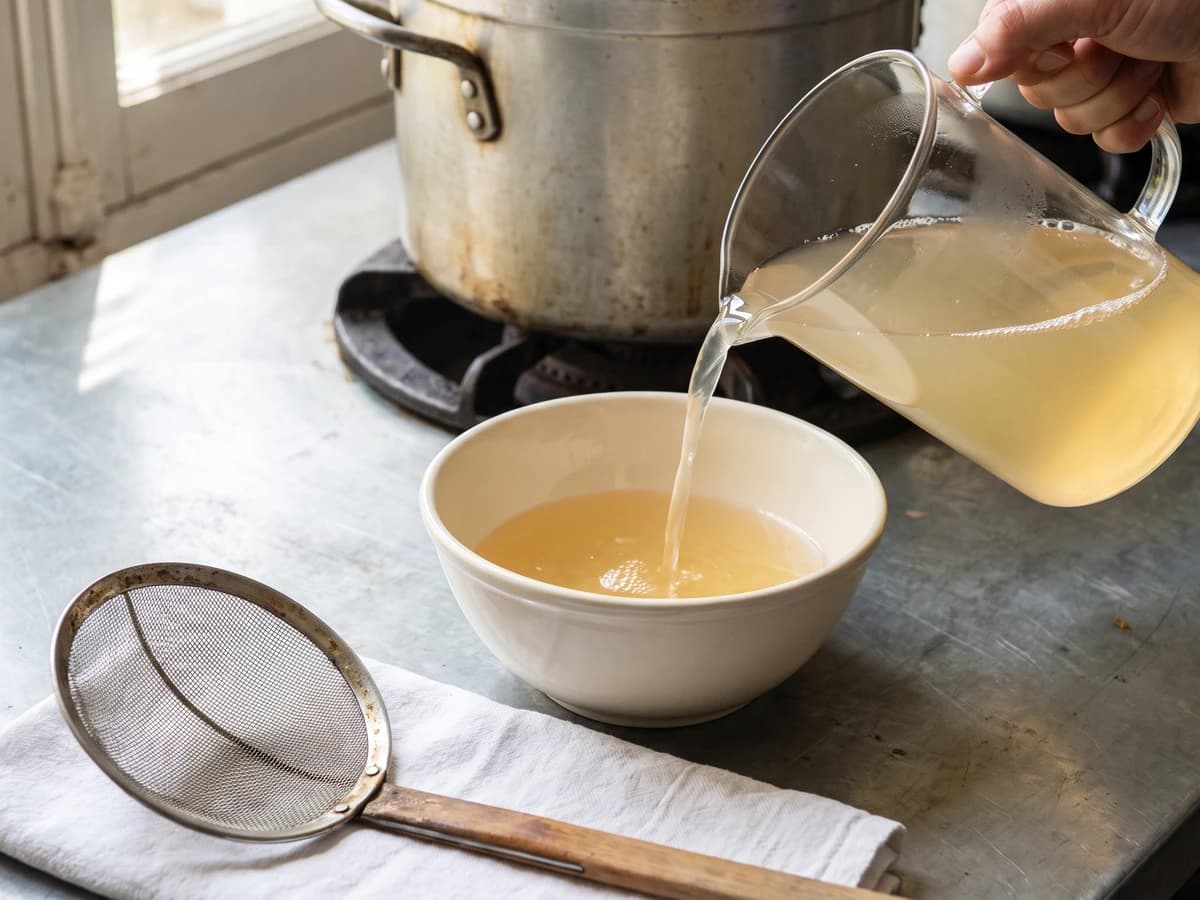
Ordinary or White Consommé
Beef shin, lean beef, and fowl begin in cold water and rise slowly toward a tremble. Skim before the boil, and you learn the quiet discipline that gives every clear French broth its backbone.
A cooking platform built around craft, culture, and the stories behind what we eat.
Created by Chef Juliette
Based on No. 226, Maintenon (preparation used in stuffing preparations à la Maintenon), from Le Guide Culinaire (1907) by Auguste Escoffier
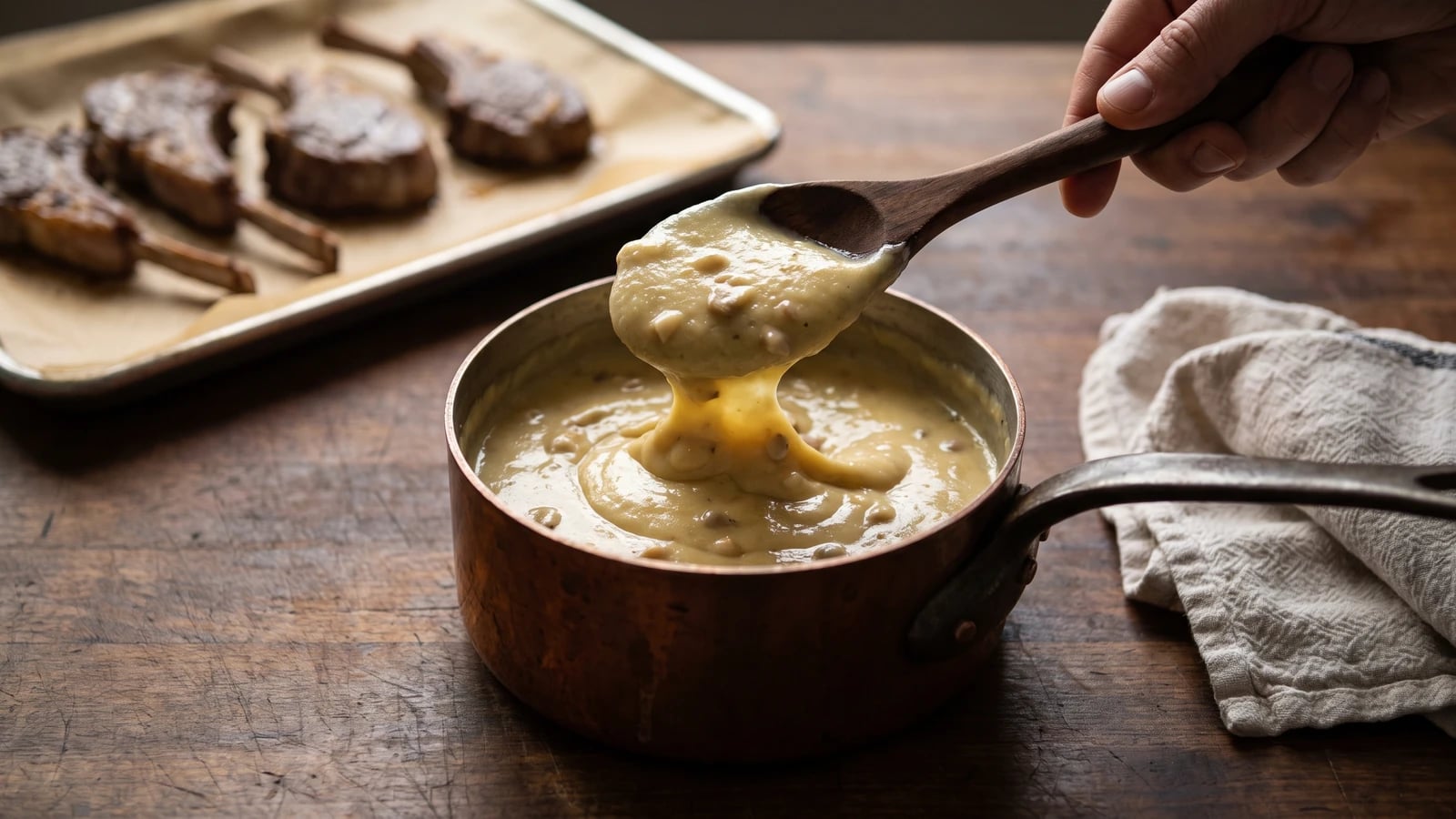
Maintenon turns two finished sauces into a dense, mushroom-studded stuffing: reduce them by half, bind them off the heat with yolks, and it will stay where a breaded côtelette needs it.
Maintenon (a dense Béchamel and Soubise stuffing) teaches one uncompromising principle: make the body through reduction before the yolks go in. The yolks bind and enrich, but they cannot rescue a loose base. Properly made, Maintenon falls from the spoon in glossy folds, chills to a spreadable paste, and stays against the côtelettes instead of escaping into the pan.
The grand kitchen assumed a saucier tending finished parent sauces beside a stockpot that never cooled, with a salamander waiting to finish the assembled chops. Your honest equivalents are prepared Béchamel, Soubise Sauce (No. 104), a heavy two-quart saucepan, and an ordinary broiler when the full côtelette recipe eventually calls for it. This formula is scaled to roughly five-eighths of the brigade measure, enough for four chops, with only the yolks rounded to a practical whole number. One cook, one stove, one evening.
Making the two parent sauces inside this preparation was work the brigade had already completed, so reach for them finished and leave their separate methods whole. That is scaffolding. The brisk reduction, the off-heat liaison, and the dry mushrooms are the dish itself. Reduce the combined sauces to half their measured volume before touching the yolks; this is the step that decides everything.
Maintenon belongs to the Parisian grand-kitchen repertory of named preparations, and its title points to Madame de Maintenon rather than to a regional larder. For côtelettes, the name denotes an appareil, a binding mixture, of reduced white sauces, yolks, and mushrooms rather than a pourable table sauce; its dense structure also made it useful in bourgeois kitchens where breaded chops could be assembled ahead of the meal.
Quantity
1¼ cups (300 ml / 300 g)
warm
Quantity
1 cup (240 ml / 80 g), to yield 2½ tablespoons (38 ml / 38 g) cooked
very finely minced
Quantity
2 teaspoons (10 ml / 10 g)
Quantity
3 large egg yolks (about 3 tablespoons / 45 ml / 50 g)
| Ingredient | Quantity |
|---|---|
| finished thick Béchamelwarm | 1¼ cups (300 ml / 300 g) |
| Soubise Saucewarm | ⅝ cup (150 ml / 155 g) Soubise Sauce (No. 104) |
| small button mushroomsvery finely minced | 1 cup (240 ml / 80 g), to yield 2½ tablespoons (38 ml / 38 g) cooked |
| unsalted butter | 2 teaspoons (10 ml / 10 g) |
| large egg yolks | 3 large egg yolks (about 3 tablespoons / 45 ml / 50 g) |
Melt the butter in the saucepan over medium-low heat. Add the mushrooms and étuver, stew them gently in butter, stirring often for 6 to 8 minutes. Keep them pale and cook until their released liquid has disappeared completely; the spoon should leave a dry path across the pan. Measure 2½ tablespoons (38 ml / 38 g) of cooked mushrooms and set them aside. If they still glisten with water, keep cooking. Do not add crumbs to absorb it, because mushroom moisture must leave the pan rather than enter the stuffing.
Combine the Béchamel and Soubise Sauce (No. 104) in the clean heavy saucepan. Bring them to active bubbling over medium-high heat and stir continuously with a flat-ended spoon, scraping the base and corners. Reduce the measured 450 ml to 225 ml, about 12 to 18 minutes. Check the volume in a heatproof measuring jug rather than trusting the clock: the reduction should fall in heavy folds, and a channel drawn across the pan should remain open for several seconds. If you have more than 225 ml, return it to the heat. If you have gone below the mark, whisk in hot water a teaspoon at a time until the volume is restored. Ça se rattrape.
Take the saucepan completely off the heat and let the bubbling subside for 1 minute. Whisk the yolks smooth in a heatproof bowl, then gradually whisk in about ¼ cup (60 ml) of the hot reduction to temper them. Whisk this liaison, the yolk thickening, back into the saucepan until the mixture turns satiny and gains body. It should reach at least 71°C (160°F); if it falls short, return it to the lowest heat and stir constantly just until it reaches that temperature, never allowing it to bubble. If tiny yolk flecks appear, remove it immediately, whisk in 1 teaspoon of cold water, and press it through a fine sieve into a clean bowl. Ça se rattrape, provided you stop before the yolks fully scramble.
Fold the cooked mushrooms into the hot Maintenon until they are evenly dispersed. Do not cook it further. Scrape the stuffing into a shallow dish, smooth it into an even layer, and press parchment directly against the surface. Cool briefly, then refrigerate for about 30 minutes, until cold and firm enough to hold a ridge from the spoon.
Test a cold spoonful before assembling the côtelettes. Maintenon should spread without tearing the meat, yet remain exactly where you place it in a layer about 5 mm thick. Allow up to ¼ cup (60 ml) for each côtelette, following the assembly and cooking directions in the full chop recipe. If the mixture merely seems soft, chill it longer. If it flows when fully cold, it was under-reduced; return it to the lowest heat, stir until it again forms heavy folds, then cool it completely before use.
1 serving (about 138g)
Culinary guides, cultural storytelling, and the editorial depth that makes cooking meaningful.
Discover Culinary ExplorerChef Juliette
Beef shin, lean beef, and fowl begin in cold water and rise slowly toward a tremble. Skim before the boil, and you learn the quiet discipline that gives every clear French broth its backbone.
Chef Juliette
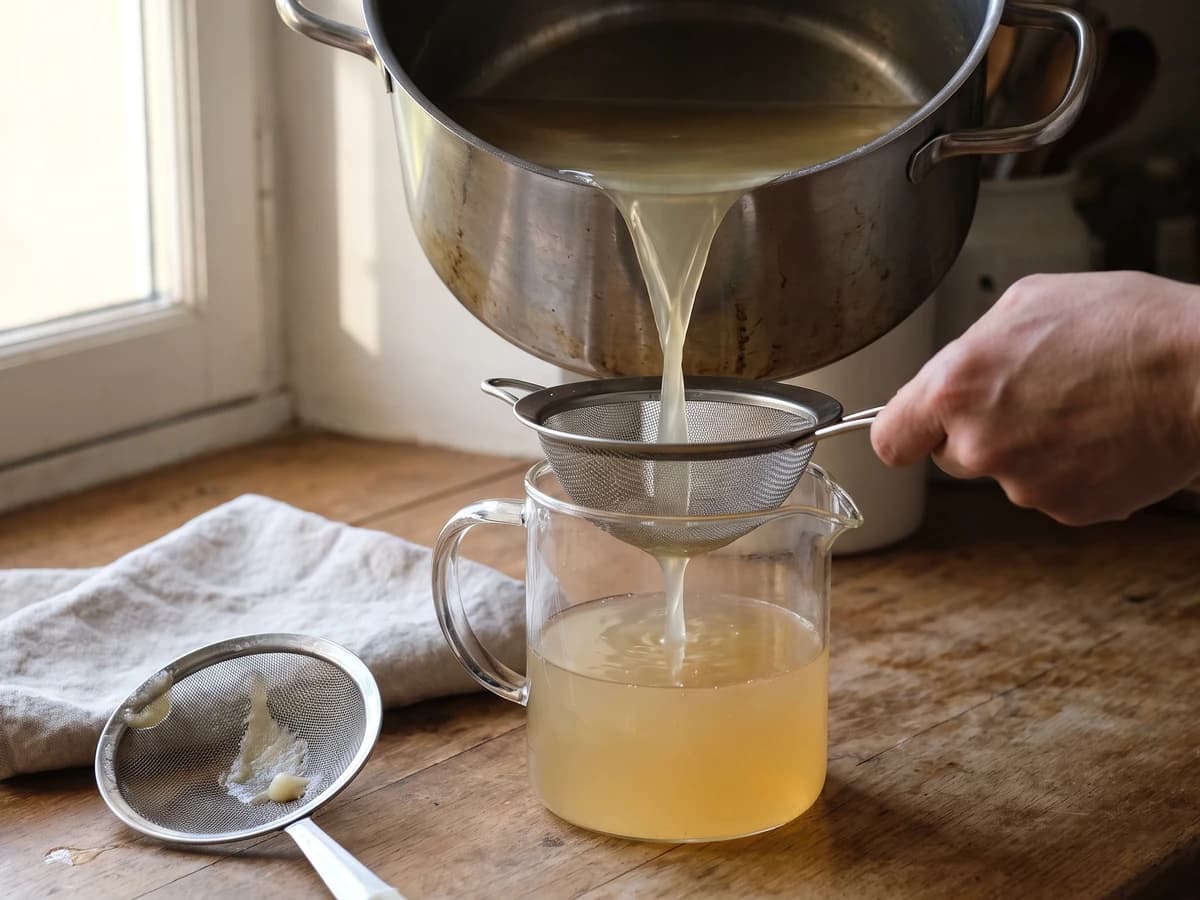
Break the veal bones small, then give them eight hours at a bare tremble. This pale, gelatinous fond becomes the quiet foundation beneath velouté, blanquette, and every sauce that must stay light.
Chef Juliette
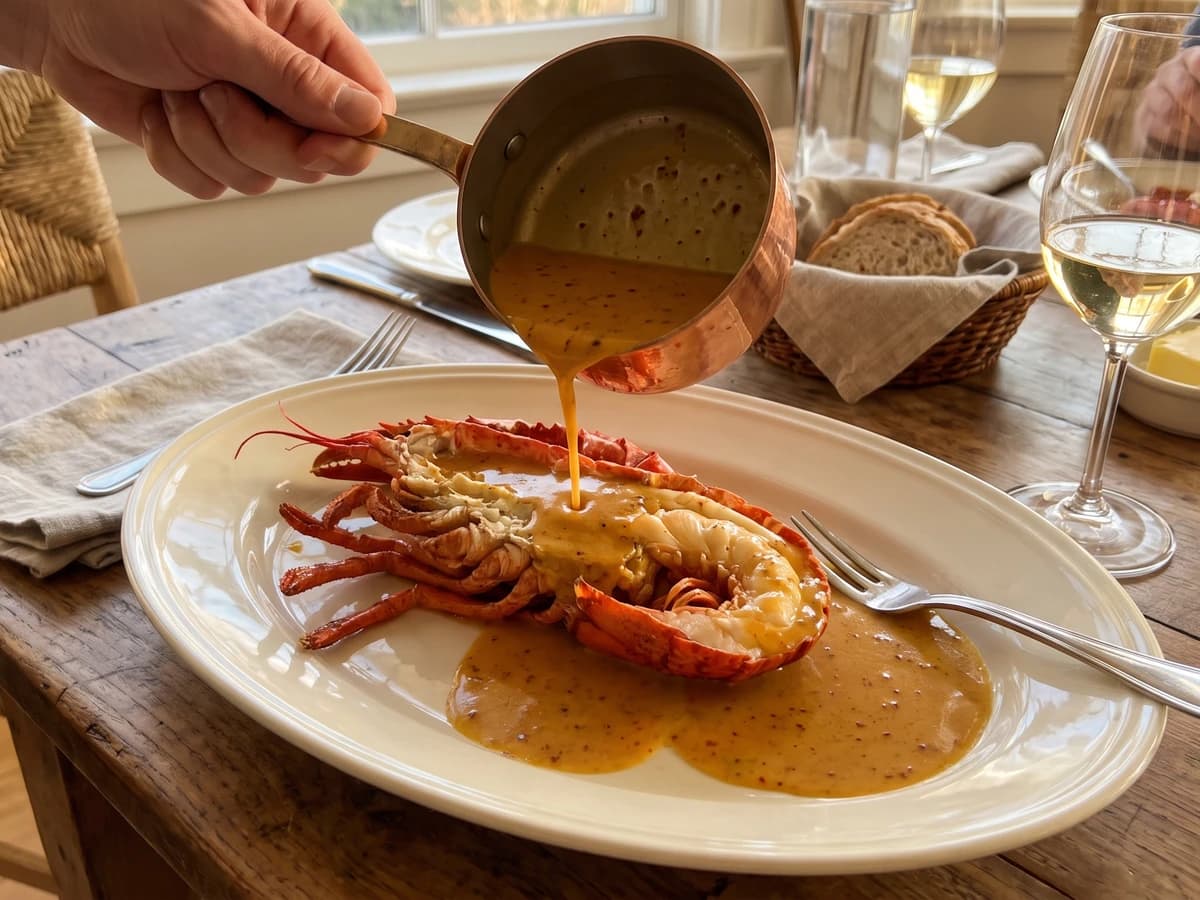
Sauce Orientale concentrates lobster-rich American Sauce with curry, then folds in cream away from the fire: a glossy, gently spiced derivative made for lobster, crayfish, and firm fish.
Chef Juliette
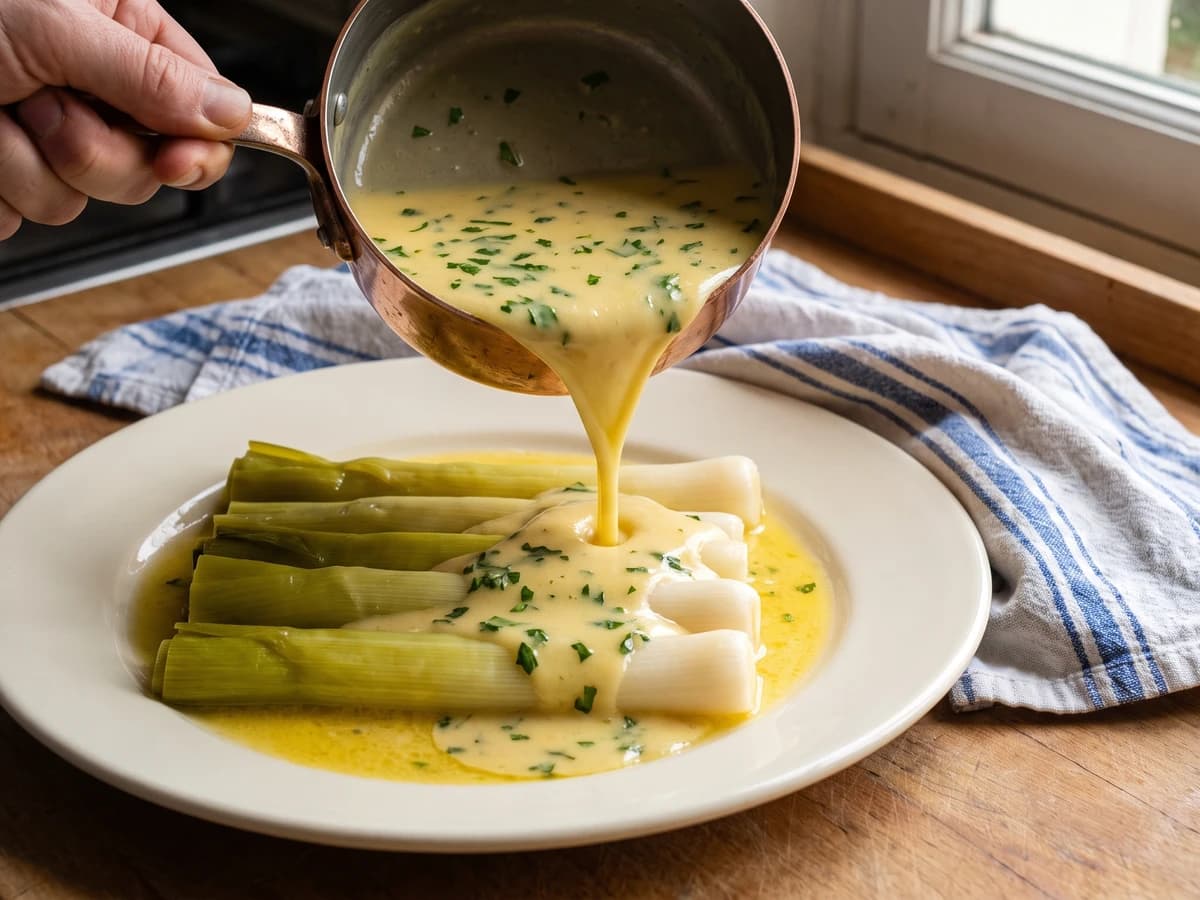
An old lesson in sauce families: Sauce Allemande takes mushroom liquor, then butter, lemon, and parsley, becoming a glossy Poulette for sheep's trotters, leeks, cauliflower, and anything needing gentle richness with a bright edge.