Chef Juliette
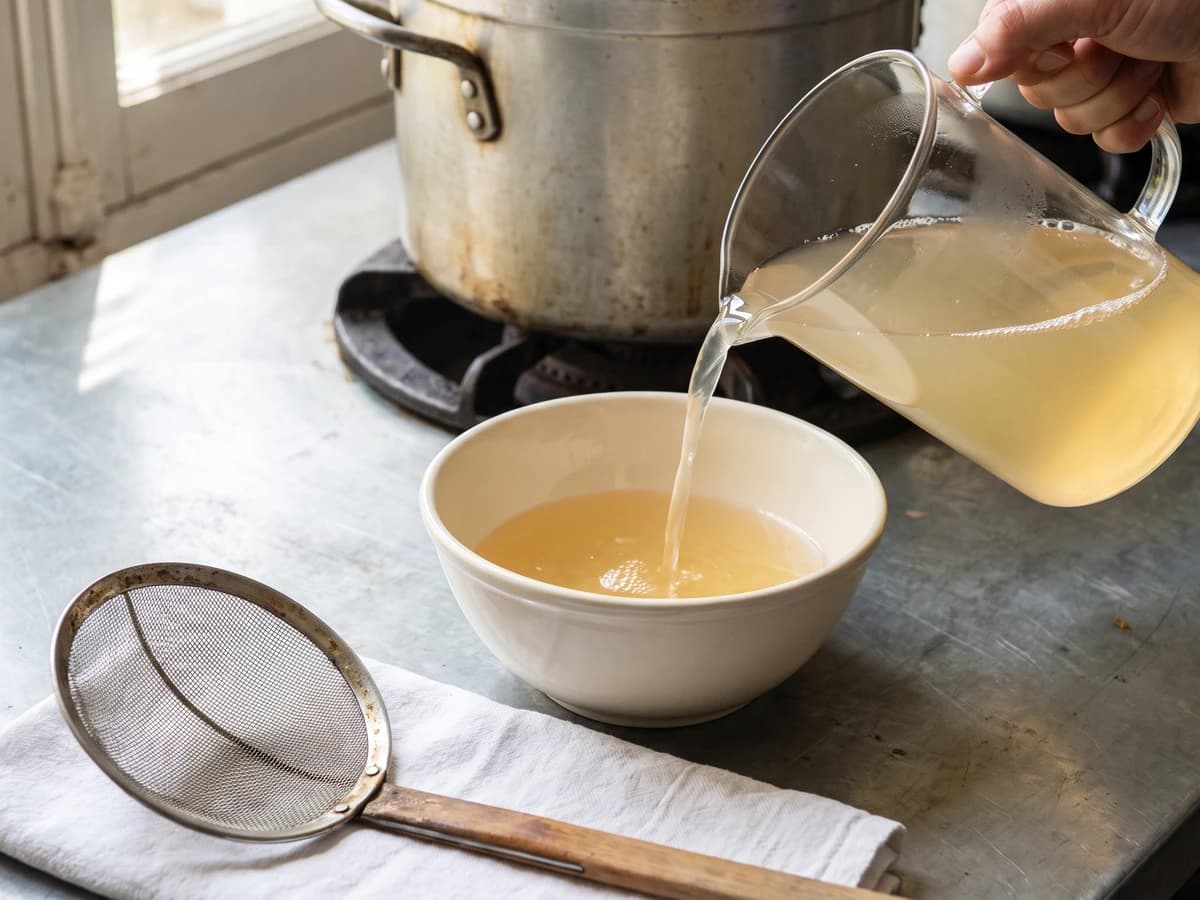
Ordinary or White Consommé
Beef shin, lean beef, and fowl begin in cold water and rise slowly toward a tremble. Skim before the boil, and you learn the quiet discipline that gives every clear French broth its backbone.
A cooking platform built around craft, culture, and the stories behind what we eat.
Created by Chef Juliette
Based on No. 161, Fish Aspic with White Wine, from Le Guide Culinaire (1907) by Auguste Escoffier
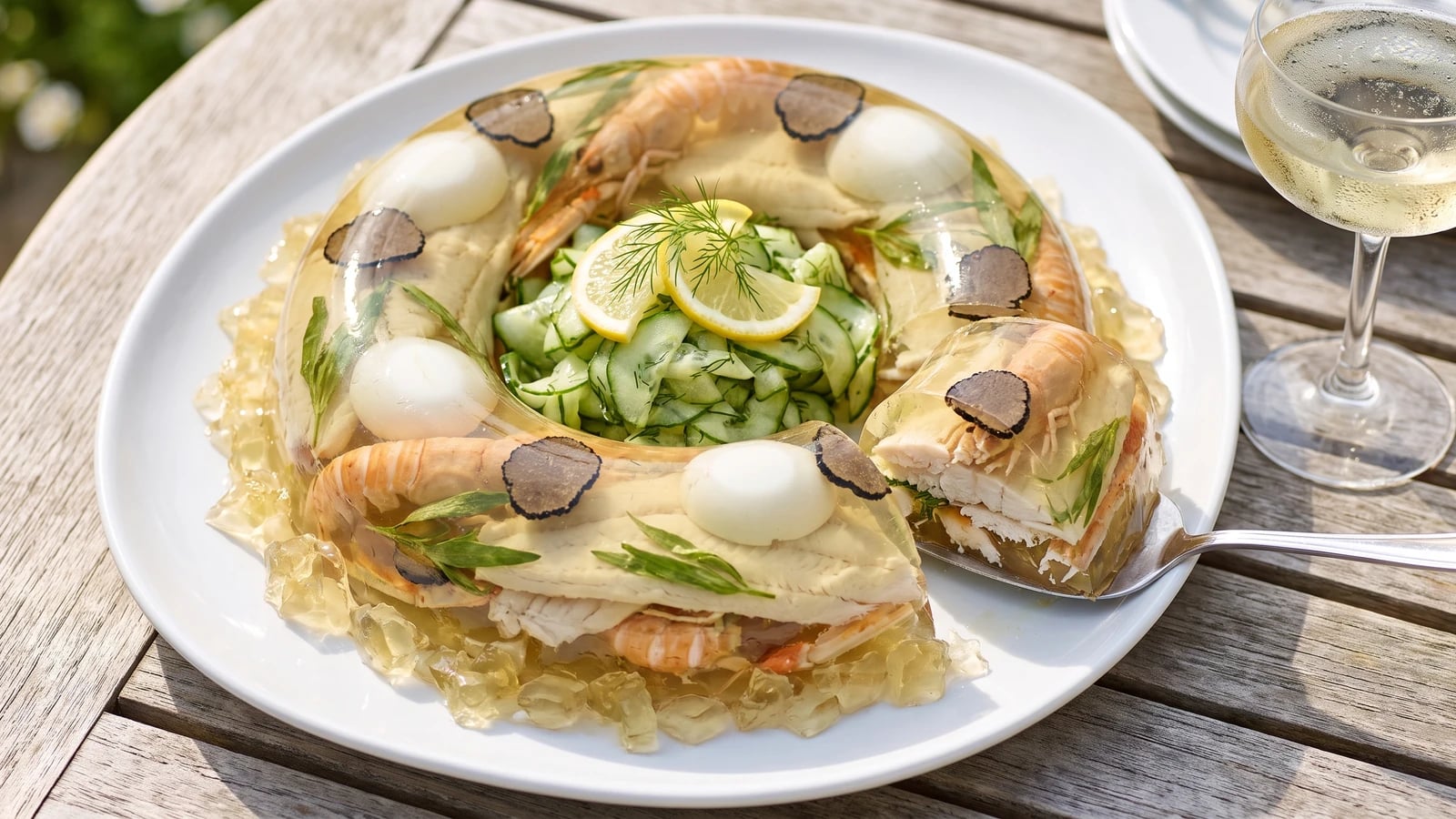
A clear, tender fish aspic perfumed with dry Champagne at the last cold moment, built on sole fumet and clarified with caviar so the jelly gleams rather than bounces.
Aspic de poisson au vin blanc (fish aspic with white wine) teaches restraint in two places: gelatin and temperature. The one true thing to know before touching a pan is that the wine goes in only when the clarified aspic is cold and just beginning to thicken. Add it warm and its finest perfume escapes; add too much gelatin and the aspic bounces instead of melting against the tongue.
The original assumed a saucier on staff, stocks never off the fire, and enough cold service to consume gallons. Here, the three referenced preparations arrive finished from their own entries, and a saucepan, damp muslin, ice bath, and frozen saucer replace the brigade. Repeating those stock methods is scaffolding and it goes. Clarifying with caviar, testing the natural set, and withholding the wine until the last cold moment are the dish itself, so they stay. This is the same aspic scaled to about two quarts: one cook, one stove, one evening.
Properly made, it is clear and pale, carrying the savor of sole beneath the clean fragrance of Champagne, white Bordeaux, or white Burgundy. It should tremble when spooned and dissolve readily, never sit like rubber. Watch the cooling bowl closely, because adding the wine at the first sign of thickening is the step that decides the dish.
Aspic de poisson au vin blanc belongs to the garde-manger (cold pantry) of the French grand kitchen, especially Parisian cold service, where clarified fumet protected and presented fish on generous buffet tables. It traveled from practical jellied stocks into formal molds, while Champagne, white Bordeaux, or white Burgundy supplied perfume rather than bulk. The common misconception is that aspic should be rigid, but the classical instruction is the opposite: use the least gelatin that will hold a clean spoonful.
Quantity
Up to 1 cup (240 ml / 240 g) Ordinary or White Consommé (No. 1)
thoroughly cold
Quantity
1/2 cup (120 ml / 115 g)
Quantity
2 tablespoons plus 1 teaspoon (35 ml / 20 g) powdered gelatin, or 10 gold-strength leaves (20 g)
use only as much as the cold test requires
Quantity
1/3 cup (80 ml / 80 g)
for blooming powdered gelatin
Quantity
1 cup (240 ml / 240 g)
well chilled
Quantity
1 small pinch (about 1/16 teaspoon / 0.05 g)
Quantity
only if needed
| Ingredient | Quantity |
|---|---|
| White Fish Stockthoroughly cold | 6 cups (1.44 L / 1.44 kg) White Fish Stock (No. 11) |
| Fish Consomméthoroughly cold | 1 cup (240 ml / 240 g) Fish Consommé (No. 4) |
| Ordinary or White Consomméthoroughly cold | Up to 1 cup (240 ml / 240 g) Ordinary or White Consommé (No. 1) |
| fresh or pressed caviar | 1/2 cup (120 ml / 115 g) |
| unflavored gelatinuse only as much as the cold test requires | 2 tablespoons plus 1 teaspoon (35 ml / 20 g) powdered gelatin, or 10 gold-strength leaves (20 g) |
| cold waterfor blooming powdered gelatin | 1/3 cup (80 ml / 80 g) |
| dry Champagne, dry white Bordeaux, or dry white Burgundywell chilled | 1 cup (240 ml / 240 g) |
| saffron (optional) | 1 small pinch (about 1/16 teaspoon / 0.05 g) |
| fine sea salt (optional) | only if needed |
Put two small saucers in the freezer. Line a fine sieve with rinsed, damp muslin and suspend it over a spotless bowl, then prepare a larger bowl of ice water. Crush the caviar lightly in a heavy saucepan and mix it with the cold Fish Consommé (No. 4) until loosened. Gradually whisk in the cold White Fish Stock (No. 11). Both liquids must begin cold so the caviar proteins disperse before they coagulate.
Set the saucepan over medium-low heat and stir slowly across the bottom as the liquid warms. When the caviar begins gathering into grey curds, stop stirring and let those proteins rise into a raft. Open a small vent through the raft with the handle of a spoon, then hold the liquid at the barest tremble for 15 minutes. Never let it boil, because a hard boil breaks the raft and drives its particles back through the stock. If that happens, remove the pan from the heat and leave it untouched for 10 minutes, then strain it twice through damp muslin without pressing. Ça se rattrape.
Ladle the clarified liquid gently through the prepared sieve, leaving the caviar raft and sediment behind. Measure the clear stock and add enough cold Ordinary or White Consommé (No. 1) to bring it to 7 cups (1.68 L), reserving any remainder for correcting the gel. If a pale golden aspic is wanted, add the saffron now, warm the stock gently for 5 minutes, and strain it once more. Taste a chilled spoonful before adding salt, because caviar and consommé both carry their own seasoning.
If using powdered gelatin, sprinkle it evenly over the cold water and leave it for 5 minutes. If using leaves, soak them in ample cold water until pliable, then squeeze them well. Warm the clarified stock until hot but never boiling, and dissolve half the prepared gelatin in it. Spoon a tablespoon onto a frozen saucer and chill it for 5 minutes. The sample should tremble, hold a clean edge, and melt readily in the mouth. Add more gelatin in small portions, testing after each addition. If the sample becomes too firm, stir in some reserved Ordinary or White Consommé (No. 1) while the mixture remains warm and test again. Less gelatin makes the finer aspic, and the supplied 20 grams is a ceiling, not a target.
Set the bowl of clarified aspic in the ice bath and stir gently until it is completely cold and begins to coat the spoon like very light cream. Reserve 2 tablespoons of the measured wine, then fold in the remainder and taste before deciding whether the last spoonfuls are needed. This timing preserves the wine's aroma. If the aspic sets before the wine goes in, warm one cup of the jelly just until liquid, stir it back through the bowl, and cool it again. Ça se rattrape. Add the wine only when the mixture returns to the edge of coagulation.
Pass the finished aspic through a clean fine sieve into shallow molds or covered storage dishes. Chill for at least 4 hours, leaving it uncovered only until the surface has set, then cover it so it takes on no refrigerator odors. Use the tender jelly to glaze chilled poached fish, line a fish mold, or spoon generously beside cold sole. For an outdoor table, nest the serving dish over ice and return leftovers promptly to the cold. À table!
1 serving (about 240g)
Culinary guides, cultural storytelling, and the editorial depth that makes cooking meaningful.
Discover Culinary ExplorerChef Juliette
Beef shin, lean beef, and fowl begin in cold water and rise slowly toward a tremble. Skim before the boil, and you learn the quiet discipline that gives every clear French broth its backbone.
Chef Juliette
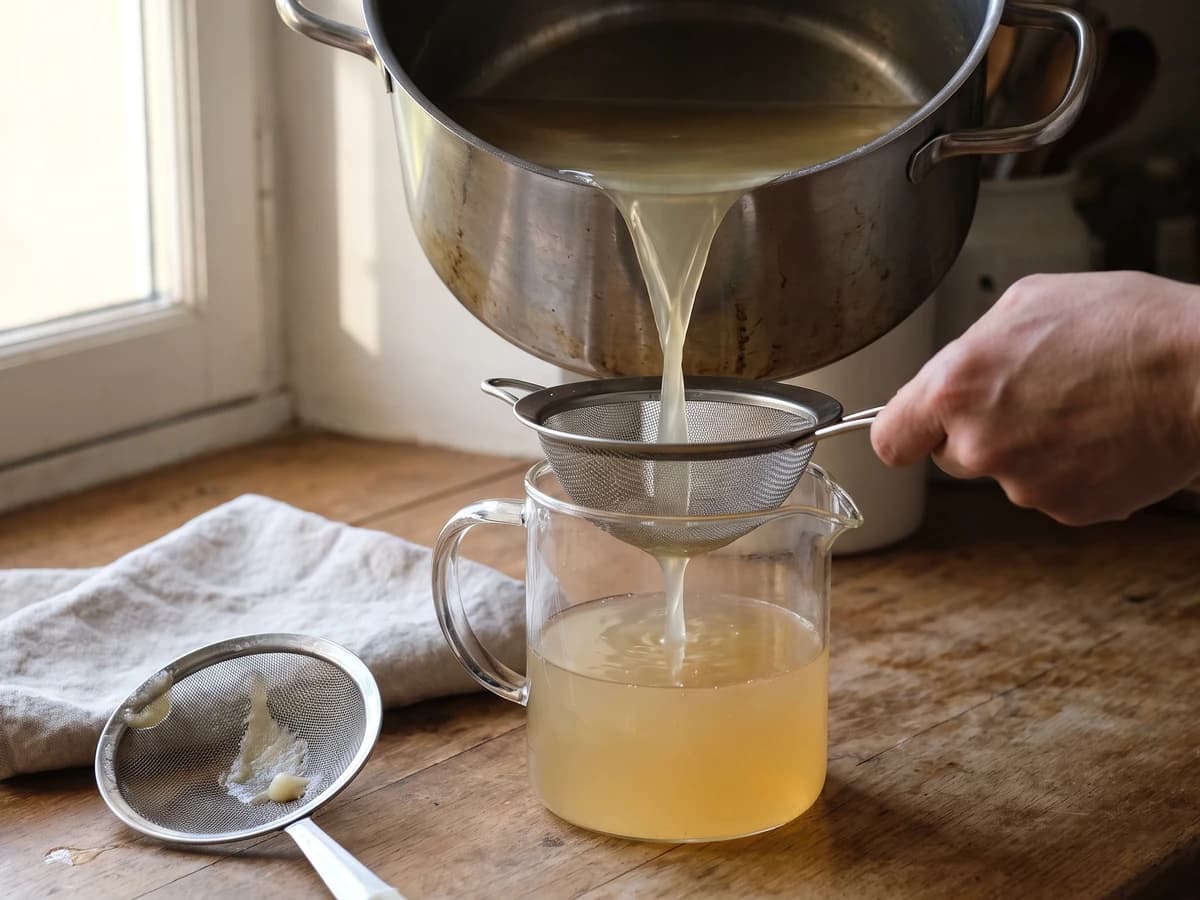
Break the veal bones small, then give them eight hours at a bare tremble. This pale, gelatinous fond becomes the quiet foundation beneath velouté, blanquette, and every sauce that must stay light.
Chef Juliette
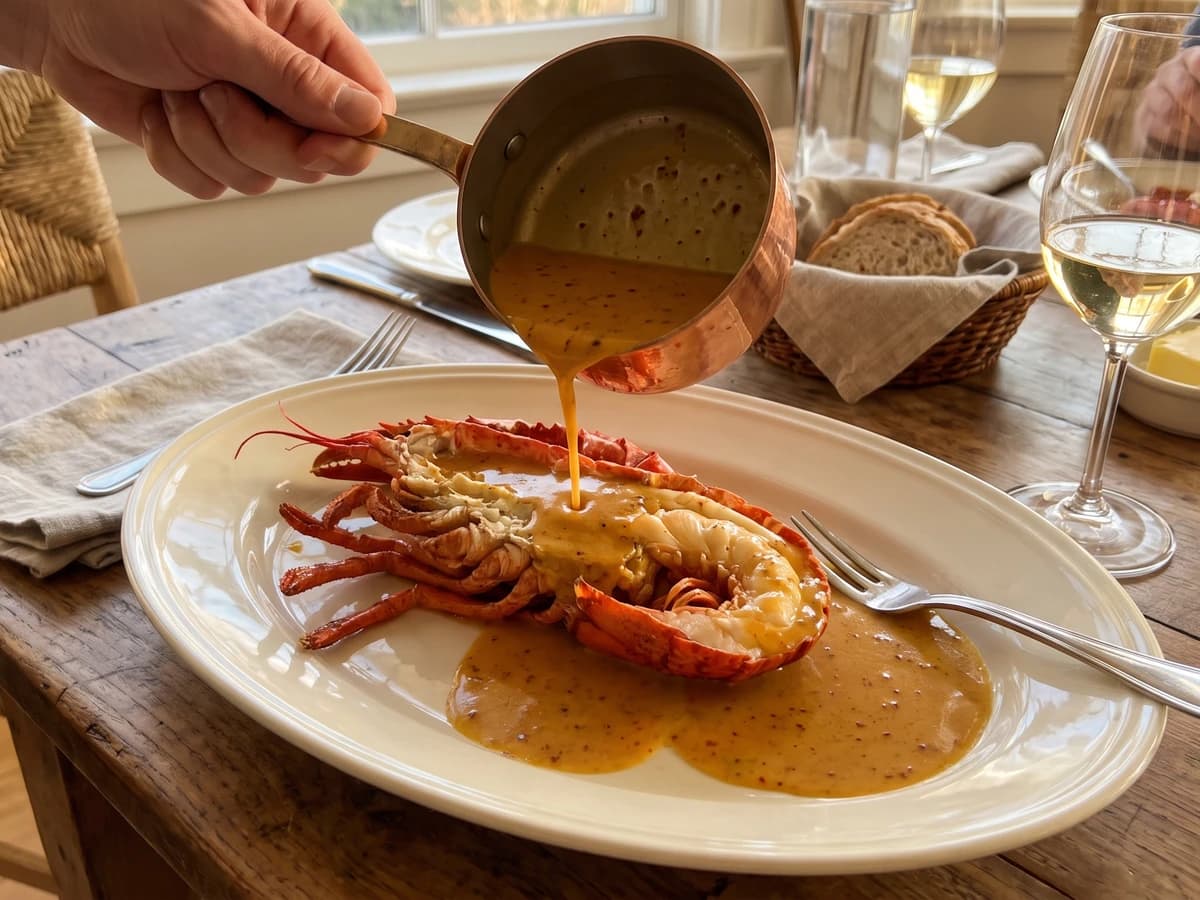
Sauce Orientale concentrates lobster-rich American Sauce with curry, then folds in cream away from the fire: a glossy, gently spiced derivative made for lobster, crayfish, and firm fish.
Chef Juliette
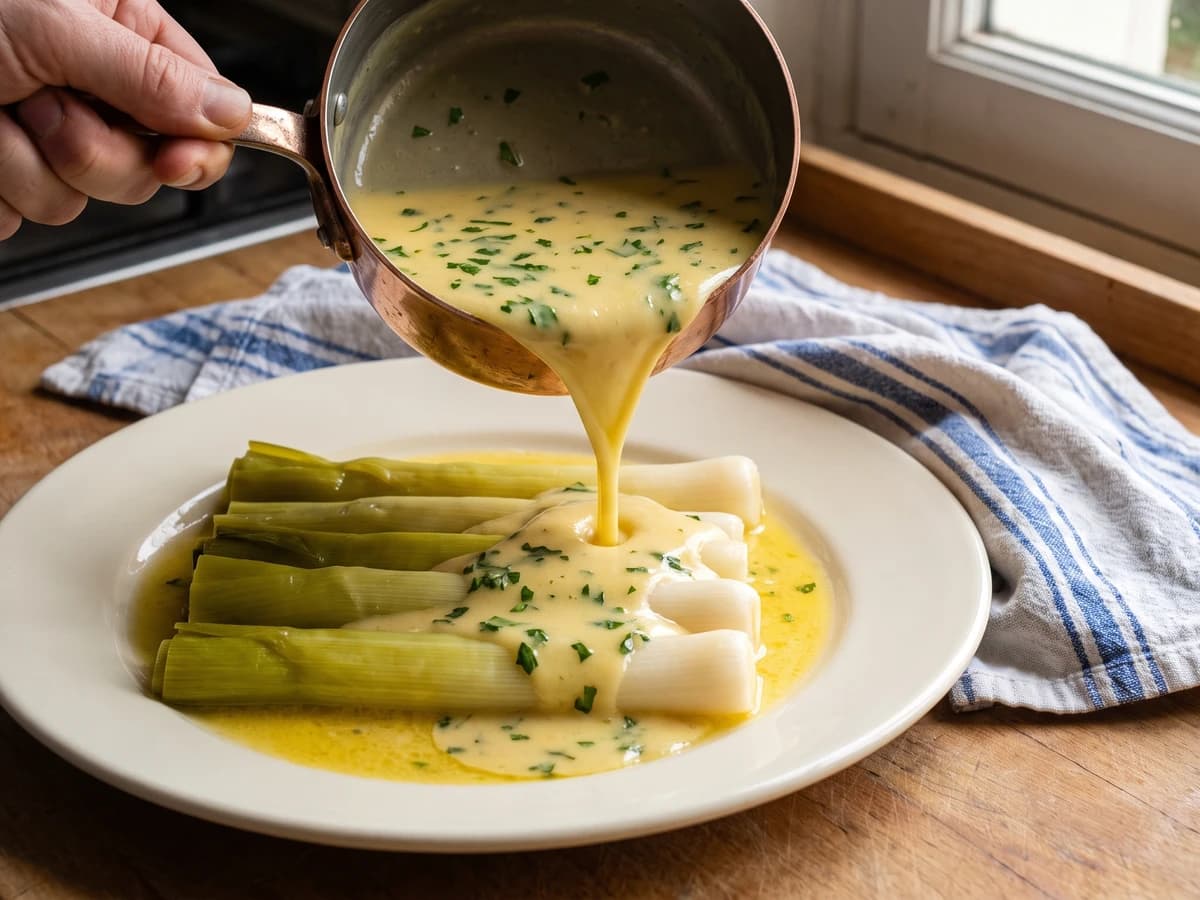
An old lesson in sauce families: Sauce Allemande takes mushroom liquor, then butter, lemon, and parsley, becoming a glossy Poulette for sheep's trotters, leeks, cauliflower, and anything needing gentle richness with a bright edge.