Chef Juliette
Ordinary or White Consommé
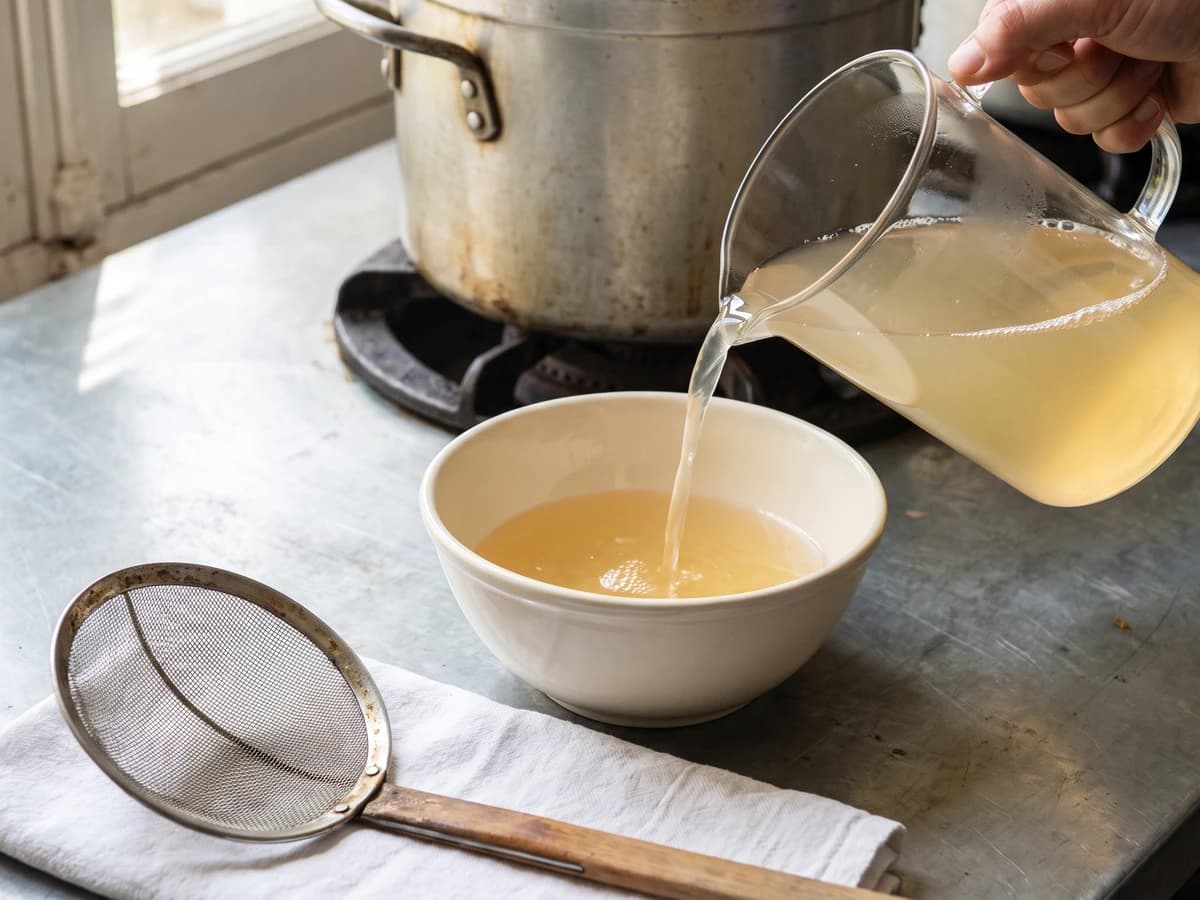
Beef shin, lean beef, and fowl begin in cold water and rise slowly toward a tremble. Skim before the boil, and you learn the quiet discipline that gives every clear French broth its backbone.
A cooking platform built around craft, culture, and the stories behind what we eat.
Created by Chef Juliette
Based on No. 11, White Fish Stock, from Le Guide Culinaire (1907) by Auguste Escoffier
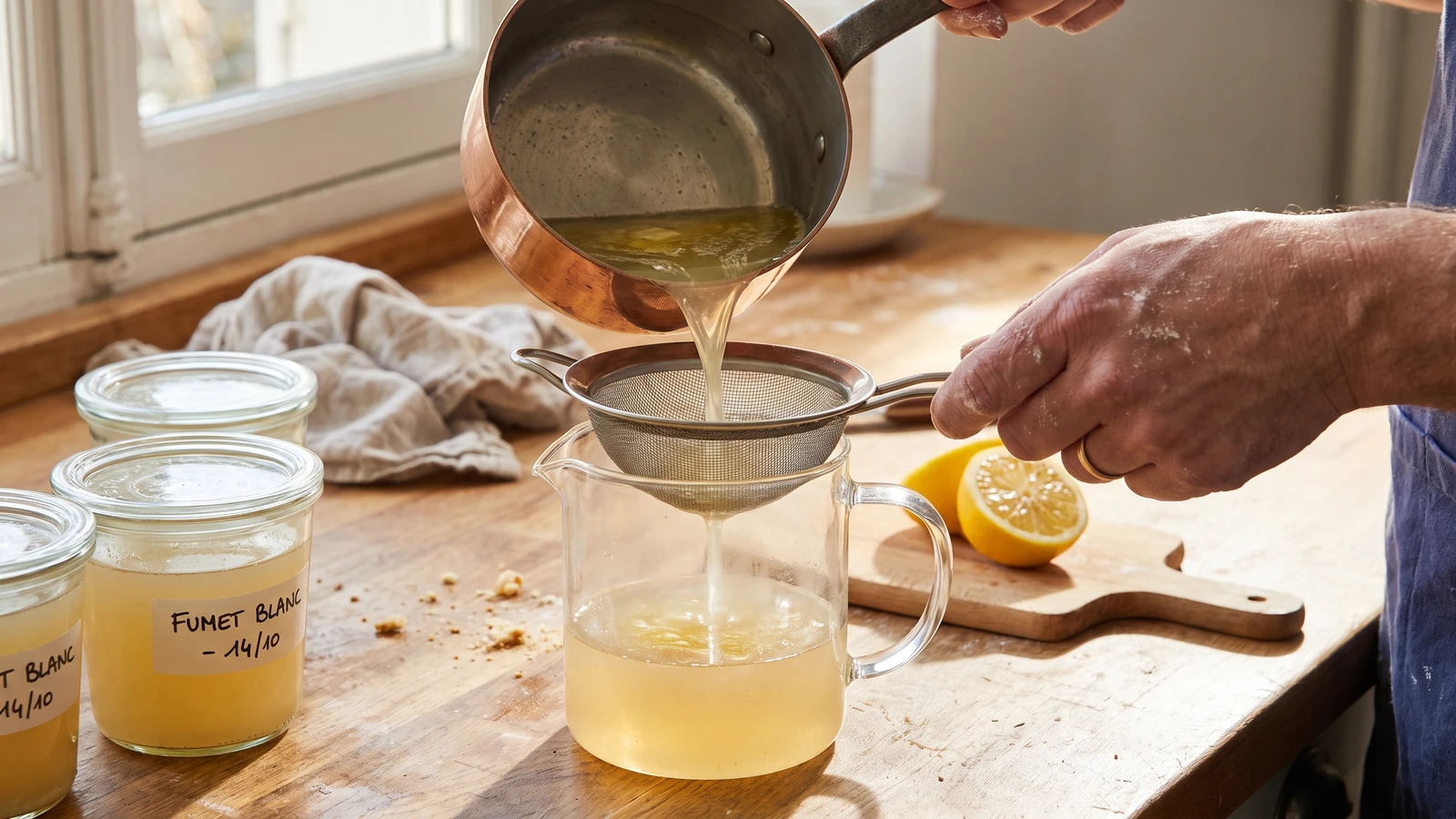
Fumet de poisson blanc turns sole or whiting bones, blanched onion, parsley, lemon, and wine into a pale, delicate foundation in twenty minutes. Cook it longer and you cook the savour straight out.
Fumet de poisson blanc (white fish stock) teaches the cleanest rule in the stockpot: fish bones give what they have quickly. Twenty minutes at a moderate simmer is enough. Keep cooking and the perfume flattens, the stock clouds, and the savour goes straight out of it.
The old formula assumed a saucier on staff, a thick tall stewpan, and four quarts needed for service. At home, a heavy 5- to 6-quart pot and half the brigade quantity give about two quarts with the same proportions. The dedicated hand and oversized batch are scaffolding and can go; sweating the bones under a lid, reducing the wine by half, and stopping the simmer at twenty minutes are the dish. One cook, one stove, one evening.
Done properly, fumet is pale and limpid, with parsley, lemon, and wine standing quietly behind the fish. Set the timer when the first true simmer begins. That is the step that matters most, because a fish stock left to improve itself only grows tired.
Fumet de poisson blanc belongs to the Parisian classical sauce kitchen, built from sole and whiting arriving from Normandy, Brittany, and the Channel ports. It carried coastal thrift into the grand repertoire: clean white-fish frames, useless at the table, became the pale foundation beneath sauces for poached and sautéed fish. Unlike a meat fond, its strength comes from brief extraction rather than hours on the fire, since delicate fish bones surrender their gelatin and aroma quickly and prolonged cooking dulls both.
Quantity
2 pounds (910 g)
gills and blood removed, chopped to fit the pot
Quantity
1 tablespoon (15 ml / 14 g)
Quantity
1 cup (240 ml / 4 ounces / 115 g), prepared by Blanchings (No. 273) and measured after draining
thinly sliced
Quantity
1 ounce (28 g)
rinsed
Quantity
juice of ½ medium lemon, about 1½ tablespoons (22 ml / 22 g)
Quantity
¼ standard bottle, about ¾ cup plus 2 teaspoons (190 ml / 190 g)
Quantity
8 cups (1.9 L / 1.9 kg)
| Ingredient | Quantity |
|---|---|
| fresh trimmings and bones of sole or whitinggills and blood removed, chopped to fit the pot | 2 pounds (910 g) |
| unsalted butter | 1 tablespoon (15 ml / 14 g) |
| yellow onionthinly sliced | 1 cup (240 ml / 4 ounces / 115 g), prepared by Blanchings (No. 273) and measured after draining |
| parsley root or parsley stalksrinsed | 1 ounce (28 g) |
| fresh lemon juice | juice of ½ medium lemon, about 1½ tablespoons (22 ml / 22 g) |
| dry white wine | ¼ standard bottle, about ¾ cup plus 2 teaspoons (190 ml / 190 g) |
| cold water | 8 cups (1.9 L / 1.9 kg) |
Have the sliced onion ready from Blanchings (No. 273), thoroughly drained and cool. Inspect the fish trimmings, removing every trace of gill or dark blood, then rinse them briefly under cold water and drain well. Fresh bones smell clean and faintly marine, never sharp. Measure the remaining ingredients and reserve ¼ cup of the measured cold water beside the stove for correcting the heat or reduction.
Coat the bottom of a heavy 5- to 6-quart pot with the butter and set it over medium-low heat. Spread the onion and parsley across the bottom, lay the fish trimmings over them, and add the lemon juice. Cover and suer, to sweat gently, for 7 to 8 minutes, giving the pot a firm sideways shake every 2 minutes, until clear juices wet the bottom and the aroma turns sweet and marine. Nothing should brown. If the butter starts coloring, pull the pot from the heat, add 1 tablespoon of the reserved measured water, lower the burner, and continue.
Pour the white wine over the fish and remove the lid. Bring the liquid to a lively simmer and reduce it by about half, 6 to 10 minutes. Judge by the level against the side of the pot: the raw edge of the wine should soften, but the bottom must remain wet. If it threatens to cook dry, add up to 2 tablespoons of the reserved measured water and stop reducing. Scorched fish proteins cannot deepen a white fumet; they only make it bitter.
Add all the remaining measured cold water and raise the heat. As soon as the first boil breaks, skim away the gray-white foam, lower the heat to a quiet moderate simmer, and set a timer for exactly 20 minutes. Do not stir. If the stock surges into a hard boil and clouds, remove it from the heat until it settles, lower the burner, and skim again. Ça se rattrape when caught early, and a damp cloth at straining will improve the clarity. At 20 minutes, take the pot off the heat. Longer cooking extracts no virtue here; it cooks the delicate savour straight out.
Pour the fumet through a fine-mesh sieve into a clean heatproof bowl and let gravity do the work. Do not press or mash the bones, which forces spent particles into the liquid and muddies its flavor. If the fumet remains slightly cloudy, pass it once more through a clean sieve lined with damp cheesecloth. Leave it unsalted so later sauces and reductions remain under your control. The finished fumet should be pale, limpid, delicately marine, and close to 2 quarts.
If the fumet is not going straight into a sauce, divide it among shallow heatproof containers and set them in an ice bath. Stir gently until cold, cover, and refrigerate at once. Use within 2 days, or freeze for up to 3 months. Do not leave a large warm pot standing on the counter; rapid cooling protects both its clean flavor and your table.
1 serving (about 240g)
Culinary guides, cultural storytelling, and the editorial depth that makes cooking meaningful.
Discover Culinary ExplorerChef Juliette
Beef shin, lean beef, and fowl begin in cold water and rise slowly toward a tremble. Skim before the boil, and you learn the quiet discipline that gives every clear French broth its backbone.
Chef Juliette
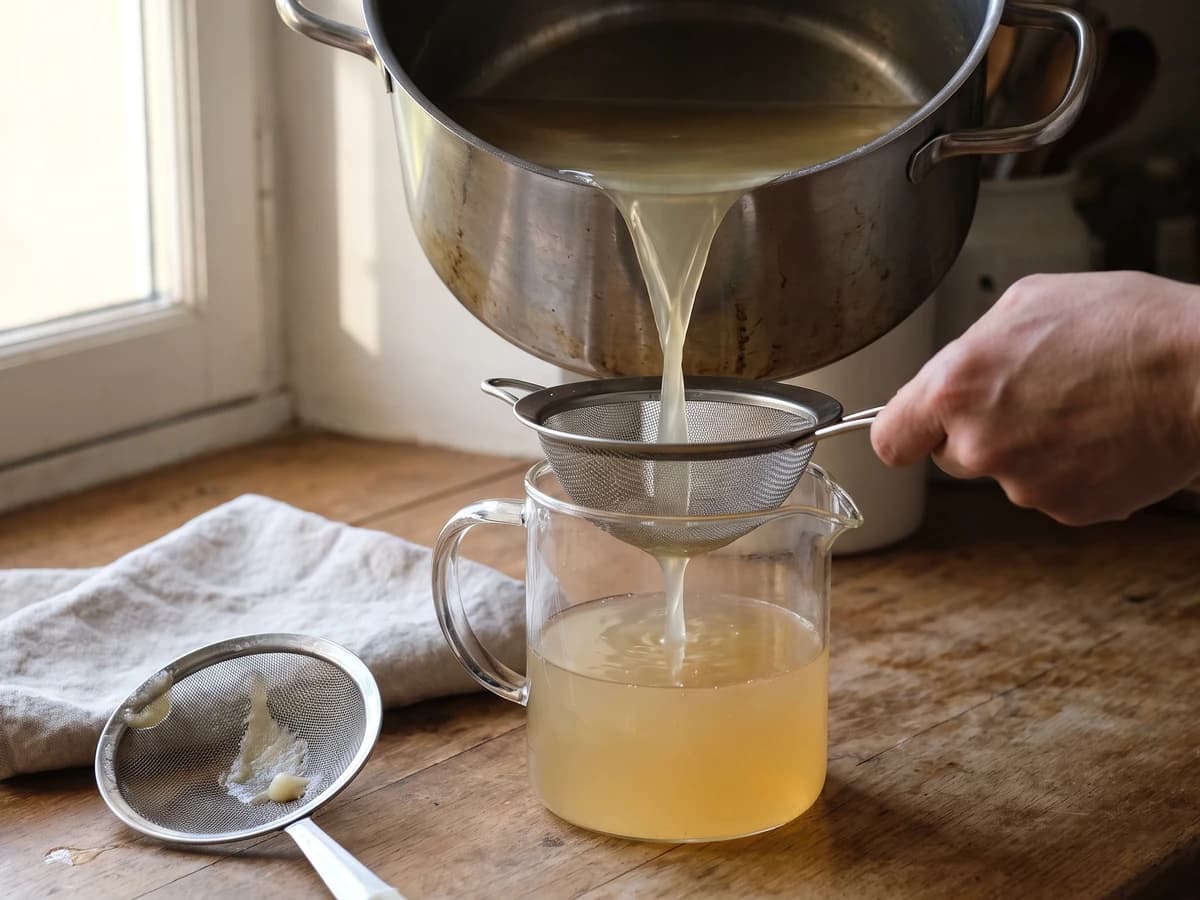
Break the veal bones small, then give them eight hours at a bare tremble. This pale, gelatinous fond becomes the quiet foundation beneath velouté, blanquette, and every sauce that must stay light.
Chef Juliette
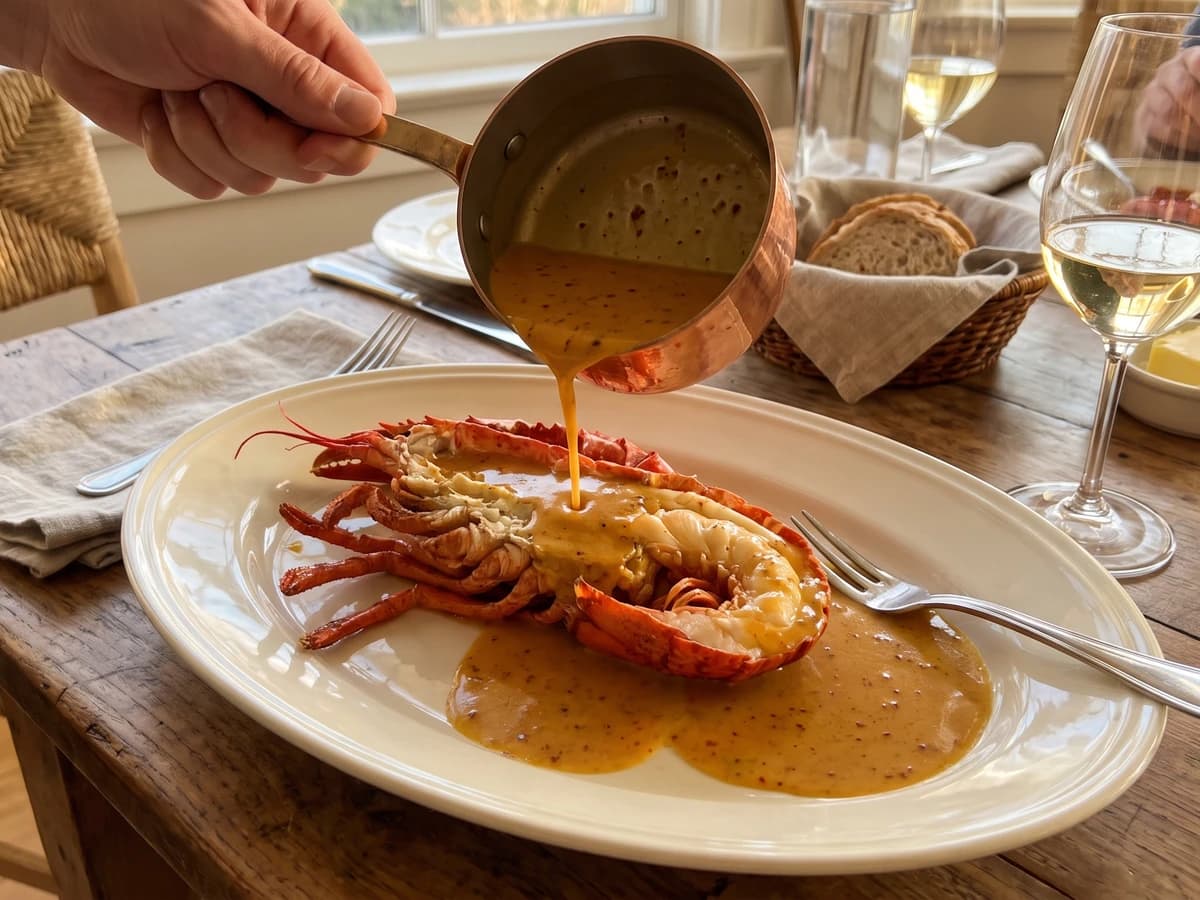
Sauce Orientale concentrates lobster-rich American Sauce with curry, then folds in cream away from the fire: a glossy, gently spiced derivative made for lobster, crayfish, and firm fish.
Chef Juliette
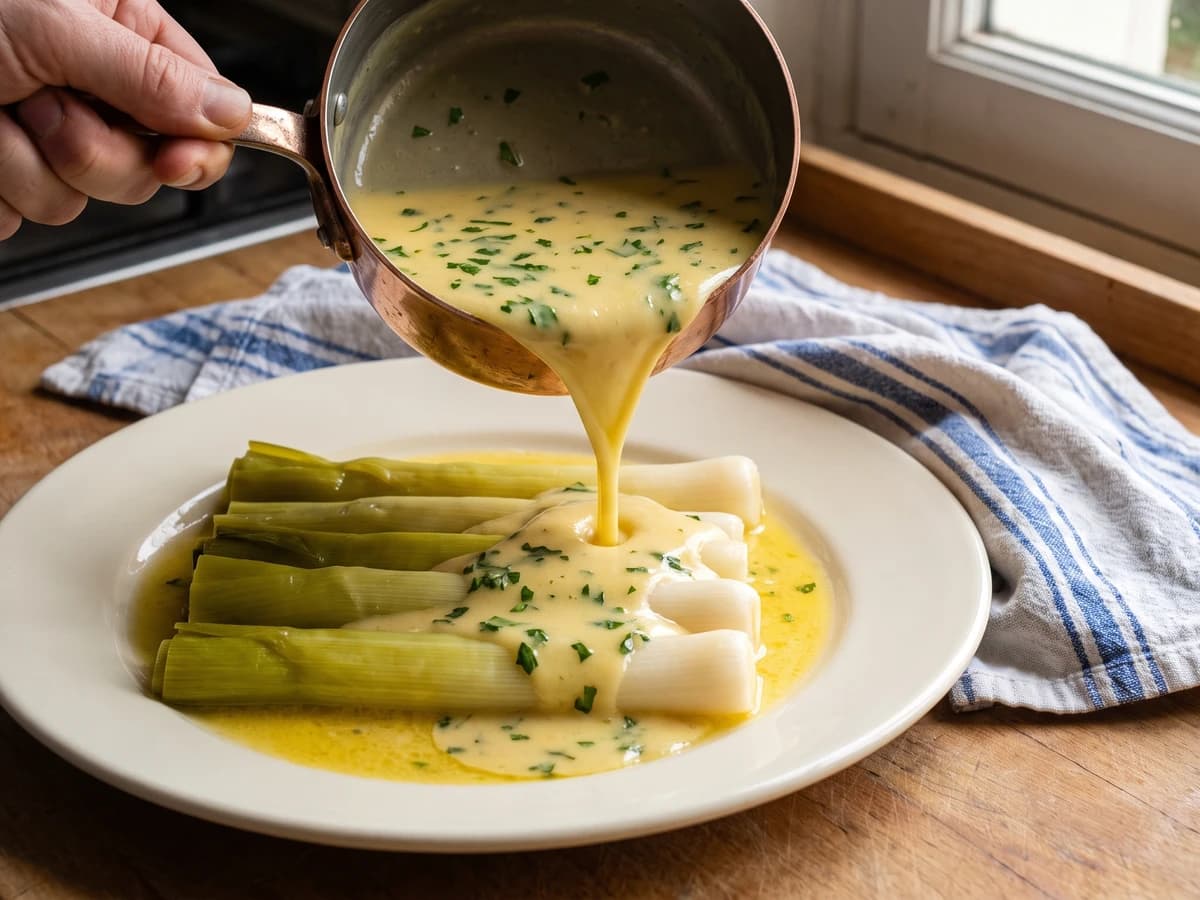
An old lesson in sauce families: Sauce Allemande takes mushroom liquor, then butter, lemon, and parsley, becoming a glossy Poulette for sheep's trotters, leeks, cauliflower, and anything needing gentle richness with a bright edge.