Chef Juliette
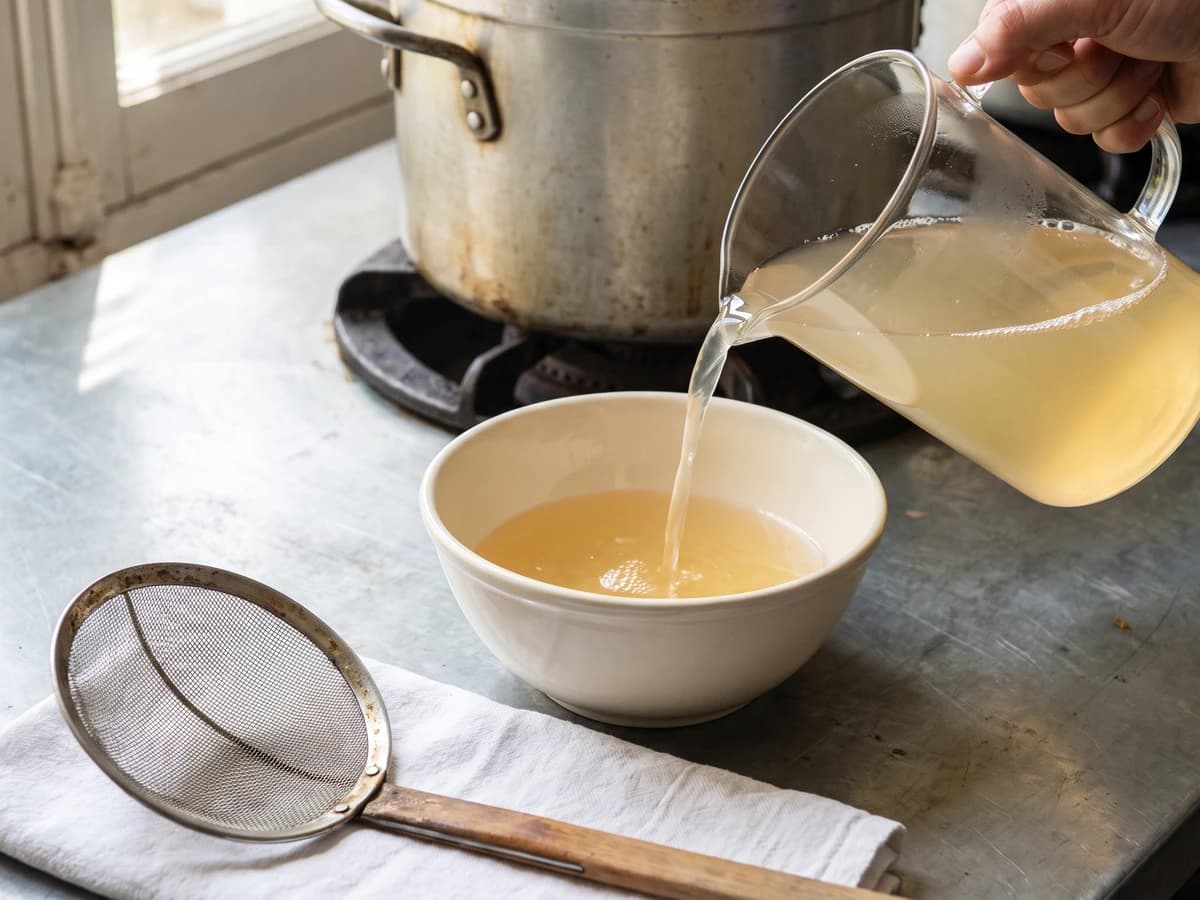
Ordinary or White Consommé
Beef shin, lean beef, and fowl begin in cold water and rise slowly toward a tremble. Skim before the boil, and you learn the quiet discipline that gives every clear French broth its backbone.
A cooking platform built around craft, culture, and the stories behind what we eat.
Created by Chef Juliette
Based on No. 147, Crayfish Butter, from Le Guide Culinaire (1907) by Auguste Escoffier
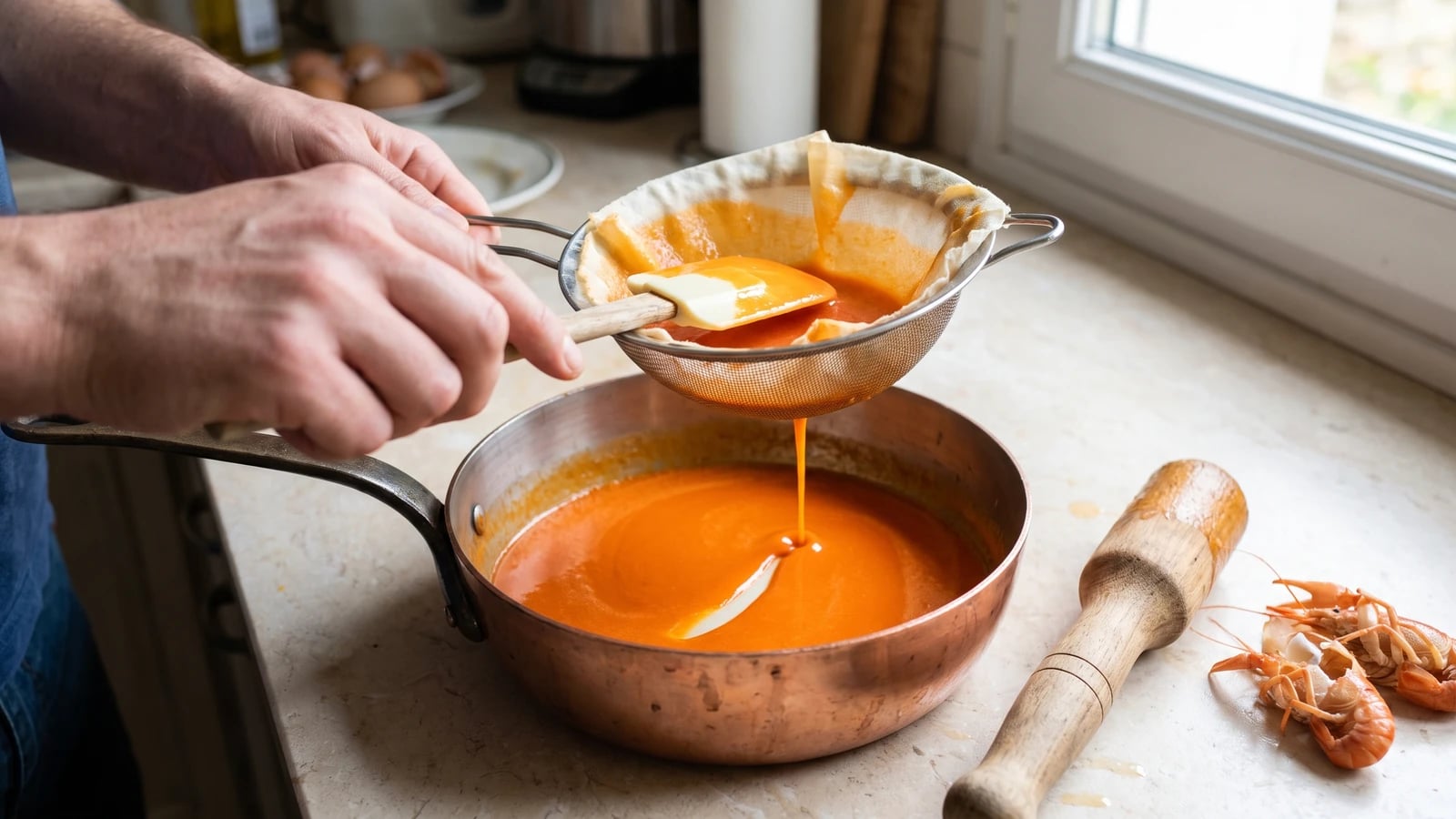
Beurre d’écrevisses turns the discarded shell into the deepest crayfish flavour: pound it with its own weight of butter, then strain twice until nothing remains but coral colour and sweetness.
Beurre d’écrevisses teaches one of the sauce kitchen’s plainest truths: the shells still hold perfume and coral colour after the meat is gone, and butter carries both forward. Before you touch a pan, know the rule that decides the batch. Pound finely, then strain twice; one hard splinter undoes all the good work.
The original entry assumed a saucier, a deep mortar, a heap of crayfish remains already cooked in Mirepoix (No. 228), and a tamis within arm’s reach. At home, a mallet and food processor replace the long pounding, while a fine-mesh sieve followed by dampened butter muslin stands in for the final tamis (drum sieve, called a tammy in the source). The brigade quantity and hand labour were scaffolding. The equal weight of shells and butter, and those two separate passes, are the dish.
This small batch gives you vivid, shell-sweet butter to finish sauces, enrich a bisque, or freeze by the spoonful. A brief bain-marie (warm-water bath) only relaxes the butter enough to screen; it must never fry. The final pass matters most, so test the butter between your fingers before chilling it. If you feel grit, ça se rattrape: warm it gently and pass it again.
Beurre d’écrevisses has its strongest regional home around Nantua in Bugey, where freshwater crayfish and quenelles meet in the sauce tradition carried into Lyon. From those tables it entered the national classical sauce kitchen as a concentrated colouring and seasoning butter, not a spread for bread. Its coral red comes from shell pigment dissolving in fat, not from tomato, and generations of sauce cooks used the second tamis because colour was welcome but shell grit never was.
Quantity
4 loosely packed cups (960 ml / 250 g), from about 24 crayfish cooked in Mirepoix (No. 228)
well drained, cooled, and weighed
Quantity
1 cup plus 1 tablespoon (255 ml / 250 g), exactly equal in weight to the drained shells
very soft but not melted
| Ingredient | Quantity |
|---|---|
| Remains and shells from cooked crayfishwell drained, cooled, and weighed | 4 loosely packed cups (960 ml / 250 g), from about 24 crayfish cooked in Mirepoix (No. 228) |
| Unsalted buttervery soft but not melted | 1 cup plus 1 tablespoon (255 ml / 250 g), exactly equal in weight to the drained shells |
Begin with the remains and shells from about 24 crayfish already cooked in Mirepoix (No. 228). Pick out every scrap of edible meat for another use, discard any grit, and drain the shells until no cooking liquid remains; water dulls the butter and shortens its keeping life. Weigh the drained shells. This batch assumes 250 g, so weigh out exactly 250 g butter. If your shells weigh differently, change the butter gram for gram. Their equal weight is the source formula, and it stays.
Put the shells in a heavy freezer bag, wrap the bag in a folded towel, and strike them firmly with a mallet or rolling pin until every claw and carapace is broken into pieces smaller than a hazelnut. This protects the processor and keeps sharp fragments contained. Work deliberately; an intact claw cannot surrender much flavour, and a flying shard has no place in anyone’s kitchen.
Process the cracked shells in small batches, never filling the bowl more than one-third full. Pulse first, then run the machine for 60 to 90 seconds at a time, stopping to scrape the bowl, until the shells resemble a very fine, faintly damp meal with no recognizable claw pieces. Finish any stubborn fragments in a mortar. Add no water. The original’s long mortar work was not ceremony: reducing the shell finely exposes the colour and aroma to the butter.
Return all the powdered shell to the processor and add the soft butter in four additions, processing each one completely before adding the next. Continue for 3 minutes, scraping twice, until the mixture is uniform and brick-coral. Transfer it to a small saucepan or heatproof bowl and set it over a gentle bain-marie for 8 to 10 minutes, stirring until the butter is fluid, glossy, and deeply coloured. It must not sizzle or brown. If it begins to fry, lift it from the bain-marie at once and set it on a cool towel; when it falls quiet, continue off the heat. Ça se rattrape.
Set a fine-mesh sieve over a clean warm bowl and spoon in the shell butter a little at a time. Press with a flexible silicone spatula, working across the mesh rather than stabbing downward, until only a dry, coarse shell paste remains. Scrape the vivid butter clinging beneath the sieve into the bowl. This first pass removes the obvious fragments, but it is not the final safeguard.
Line a second clean sieve with two layers of butter muslin rinsed in hot water and wrung thoroughly dry. Pour the warm butter through, allowing gravity and gentle pressure to do the work; never twist the cloth hard enough to drive shell dust through it. Rub a cooled drop between your thumb and forefinger. It should feel as smooth as plain butter. If you detect even one grain, gently rewarm the batch and pass it through fresh muslin again. Ça se rattrape, and this is not the moment for pride. Set the clean bowl over ice and stir until the butter thickens and turns opaque, then pack it into a covered jar or tablespoon portions and chill for 1 hour.
1 serving (about 15g)
Culinary guides, cultural storytelling, and the editorial depth that makes cooking meaningful.
Discover Culinary ExplorerChef Juliette
Beef shin, lean beef, and fowl begin in cold water and rise slowly toward a tremble. Skim before the boil, and you learn the quiet discipline that gives every clear French broth its backbone.
Chef Juliette
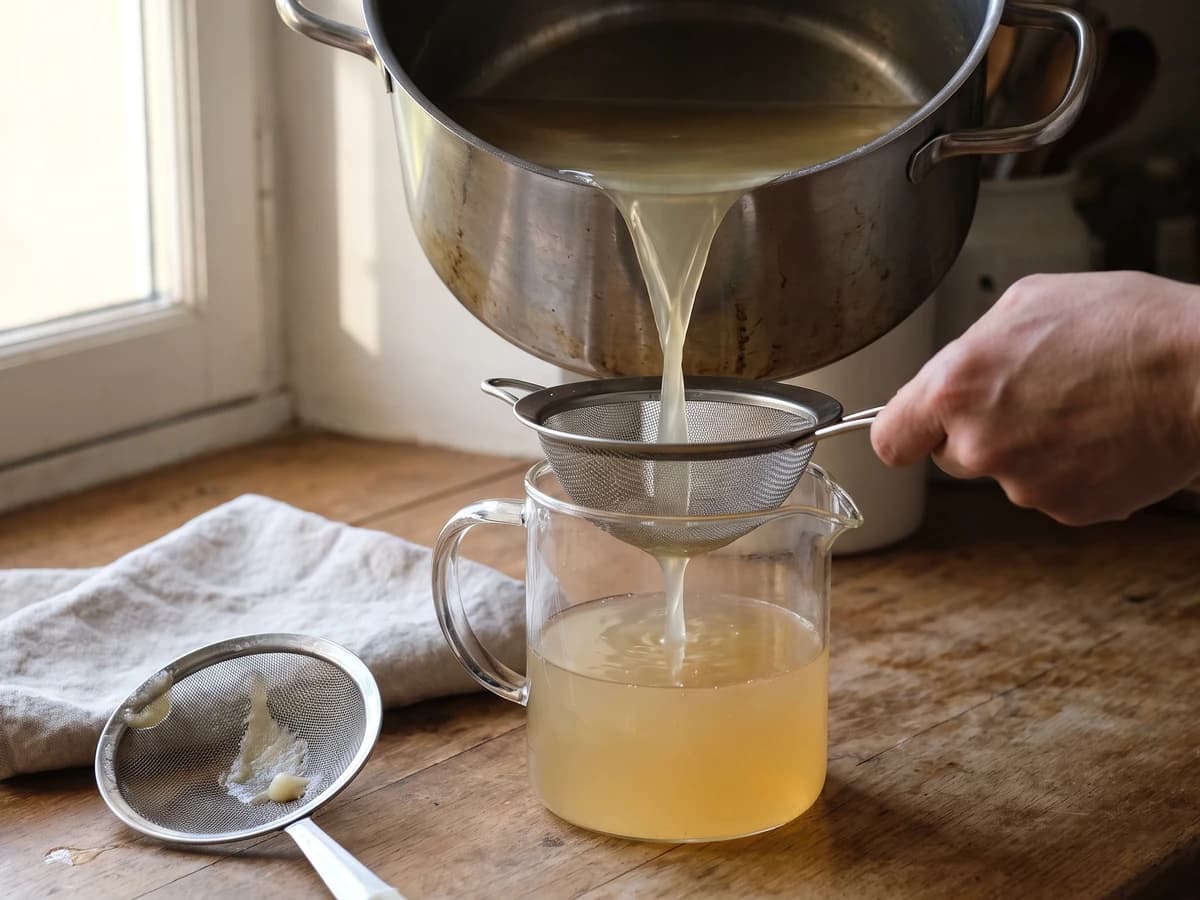
Break the veal bones small, then give them eight hours at a bare tremble. This pale, gelatinous fond becomes the quiet foundation beneath velouté, blanquette, and every sauce that must stay light.
Chef Juliette
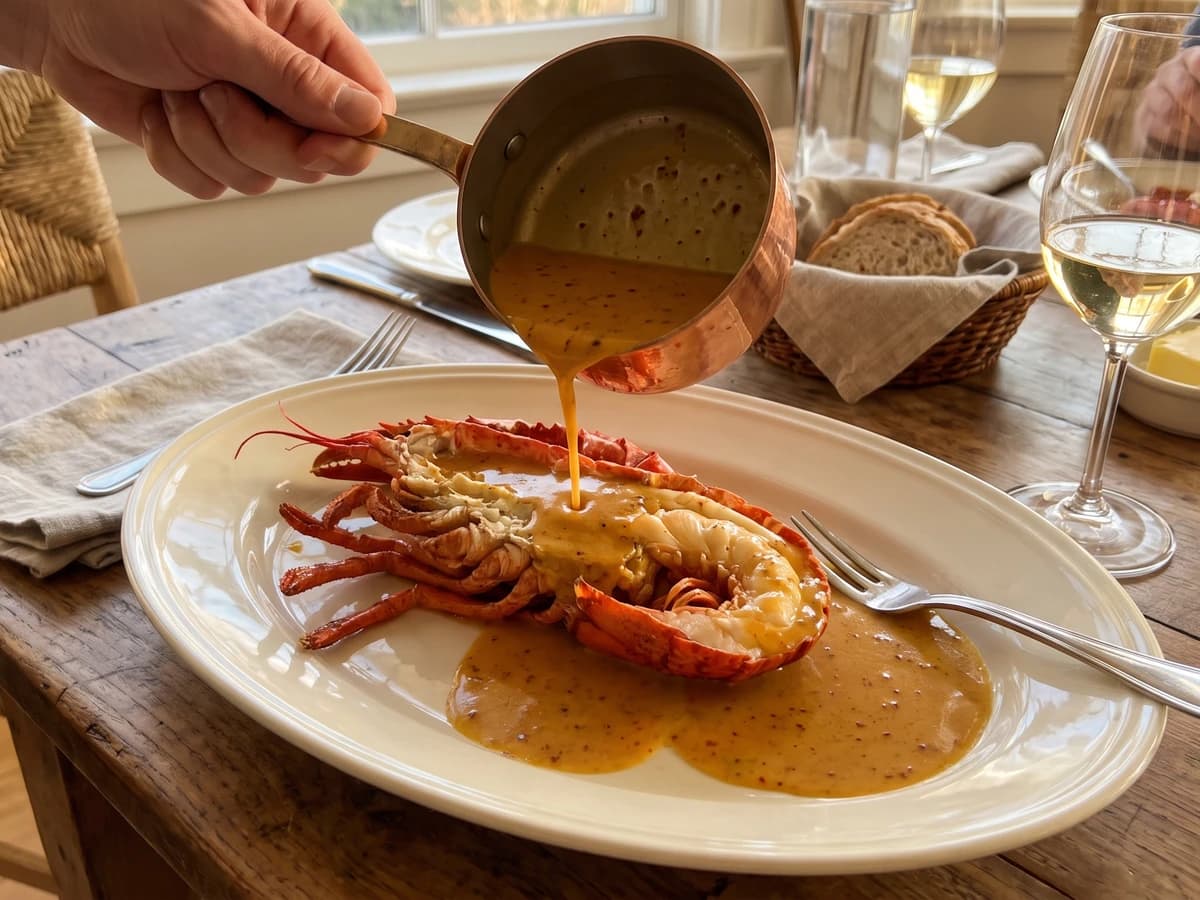
Sauce Orientale concentrates lobster-rich American Sauce with curry, then folds in cream away from the fire: a glossy, gently spiced derivative made for lobster, crayfish, and firm fish.
Chef Juliette
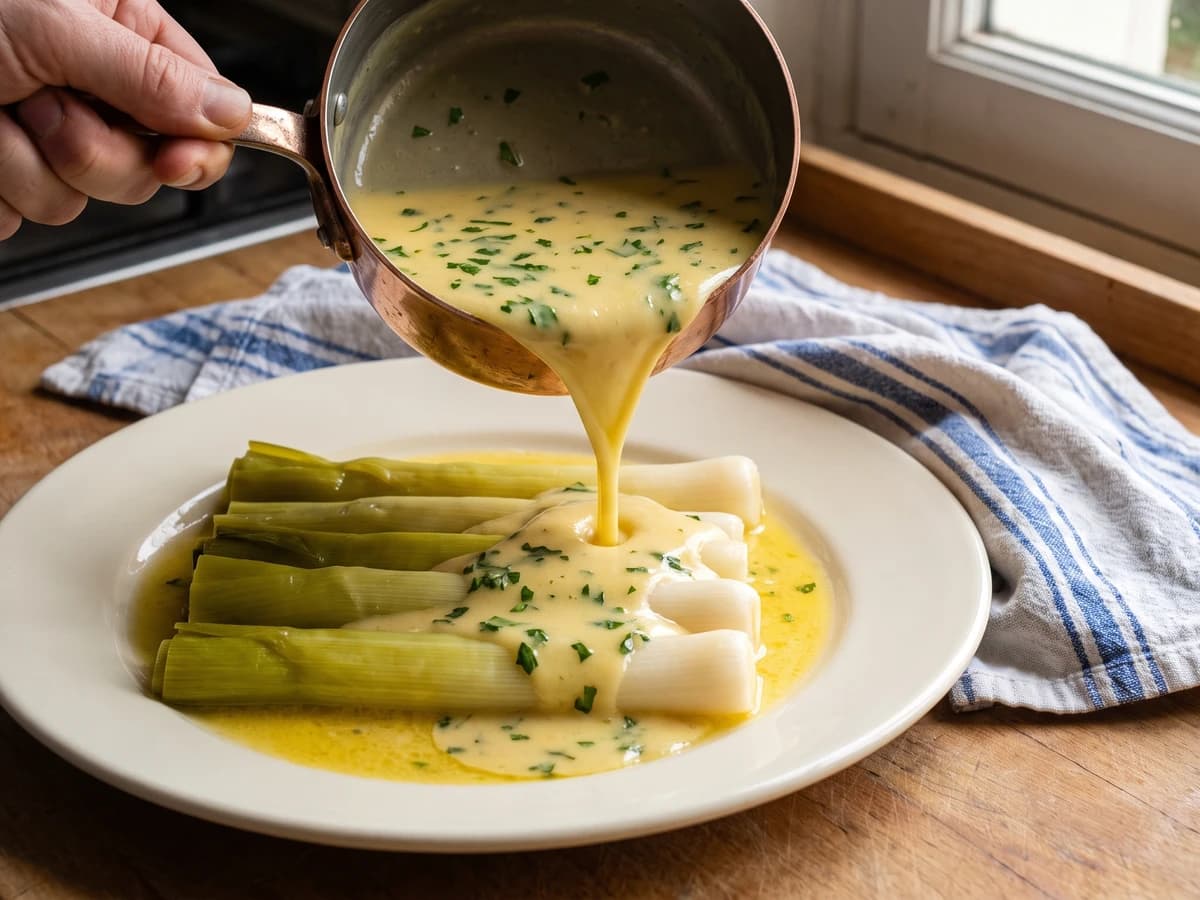
An old lesson in sauce families: Sauce Allemande takes mushroom liquor, then butter, lemon, and parsley, becoming a glossy Poulette for sheep's trotters, leeks, cauliflower, and anything needing gentle richness with a bright edge.