Chef Juliette
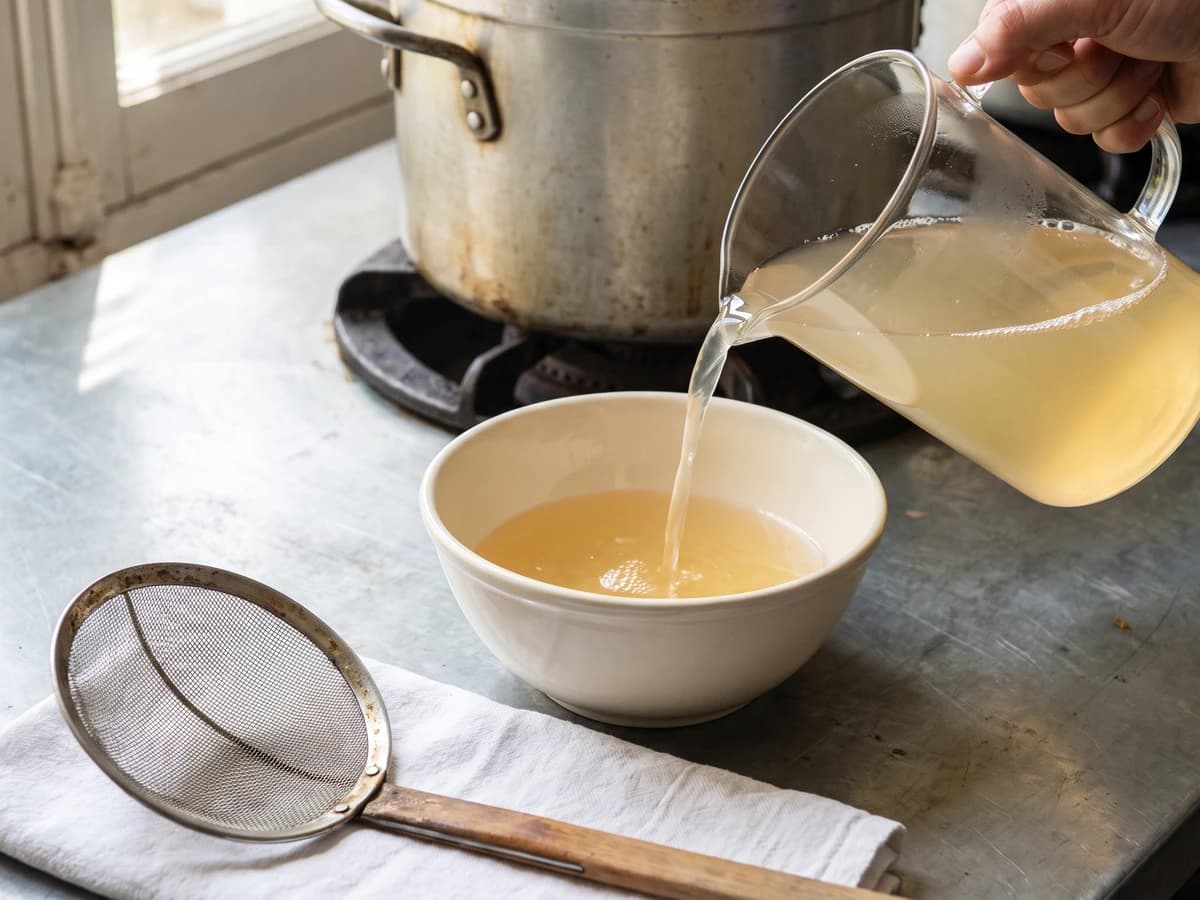
Ordinary or White Consommé
Beef shin, lean beef, and fowl begin in cold water and rise slowly toward a tremble. Skim before the boil, and you learn the quiet discipline that gives every clear French broth its backbone.
A cooking platform built around craft, culture, and the stories behind what we eat.
Created by Chef Juliette
Based on No. 141, Colbert Butter, from Le Guide Culinaire (1907) by Auguste Escoffier
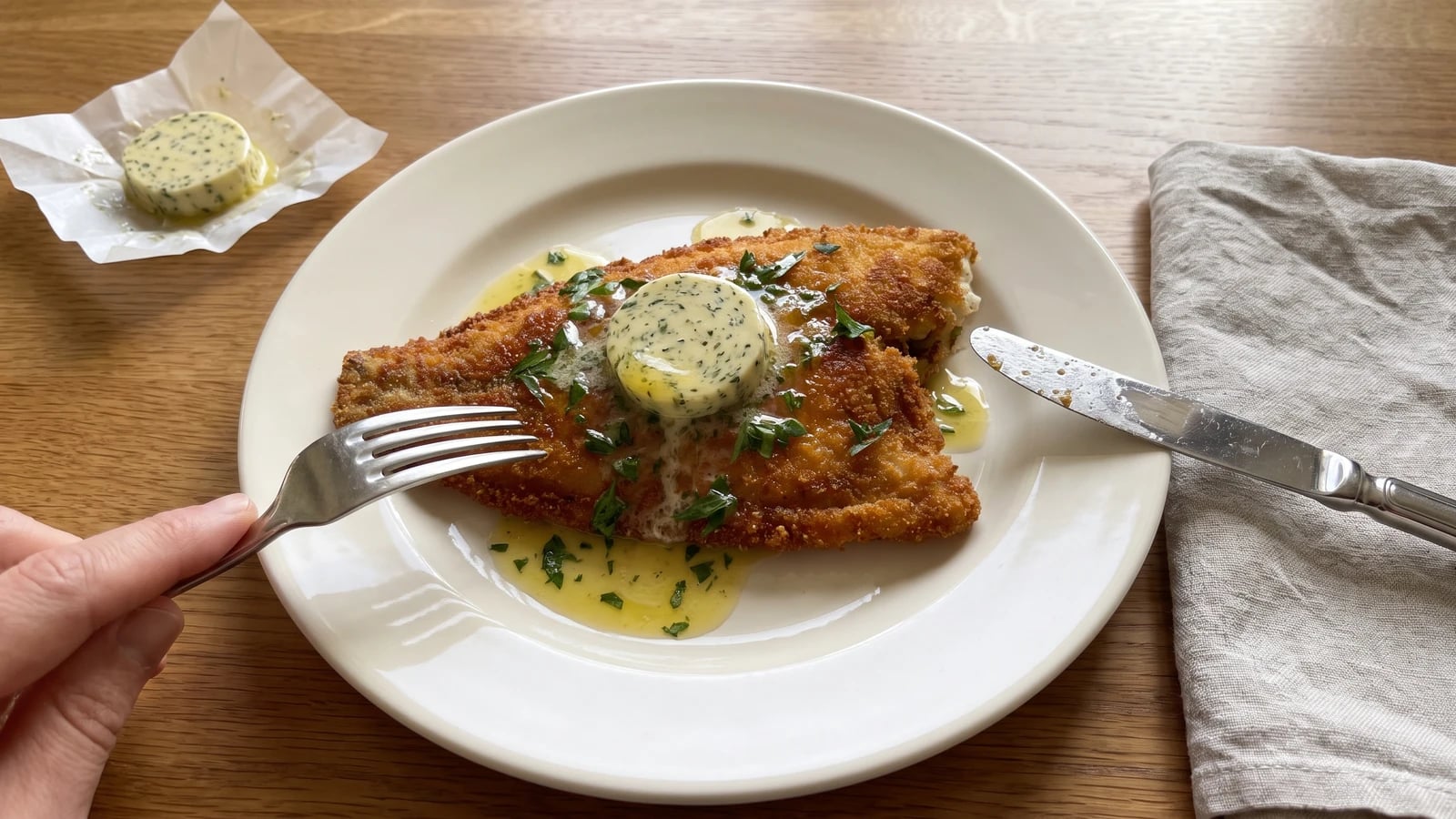
Beurre Colbert turns one cool spoonful of maître d’hôtel butter, pale meat glaze, and tarragon into the finishing sauce for hot fish, with temperature control doing all the work.
Beurre Colbert (Colbert butter) teaches the central lesson of every beurre composé, or compound butter: enrichment must meet butter at its own temperature. Pale meat glaze brings body and savor, tarragon gives a clean anise lift, and hot fish melts the finished coin into its own sauce on the plate. The one true thing to know before touching the pan is this: the glaze must be fluid, but barely warm, or the butter turns oily.
The book assumed a saucier with pale meat glaze ready from a stockpot never off the fire, Butter à la Maître d’Hôtel (No. 150) already made, and a pound-scale service batch. At home, warm only the spoonfuls of unsalted pale veal or chicken glaze you need and make one quarter of the original formula. The brigade quantity and the always-ready stockpot are scaffolding; the book's ratio, its finished referenced butter, and the order of glaze before tarragon are the dish. One cook, one stove, one evening.
Cool the dissolved glaze until it is no warmer than your fingers, then work it into pliable butter in small additions. If the mixture loosens, stop and chill the bowl briefly. Ça se rattrape. That moment, not shaping a perfect little log, decides whether Beurre Colbert reaches the table creamy, green-flecked, and ready to melt.
Beurre Colbert belongs to the named preparations of the Parisian classical kitchen, where fish ordered à la Colbert was breaded, fried, opened along the center, and finished with this compound butter. It is sometimes mistaken for a separately cooked sauce, but the sauce forms only when the hot fish melts Butter à la Maître d’Hôtel (No. 150) enriched with pale meat glaze and tarragon. The preparation moved easily from the brigade to the home table because its service remains beautifully direct: a cold slice, a hot fish, and the plate completes the work.
Quantity
½ cup (120 ml / 113 g) Butter à la Maître d’Hôtel (No. 150)
softened but still cool
Quantity
1½ tablespoons (22 ml / about 24 g)
dissolved, then cooled until barely warm
Quantity
¼ teaspoon (1.25 ml / 0.15 g)
finely chopped
| Ingredient | Quantity |
|---|---|
| Butter à la Maître d’Hôtelsoftened but still cool | ½ cup (120 ml / 113 g) Butter à la Maître d’Hôtel (No. 150) |
| pale meat glazedissolved, then cooled until barely warm | 1½ tablespoons (22 ml / about 24 g) |
| fresh tarragonfinely chopped | ¼ teaspoon (1.25 ml / 0.15 g) |
Put the pale meat glaze in your smallest heavy saucepan and set it over the lowest heat. Stir just until it becomes smooth and fluid, about 30 to 60 seconds, then remove it immediately. It must not simmer or reduce further, because the book's proportion depends on the glaze arriving at the butter unchanged.
Transfer the dissolved glaze to a small shallow bowl and let it cool until it feels barely warm against your fingertip, ideally 24 to 26°C. Fluid but cool is the principle that decides Beurre Colbert. If the glaze sets before you use it, set the bowl over warm water for five seconds and stir. Ça se rattrape.
Place the softened Butter à la Maître d’Hôtel (No. 150) in a medium bowl. Work it firmly against the side with a flexible spatula until it is creamy and free of hard lumps, but stop if the surface begins to look melted or oily. The butter should yield easily while remaining cool and matte.
Add the cooled glaze to the butter one teaspoon at a time, beating each addition completely smooth before adding the next. If the mixture turns glossy, loose, or greasy, the glaze was too warm; stop and chill the bowl for five minutes, then work it together again. If the glaze forms firm little beads, warm only the outside of the bowl over barely warm water for three to five seconds and continue. Ça se rattrape.
Fold in the chopped tarragon only after the glaze has been fully absorbed, preserving the sequence of the original formula. Work just until the herb is evenly scattered through the pale, creamy butter. The tarragon is an accent, not the body of the sauce, so the small quantity is exactly right.
Scrape the butter onto parchment and shape it into a log about 3 cm thick. Roll it snugly, twist the ends, and chill for one hour, until firm enough to cut cleanly. Shaping the butter is a home-service convenience rather than the defining technique; it changes no flavor and divides this quarter-scale batch neatly for four.
Cut the chilled log into four generous coins, about 34 g each. Set one immediately into the opened center of each hot fish prepared à la Colbert. The crisp fish melts the butter, the meat glaze gives the pooling sauce body, and the tarragon lifts the richness. Do not melt it separately in a pan; the plate completes the sauce. À table!
1 serving (about 35g)
Culinary guides, cultural storytelling, and the editorial depth that makes cooking meaningful.
Discover Culinary ExplorerChef Juliette
Beef shin, lean beef, and fowl begin in cold water and rise slowly toward a tremble. Skim before the boil, and you learn the quiet discipline that gives every clear French broth its backbone.
Chef Juliette
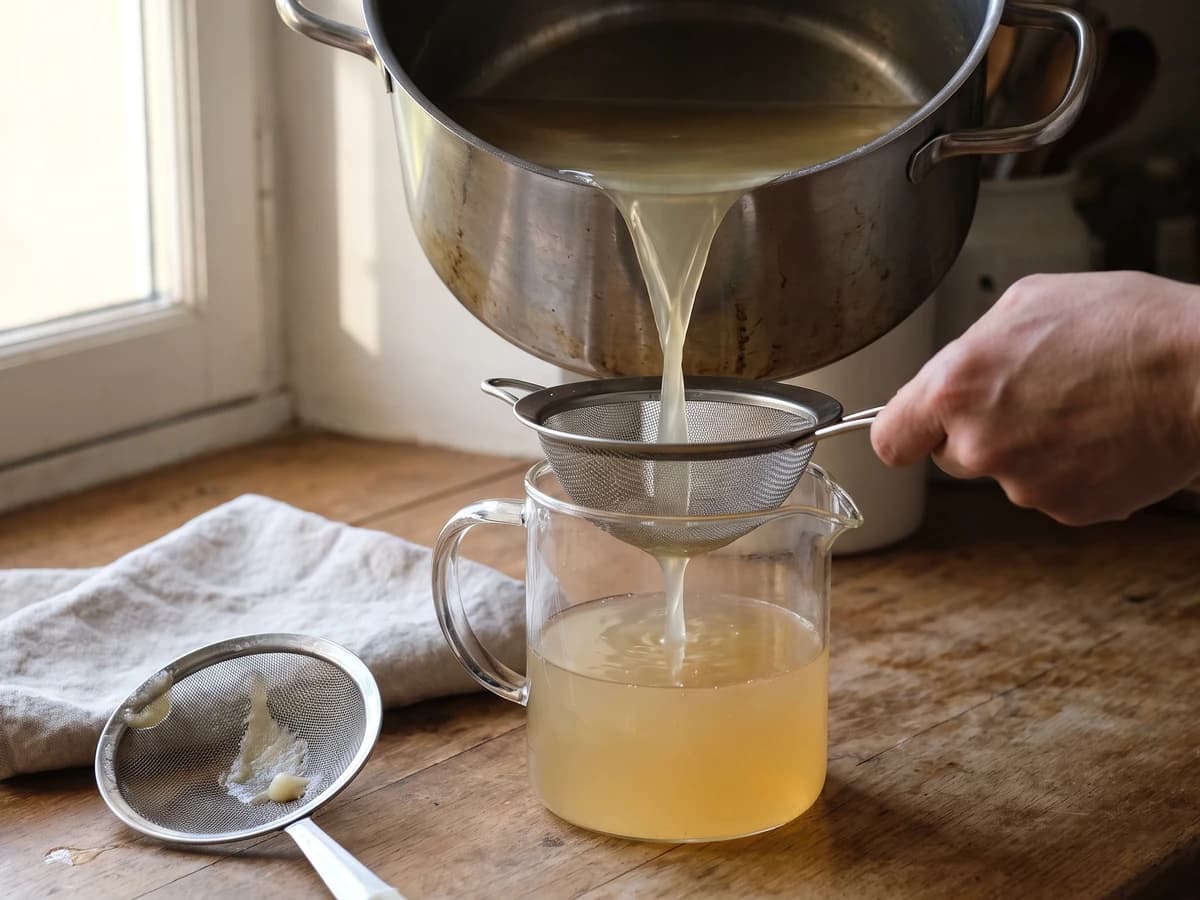
Break the veal bones small, then give them eight hours at a bare tremble. This pale, gelatinous fond becomes the quiet foundation beneath velouté, blanquette, and every sauce that must stay light.
Chef Juliette
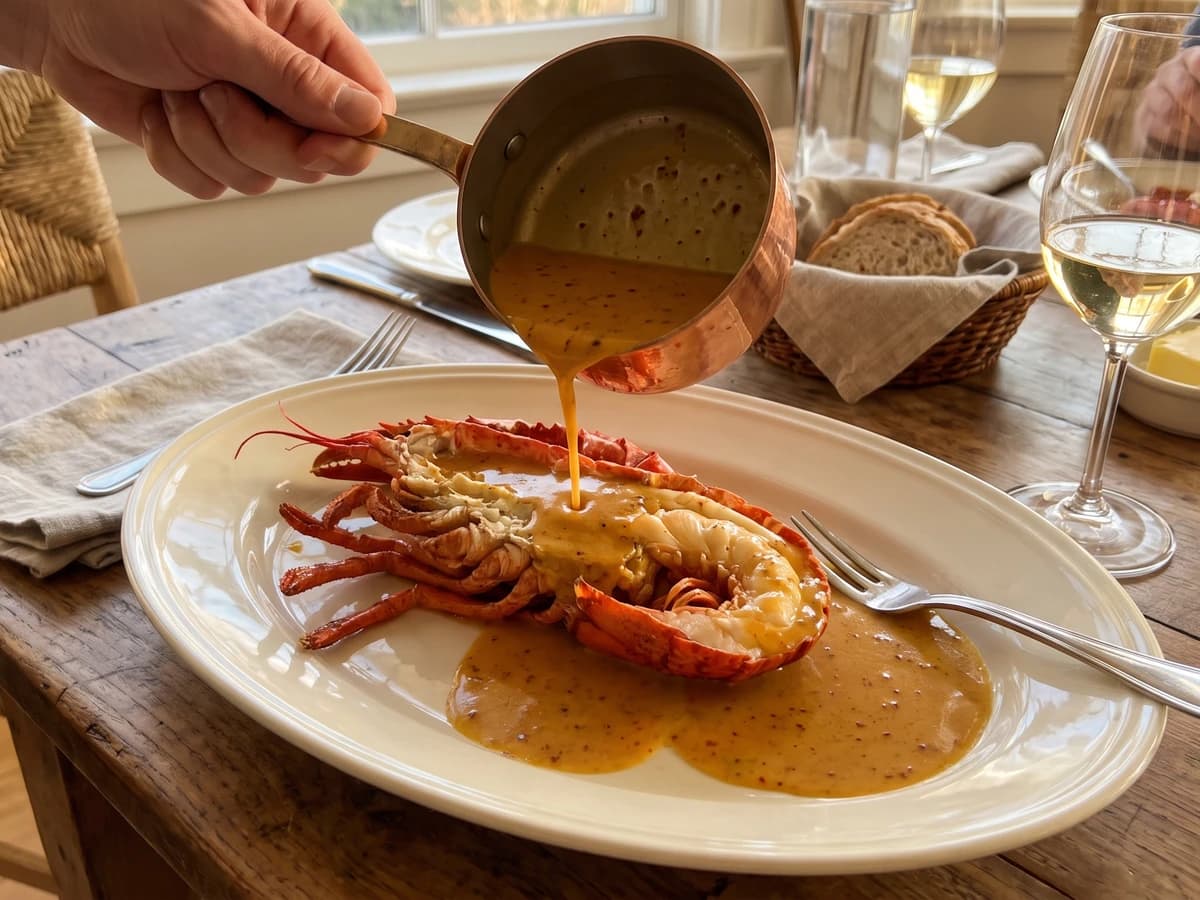
Sauce Orientale concentrates lobster-rich American Sauce with curry, then folds in cream away from the fire: a glossy, gently spiced derivative made for lobster, crayfish, and firm fish.
Chef Juliette
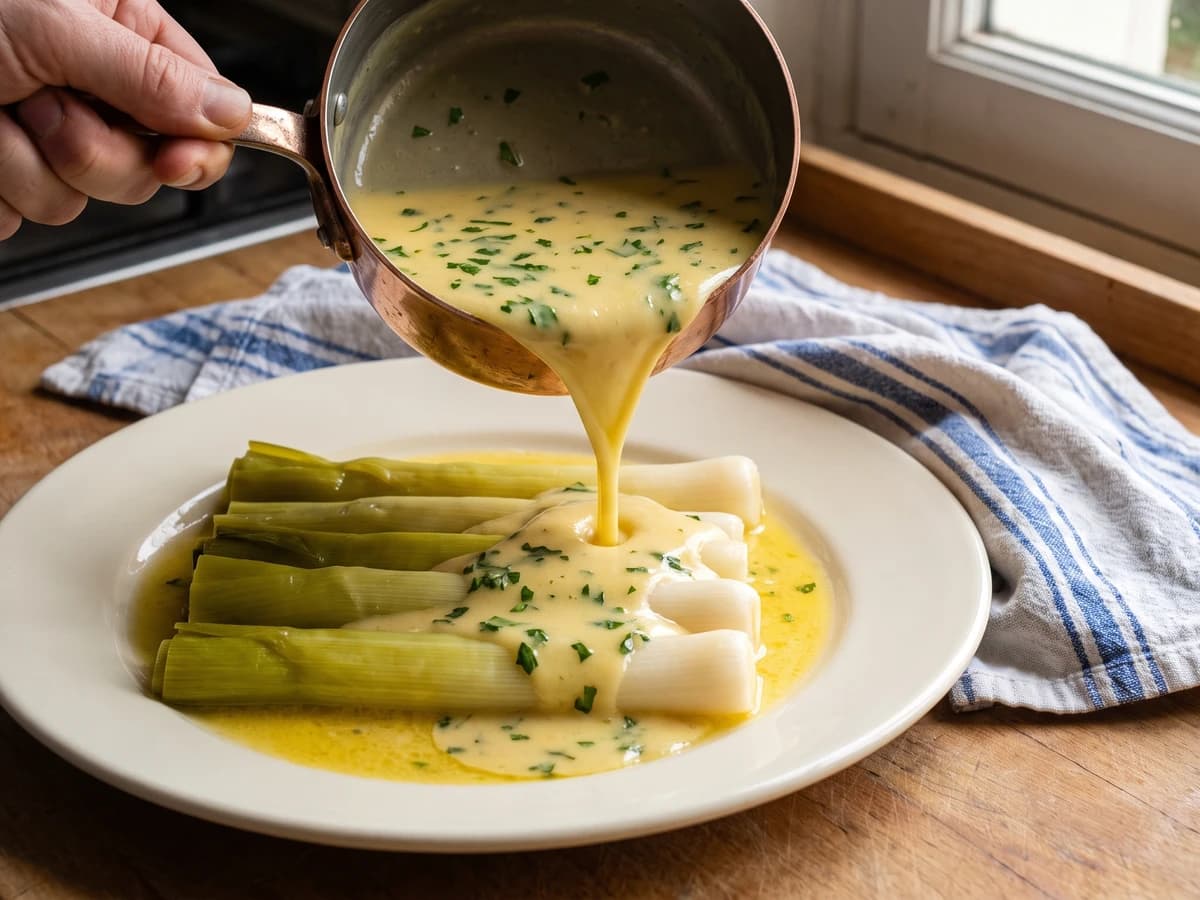
An old lesson in sauce families: Sauce Allemande takes mushroom liquor, then butter, lemon, and parsley, becoming a glossy Poulette for sheep's trotters, leeks, cauliflower, and anything needing gentle richness with a bright edge.