Chef Juliette
Ordinary or White Consommé
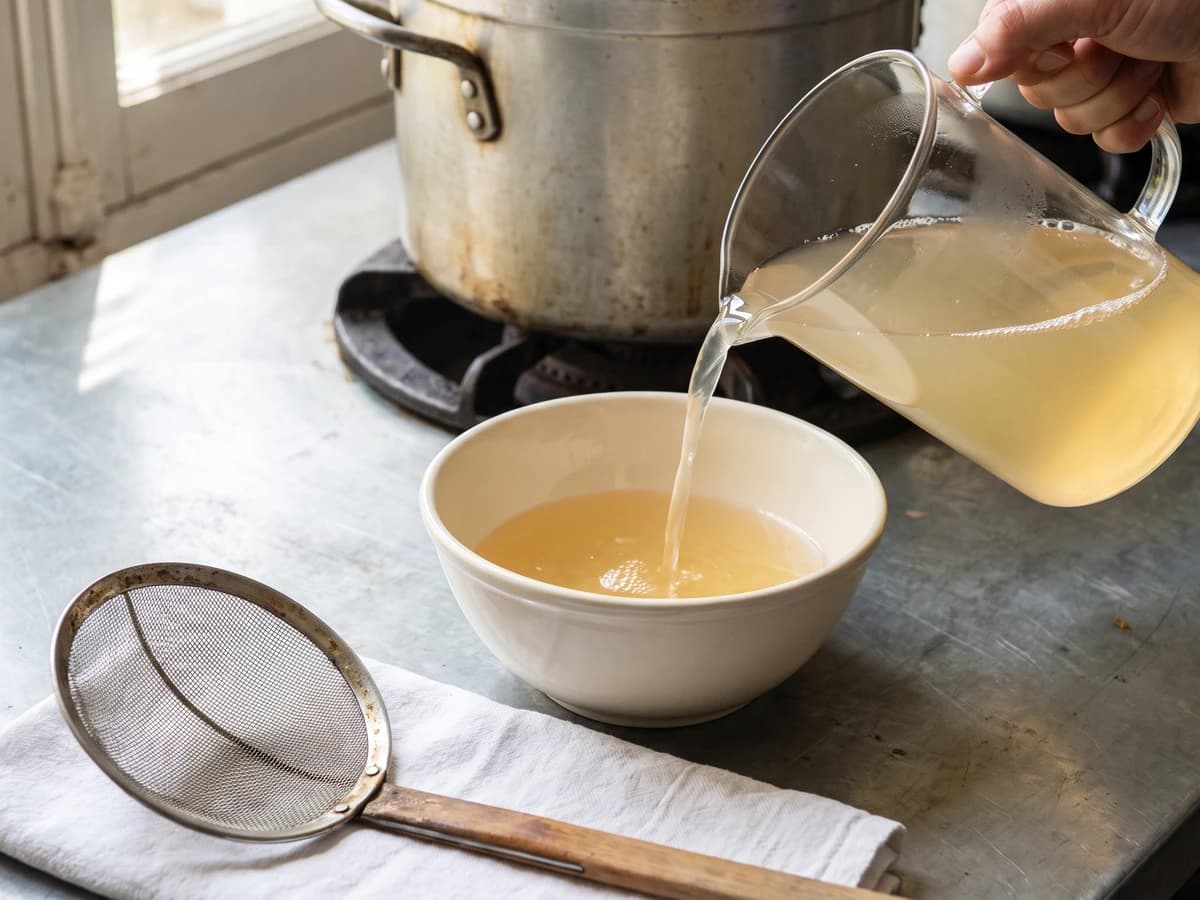
Beef shin, lean beef, and fowl begin in cold water and rise slowly toward a tremble. Skim before the boil, and you learn the quiet discipline that gives every clear French broth its backbone.
A cooking platform built around craft, culture, and the stories behind what we eat.
Created by Chef Juliette
Based on No. 137, Oxford Sauce, from Le Guide Culinaire (1907) by Auguste Escoffier
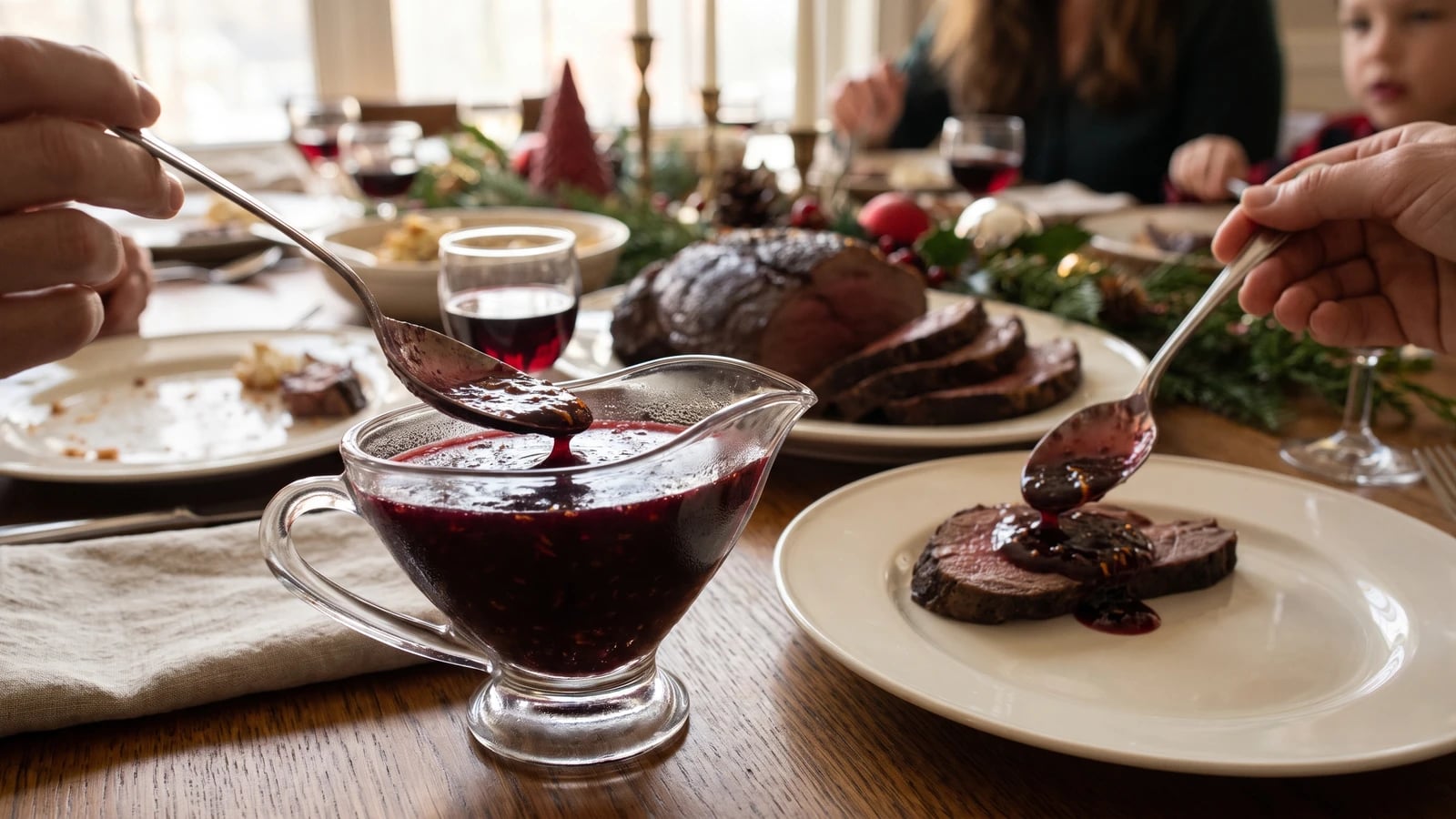
Sauce Oxford is Cumberland's quieter twin: red-currant jelly and port sharpened with citrus, mustard, ginger, and cayenne, its zest rasped fine so the sauce stays smooth beside cold venison and other game.
Sauce Oxford (Oxford currant-and-port sauce) teaches that a change in cut can change the whole experience of a sauce. It is Cumberland's near twin, but its orange and lemon rind is rasped fine and used more sparingly, so the citrus melts into the currant jelly and port instead of arriving as Julienne-fashion (matchstick) threads. The one true thing to know before touching a pan is this: the measured zest defines the sauce.
The old entry assumed a saucier who could call for Cumberland Sauce (No. 134) and a prep hand to deliver blanched rind. At home, the honest equivalent is one fine citrus rasp, one small saucepan, and the linked Cumberland batch made in sequence. There is no stockpot or salamander to replace because this sauce never asked for either, and the book's quantity is already a sensible home batch, so I have kept it intact. One cook, one stove, one evening.
The separate prep hand is brigade scaffolding and goes. The two-minute blanch and exact two-thirds teaspoon of each rind are the dish and must stay. Rasp only the colored skin, measure after rasping, and stop before the bitter white pith.
Sauce Oxford belongs to the British cold-game table, especially cold venison, and entered the French classical repertoire as a named variation on Cumberland Sauce (No. 134). Its city-name is less securely explained than its technique: the defining rule is less citrus rind, rasped or finely chopped rather than cut Julienne-fashion. That finer cut makes the sauce smoother and more integrated, which is why Oxford and Cumberland should not be treated as two labels for the same bowl.
Quantity
1 batch Cumberland Sauce (No. 134), about 1¼ cups (300 ml / 310 g)
prepared according to its own entry, replacing its julienned citrus rinds with the measured Oxford zests below
Quantity
⅔ teaspoon (3 ml / 1.3 g)
finely rasped from the colored skin only
Quantity
⅔ teaspoon (3 ml / 1.3 g)
finely rasped from the colored skin only
| Ingredient | Quantity |
|---|---|
| Cumberland Sauceprepared according to its own entry, replacing its julienned citrus rinds with the measured Oxford zests below | 1 batch Cumberland Sauce (No. 134), about 1¼ cups (300 ml / 310 g) |
| orange zestfinely rasped from the colored skin only | ⅔ teaspoon (3 ml / 1.3 g) |
| lemon zestfinely rasped from the colored skin only | ⅔ teaspoon (3 ml / 1.3 g) |
Wash and dry the orange and lemon used for the Cumberland preparation. Rasp the colored skin in short strokes, turning each fruit before the white pith appears, then measure a loose ⅔ teaspoon of each zest. Scald the measured zests in gently boiling water for two minutes, drain them through a very fine strainer, cool, and press them dry. If white pith has slipped in, pick it out now; boiling softens pith but never removes its bitterness.
Prepare the Cumberland Sauce (No. 134) exactly according to its own entry, omitting only its teaspoon each of orange- and lemon-rind julienne. All other proportions and the sequence belong to that entry and remain untouched. Oxford changes the cut and quantity of the rind, not the currant-jelly and port foundation beneath it.
When the Cumberland Sauce (No. 134) reaches its citrus-rind addition, whisk in the blanched ⅔ teaspoon each of rasped orange and lemon zest. Mix until the flecks are evenly suspended and the sauce is smooth and wine-dark. If the jelly tightens before the zest disperses, don't add more port. Set the bowl over barely warm water and whisk for thirty seconds. Ça se rattrape.
Let the sauce cool to room temperature, cover it closely, and chill it for at least one hour so the citrus, mustard, ginger, and cayenne settle into the currant and port. Stir before serving and take it from the cold fifteen minutes before it reaches the table; it should spoon softly rather than sit like set jelly. Serve with cold venison. À table!
1 serving (about 35g)
Culinary guides, cultural storytelling, and the editorial depth that makes cooking meaningful.
Discover Culinary ExplorerChef Juliette
Beef shin, lean beef, and fowl begin in cold water and rise slowly toward a tremble. Skim before the boil, and you learn the quiet discipline that gives every clear French broth its backbone.
Chef Juliette
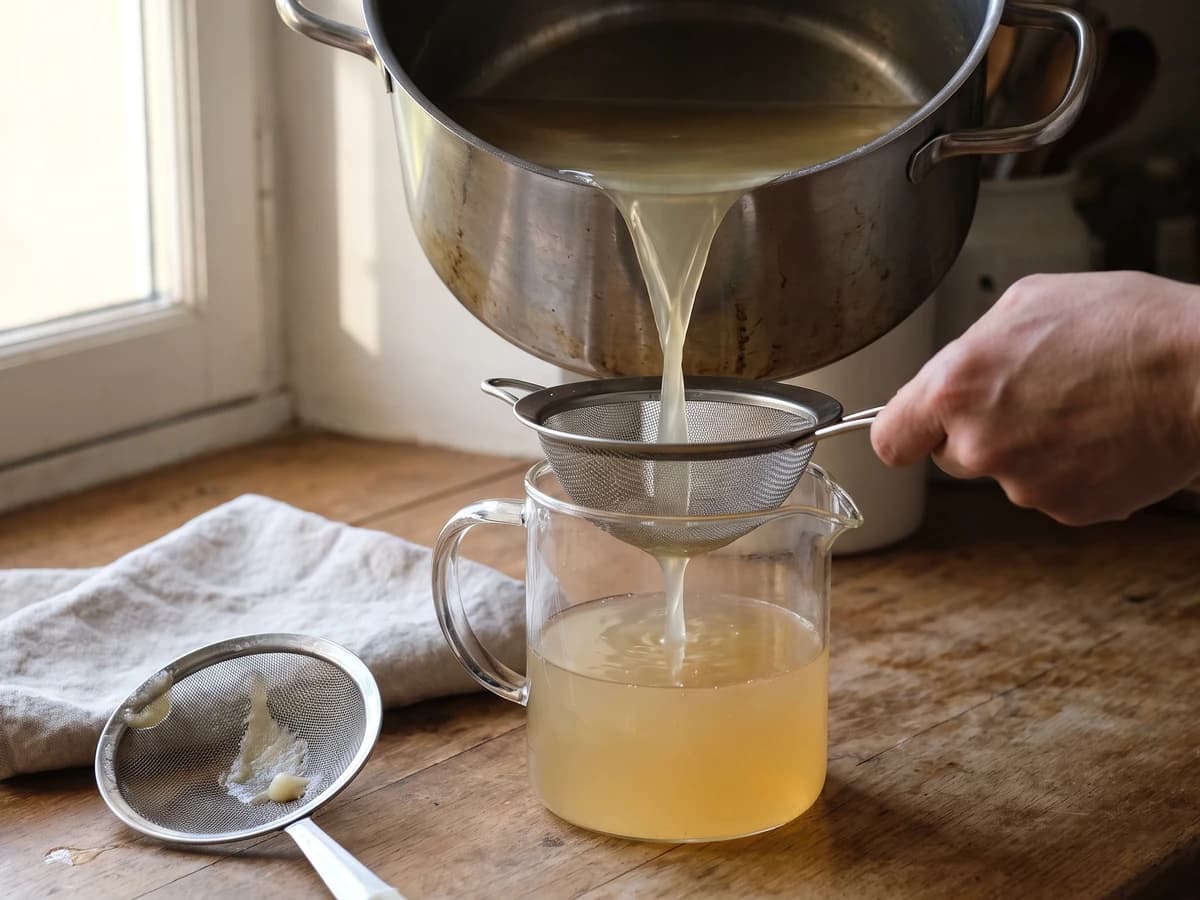
Break the veal bones small, then give them eight hours at a bare tremble. This pale, gelatinous fond becomes the quiet foundation beneath velouté, blanquette, and every sauce that must stay light.
Chef Juliette
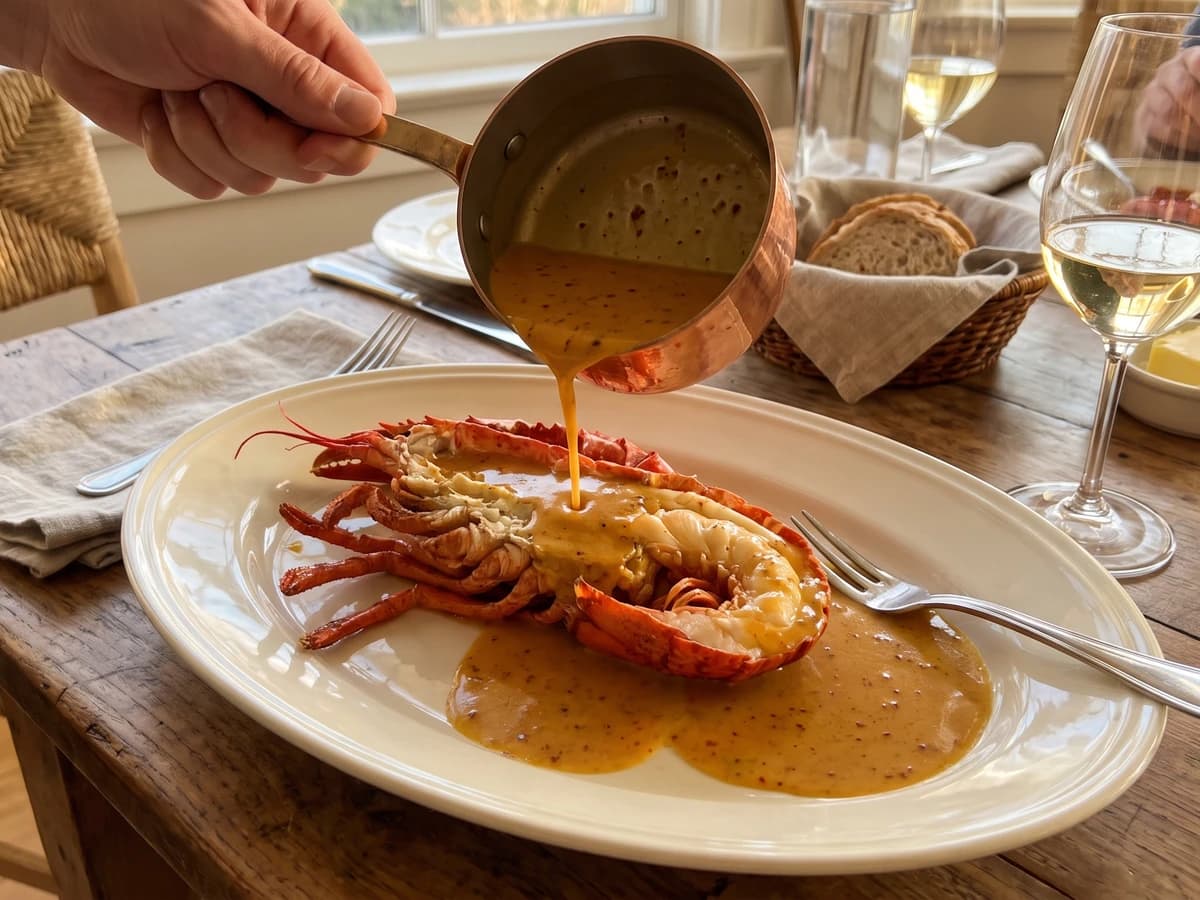
Sauce Orientale concentrates lobster-rich American Sauce with curry, then folds in cream away from the fire: a glossy, gently spiced derivative made for lobster, crayfish, and firm fish.
Chef Juliette
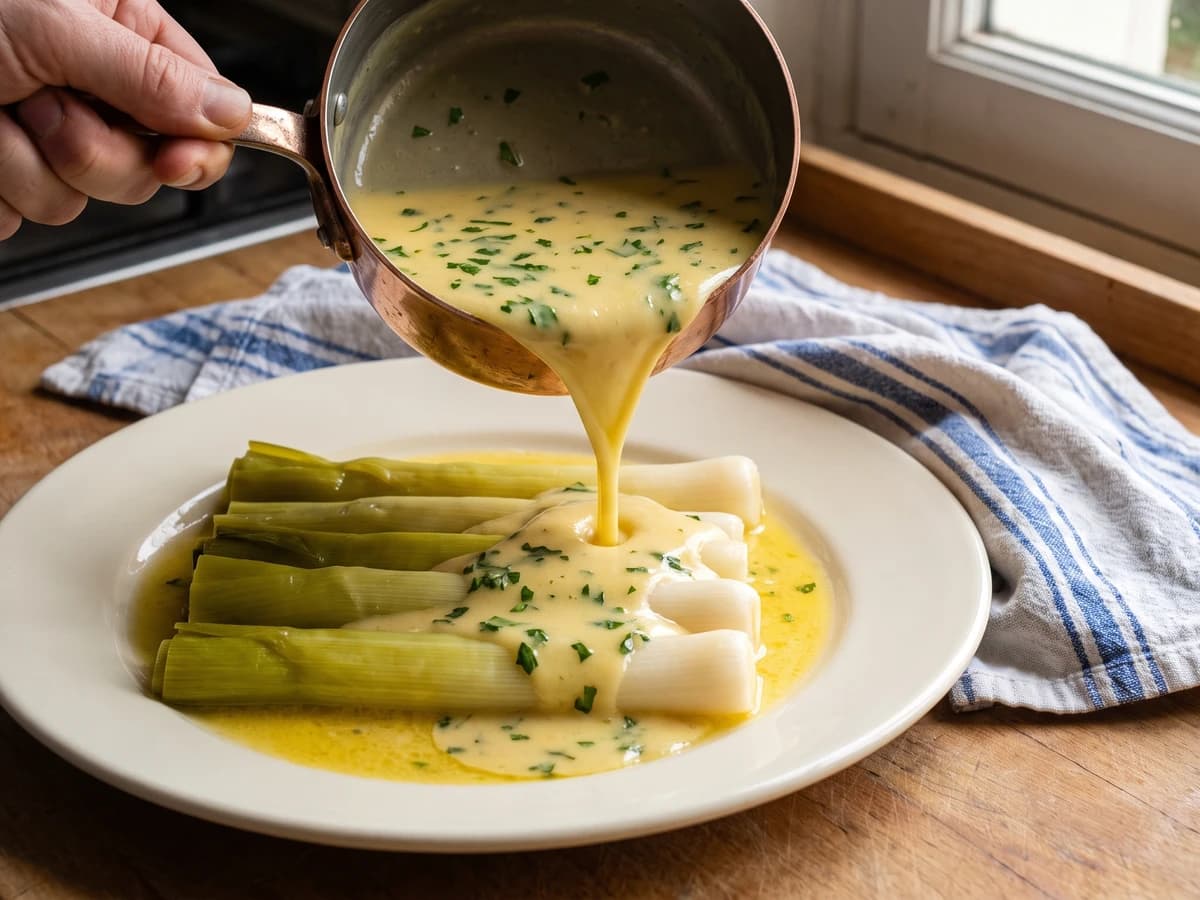
An old lesson in sauce families: Sauce Allemande takes mushroom liquor, then butter, lemon, and parsley, becoming a glossy Poulette for sheep's trotters, leeks, cauliflower, and anything needing gentle richness with a bright edge.