Chef Juliette
Ordinary or White Consommé
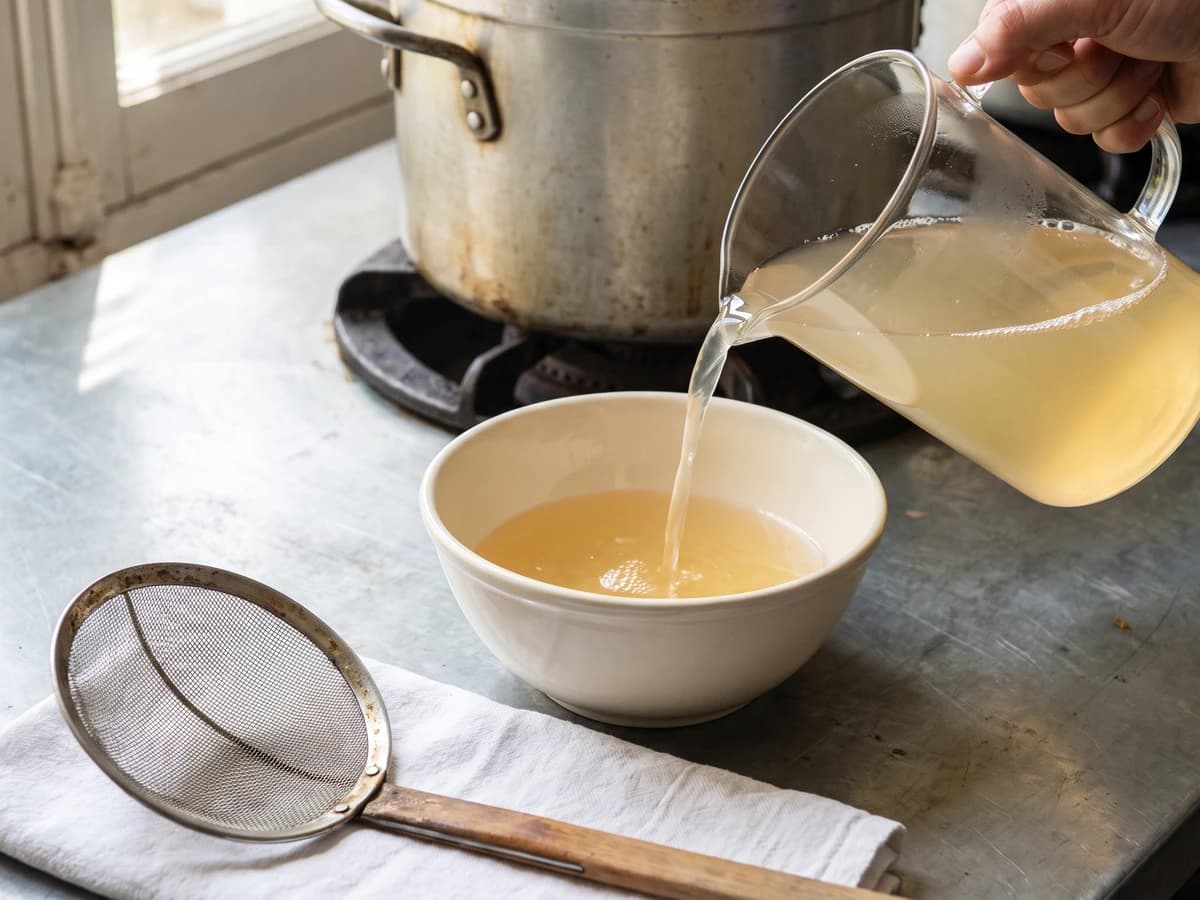
Beef shin, lean beef, and fowl begin in cold water and rise slowly toward a tremble. Skim before the boil, and you learn the quiet discipline that gives every clear French broth its backbone.
A cooking platform built around craft, culture, and the stories behind what we eat.
Created by Chef Juliette
Based on No. 134, Cumberland Sauce, from Le Guide Culinaire (1907) by Auguste Escoffier
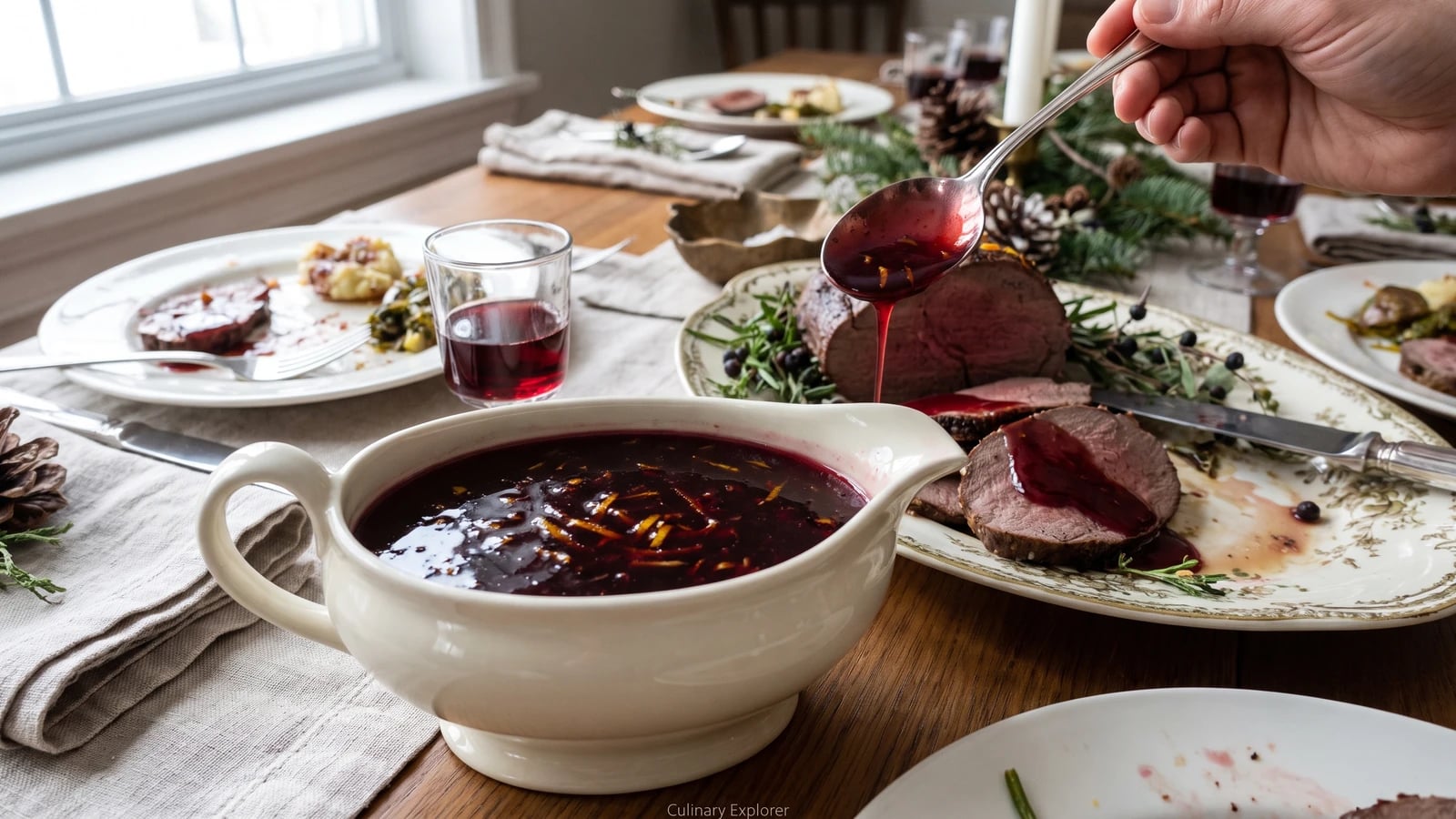
Sauce Cumberland turns red-currant jelly and port into a cold, garnet-bright companion for venison, sharpened with scalded citrus julienne, mustard, ginger, and cayenne, with sweetness held firmly in check.
Sauce Cumberland (cold red-currant and port sauce) teaches the discipline of balance. Red-currant jelly brings sweetness and body, but port, citrus, mustard, ginger, and cayenne give it edges, until the finished sauce tastes generous rather than sugary. The one true thing to know before touching a pan is that this sauce must be loosened, never reduced.
The classical entry assumes a saucier who can scald several tiny garnishes separately and have the sauce waiting cold for service. A stock never off the fire and a salamander have no work here, and inventing either would only burden the dish. One saucepan handles the rind and shallot in sequence. The extra brigade pans are scaffolding; the scalding itself is the dish and must stay. The source ratio has been repeated eightfold for a single holiday batch of about two quarts, while its proportions, flavorings, and order remain intact. One cook, one stove, one evening.
When it is right, Sauce Cumberland is translucent garnet, loose enough to ribbon from a spoon, with fine orange and lemon matchsticks suspended through it. The step that decides everything is the scald: 2 minutes for the citrus rind, mere seconds for the shallot, followed by thorough draining and cooling.
Sauce Cumberland belongs to the English table, not to a French province, and the French classical canon keeps that identity by treating it as an English cold sauce for venison and other game. Red-currant jelly, port, scalded citrus rind, mustard, and ginger turn preserved fruit into a sharp companion for cold meat, while the name is linked to the dukes of Cumberland even though the precise namesake remains disputed. Its passage from British game tables into French sauce books is a useful correction to the notion that the canon ever stopped at the border.
Quantity
2 cups (480 ml / 680 g)
Quantity
3¾ cups (900 ml / 895 g)
Quantity
2 tablespoons plus 2 teaspoons (40 ml / 32 g)
finely chopped
Quantity
2 tablespoons plus 2 teaspoons (40 ml / 14 g)
white pith removed and cut julienne-fashion
Quantity
2 tablespoons plus 2 teaspoons (40 ml / 14 g)
white pith removed and cut julienne-fashion
Quantity
Juice of 8 small oranges, about 2 cups (480 ml / 480 g)
strained
Quantity
Juice of 4 lemons, about ½ cup (120 ml / 120 g)
strained
Quantity
2 tablespoons plus 2 teaspoons (40 ml / 44 g)
Quantity
½ teaspoon (2.5 ml / 0.9 g)
Quantity
½ teaspoon (2.5 ml / 0.9 g)
| Ingredient | Quantity |
|---|---|
| red-currant jelly | 2 cups (480 ml / 680 g) |
| ruby port | 3¾ cups (900 ml / 895 g) |
| shallotfinely chopped | 2 tablespoons plus 2 teaspoons (40 ml / 32 g) |
| orange rindwhite pith removed and cut julienne-fashion | 2 tablespoons plus 2 teaspoons (40 ml / 14 g) |
| lemon rindwhite pith removed and cut julienne-fashion | 2 tablespoons plus 2 teaspoons (40 ml / 14 g) |
| orange juicestrained | Juice of 8 small oranges, about 2 cups (480 ml / 480 g) |
| lemon juicestrained | Juice of 4 lemons, about ½ cup (120 ml / 120 g) |
| smooth prepared mustard | 2 tablespoons plus 2 teaspoons (40 ml / 44 g) |
| cayenne pepper | ½ teaspoon (2.5 ml / 0.9 g) |
| ground ginger | ½ teaspoon (2.5 ml / 0.9 g) |
Before juicing the fruit, peel broad strips of orange and lemon rind with a vegetable peeler, taking only the colored skin. Trim away every trace of white pith, then cut the rind julienne-fashion into match-shaped rods about 2 mm wide and 2.5 cm long. Measure the required amounts, juice the fruit, and strain both juices.
Bring a saucepan of water to a boil. Add the orange and lemon julienne and scald it for exactly 2 minutes, then drain thoroughly and spread it on a plate to cool. Return the water to the boil, drop in the chopped shallot for only a few seconds, and drain it through a fine sieve. Press firmly with the back of a spoon to remove the water, then let it cool. One saucepan replaces the brigade's row of little pans, but the separate scalding must stay: the rind needs 2 minutes, while the shallot needs mere seconds.
Place the red-currant jelly and all but ½ cup of the measured port in a large saucepan. Warm them over low heat, whisking gently, only until the jelly dissolves and the mixture becomes uniformly garnet and fluid. Remove it from the heat and whisk in the remaining port. Do not boil or reduce it. If the jelly gathers into stubborn lumps, lift the pan from the heat and whisk in the reserved port a little at a time until smooth. Ça se rattrape.
In a large heatproof bowl, whisk the orange juice, lemon juice, mustard, cayenne, and ground ginger until no mustard or spice remains in little beads. Let the jelly and port cool until merely lukewarm, then whisk it gradually into the citrus mixture. Fold in the cooled rind and pressed shallot. The sauce should taste sweet first, then answer with citrus, mustard, ginger, and restrained heat.
Cover and chill the Sauce Cumberland for at least 2 hours so the jelly regains a light body and the scalded aromatics season the whole bowl. It may look rather loose while warm. Give it the full chilling time before judging it; if it then seems too firm, leave it at room temperature for 15 minutes and whisk gently. It should coat a spoon and fall in a glossy ribbon, never sit like a molded jelly.
Stir the cold sauce before transferring it to a saucière, keeping the citrus julienne evenly distributed. Serve it beside cold venison so each guest can spoon on as much as wanted; it is also at home with cold roast beef, lamb, or ham. Do not strain out the rind and shallot at the finish. Their fine texture is part of Sauce Cumberland. À table!
1 serving (about 35g)
Culinary guides, cultural storytelling, and the editorial depth that makes cooking meaningful.
Discover Culinary ExplorerChef Juliette
Beef shin, lean beef, and fowl begin in cold water and rise slowly toward a tremble. Skim before the boil, and you learn the quiet discipline that gives every clear French broth its backbone.
Chef Juliette
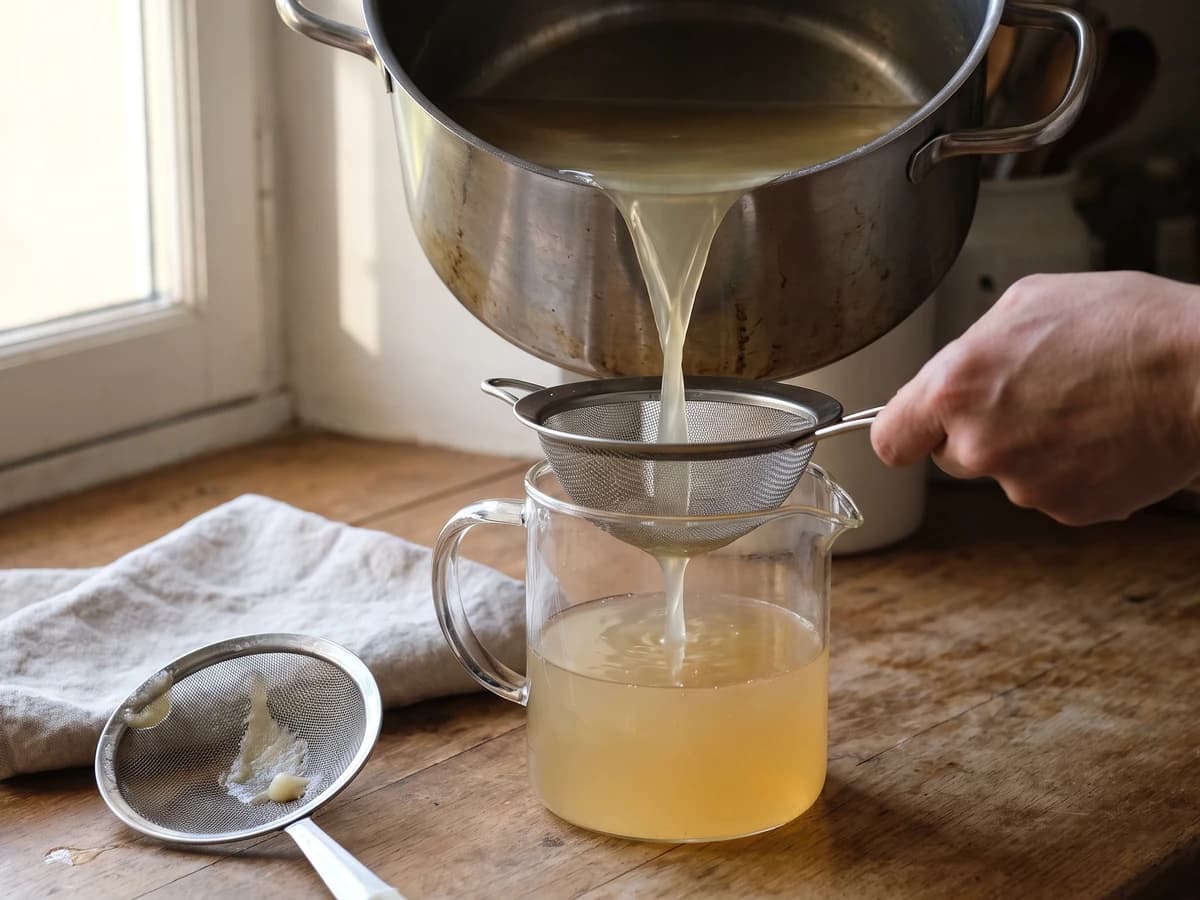
Break the veal bones small, then give them eight hours at a bare tremble. This pale, gelatinous fond becomes the quiet foundation beneath velouté, blanquette, and every sauce that must stay light.
Chef Juliette
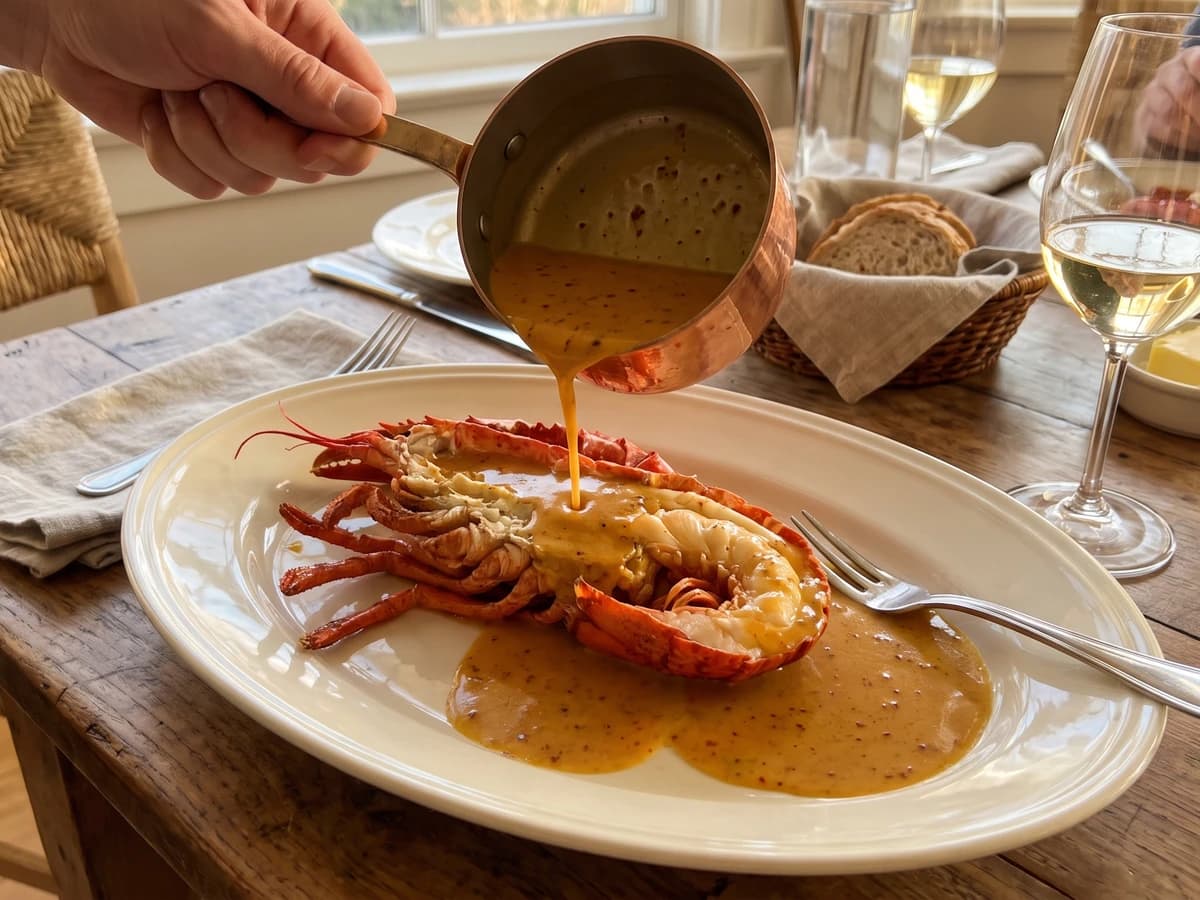
Sauce Orientale concentrates lobster-rich American Sauce with curry, then folds in cream away from the fire: a glossy, gently spiced derivative made for lobster, crayfish, and firm fish.
Chef Juliette
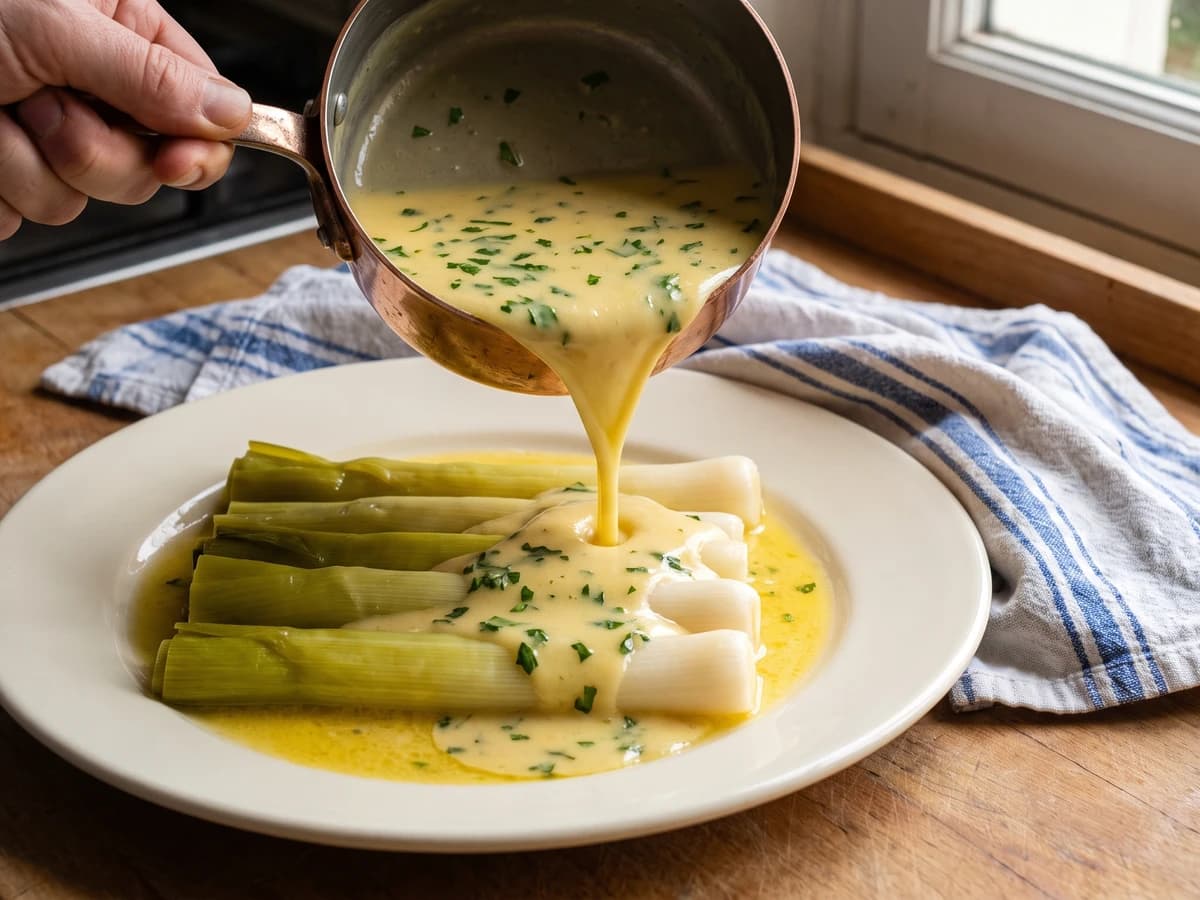
An old lesson in sauce families: Sauce Allemande takes mushroom liquor, then butter, lemon, and parsley, becoming a glossy Poulette for sheep's trotters, leeks, cauliflower, and anything needing gentle richness with a bright edge.